
16 Interesting Recipes for Pickling Cabbage in Brine for the Winter
Content
- 1 Calorie content and benefits of pickled cabbage
- 2 What kind of cabbage is suitable for pickling?
- 3 Peculiarities of making cabbage brine
- 4 Video: "Sauerkraut in Brine"
- 5 Recipes for pickling cabbage with brine
- 5.1 With hot brine
- 5.2 Without vinegar
- 5.3 With vinegar
- 5.4 The quick way
- 5.5 Daily cabbage
- 5.6 With horseradish and garlic
- 5.7 With beets
- 5.8 With apples and beets
- 5.9 With honey and carrots
- 5.10 With tomatoes
- 5.11 With vegetables
- 5.12 Pickling in pieces
- 5.13 In banks
- 5.14 In Korean
- 5.15 In Georgian
- 5.16 In Gurian
- 6 Storage terms and conditions
Calorie content and benefits of pickled cabbage
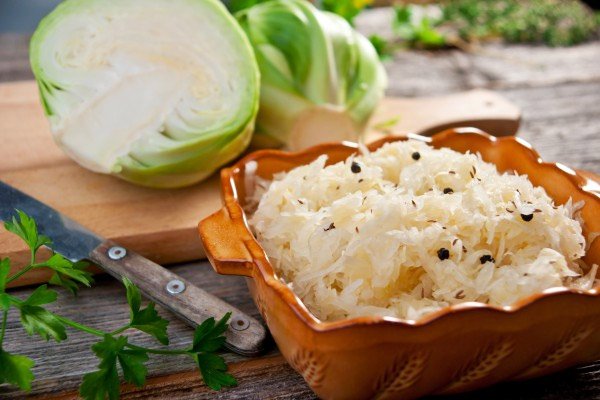
In terms of nutritional value, white cabbage is suitable even for those on a diet. Salted cabbage is a low-calorie snack (100 g contains only 20 kcal), yet rich in nutrients. Almost half of its chemical composition is ascorbic acid, making it an indispensable source of vitamin C. The variety of micro- and macronutrients helps support the immune system, stabilizes heart function, strengthens the central nervous system, and prevents thrombosis.
What kind of cabbage is suitable for pickling?
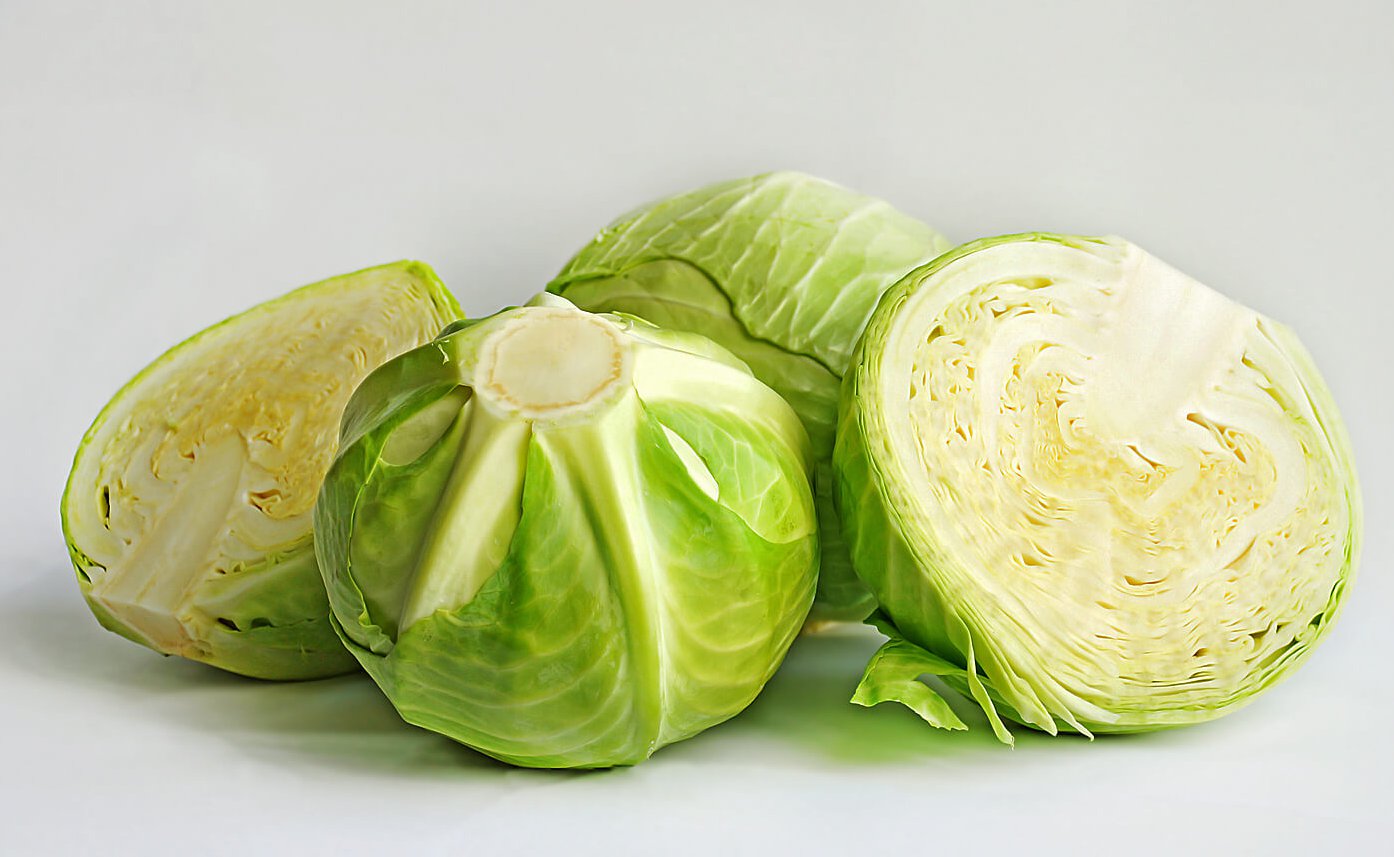
Before you begin the salting process, you need to choose the main ingredient. Late or mid-season varieties are best for pickling. Early varieties are absolutely not suitable, as the resulting snack will not be crispy. The heads of cabbage should be juicy, yet firm and tightly packed. If you use varieties with little juice, the dish will turn out dry.
Before purchasing, inspect the leaves carefully. Avoid frozen or spoiled leaves. To determine which cabbage will make a tasty snack, press it with your hands on both sides. If you hear a distinctive crunch, go ahead and buy it.
Peculiarities of making cabbage brine
The key ingredient for pickling white cabbage is cabbage brine. Read below to learn how to prepare a basic marinade for pickled and salted appetizers.
For sauerkraut
- Add 20 g of salt and 40 g of granulated sugar to one and a half liters of purified water.
- Bring to a boil over medium heat until the crystals are completely dissolved, then let the liquid simmer for a couple of minutes.
- Cool the brine before pouring it over the shredded cabbage.
For pickled cabbage
- Combine 100 ml of vegetable oil, 40 g of salt, a glass of granulated sugar and 200 ml of table vinegar with one liter of purified water.
- Stir until dry ingredients are completely dissolved.
- Bring the liquid to a boil and then pour it over the prepared vegetables.
Pickled cabbage, unlike salted cabbage, can be consumed within 24 hours of preparation.
Video: "Sauerkraut in Brine"
This video describes a recipe for making a delicious snack for the winter.
Recipes for pickling cabbage with brine
Now that you know the basic principles of brine preparation, you can confidently begin the main process. We've compiled several options for you on how to salt cabbage.
With hot brine
- Mix 2 kg of finely chopped main ingredient with 400 g of coarsely grated carrots. Add a couple of teaspoons of dill seeds and a few allspice berries.
- Prepare the brine using the following proportions: 1.5 liters of purified water, 40 g of salt, a glass of granulated sugar, 2 tablespoons of table vinegar.
- While the marinade is still hot, pour it over the mixture. Let it sit at room temperature for three days.
Without vinegar
- Combine a couple of kilograms of cabbage, 400 grams of shredded carrots, and 5 crushed garlic cloves. Add a few peppercorns.
- Cook the brine: 1.5 liters of purified water, 60 g each of salt and granulated sugar.
- Pour the hot marinade over the jar. Leave at room temperature for three days.
With vinegar
- Mix 5 kg of shredded white cabbage with finely grated carrots (600 g).
- Prepare the marinade using the following proportions: two liters of purified water, granulated sugar, salt (80 g each), 40 ml of table vinegar.
- Pour the hot liquid over the mixture. Let it sit for 5-6 hours, then refrigerate.
The quick way
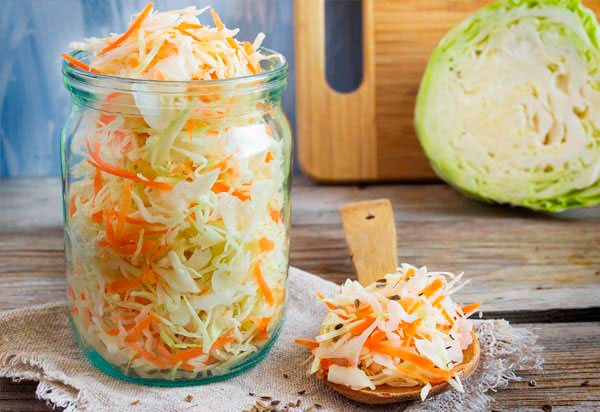
- Combine a couple of kilograms of finely chopped main product, 400 g of shredded carrots, 4-5 squeezed garlic cloves.
- Make a brine: 300 ml of purified water, ½ cup of granulated sugar, 20 g of salt, 50 ml of table vinegar, 100 ml of vegetable oil.
- Pour the still-boiling marinade over the mixture. Let it sit for 4-5 hours, then refrigerate for an hour.
Daily cabbage
- Mix 2 kg of shredded white cabbage, 6 carrots, grated on a coarse grater, and one radish.
- Place the vegetables in jars. Add 4-5 finely chopped garlic cloves and a few cloves of hot pepper.
- Prepare the marinade in the following proportions: a liter of water, 150 g of granulated sugar, 60 g of salt, table vinegar, vegetable oil (150 ml each).
- Pour hot liquid over the preparation, pierce it with a knitting needle, and then leave it to marinate for a day.
With horseradish and garlic
- Thinly slice a couple of kilograms of the main ingredient. Grind 30 g of horseradish through a meat grinder. Finely chop or press 20 g of garlic.
- Prepare the brine: a liter of purified water, salt, sugar (1 tablespoon each).
- Place currant leaves, celery, and parsley in the bottom of the jars. Add some dill seeds and a few cloves of hot pepper, if desired.
- Place the mixed vegetables on top.
- After filling the preparation with hot brine, leave it to salt for 4-5 days.

With beets
- Finely chop 3.5 kg of white cabbage. Dice 0.5 kg of beets. Grind two small horseradish roots. Chop 4 cloves of garlic.
- Prepare the brine: two liters of purified water, ½ cup of salt, the same amount of granulated sugar, a few peppercorns, 5-6 bay leaves, a couple of cloves.
- Pour the hot marinade over the preparation, then place it under pressure for 48 hours at room temperature.
With apples and beets
- Mix a kilogram of cabbage cut into small pieces, chopped apples, carrots, beets (2 each).
- Make a brine: 750 ml of purified water, vegetable oil, table vinegar (4 tablespoons each), 60 g of granulated sugar, a tablespoon of salt, a few bay leaves.
- Pour the mixture over the mixture, then cool it at room temperature, tightly covered with lids. Then, refrigerate it.
With honey and carrots
- Combine 2 kg of shredded main ingredient with 500 g of finely chopped carrots.
- Prepare the marinade using the following proportions: one and a half liters of purified water, 40 g of salt.
- Once the liquid has cooled, add one and a half tablespoons of liquid honey. Stir until it dissolves completely.
- Cover the cabbage with brine and let sit for 2-3 days under nylon lids. After the allotted time, refrigerate the cabbage.
With tomatoes
- Grind 4 kg of the main ingredient. Finely chop a couple of kilograms of tomatoes.
- Place bay leaves, peppercorns, and garlic (add to taste) at the bottom of the jars. Layer the cabbage and tomatoes on top.
- Make a brine: 9 liters of purified water, 150 g of salt, 0.6 kg of granulated sugar, 600 ml of table vinegar. Boil for 10 minutes, then divide the brine into three parts.
- Pour the brine over the vegetables. Let sit for a couple of minutes, then drain.
- Repeat the procedure one more time, and on the third time, leave the brine, covering the blanks with lids.
With vegetables
- Shred a kilogram of white cabbage. Dice a couple of onions. Cut two tomatoes into 8 wedges. Chop one carrot, a bell pepper, and 2-3 small apples.
- Prepare the marinade: a liter of purified water, 1 tablespoon each of granulated sugar and salt, 20 ml of table vinegar, 1/3 cup of vegetable oil.
- Place the vegetables in the jars, adding bay leaves, a couple of cloves, and a few peppercorns to the bottom.
- Pour the hot brine over the preserves, then sterilize the salad for about fifteen minutes. Store the cooled preserves in the cellar.
Pickling in pieces
- Mix three kilograms of cabbage, cut into small pieces, with one kilogram of coarsely grated carrots. Add a few grinds of black pepper.
- Make a brine: a liter of purified water, 75 g each of granulated sugar and salt, 20 ml of table vinegar.
- Pour the hot marinade over the mixture. Let it sit at room temperature for three days, then refrigerate it.
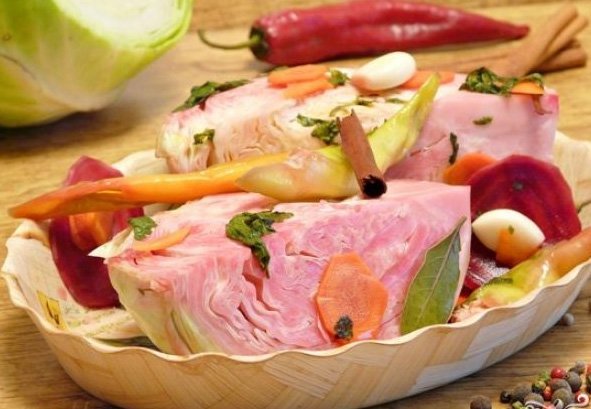
In banks
- Finely chop 3 kg of the main ingredient. Shred 500 g of carrots.
- Mix the vegetables and then place them in jars, layering them with bay leaves, allspice, and spices to taste.
- Prepare the marinade using the following proportions: one and a half liters of purified water, 40 g each of salt and granulated sugar.
- When the crystals have dissolved, pour the liquid over the workpiece so that it completely covers it.
- Keep the jars at room temperature for 2-3 days, then put them in the refrigerator.
-
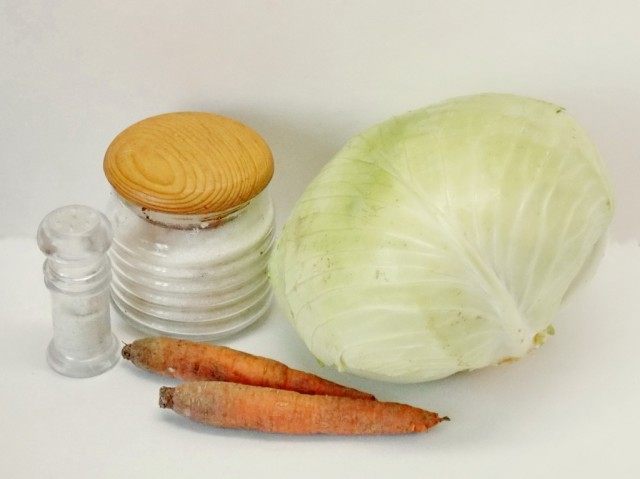
- Prepare the ingredients
-
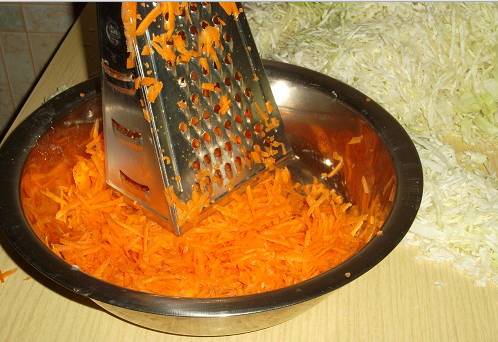
- Shred the cabbage and grate the carrots.
-
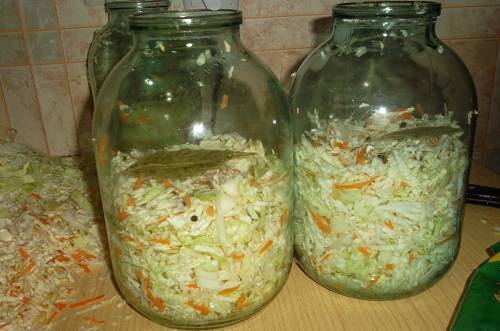
- We pack the products into jars
-
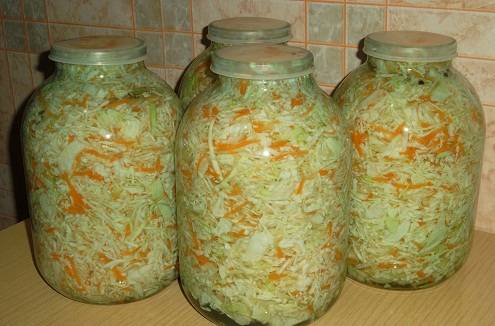
- Fill with brine
-
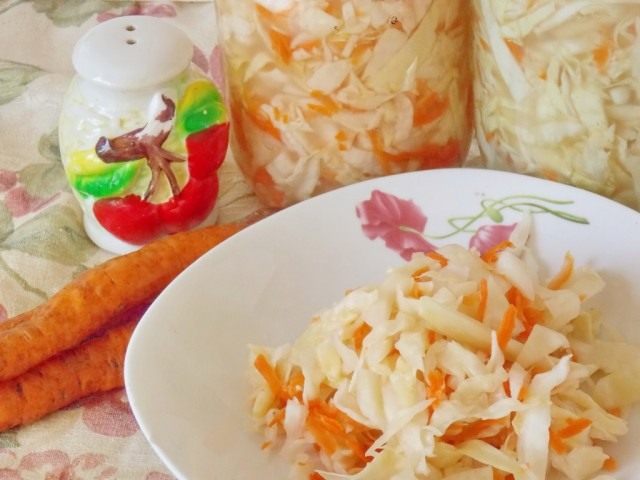
- Ready to eat snack
In Korean
- Coarsely chop a couple of kilograms of white cabbage. Grate 4 carrots using a Korean grater. Squeeze out two cloves of garlic.
- Make a brine: 1 liter of purified water, a glass of granulated sugar, 80 g of salt, a few bay leaves, ½ tsp of ground chili, black pepper, 20 ml of table vinegar.
- While the marinade is still warm, pour it over the thoroughly mixed vegetables.
Quick Korean cabbage will be ready to serve in just a few hours, once it has cooled completely.
In Georgian
- Cut 3 kg of cabbage into wedges. Thinly slice 1.5 kg of beets. Chop two heads of garlic and three chili peppers.
- Prepare the marinade in the following proportions: two liters of purified water, ½ cup of salt.
- Once the crystals have dissolved, set the liquid aside to cool.
- Layer the vegetables, placing the celery between them, and then pour the slightly warm marinade over them.
- Let the snack soak in salt for three days at room temperature.
In Gurian
- Prepare the marinade: 5 liters of purified water, 250 g of granulated sugar, the same amount of salt, bay leaf, allspice, cloves, cumin, parsley.
- Coarsely chop 10 kg of the main ingredient. Thinly slice six chili peppers, six beets, horseradish root, and garlic (150 g each).
- Layer all the ingredients. Pour the cooled brine over them and press them for 3 days, piercing them regularly with a skewer.
Storage terms and conditions
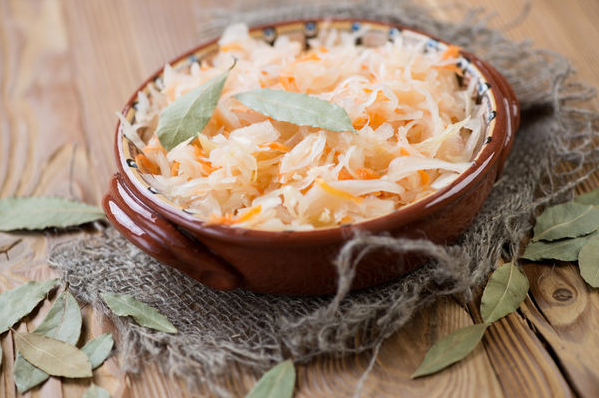
The finished product, sealed for the winter, should be stored only in glass jars. The storage temperature should not fall below -2°C or rise above freezing. The best place to store it is a balcony, loggia, refrigerator, or cellar. Depending on the recipe you use to pickle the cabbage, its shelf life can range from several weeks to a year.
Pickling with brine has many advantages. Salt significantly extends the shelf life and preserves the succulent texture for a long time. Another advantage is that you can add any vegetables or spices to the cabbage, making the recipe your own.