
TOP 14 classic and unusual recipes for making viburnum wine at home
Content
The benefits and potential harm of viburnum wine
These bright red fruits with a unique flavor are prized for their rich nutritional content. Their chemical composition includes many organic acids, vitamins, and micro- and macroelements. Viburnum is recommended for the following ailments:
- cardiovascular system;
- respiratory organs;
- gastrointestinal tract;
- liver;
- female genital organs;
- central nervous system.
The berry also helps fight colds, boosts immunity, relieves headaches, lowers blood pressure, and has antibacterial and anti-inflammatory properties. It helps with oral diseases, dental problems, sore throats, and coughs. It has a laxative effect, normalizes cholesterol levels, and treats diathesis.
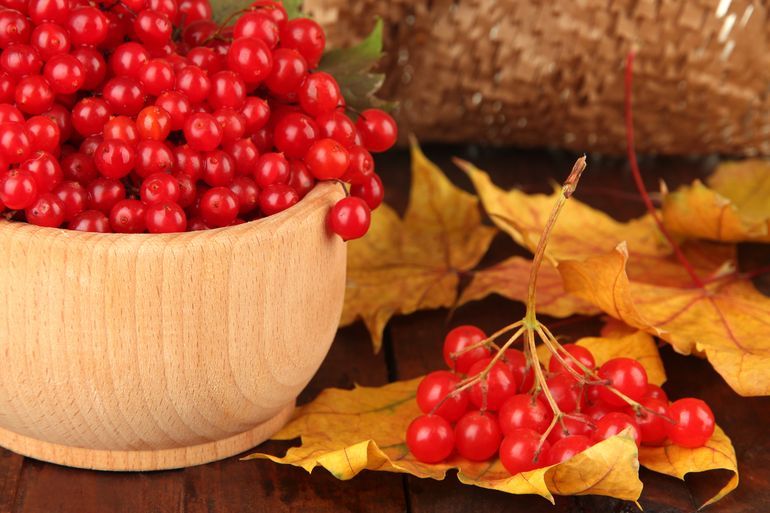
Viburnum wine is beneficial only when consumed in moderation. Failure to adhere to recommended guidelines and dosages can cause significant harm to the body. Pregnant or breastfeeding women, as well as people with the following conditions, should abstain completely from alcohol:
- hypotension;
- gout;
- kidney pathologies;
- allergy;
- increased acidity.
Classic viburnum wine recipe
Making traditional viburnum wine requires just four ingredients: berries, sugar, raisins, and water. The amount of granulated sugar will depend on how sweet you want the wine to be. The process itself consists of several steps, which you'll learn about below.
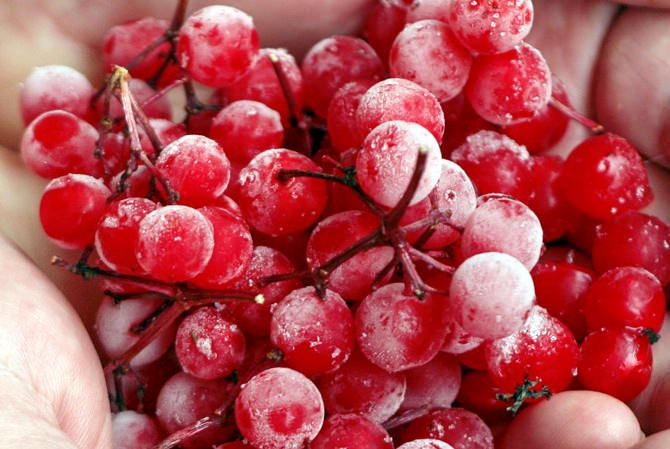
Preparing berries
To prevent the finished drink from acquiring excessive bitterness, it's best to pick the berries before the first frost. Don't worry if the berries aren't ripe yet—you can store them in jars and leave them in the sun to ripen. Frozen viburnum berries are also suitable for making vodka.
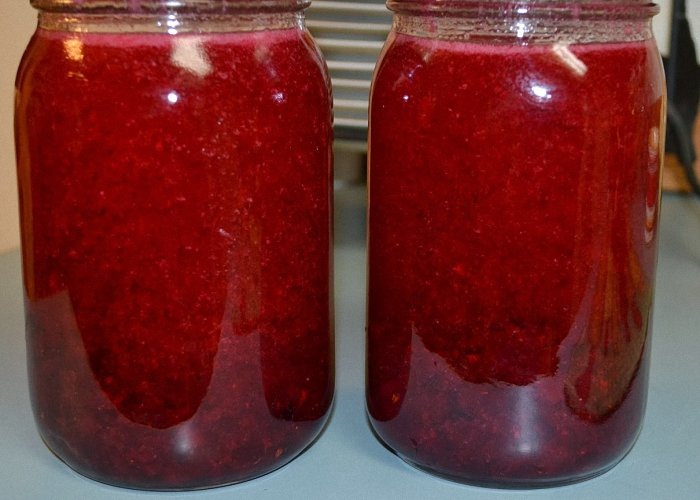
Carefully sort all ingredients, removing any spoiled or crushed berries. Winemakers recommend not washing the viburnum berries but gently wiping them with a paper towel. This will leave the natural yeast, which is essential for fermentation, on the surface. Fill a large jar with whole or pureed viburnum berries, then add the raisins, granulated sugar, and water. Cover the jar with cheesecloth and leave at room temperature for a couple of days.
Fermentation
When foam appears on the surface, you can begin the second stage. Carefully filter the must, then pour it into a clean container. Add a little purified water. Remove half the sugar and add it to the mixture. After three days, add the remaining sugar, then seal the bottle with an airlock. The container with the future wine should be kept at room temperature for about a month, out of direct sunlight.
Packaging
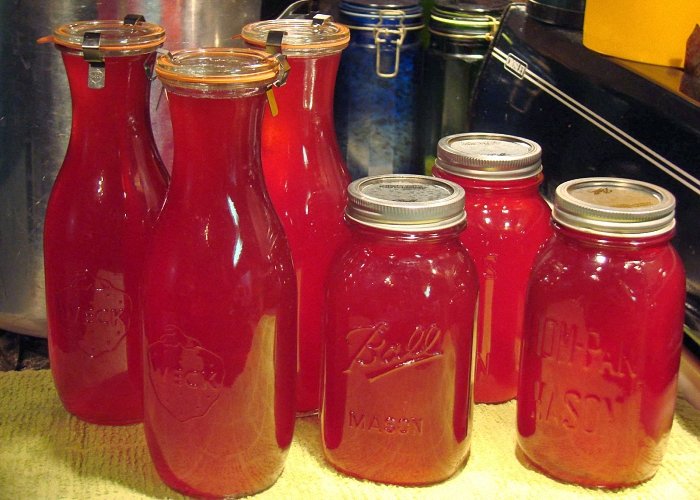
After about 30 days, fermentation should have completely ceased. This will be indicated by the absence of bubbles or a drooping medical glove. When carbon dioxide has ceased to be released, strain off the alcohol and pour it into another decanter. Before bottling, let the wine rest for another month and a half, then bottle it.
Infusion
Once poured into smaller containers, the viburnum wine should be left to mature for several more months. To do this, it is placed in a cellar or basement. During this time, it will completely clear, and the stone will settle to the bottom. Winemakers recommend decanting it again before serving.
-
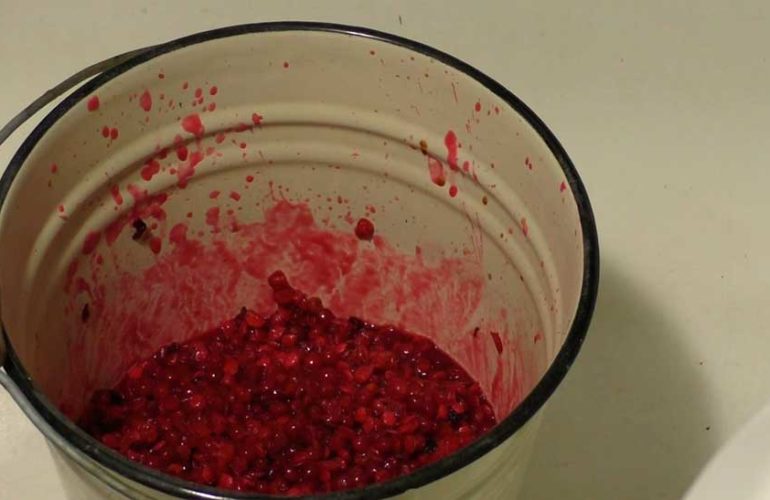
- Grinding berries
-
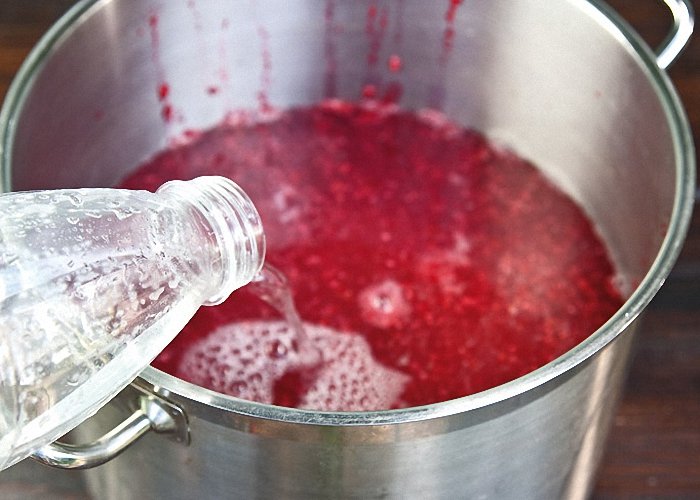
- Adding sugar and water
-
- Fermentation
-
- Packaging and infusion
Video: "A Simple Recipe for Viburnum Wine"
This video describes a simple recipe for making an alcoholic drink.
The best recipes step by step
Every winemaker has their own favorite method for making viburnum wine. We've selected 13 step-by-step recipes that are sure to please your taste buds.
Homemade wine
A fairly simple recipe for homemade alcohol that can be varied with any ingredients:
- Place 5 kg of pureed berries in a deep container. Add 500 g of granulated sugar, a handful of raisins, and 10 liters of purified water.
- Cover with gauze and leave to ferment for 3 days, stirring the mixture regularly.
- After the allotted time, filter the liquid, squeezing out the pulp. Add another 0.5 kg of sugar, stir until completely dissolved, and then place the fermenter under the seal.
- Sweeten again after 3 days. Repeat the procedure after the same amount of time.
- Once fermentation is complete (1.5-2 months), carefully filter the alcohol. If necessary, add more sugar or fortify with alcohol.
- Pour into a clean container and leave to mature for 3-5 months, regularly decanting when sediment forms.
Dry wine
For lovers of dry wines, as well as people watching their weight, this recipe, which contains virtually no sugar, is perfect.
- Combine two kilograms of pureed viburnum with a glass of granulated sugar, a couple of handfuls of raisins, and then pour in three liters of purified water.
- Leave the mixture for 3-4 days, covering the bottle with gauze.
- When foam appears, strain the wort and add another 1 cup of sugar, topping up with 400 ml of water.
- Keep the container sealed for three days, and then sweeten it again.
- After a month, filter the drink using a straw.
Dessert wine
By adding more sugar, you can make a richer alcohol with a brighter aroma.
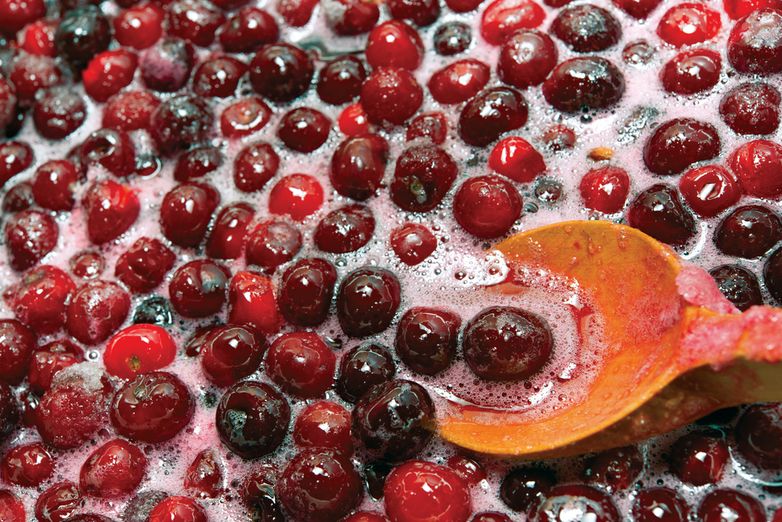
- Cover 2 kg of fruit with ½ cup of granulated sugar. Cover the bottle neck with cheesecloth and let the sweet mixture ferment.
- On the third day, collect the pulp and dilute the strained juice with 750 ml of purified water. Add more sugar at a rate of 100 g per 1 l and place the mixture under the seal.
- Once fermentation is complete, sweeten the drink again using the same proportion.
To ensure the wine remains clear, carefully decant it from the sediment after two weeks.
Tsar's treat
It's no coincidence that this drink was named "Tsar's." Its delicate color and exquisite aroma will please even the most discerning connoisseur.
- Pour boiling water over a kilogram of fruit and let it sit for 20-30 minutes. Rub the softened berries through a sieve.
- Combine the resulting juice with 500 g of pureed raisins. Add sweet syrup (1.2 kg of granulated sugar per liter), then add another 1 liter of water.
- Mash 400 g of ripe bananas. Add 500 ml of water and simmer over medium heat for 30-40 minutes. Let cool slightly, strain out the liquid, and combine with the viburnum mixture.
- After cooling the mixture to 25°C, add 1 teaspoon each of brewer's yeast, pectin enzyme, and citric acid. Cover the bottle with cheesecloth and let it ferment, stirring regularly.
- After 3-4 days, pour the strained liquid into a clean container and place it under a seal for a month.
- Once fermentation is complete, rack the wine from the sediment. Let it mature for 8-10 months, then bottle after decanting.
Rose wine
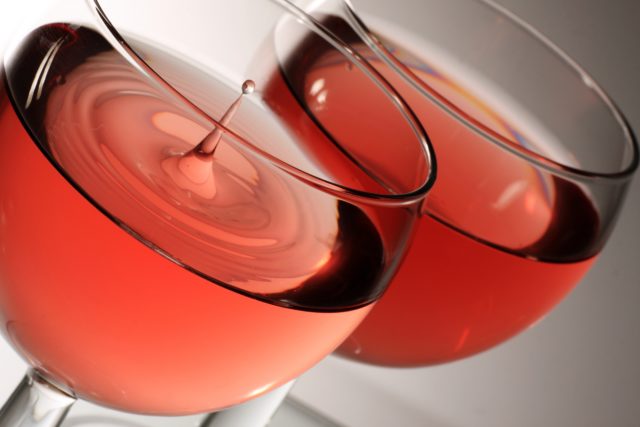
Another version of a soft pink aromatic alcohol with similar ingredients.
- Puree two kilograms of berries. Add 500 g of raisins and pour in 2 liters of purified water.
- Prepare the syrup (1.7 kg of granulated sugar per two liters). While still boiling, pour it into the viburnum mixture.
- Boil a kilogram of ripe bananas. Squeeze out the liquid and combine it with the main mixture.
- When the wort has cooled, add 2 teaspoons each of wine yeast and pectin, as well as 1 teaspoon of citric acid. Cover the container with cheesecloth and let it ferment.
- After 3-4 days, collect the pulp, strain it, and then place it under the seal.
- After fermentation is complete, leave the wine for 6-8 months without draining it from the sediment.
- After the required time, decant the drink.
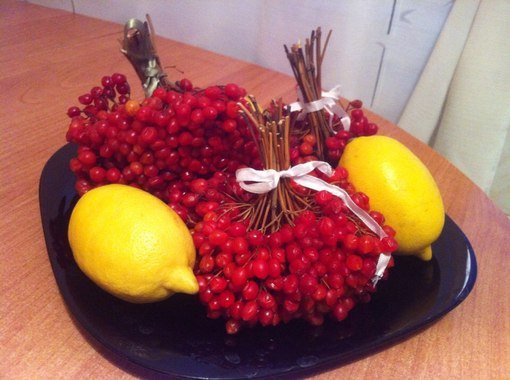
With lemon
The drink with the addition of citrus turns out to be very viscous and strong, similar to liqueur.
- Puree 350 g of fruit.
- Pour 500 ml of vodka or purified alcohol over the mixture.
- After 7 days, strain the pulp from the mixture by passing it through folded cheesecloth.
- Add lemon juice mixed with ½ cup of sugar syrup.
- Let it sit for a couple of weeks, and then filter the finished alcohol again.
With sea buckthorn
Orange vitamin berries will add their own touch to the viburnum drink, making the taste more refined.
- Pour 3 kg of viburnum and a kilogram of sea buckthorn into a deep container.
- Pour in 2 liters of vodka or purified alcohol.
- After 14 days, strain the berries. Let the resulting juice steep further, and sprinkle the alcohol-infused berries with two cups of granulated sugar.
- After 2 weeks, combine the resulting syrup with the main preparation, mixing well.
With honey
The drink made with this recipe is fortified, with a spicy, sweet flavor.
- Prepare 2.5 liters of dry viburnum wine in advance. It's best to use one that's been aged for at least a year.
- Warm 300 ml of liquid honey, pour it into the alcohol. Mix well and let sit for 24 hours.
- After 24 hours, add one and a half glasses of cognac.
With red rowan
Wine with added rowan berries is twice as healthy as regular viburnum wine.
- Puree 5 kg of berries. Drain the juice, and pour 4 liters of purified water over the pulp.
- Add ½ cup of raisins. Cover with cheesecloth and leave for 3-4 days.
- After the required time, filter the mixture. Add three kilograms of granulated sugar to the wort, then place it under the airlock.
- When fermentation is complete, decant the wine.
With chokeberry
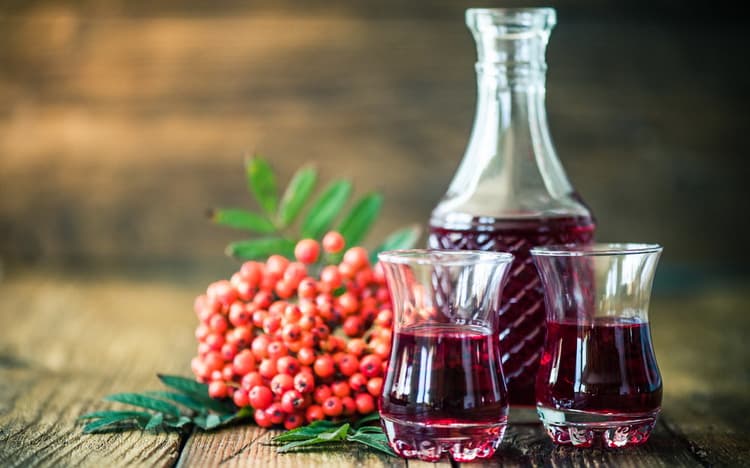
Chokeberry is just as beneficial as its red cousin. It also imparts a beautiful ruby hue to the drink.
- Puree 500 g of viburnum and rowan berries.
- Add half a liter of vodka or purified alcohol. Let the mixture steep for 24 hours.
- After filtering the liquid, add lemon juice (from ½ a citrus fruit), and then pour in a packet of vanillin.
- Leave the wine to mature for a month and a half.
With yeast
Wine yeast imparts a piquant bitterness to viburnum alcohol. This recipe can be used to make semi-sweet or sweet wine:
- Pour boiling water over 900 g of pureed fruit. After 20-30 minutes, squeeze out the juice.
- Blend 400g of raisins. Add them to the viburnum mixture and pour in another liter of boiling water.
- Make a syrup using 900 g of granulated sugar per 500 ml of liquid. While it's still hot, combine it with the wort.
- Boil 400 g of chopped ripe bananas. Strain, and add the resulting juice to the mixture.
- Cool the mixture to 20°C, then add 1 teaspoon each of wine yeast and citric acid. Stir and leave to ferment for three days, stirring regularly.
- Filter the wort, diluted with purified water, and place it under the lock.
- When fermentation is complete, rack the wine off the sediment.
From viburnum cake
If you use pulp when making alcohol, the drink will be more concentrated.
- Grind two kilograms of fruit with ½ cup of granulated sugar. Let the sweet mixture sit for 4 days.
- When the juice appears, separate the pulp. Dilute the liquid with 750 ml of water and add 100 g of sugar. Place the mixture under the seal.
- While the wort is fermenting, sweeten the wort twice more in the same proportions.
Viburnum liqueur
The ladies' drink is distinguished by its beautiful color, rich aroma, thickness and special sweetness.
- Pour boiling water over 2 kg of viburnum berries. Let them sit for half an hour, then transfer them to a bottle.
- Add 500 g of granulated sugar. Mix well and leave the mixture for 3-4 days under a tight lid.
- Next, pour in a liter of vodka or purified alcohol.
- Make a sweet syrup using one kilogram of sugar per two cups of water. Combine it with the main ingredients.
- After a month, strain the finished drink and bottle it.
How to store the drink
Bottled wine can be stored for several years under the right conditions. To preserve its beneficial properties, it's best to pour it into small bottles and store them horizontally. Storage temperatures should be no higher than 3-5°C. A refrigerator, basement, or cellar are ideal for storing viburnum-based spirits.
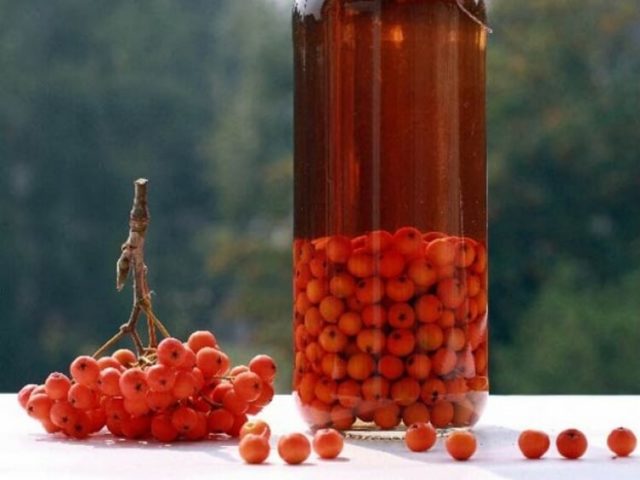
Homemade viburnum drink surpasses store-bought not only in its rich flavor. Homemade viburnum contains many more nutrients and is less harmful to the body when consumed in moderation.