
Homemade Viburnum Tincture: 15 Best Step-by-Step Recipes with Photos
Content
- 1 The beneficial properties of viburnum tincture
- 2 Contraindications and harm of viburnum
- 3 Selecting and preparing berries
- 4 Video: "Classic Viburnum Tincture with Vodka"
- 5 Popular recipes for viburnum tincture
- 5.1 Classic recipe with vodka
- 5.2 On alcohol
- 5.3 On moonshine
- 5.4 With honey
- 5.5 With honey and mint
- 5.6 With honey and thyme
- 5.7 With linden flowers
- 5.8 With pine nuts
- 5.9 With apple juice and cinnamon
- 5.10 With sea buckthorn and hot spices
- 5.11 With quince
- 5.12 With lemon
- 5.13 With raspberries
- 5.14 From viburnum juice
- 5.15 From viburnum bark
- 6 Rules for storing kalinovka
The beneficial properties of viburnum tincture
These bright red, small fruits were highly prized for their properties by ancient healers. The berries contain many beneficial components:
- vitamins A, C, E, P;
- macro-, microelements (Mn, Mg, P, I, K, Ca, Zn, V);
- valerianic and isovaleric acid;
- viburnin;
- coumarin;
- carotene;
- tannin;
- pectin;
- invert sugar;
- glucose;
- fructose;
- saponins;
- tannins;
- resins.
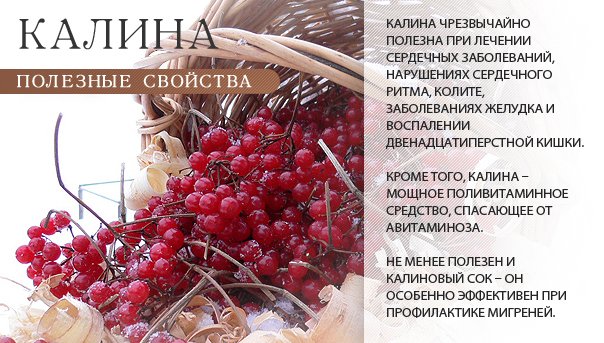
Thanks to the alcohol used in viburnum tincture, all these substances are distributed throughout the body faster than when consuming fresh berries. Thus, it is recommended to drink 30-40 drops of the drink twice a day before meals for the treatment and prevention of the following ailments:
- gastritis;
- ulcer;
- diabetes;
- swelling;
- high blood pressure;
- atherosclerosis;
- various inflammations of internal organs;
- skin diseases;
- bronchitis;
- asthma;
- neuroses;
- insomnia;
- decreased body tone;
- colds.
Viburnum tincture strengthens weakened immunity, increases resistance to infections, and stabilizes the functioning of internal organs. It contains antioxidants that help quickly remove toxins from the body. Regular consumption of the drink restores the acid-base balance, normalizes metabolism, improves cardiovascular function, and helps combat stress. Kalinovka also has antispasmodic and analgesic properties. It is recommended as an antipyretic, to thin mucus, and to relieve various inflammatory conditions.
Contraindications and harm of viburnum
Despite the beneficial effects of the drink on the body, people with the following problems should avoid drinking it:
- hypotension;
- thrombosis, thrombophlebitis;
- increased blood clotting;
- chronic kidney disease;
- exacerbation of liver diseases;
- gout.
Pregnant women should also avoid using viburnum. Women who are breastfeeding and children under 3 years of age should consult a doctor before using it.
Selecting and preparing berries
A delicious liqueur can only be made from high-quality ingredients. Viburnum berries should be ripe, bright red, and juicy. Berries for stumbleweed should be unblemished, uniform in color, and free of signs of disease or pest damage. Before preparation, they should be thoroughly washed, sorted, and then dried. If the berries are not sweet enough, you can use sugar. However, it's best to substitute it with flower honey.
Any alcohol will do (spirit, vodka, rum, or cognac). The only requirement is that it must be purified and of high quality. If the recipe calls for additional ingredients, it's best to avoid using frozen berries or fruits. A good Kalinovka will only come out fresh.
Video: "Classic Viburnum Tincture with Vodka"
This video provides a step-by-step master class on how to prepare the drink.
Popular recipes for viburnum tincture
Making a stumbleweed at home is very simple; you just need to choose a recipe that you like.
Classic recipe with vodka
- Sort out 500 g of viburnum, leaving only suitable fruits.
- After pouring them into a container, fill them with vodka to the level of two fingers.
- Keep the preparation for 24 hours under an airtight lid.
- After 24 hours, add the remaining half liter of alcohol and leave for a month at room temperature, stirring the contents every week.
- Strain the tincture, sweeten to taste with sugar or honey, and then bottle.
-
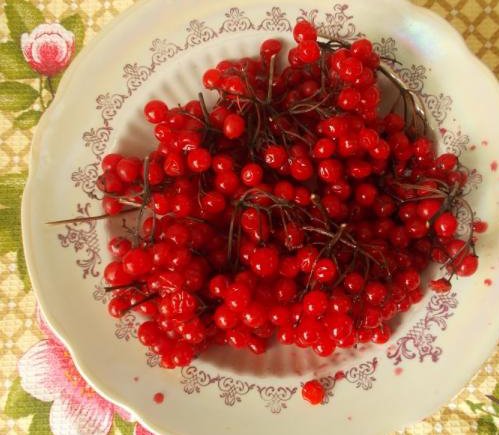
- Preparing ingredients
-
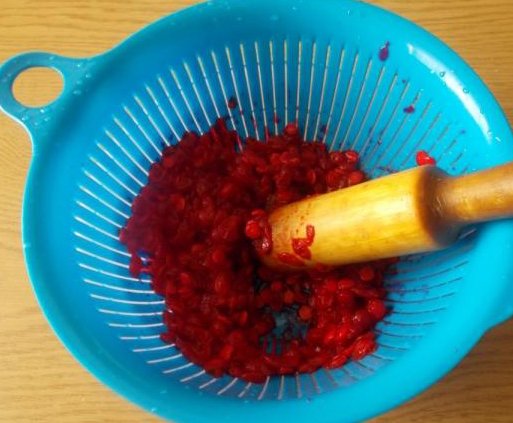
- Grinding berries
-
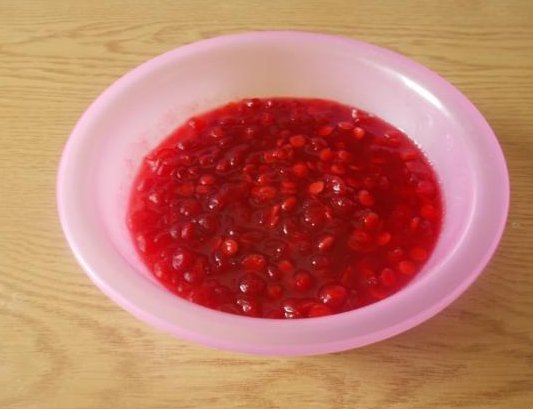
- Adding vodka
-
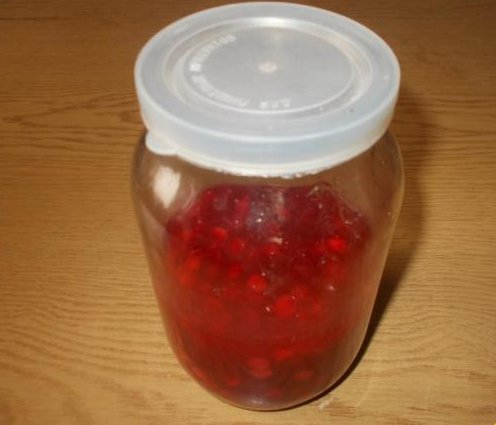
- The infusion process
-
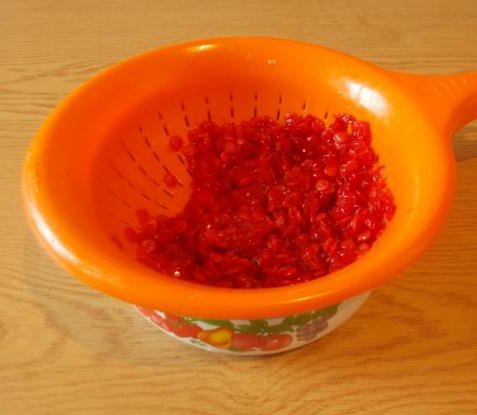
- Straining the infused drink
-
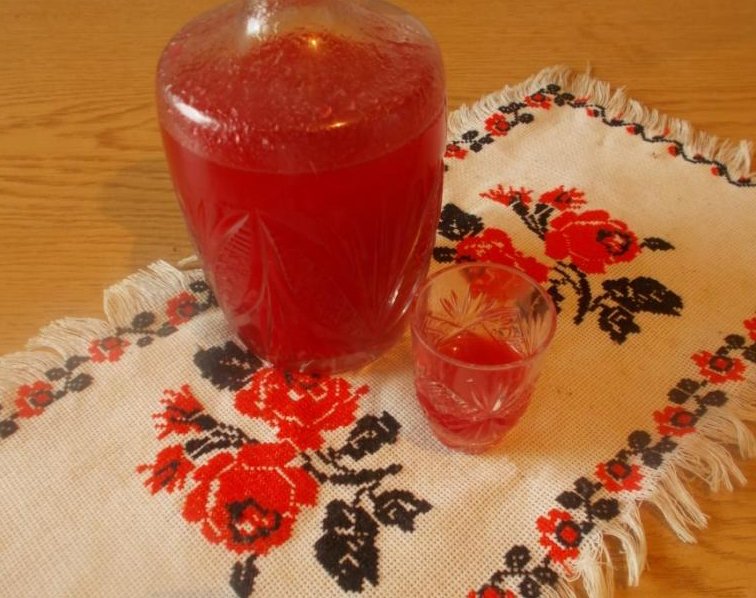
- Ready-to-eat viburnum
On alcohol
- Pour a glass of peeled berries into a deep container.
- Pour in equal amounts of alcohol and filtered water (0.5 l each).
- Close the lid tightly and let the mixture sit for 30 days.
- After some time, strain the drink through cheesecloth.
On moonshine
- Add ½ cup of sugar to 250 g of viburnum so that it releases juice.
- Transfer to a bottle and pour in 0.5 liters of purified moonshine.
- Close the container tightly with a lid and leave for 2-3 weeks.
- Filter and then let stand for a couple more days.
With honey
- Pour half a kilogram of sorted fruit into a jar.
- Add a glass of liquid honey.
- Pour in a liter of vodka or cognac.
- Stir the contents until the honey is completely dissolved.
- Close the bottle tightly and then leave the mixture to infuse for 1.5 months at room temperature.
- Strain the finished drink through cheesecloth.
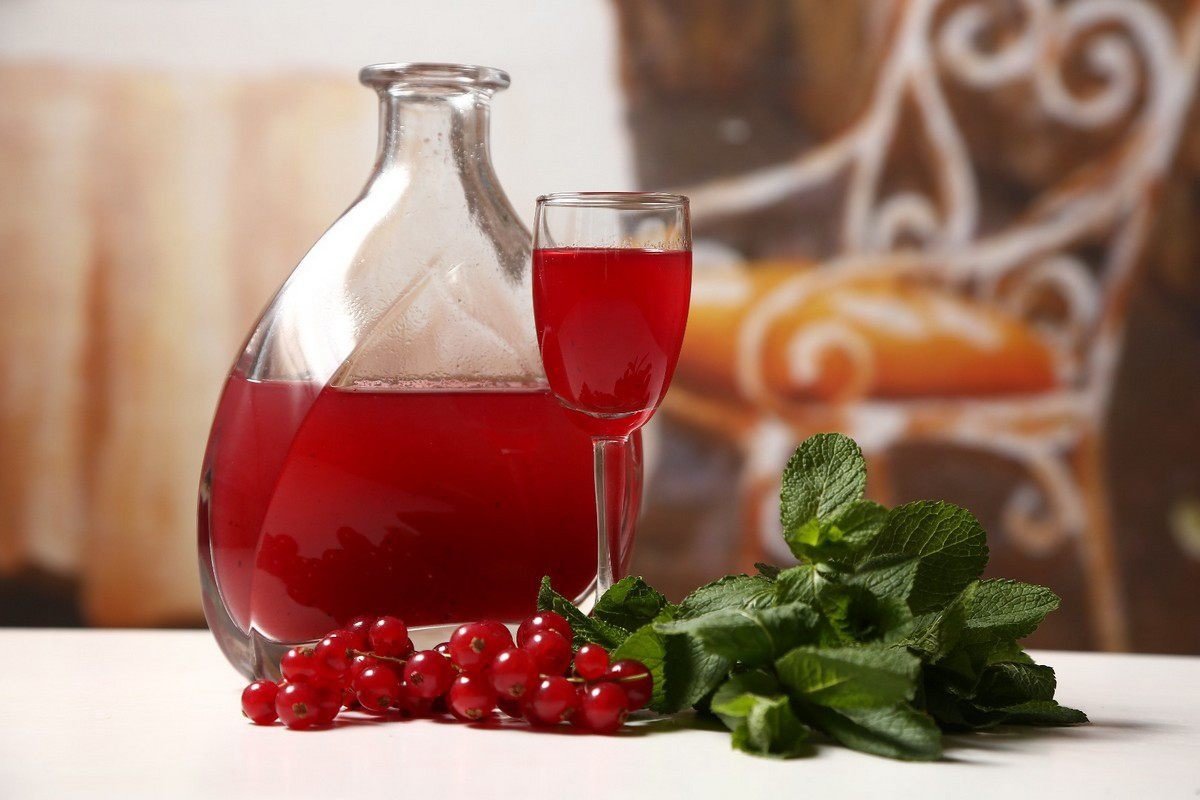
With honey and mint
- Pour 200 g of peppermint into two liters of purified water and leave for 6 weeks.
- Mash 2.5 kg of berries thoroughly to release juice.
- Dilute the mint infusion with water (1:1) and pour it over the viburnum.
- Infuse for 20-21 days, then strain through cheesecloth.
- Add another one and a half liters of water to the remaining pulp, and add 2 liters of liquid honey to the filtered liquid.
- After half a month, connect both pieces.
- After a couple of days, strain again, and then let it sit for another 3 months.
With honey and thyme
- Mash 2 cups of ripe berries until juice appears.
- Add 100 g of chopped dry thyme.
- Pour in 0.5 liters of alcohol and let it sit for 3 weeks.
- After the required time, filter the mixture.
- Dilute the same amount of liquid honey in a liter of purified water.
- Combine the syrup with the tincture and then leave for 60 days.
- After 2 months, drain the drink through cheesecloth.
With linden flowers
- Wash the linden flowers thoroughly, crush them lightly, and then pour a glass of water over them.
- After a month, filter the resulting infusion.
- Add half a kilogram of crushed viburnum to 1 kg of granulated sugar.
- Fill the preparation with linden tincture.
- Infuse the stumbleweed for 45 days, then filter well.
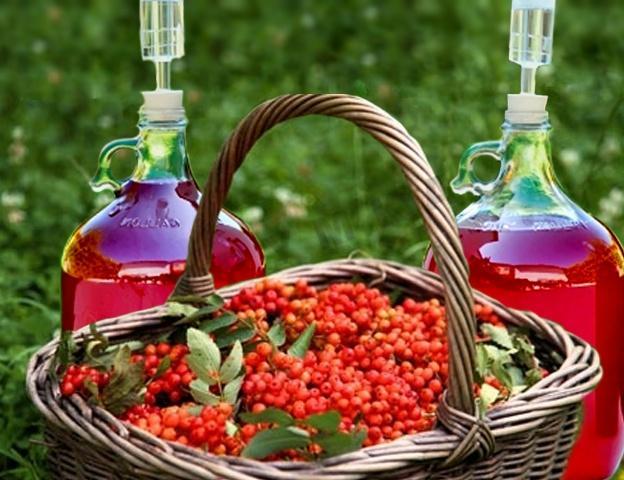
With pine nuts
- Combine 1 kg of fruit with 50 pine nut kernels.
- Pour in a liter of alcohol.
- Add a couple of grams of anise seeds.
- Shake and leave under a tight lid for 21 days, stirring daily.
- After 3 weeks, filter the tincture.
- After preparing the sweet syrup (125 ml water/60 g granulated sugar), pour it into the finished drink and then bottle it.
With apple juice and cinnamon
- Combine 3 liters of apple juice with 2.5 cups of granulated sugar, adding 150 g of raisins.
- Place the bottle under a water seal so that the liquid begins to ferment.
- Put half a kilogram of berries through a meat grinder, place in a deep container, throw in a cinnamon stick, and then pour in 500 ml of vodka.
- Let the mixture steep while the wine is being prepared.
- When the apple drink is completely ready, pour out some of it and dilute a kilogram of sugar with it.
- Combine again with wine and leave for 24 hours at room temperature.
- After 24 hours, pour the strained viburnum infusion into the apple mixture.
With sea buckthorn and hot spices
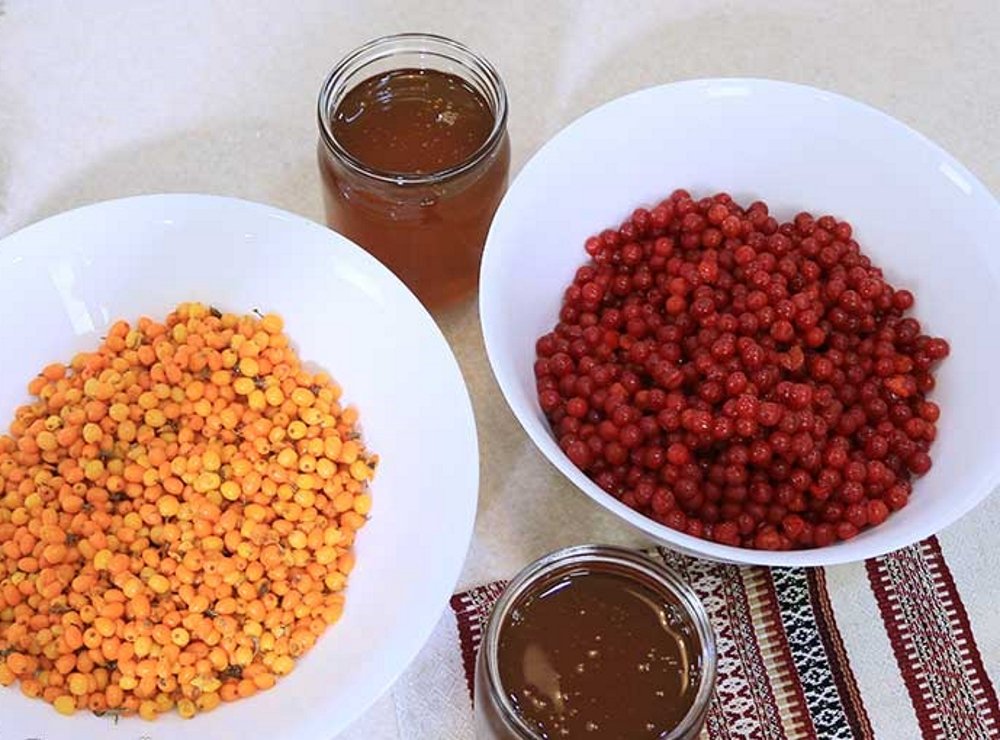
- Pour 0.5 l of vodka over 70 g of viburnum berries.
- After 24 hours, add black peppercorns (1 packet).
- Leave for a day, and then add 70 g of sea buckthorn.
- Let the stumbleweed steep for 30 days, then filter.
With quince
- Pass 500 g of quince through a meat grinder.
- Mash the viburnum to release its juice.
- After combining the ingredients, pour a liter of vodka over them.
- Infuse for 2 weeks under an airtight lid.
- After 14 days, add 200 ml of liquid honey and leave for another week, stirring daily.
- Pour lemon juice from one citrus fruit into the prepared tincture, and then filter the drink.
With lemon
- Pass 300 g of berries through a meat grinder.
- Pour 200 ml of water over ½ cup of granulated sugar and cook to make a sweet syrup.
- After cooling the liquid to room temperature, pour it over the viburnum preparation.
- Add the grated zest of 1 lemon and then store the jar under a tightly closed lid.
When separating the zest, be careful not to let the white part of the lemon covering the pulp get into the infusion – it can spoil the taste of the finished drink.
With raspberries
- Mash half a kilogram of viburnum with the same amount of raspberries until the juice is released.
- Pour a liter of alcohol over the pulp.
- Close with an airtight lid and leave for 14 days at room temperature.
From viburnum juice
- Prepare sweet syrup (0.4 l water/300 g sugar).
- After cooling the liquid, combine it with 400 ml of viburnum juice and a liter of alcohol.
- Let it brew under a tight lid for 3-4 weeks.
- After some time, filter the finished drink.
From viburnum bark
A non-alcoholic but beneficial tincture of viburnum bark is used for colds, Staphylococcus aureus, and to stop internal bleeding.
- Remove fresh bark from the tree.
- Pour a glass of boiling water over a tablespoon of the crushed ingredient.
- Let it brew for 10-15 minutes.
Drink the healing drink 2 tablespoons three times a day after each meal.
Rules for storing kalinovka
Viburnum tincture can be stored for six months to three years if you follow a few simple rules:
- Before pouring the StumbleUpon into bottles, the container must be thoroughly washed with soda;
- the caps on the containers must not allow air to pass through;
- To prevent the alcohol, and along with it the alcohol content, from evaporating, the drink should be stored in half-liter bottles;
- When storing viburnum, avoid exposing it to sunlight and overheating.
Despite its many beneficial properties, viburnum tincture is still an alcoholic beverage. To avoid harm, it should be consumed in moderation and avoid overdosing.