
9 ways to store apples at home for the winter
Content
What you need to consider to preserve your harvest
To keep fruit fresh until spring, simply stacking it in boxes and dropping it into the cellar isn't enough. Good shelf life depends on a few rules.
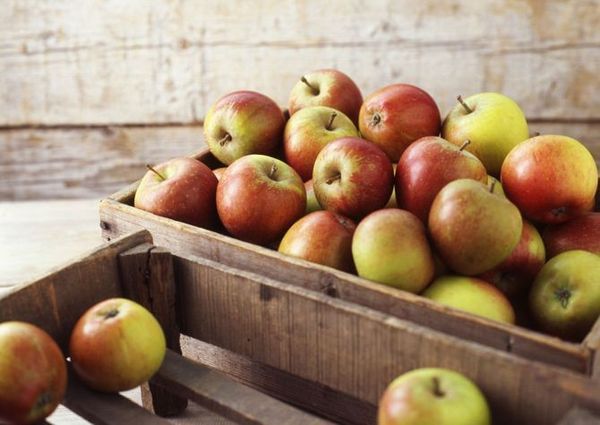
Video: "An Easy Way to Preserve Apples and Pears Until Spring"
This video will show you how to preserve apples and pears until spring.
Apple varieties for long-term storage
Not all fruits have the same shelf life. For example, summer varieties are not suitable for long-term storage because they spoil quickly. Autumn varieties only last a couple of months. Mackintosh, Spartak, and Welsey are particularly good. However, winter apples have the best shelf life: Simirenko, Antonovka, Idared, Dzhanatan, and Golden.
Shelf life
The shelf life of the harvest directly depends on the chosen variety:
- Summer fruits retain their marketable appearance for no more than a month;
- the shelf life of autumn varieties is 30–60 days;
- Winter ones are stored from 4 to 7 months.
Rejection of low-quality fruits
Once the harvest is complete, it needs to be sorted. Apples suitable for winter storage should be whole, without any obvious damage or dark spots. A waxy coating on the skin is normal. This film protects the fruit from infection and parasites.. However, if holes are visible on the surface, a worm is likely inside. Such specimens should also be set aside.
Before finally storing the fruits, do the following:
- They inspect the harvested crop, rejecting unsuitable specimens.
- Place the fruits in a cool place for 14–21 days.
- After 2–3 weeks, the sorting is repeated, identifying any damage that has appeared.
Once these three stages are completed, you can proceed to the next preparation processes. To prolong shelf life, gardeners recommend not removing the stems from the fruit.
Sorting by grades and sizes
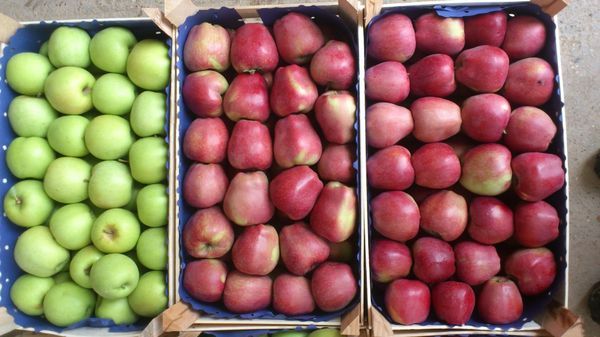
After a short "quarantine" period, the whole apples need to be sorted. The procedure is as follows:
- different varieties are distributed into separate boxes;
- select fruits of the same size and place them in appropriate containers;
- leave the stalk and wax coating on the fruit.
Optimal storage conditions
By creating all the necessary conditions, the harvest's shelf life can be extended until late spring. We'll discuss the factors that influence shelf life below.
Place
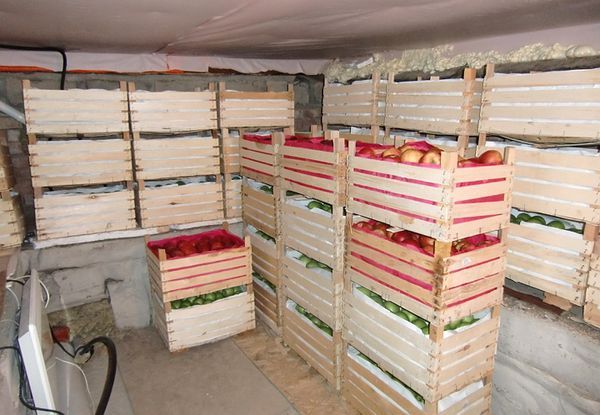
In an apartment, a balcony or pantry is suitable for winter storage. If you live in a private house, you can use a cellar. The main thing is to prevent the fruit from freezing or becoming rotten. If the harvest is particularly large, it's better to consider a separate room. It should be well insulated, and the floor should be lined with pallets for the fruit boxes.
Tara
Metal containers should never be used for winter storage. Fruit will quickly rot, losing its marketable appearance and nutritional value. Wooden crates, regular wicker baskets, or cardboard boxes are best. The key is to ensure the container has sufficient openings to allow air to circulate freely.
Temperature
To keep apples fresh longer, strictly adhere to the correct temperature. The ideal temperature is 0°C, but fluctuations from -1°C to +4°C are acceptable. At higher temperatures, the fruit begins to actively release ethylene gas, which triggers the rotting process.
Humidity
The shelf life of the harvest is directly affected by the humidity level maintained in the storage area. It should be at least 90–95%. If the humidity is too dry, the fruit will wilt, while excess moisture will lead to rapid spoilage.
Popular ways to store fresh apples for the winter
Home storage methods vary. We'll cover the most common ones in more detail.
-
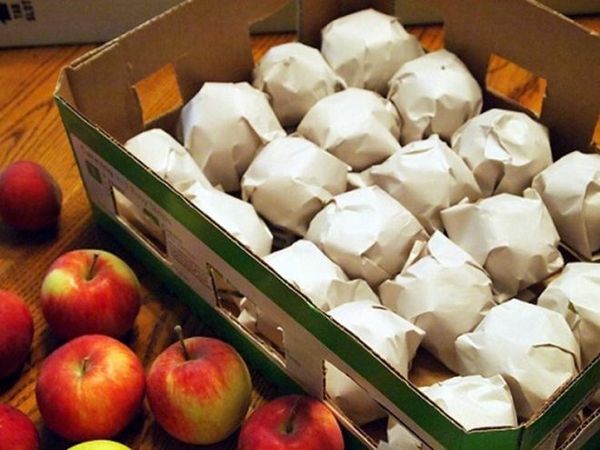
- Storing apples in paper
-
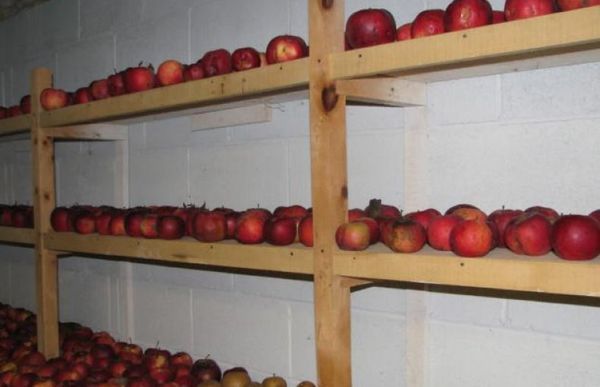
- Storing apples on shelves
-
- Storing apples in boxes
Easy stacking in boxes
The simplest, but not very effective, method involves simply placing the fruit in boxes lined with newspapers, with the stems facing up. If necessary, the stems can be trimmed slightly to prevent them from scratching the surrounding fruit. Apples stored this way should be regularly inspected and any spoiled ones removed.
On the shelves
This method is suitable if the harvest is small. The shelves should be easily accessible and pull out. The fruit is arranged on the shelves in a single layer, not too close together, so that air flows through them from all sides. Gardeners say this method is the most effective.
Wrapping in paper
For wrapping, it's best to use old newspaper, regular napkins, or paper towels. Glossy paper isn't suitable for this method. Wrap each flower individually, leaving the stem exposed, and place them in several rows in boxes.
Pouring and layering
Instead of paper, you can use loose materials. The harvest is placed in individual boxes, sprinkling each layer with fine wood shavings. Alternatively, you can also use:
- onion peel;
- dry birch leaves;
- sawdust;
- moss.
Plastic bags
Properly packaged fruit in plastic will preserve its appearance and nutritional value for a long time. This is due to the low rate of gas exchange. Typically, no more than 4 kg of fruit is packed into bags, with small holes made to prevent the apples from suffocating. They can be stored on shelves or in crates.
Cling film
The harvest can also be stored under plastic wrap. To do this, line the bottom of the box or crate so that the edges of the plastic wrap hang over all sides. After laying the fruit, cover it with the free part and store it for further use. For comfortable overwintering, there should be no more than three layers.
In the ground
If you don't have a cellar or basement, you can store the harvest this way. The fruit is placed in 4-6 kg plastic bags. Holes up to half a meter deep are dug, and then the harvest is placed in them, sprinkled with pine needles.
To avoid losing the location where the apples are stored, a “beacon” is installed.
In the refrigerator
Refrigerating fruit immediately after picking or purchasing can extend its shelf life by up to two months. Experienced gardeners don't recommend washing apples beforehand. They recommend wrapping several apples in plastic wrap, leaving an air vent, and placing them in vegetable trays.
In the freezer
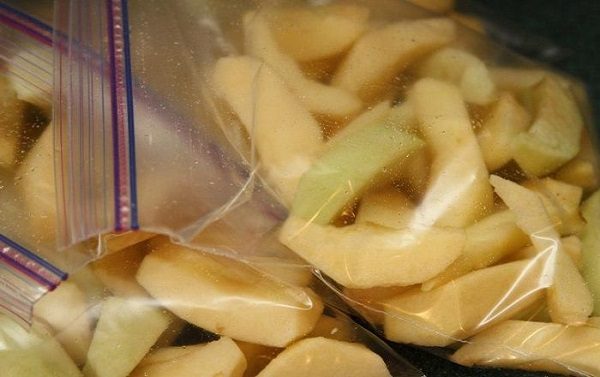
Freezing significantly increases shelf life, but it doesn't allow for storing whole apples. Washed, dried apples are sliced or grated, then placed in the freezer, spread out in a single layer on a board. Once the fruit is slightly frozen, they are packaged in bags for long-term storage.
Pre-treatment of apples before storage
Additional processing can help extend the shelf life. Gardeners offer several options:
- Carbon dioxide. A siphon is used to inject carbon dioxide into the plastic bags used to store fruit, after which they are hermetically sealed.
- Ultraviolet. The fruit is laid out in a single layer, then exposed to a UV lamp for half an hour. For uniformity, the apples are turned over after 15 minutes.
- Propolis. The harvest is treated with an alcohol solution of propolis, prepared in a 1:5 ratio.
- Calcium chloride. The fruits are soaked in a 2% solution for 3-5 seconds, then rubbed with glycerin and stored.
Helpful tips
A few little tricks will help you keep your harvest looking good for as long as possible:
- do not store apples together with potatoes;
- Place different varieties in separate boxes;
- Inspect regularly and remove damaged specimens promptly;
- arrange the fruits in neat layers;
- If you use sand for pouring, it should not be too wet, otherwise the rotting process will start;
- It is better not to put hay around fruits, as dry grass will give them an unpleasant smell and taste;
- Cardboard or paper partitions between the apples will help to avoid contact with each other;
- When storing in the ground, ropes can be tied to the bags for easy removal, which can then be secured to a “beacon”;
- To avoid tearing off the stalk when harvesting, the fruit should be slightly twisted;
- do not water during the fruiting period;
- Fruits collected from a tree that has been overfed with organic or mineral fertilizers do not store well.
Once you've learned all the secrets of storing apples, you can confidently stock up on a healthy and flavorful harvest for the winter. If you follow all the rules, the fruit will last until summer without losing its flavor.