
Basic methods and timing for planting daikon radish
Content
Growing seedlings
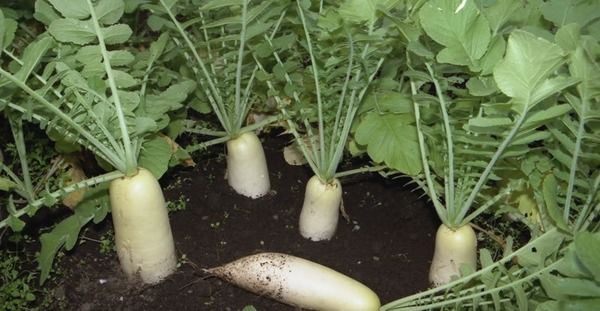
How and when to plant radishes? This plant's roots come in oval and round shapes. Keep in mind that long rhizomes don't tolerate picking or transplanting well. For the latter, only planting in open ground is suitable. Planting timing is determined by many factors, including the daikon variety and the growing region.
When to plant
Experts recommend sowing the seeds a month before planting them in the garden. When should you plant daikon outdoors in the Moscow region in 2025? The best time to plant daikon is August. If you miss the opportunity, try to plant it at a temperature of 18–20°C. This is the answer to the question of when to sow daikon.
Sowing seeds
There is no need to worry about the seeds freezing if you plant them too late. It is recommended to give preference to the Elephant Tusk variety. Even at temperatures as low as 3°C, seeds can be sown. Gardeners who plant daikon radish under these conditions report that the plants grow well. They will have plenty of time to ripen before the summer heat sets in. The roots can be preserved without any complicated care. It's best to sow and grow daikon radish seeds in late May. This is a good idea, as the planting material can be harvested as early as August. However, everything depends on choosing the right daikon variety.
Caring for seedlings
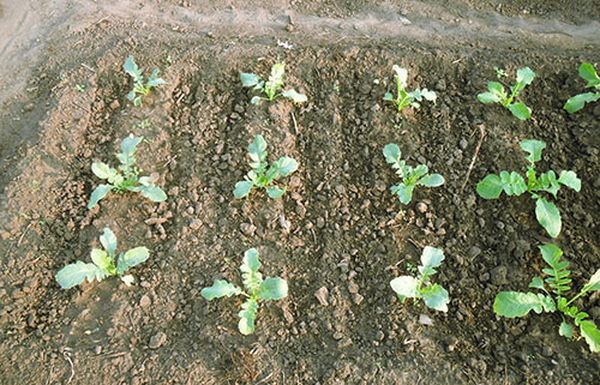
Experts recommend covering the bed with plastic film. When warm weather arrives, you can remove it during the day. As soon as 2-3 true leaves appear, remove the weak ones and leave the strong ones. Then, loosen the space between the rows and hill up (as with other root crops).
Planting in open ground
How and when to plant daikon? If you don't plant it at the right time, bolting will occur. Therefore, it's crucial to time the daikon planting correctly.
When to plant
When should daikon be planted outdoors? It's best to do so in a climate with temperatures between 18 and 20°C. It grows best in this climate. Excessive daytime sunlight and high temperatures, like in July, will slow growth. The lunar calendar confirms this. Planting daikon outdoors also requires following proper site and soil selection.
Selecting soil and preparing the site
This root vegetable doesn't require a particularly complex or rich soil composition. It's not picky. Loose sandy loam or loamy soil is an excellent choice. Just be sure to avoid planting and caring for it outdoors if the soil is acidic. Otherwise, there's a risk of disease.
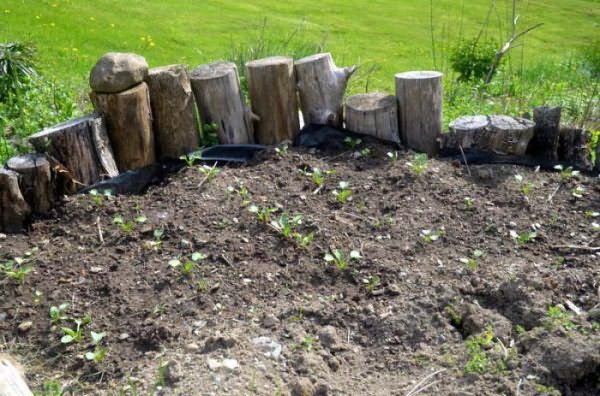
Planting, care, and timing of daikon vary. For spring planting, it's best to prepare the soil in the fall. If you plan to plant in the summer, prepare the soil well in the spring. Select a site and till it beforehand. The optimal depth is 25 cm. If the soil isn't fertile enough, apply mineral fertilizers. Superphosphate and potassium sulfate are suitable.
Landing features
It's important to use a 30 x 60 pattern. This means leaving 60 cm between rows and 30 cm between plants. If the root crops are round, this pattern is ideal. For growing small root crops, use a similar pattern—20 x 40 cm.
The soil should be moistened beforehand. Plants should be periodically fertilized.
Further care
How to store and care for daikon are the main questions you need to know the answers to. These are the basics of growing and harvesting a good crop. Watering and cultivating the soil between rows are essential, regardless of how you grow these root vegetables. Periodic hilling is necessary, as most varieties of this radish protrude above the soil surface.
Planting before winter
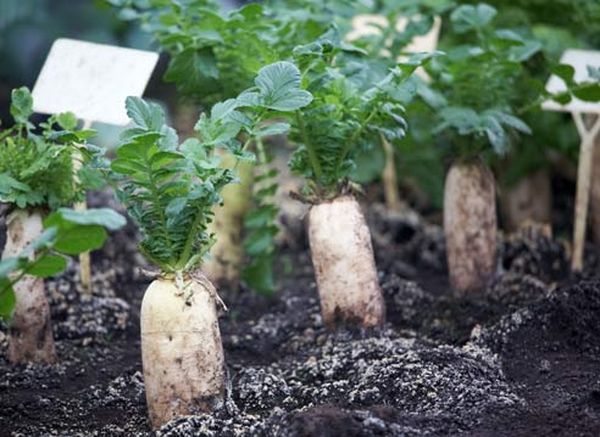
To preserve daikon over the winter, it needs to be fertilized. Sowing it in the fall allows for a high-quality and abundant harvest. The largest and healthiest roots will survive severe frosts. But don't forget to feed the plant on time.
The technique for winter sowing is similar to that for summer or spring planting. It's best to prepare the holes for winter storage in advance. It's recommended to plant this plant in the cold season after the first frost.
Gardener's tips
Experienced gardeners know that harvesting should only be done in dry weather. Daikon ripens 1.5 to 2 months after planting. The root should be pulled out by the tops. First, set the root aside for a while, along with any soil that adheres to it. Once it dries, the soil will be easier to remove. Whole daikon should be kept for later use, while blemished daikon can be used immediately for salads and other dishes.
Remember that regardless of planting time, even with proper plant care, people over 50 years of age should consult a doctor before consuming daikon.
Video "Daikon - Planting and Care"
This video will show you how to plant and care for daikon.