
Description and cultivation features of Japanese daikon Minowashi
Content
Description of the variety
Daikon is a variety of radish traditionally grown in Japan. Today, the name Minowashi covers a range of mid-season varieties distinguished by the following characteristics:
- there is no reaction to high temperatures, but the plant does not tolerate low temperatures well;
- good immunity, which allows daikon to effectively resist pathogenic microflora.
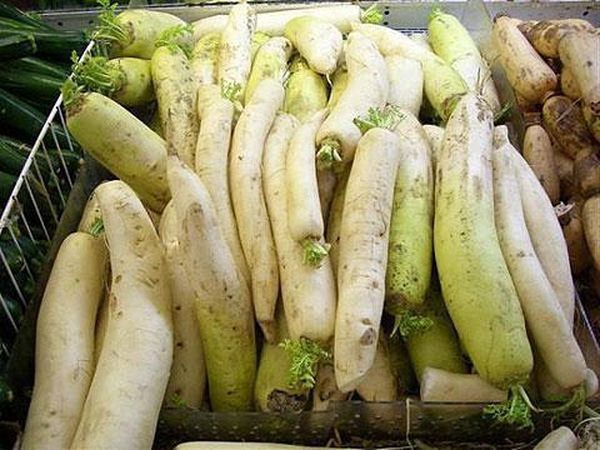
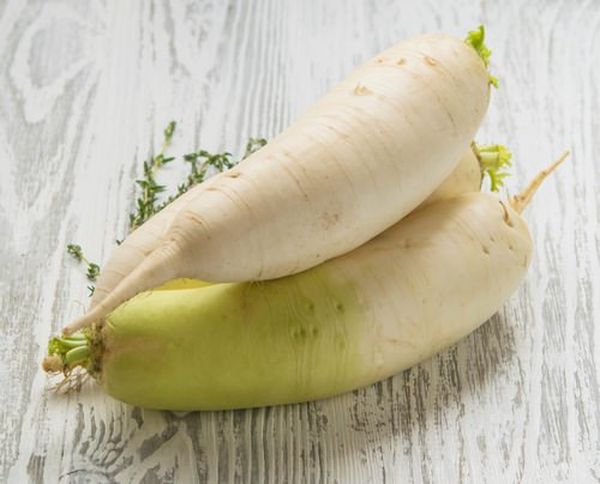
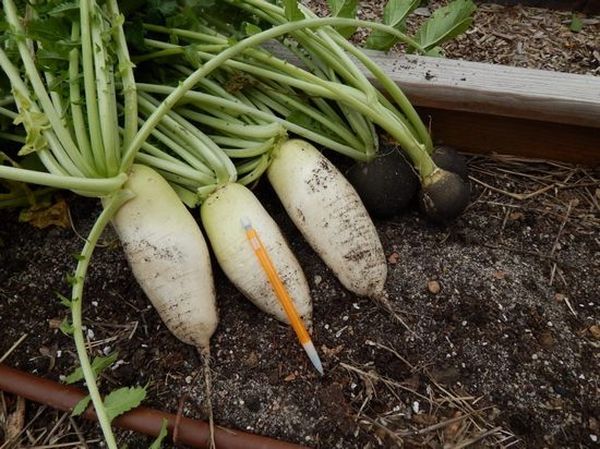
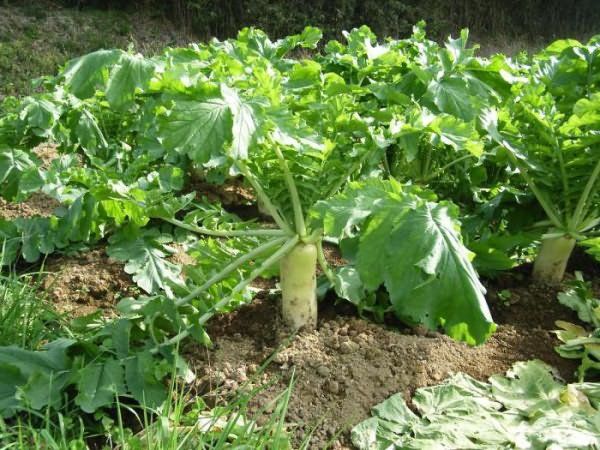
These characteristics allow the species to be grown in virtually any region of our country. Minovasi forms a white root crop within 60–70 days after planting the seed material. The length of the root vegetable is 40–55 cm. At its thickest part, it has a diameter of about 10 cm. The shape of the underground part is cylindrical, tapering towards the end.
This variety of daikon has a milder flavor than the more common radish. This is due to its lower mustard oil content. A subtle spiciness develops only toward the tip of the root. The pulp is rich in the following nutrients:
- vitamin C, B;
- sugar;
- dietary fiber;
- proteins;
- an enzyme that allows the digestion of starch;
- phytoncides;
- beta-carotene;
- metal salts.
This description of the vegetable has made it a very popular product in many cuisines around the world, as well as an excellent folk remedy for many ailments.
The above-ground portion of the plant consists of a rosette of large, dissected leaves. This can have a variety of appearances depending on the variety. As the root matures, it begins to emerge from the ground.
Planting times for this crop vary, as there are winter (before July) and summer (late spring) varieties. However, before deciding when to plant daikon, it's important to learn about its growing guidelines.
Features of cultivation
This vegetable should be grown outdoors. However, varieties of this variety are also suitable for greenhouse cultivation. Planting and caring for daikon are very similar to those of regular radishes.
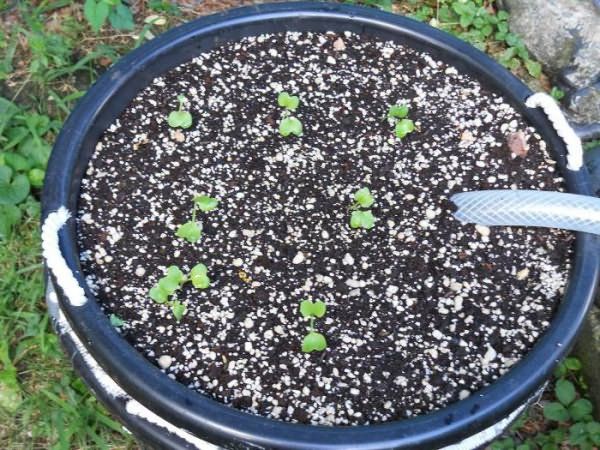
To ensure a good harvest, experienced gardeners recommend planting daikon using seedlings. This method is characterized by a high survival rate and an earlier harvest. However, this method is not suitable for Minowasi, as this variety does not respond well to picking and transplanting. Therefore, it is best to sow prepared seeds in open ground.
When growing this crop, it's important to know not only the sowing time but also the best soils. Minovasi prefers loose, fertile, non-acidic, and light soils. Although the plant is quite capable of growing in other types of soil, the yield will be poorer.
It is prohibited to sow this variety of daikon after cruciferous vegetables. Otherwise, all of Minowasi's resistance to diseases will be completely negated.
Ideal predecessors for this variety are potatoes, tomatoes, beets, cucumbers, and carrots. Plant daikon after these crops and you'll be guaranteed a bountiful harvest.
Proper care of the plants is crucial, especially if the seeds were sown in open ground. To ensure large and tasty roots, the plants need to be fertilized. You'll often hear comments like, "I grow daikon organically, and the roots turn out large and long." Organic fertilizers are typically used to ensure a large harvest.
It's important to water your plants properly. If they don't get enough moisture, the roots will become bitter and tough. If watering is uneven, the underground part of the plant will begin to crack. Water the beds every five days. If there's a drought, water more frequently. If it's raining, reduce the frequency of watering. It's best to combine watering with fertilization. Wood ash will not only nourish the plants but also protect them from pests.
Throughout the growing season, weed the beds. The soil around the plants should be loose. Hilling can protect the roots from damage. Mulching the beds with compost or peat is acceptable.
Once the harvest is in, the beds should be thoroughly dug over and weeded. Afterward, the soil should be fertilized with humus or compost (2 kg of fertilizer per square meter). Lime, ammonium sulfate, potassium sulfate, and superphosphate can also be added.
Advantages and disadvantages
The Minowashi variety has both advantages and disadvantages. The main advantages of this daikon variety include:
- Excellent yield. With proper care, you can harvest approximately 12 kg of vegetables per square meter. Each root vegetable will weigh approximately 1.5 kg;
- Early maturity. It's worth noting that winter varieties have time to ripen even if they were planted in late summer;
- Daikon can be planted after crops that have already yielded a harvest. Thus, the same plot of land can yield two harvests of different vegetables in a single season;
- easy care;
- excellent taste characteristics;
- the presence of medicinal properties in the root vegetable;
- Environmentally friendly. Vegetables do not accumulate harmful substances.
The main drawback of this variety is its poor tolerance to low temperatures. Plants begin to react at temperatures as low as 10°C. With long daylight hours, daikon stops growing and forms a stalk.
Knowing the information provided above, you can grow this variety of daikon in your garden without any problems.
Video: "Cultivation Techniques for Daikon"
This video will show you how to properly grow daikon.