
The Basics of Growing Radishes in a Greenhouse
Content
Features of radish
Growing radishes doesn't require advanced agronomic knowledge. It's enough to pay attention to the biology of this root vegetable, its physiological and ecological characteristics.
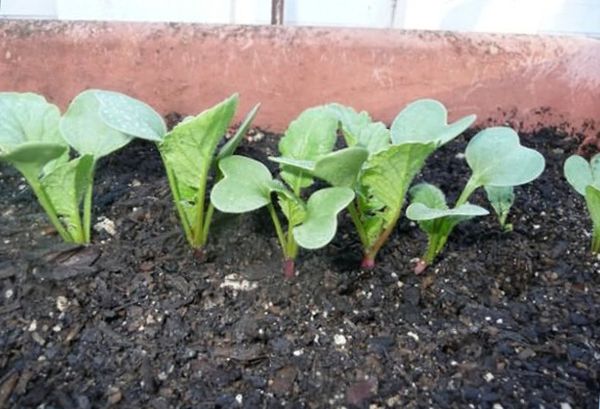
Radish is an annual, light-loving plant from the cabbage class. As is well known, almost all brassicas are heat-loving plants. Therefore, to produce a full harvest, they simply require sufficient warmth and light. Interestingly, despite their heat-loving nature, radishes can easily withstand temperatures as low as -3 degrees Celsius.
To properly care for radishes, it is important to ensure that the temperature remains between eighteen and twenty degrees Celsius, otherwise various anomalies may develop.
Growing radishes in a greenhouse requires careful attention to the soil in which the vegetable grows. There are even selective soils available these days, designed to inhibit the growth of fungal or bacterial pathogens. If you can't afford such soil, remember: radishes grown in acidic soil can be susceptible to clubroot. Radishes with potassium deficiency in a greenhouse experience difficulty growing extremely slowly, with virtually no root formation. The same applies to nitrogen deficiency.
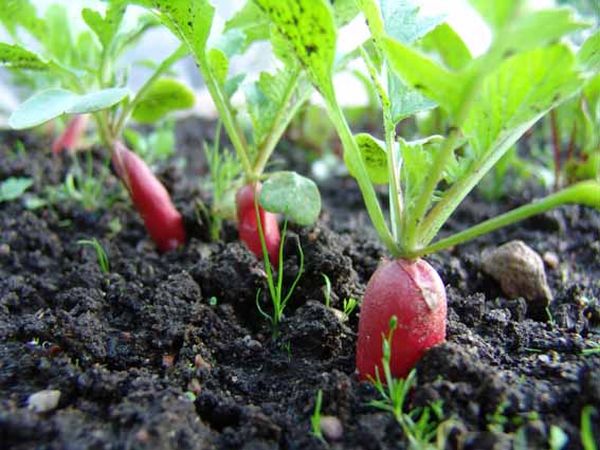
In general, with the right care, this vegetable can grow into February, despite frosts. Under these conditions, radishes grow and produce best in a polycarbonate greenhouse.
Preparing the soil in the greenhouse for sowing
To ensure rapid growth and a good harvest of radishes, proper care of the seedlings is essential. To ensure a high-quality harvest, special attention should be paid to the soil. It's important to remember that, unlike natural soil, many biological and physical processes will be absent in a greenhouse, which will need to be compensated for. Growing radishes in a greenhouse requires neutral soil. To leach acidic soil, it is recommended to add horse manure at a rate of one and a half buckets per square meter of soil.
To prevent harmful microorganisms before placing the plants in greenhouses, the soil must be sterilized using high temperature or pressure. In rare cases, an autoclave may be used. However, the most popular method is either fumigation of the soil and inoculation with pest-toxic compounds, or soil roasting.
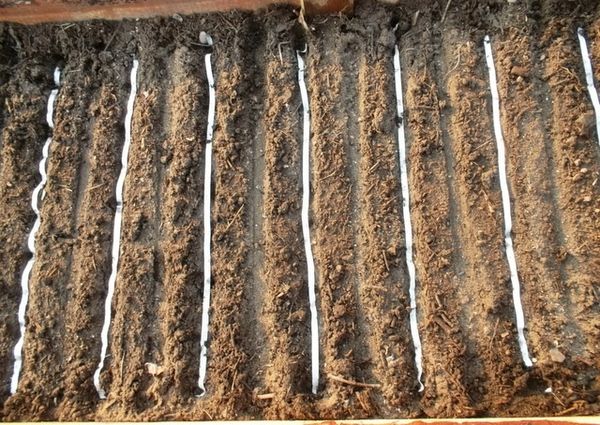
Fertilizer addition is essential. Phosphorus and potassium have been noted to be weak links in radish mineral nutrition. To prevent yield loss, apply superphosphate at a rate of 40 grams per square meter of soil, as well as potassium chloride at 15 grams per square meter. Adding these fertilizers will improve root crop growth and productivity. It's important to monitor nitrogen and potassium levels, as these are essential for proper crop development.
It's recommended to approach garden bed preparation seriously and in advance. It's best to begin preparing the beds in the fall. The beds should be more than half a meter wide.
Preparing seeds for planting
Selecting the right seed is the lion's share of success in farming. For planting, it's best to use large seeds (up to three and a half millimeters in length). At home, selecting seeds is easy—just pass them through a large-mesh sieve.
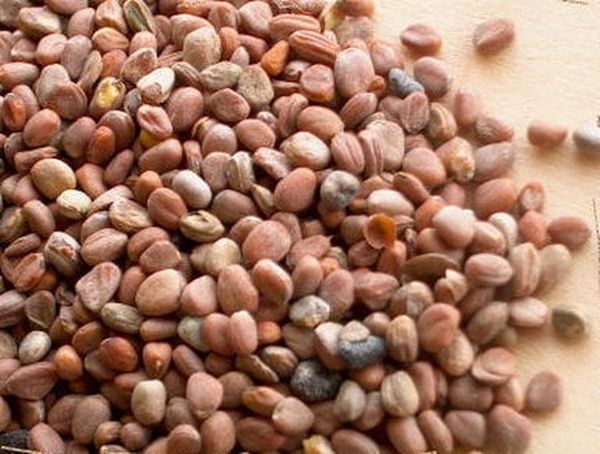
There are specially bred radish seed varieties for greenhouse planting. This is because greenhouse radish cultivation has its own physiological characteristics, which can be beneficial for gardeners.
Just before planting the seeds in the soil, soak them in water for a few days, maintaining them at room temperature. This is best done in a thermostatically controlled container, placed on layers of cheesecloth. After this, it is recommended to treat the seeds with a fungicide solution or a weak solution of potassium permanganate. Only then can the dried seeds be planted in the soil.
Landing
Radishes are best planted in a polycarbonate greenhouse. Planting is typically done by hand. The distance between seeds typically ranges from one to two centimeters, and between rows, from six to eight centimeters. Avoid planting the seeds too deeply into the buds—a centimeter is more than sufficient. A drip irrigation system is recommended before planting.
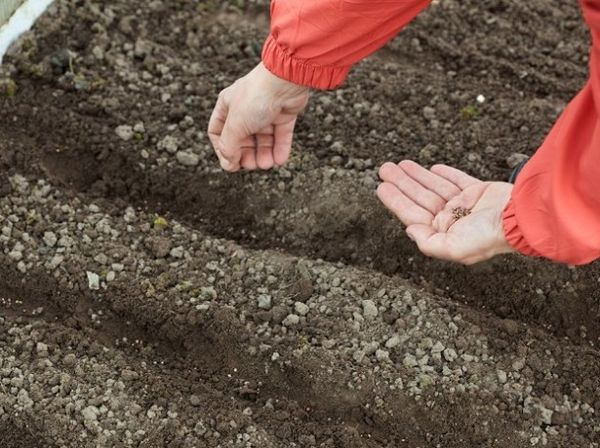
Compliance with at least these minimum requirements will comprehensively answer the question: how to grow radishes in a greenhouse.
Caring for seedlings
To successfully grow radishes in a greenhouse, it must be properly equipped. Proper care of the seedlings will help protect young plants from diseases and pests, and also ensure a successful harvest.
In general, it is necessary to control several parameters: air temperature, lighting, humidity, pest contamination and mineral nutrition of seedlings.
Thanks to the intricacies of greenhouse cultivation, we can vary the temperature throughout the plant's growing season. During seed germination, the temperature should be low, ranging from two to four degrees Celsius (24 to 16 degrees Fahrenheit). Once the seedlings begin to emerge en masse, the temperature is lowered slightly, to six degrees Celsius (6 degrees Fahrenheit). After four days at this temperature, the temperature is raised back to the original level.
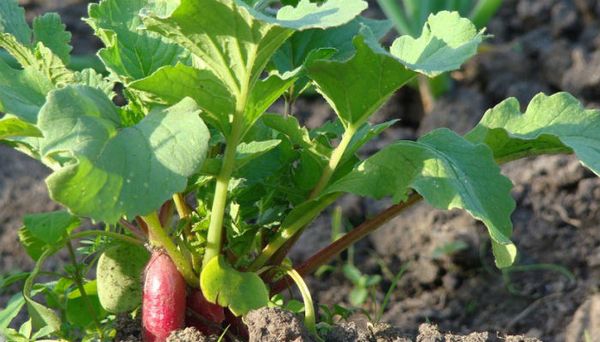
Of course, there are challenges if your greenhouse is unheated. In this case, it's possible to lower the temperature mechanically without resorting to a heating system. Using special materials in the greenhouse's construction can help compensate for the unheated greenhouse. For example, radishes grown in a polycarbonate greenhouse don't experience extreme temperature fluctuations and generally produce a bountiful harvest.
How much water do seedlings need? This is a question many gardeners ask themselves. If there's not enough moisture, the roots will be dry and bland, while if there's too much, the plants may develop root rot or blackleg.
Therefore, when watering radishes grown in a greenhouse, they should be balanced. Don't let the soil dry out completely. It's best to apply water from below, to a depth of ten to fifteen centimeters.
Adding nutrients is recommended only in insufficiently enriched soil. Superphosphate and wood ash are considered the most suitable fertilizers.
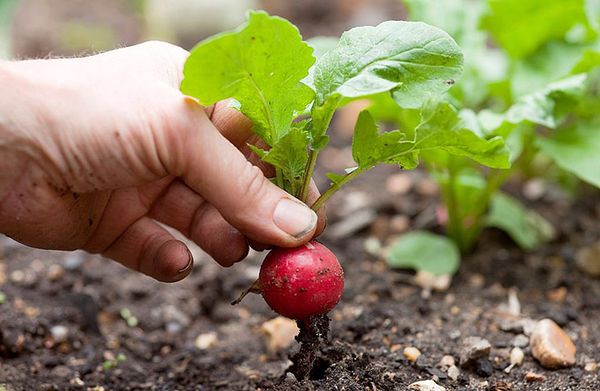
For additional protection against parasites, as well as to help the soil retain moisture, it is advisable to treat the beds with mulch.
The nuances of early planting radishes
Planting radishes early in a greenhouse can pose certain challenges. In greenhouses that are unheated or made of materials that don't retain heat well, such as those without a foundation, you should wait until the soil warms up, otherwise you risk losing the entire harvest. In polycarbonate greenhouses, seedlings can be planted as early as February.
You might be wondering how to grow radishes in February, when it's still freezing outside. To do this, the soil needs to be moistened with warm water, the beds need to be hilled up promptly, and fertilizing is essential at such an early stage. Loose soil, pest-free conditions, and proper care will help you enjoy your home-grown radishes year-round.
The best radish varieties for greenhouses
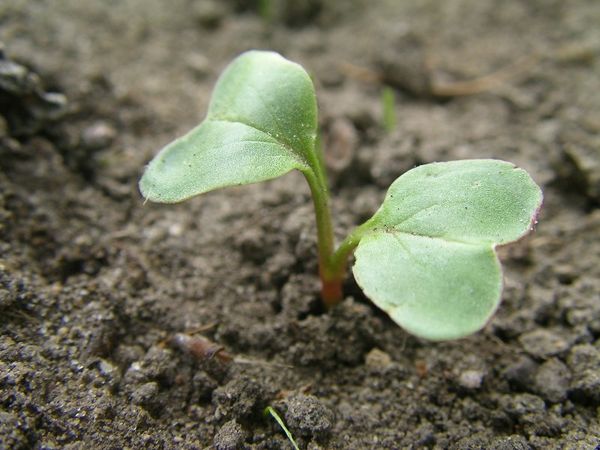
The best radishes for greenhouses include the following varieties: "Greenhouse Radish," "Eighteen Days," "Early Red," and "French Breakfast." These varieties are characterized by resilience, high yield, high germination rates, and a short ripening period. So, when choosing from the countless radish varieties for greenhouse planting, consider the following.
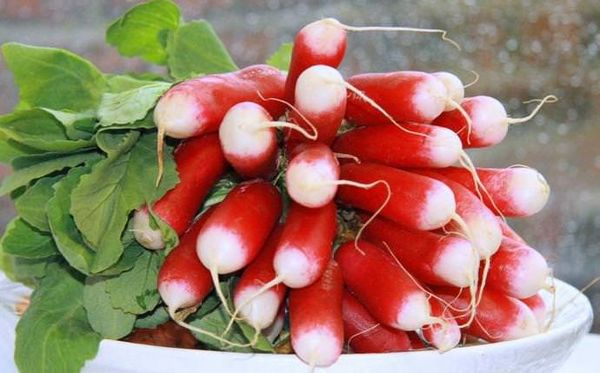
French breakfast
This is an unusual-looking radish variety. It's notable for its cylindrical shape and piquant, rich flavor. The fruit ripens in just about three weeks, allowing for a quick, bountiful harvest.
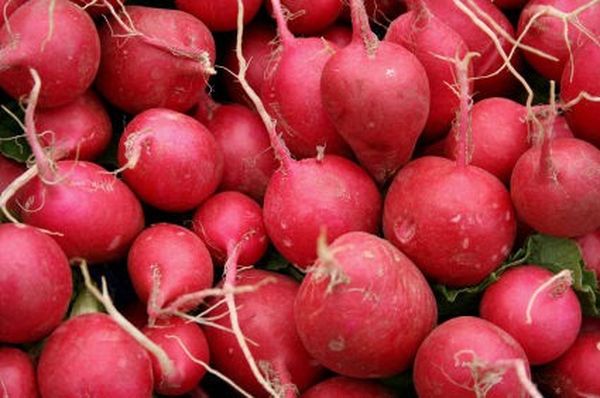
Early red
This variety is considered early, but doesn't ripen as quickly as 'French Breakfast.' However, 'Early Red' typically produces a much richer harvest. It is also resistant to vitrification. It can be recognized by its characteristic round, dark-red tubers.
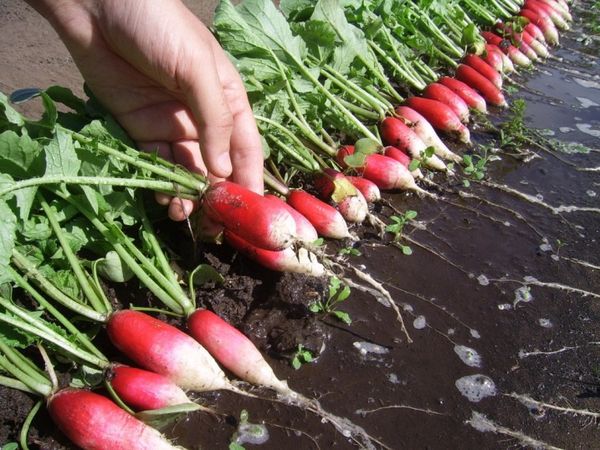
18 days
"18 Days" rightfully takes the lead in terms of speed of germination and ripening. Its fruits are not round like "Early Red," but slightly elongated and reddish in color.
Video: "Sowing Radishes in a Greenhouse"
This video will show you how to properly sow radishes in a greenhouse.