
Technology of planting radishes in early spring
Content
We are creating conditions for the first harvest
Although radishes are traditionally considered easy to grow and undemanding, certain agricultural practices should still be followed. For example, sowing should not be delayed until late spring, as radishes develop best in early spring, when daylight hours are still short. Otherwise, the crop becomes prone to bolting.
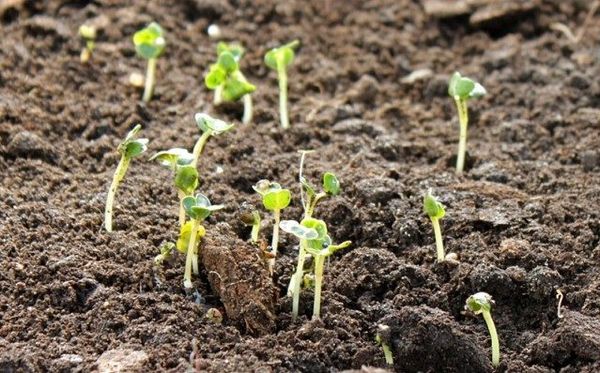
Early varieties of radishes can produce their first root crop within 20-30 days of germination. Therefore, if you want to harvest vegetables as early as possible, you should begin preparing the beds for planting as early as possible: as soon as the spring weather becomes relatively warm. Moreover, radishes are rightfully considered a cold-hardy plant—planted outdoors, they can easily survive nighttime temperatures down to -5 degrees Celsius.
The optimal time to sow radishes is considered to be the last days of March or the beginning of April, when the sun's rays are already actively warming the ground. To determine the right time to plant radishes, consider the average daily temperature in your region. If you plant radishes at 8 degrees Celsius, the seeds will take a long time to germinate.
If the crop is sown when the average temperature has reached 10 to 15 degrees Celsius, the first green shoots will begin to emerge confidently within seven days. Radish seeds germinate most quickly when the air temperature reaches 20 degrees Celsius: in this case, you'll see sprouts as early as four days later. Therefore, you can decide when to plant radishes yourself, simply based on weather conditions and the expected results.
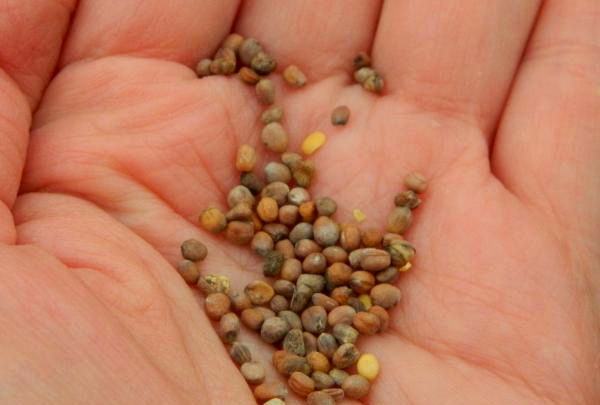
Another advantage of spring radishes is that you can harvest the first selective crop as early as 20 days after germination—these will be small (but highly anticipated) roots, which should be carefully removed from the bed, thinning the rows. A little later, you can harvest the remaining plants. Many gardeners confidently take advantage of the crop's short growing season, extending the season throughout the spring. To do this, we simply sow radishes in several stages, maintaining a frequency of approximately seven days.
By late spring, you can gradually reduce the pace of radish cultivation, as the hot summer months are not conducive to the development of high-quality roots—the radishes will grow small, dry, and not nearly as tasty as those harvested in April or May. However, by late summer, sowing radishes outdoors can be resumed—the cooler autumn air and the short root ripening period are quite conducive to another harvest cycle.
Soil preparation
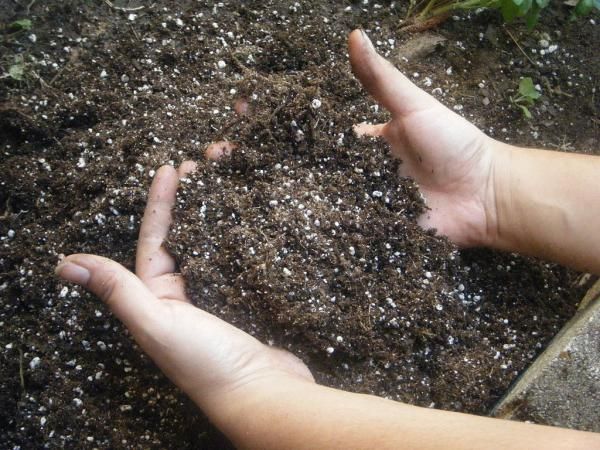
It's no secret that all plants, without exception, love high-quality, fertile soil. Radishes are no exception. Like other crops, they require a carefully selected and prepared bed. If you plan to sow radishes in March, you should begin preparing the site well in advance of autumn.
How do you do this? It's very simple: first, add compost or humus to the soil and dig it thoroughly to the depth of a spade. Another important requirement for the crop is soil composition. Radishes are best planted in loose, light soil in the spring. If your soil is clayey, try adding a little river sand or peat.
Preparatory work with the soil requires mandatory winter fertilization – it is necessary to achieve maximum soil nutrition.
To do this, add a little mineral fertilizer to the prepared soil:
- ammonium nitrate – 15g;
- superphosphate – 25g;
- potassium chloride – 20g.
The specified amount of fertilizer is enough for 1 square meter of soil to ensure maximum productivity in growing radishes.
Preparation of seed material
By planting radishes outdoors, you can significantly speed up the germination process. To do this, you need to perform simple pre-sowing treatment of the seeds, specifically, try to germinate them:
- Many beginning gardeners wonder how to grow large root vegetables. It turns out, the solution is simply to soak the seeds before planting them. The selected seeds are immersed for several hours in a solution of Baikal EM-1, diluted with water at a ratio of 1:500. After this, the seeds are removed, laid out on several layers of cheesecloth, and covered with a cotton cloth soaked in the same magical solution. The container with this "sandwich" is placed in a warm place for several hours – the seeds will begin to sprout right before your eyes. Experience shows that radish seeds treated in this way produce roots that are, on average, 30 grams larger.
- When planning your sowing, you can try calibrating your seeds by sifting them through a regular sieve with mesh openings of approximately 2 mm. This way, you'll be able to select only the largest and most viable specimens.
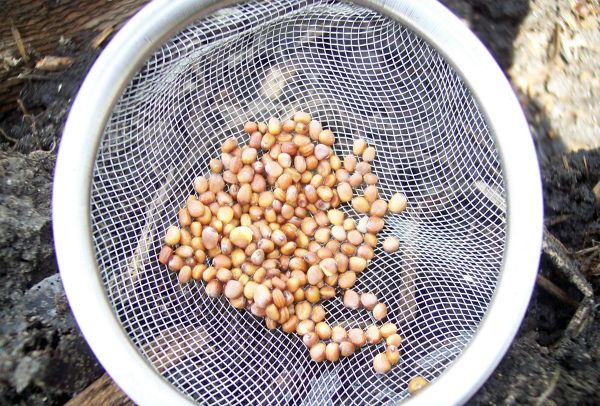
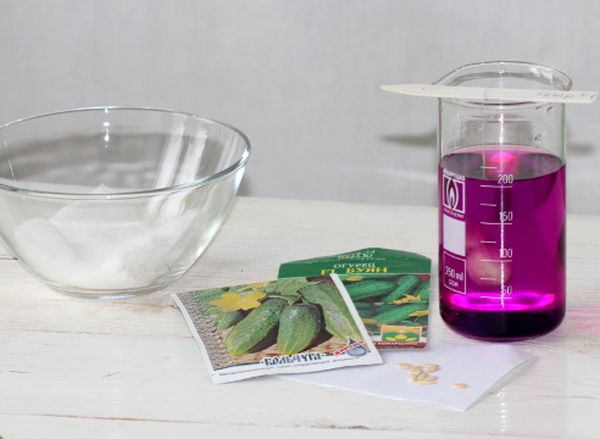
- Another trick used by gardeners who have been planting radishes for years is to treat the seeds with potassium permanganate: it will protect the plants from various diseases;
- It's best to sow radishes by hand, without using any tools. This way, you'll maintain the optimal distance between the future seedlings, ensuring the plants can develop normally and eliminating the need to thin the beds. You'll also save significantly on seeds—the optimal seed consumption is 5 grams per square meter of bed.
Planting in the ground
Radishes should be sown in suitable areas: it's best to choose southern or southeastern-facing areas of the garden that receive good sun but are also well-protected from cold spring winds. If you haven't prepared the soil since fall, you should do so before sowing the radishes—March will give you plenty of time to do all the necessary preparations.
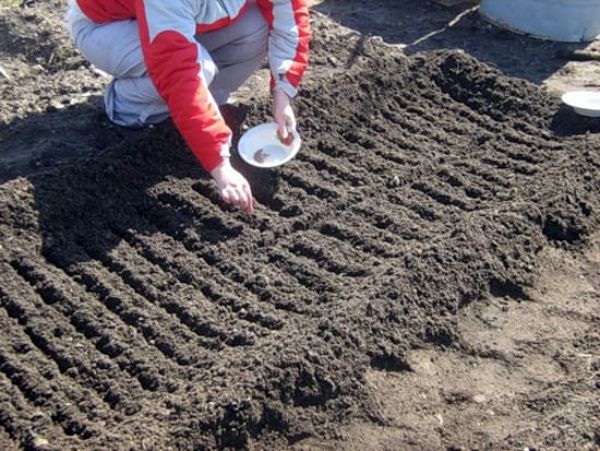
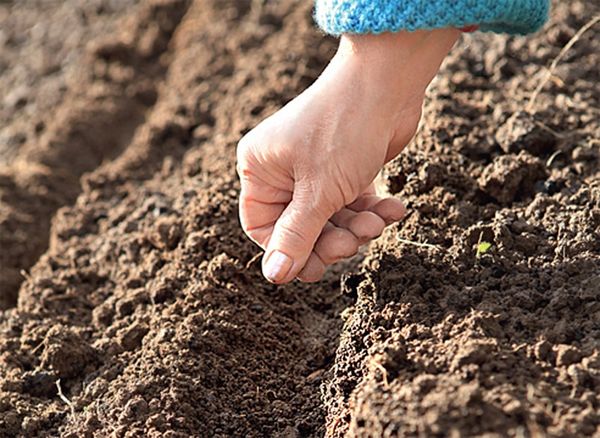
Add well-rotted manure or compost to the soil (one standard bucket per linear meter of the bed), sprinkle it all over with a liter of wood ash (for every 2 linear meters), and dig thoroughly. Now it's time to level the surface, removing any clods. Once everything is done, you can form rows: to do this, create "streams" 10 cm apart along the entire length of the selected area. You can sprinkle the formed planting rows with crushed charcoal from a campfire to add looseness to the soil.
Some farmers prefer to treat the seeds with a solution of potassium permanganate and dust them with starch. This makes each seed clearly visible in the soil. The goal is to spread them evenly along the entire row, maintaining equal intervals to avoid thinning the seedlings. Once all the seeds are in the soil, it's time to cover them: don't cover the radishes with a thick layer of soil—it shouldn't be more than 1-2 cm.
The main spring radish planting is now complete. But our goal is a bountiful harvest, so let's try to protect future seedlings. To do this, sow spinach or watercress around the perimeter of the radish plot—these crops effectively prevent attacks by numerous insects. Planting radishes in the spring also requires providing a protective cover—the bed should be covered with thin spunbond to protect it from possible frost.
Watering and fertilizing
Until the first shoots emerge, water directly over the spunbond, every other morning. Use approximately one watering can of settled water per square meter of the beds. Once the shoots develop a couple of true leaves, watering should be increased to twice a day, morning and evening.
It's best to finish morning watering before the sun begins to shine, and evening watering at dusk. Once every seven days, you can water the radish beds with a solution of fermented grass as an additional fertilizer (two liters of solution per bucket of water is sufficient).
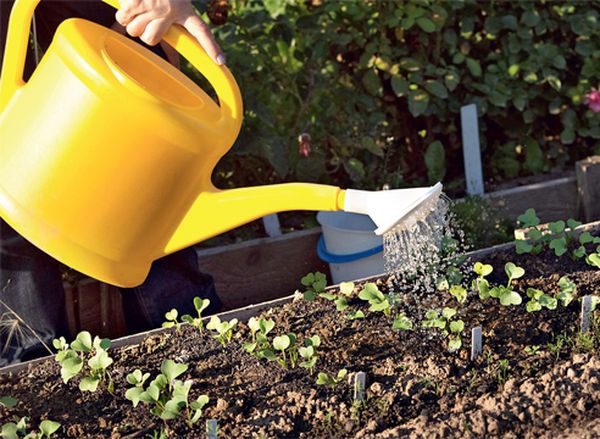
The frequency and intensity of watering are crucial for radishes—adequate moisture will determine the taste and marketability of the root vegetables. The soil in the garden bed should be kept slightly moist, but avoiding excess waterlogging—this is equally detrimental to the crop: insufficient moisture will cause the roots to dry out, become deformed, and develop a characteristic bitter taste, while overwatering can cause plant rot. Furthermore, even a short-term drought following excessive watering will cause the roots to crack.
If you're growing radishes in a closed greenhouse, we recommend using warm water for daily evening watering: warm water will help the plants maintain the desired temperature throughout the long, cold night.
Given their rapid ripening time, radishes produce good yields without additional fertilization, provided your soil is fertile. If this isn't the case, you can support the seedlings (seven days after emergence) with a small amount of organic fertilizer—simply add a little compost solution to the watering water. Another option is mulching the beds with last year's dried compost or even grass clippings.
The most important thing to remember when fertilizing radishes is to never overdo it! Otherwise, as with most root vegetables, the plant will begin to actively grow green mass without paying due attention to the development of high-quality tubers.
Interesting facts about radishes
Gardeners often and successfully use radishes as a marker: they sow them directly into cucumber, beet, or pumpkin beds. Given the short growing season and early emergence, tending the beds (weeding and loosening the soil between the rows) becomes much easier, and we also get the opportunity to harvest two different crops from the same bed.
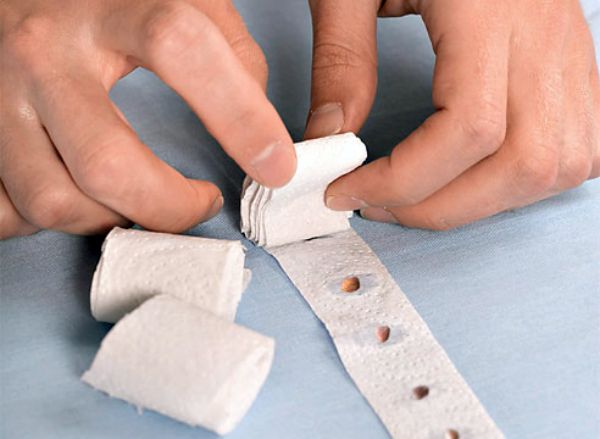
Some particularly resourceful gardeners while away the long autumn evenings with an interesting and unusual activity: gluing radish seeds onto long, narrow strips of paper. If these "garlands" are dried and stored until spring, all we need to do is lay the strip at the bottom of a prepared planting "stream." As a result, thinning the seedlings is eliminated.
Anyone who's ever grown radishes in their garden agrees: you can't leave the plants in the ground longer than the allotted time, hoping the roots will grow in size. Unfortunately, this won't happen, but the radishes will definitely lose their flavor and marketability—they'll become rotten, dry, and deformed.
Some virtuosos successfully sow radishes for the winter – the seeds are placed in the soil when the garden is fully prepared for winter, sometimes even after the first snowfall. This technique allows for the first spring harvest well before the March plantings begin to bear fruit. Remarkably, winter sowing requires that the seeds be placed exclusively in dry soil and carefully covered with a protective layer of mulch. This way, they will safely overwinter, remaining dormant (importantly, they will simultaneously undergo a hardening process), and with the arrival of spring, they will be saturated with moisture and begin to actively develop.
And the last thing I'd like to mention is radishes' tendency to accumulate nitrates. Therefore, when choosing a fertilizing method, try to opt for organic products: after all, everything you pour onto your garden bed, you'll eventually eat.
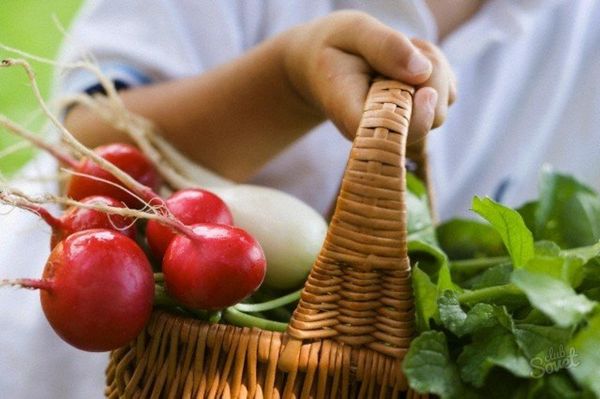
Video: How to Grow a Good Harvest of Radishes
This video will teach you how to properly care for radishes and get a good harvest.