
Planting times and care rules for radishes in open ground
Content
Timing of planting radishes
Radishes with red, pink, and white-pink skin are eaten on their own or in salads, which can be dressed with sour cream or some kind of sauce. Let's figure out how to grow this root vegetable.
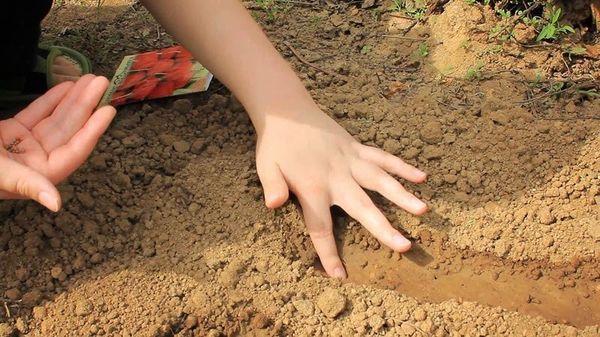
Radishes are distinguished by good frost resistance. In case of spring ground frosts, the crops will not be damaged.
Many novice gardeners learning how to grow this root vegetable wonder when to plant radishes. Planting radishes in the ground in spring depends on the region's climate and the variety's characteristics. Seeds can be sown in late March or early April, once the snow has completely melted. To get the earliest possible harvest, the beds should be covered with plastic, creating greenhouse-like growing conditions for the crops.
One of the key features of radishes is that, if planted correctly, this juicy and tasty root vegetable will be available year-round. Early-ripening varieties are planted outdoors in June, while mid-season varieties are planted in July. Late-ripening varieties should be planted in August-September, allowing you to harvest a bountiful radish crop practically year-round.
Some experienced agronomists recommend planting radishes in winter. Winter sowings produce the earliest root crop.
Selecting a location and preparing a garden bed
When answering the question of how to grow radishes outdoors to get a good harvest, we would like to point out that choosing a planting site and preparing the bed play an important role.
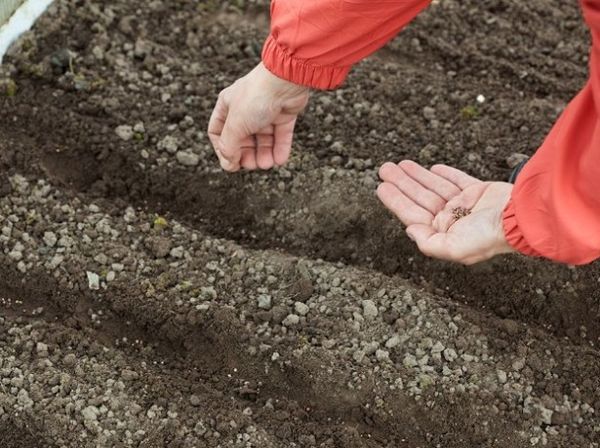
Radishes are best grown in nutritious, loose, and well-drained soil with a neutral pH. According to crop rotation guidelines, optimal predecessors include potatoes, cucumbers, tomatoes, legumes, and peppers. Experts note that due to soil depletion, radishes should not be grown in the same location for more than three years.
A sunny area of the garden free of strong winds and drafts is ideal for planting this vegetable crop. Radishes require 13 hours of daylight for normal growth and development, so it's recommended to avoid areas shaded by trees and shrubs.
It's best to prepare the garden bed in the fall. This involves clearing the garden of plants, digging, and fertilizing the soil with organic matter. In the spring, as soon as the snow melts, dig the bed again and add mineral fertilizer. This type of gardening promotes a better yield of this vegetable crop.
Landing rules
How do you plant radishes correctly, you ask? First, make shallow furrows, leaving 15–20 cm between them, and moisten the soil thoroughly. Now you can sow the seeds. Fill the furrows with soil and firm them down without watering. Cover the garden bed with a layer of humus or peat. It is recommended to cover the bed with plastic film at night. As soon as you notice the radishes are about to sprout, remove the plastic film.
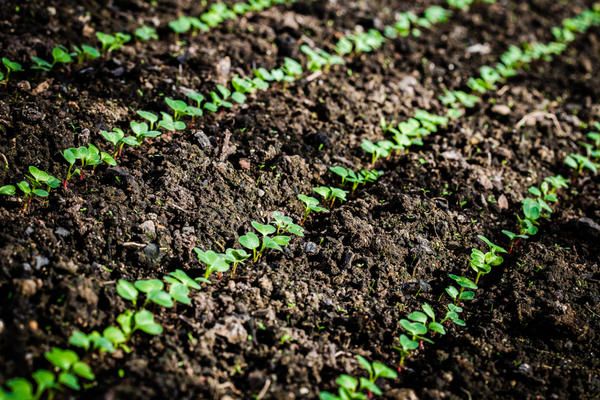
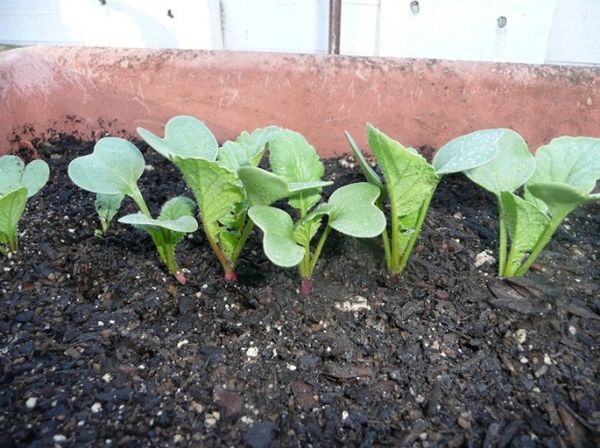
In good, sunny weather, seeds can germinate as early as 3–4 days after planting. When the first leaves appear on the seedlings, it's time to begin thinning the beds (removing weak and damaged plants). Leave at least 3–5 cm between radish seedlings.
Further care
Many novice gardeners are interested in how to properly care for radishes grown in open ground.
Watering
Radishes are moisture-loving vegetables. Optimal soil moisture levels should be at least 80%. Otherwise, the plant will bolt, the roots will develop poorly, and they will taste bitter. Excess moisture also negatively impacts the quality of radishes. During harvest, gardeners noticed that roots grown in overly wet soil often had hollow interiors.
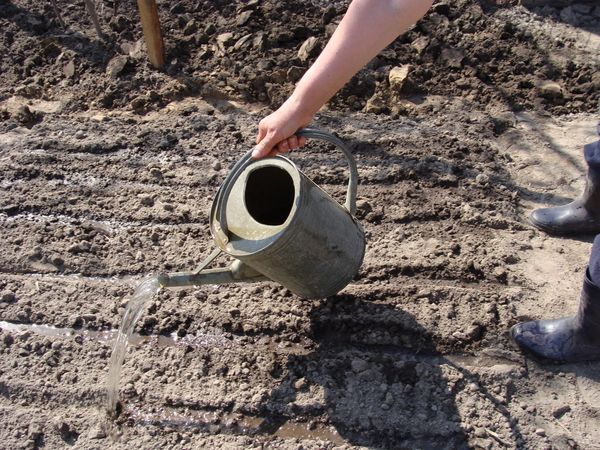
Experts note that radishes need to be watered daily, while monitoring soil moisture levels. Watering should be done early in the morning, before the sun rises, or late in the evening, after the sun has set. If there is no precipitation, increase the frequency of watering to twice a day.
After each watering, the soil should be loosened to prevent a crust from forming on the surface of the soil, which would impede normal air circulation.
Top dressing
Radishes thrive in fertile soil. Therefore, it's important to enrich the soil with mineral fertilizers beforehand. Superphosphate and potassium salts are ideal, as they promote proper root development. Although many agronomists recommend adding organic fertilizers to the soil, avoid using fresh manure, which has a detrimental effect on root growth.
It's also important to calculate the correct amount of nitrogen-containing fertilizer. Too much nitrogen will result in the growth of tops rather than root vegetables.
Following the recommendations of experienced gardeners, fertilize the beds with a mixture that includes humus, compost, 10–15 g of saltpeter, 10 g of superphosphate, 10 g of potassium fertilizer, and 1.5 liters of wood ash.
Gardener's tips
Planting and caring for radishes outdoors doesn't require much attention or effort. However, to improve their growth, it's worth taking advantage of some tips and tricks from more experienced gardeners.
"Thanks to their rapid ripening, radishes are resistant to pests, except for the cruciferous flea beetle. To prevent and control cruciferous flea beetles, use the following method: dilute 50 grams of grated laundry soap and 2 cups of wood ash in 10 liters of water. This method of controlling insect pests is only suitable for open areas of the garden. You can get rid of cruciferous flea beetles using a special protective device covered with spunbond." (Andrey, 43)
"Yield indicators depend on the variety and selection characteristics of the root crop being grown, the timing of planting and seed ripening, and compliance with all agricultural conditions for growing the crop. Therefore, before planting, it is necessary to sort the seeds by size. Seeds 3 cm or longer will produce a good harvest of tasty, large root crops." (Oksana, 35)
Video: Caring for Radishes
This video will show you how to properly care for radishes in open ground.