
How to plant radishes correctly and get an excellent harvest
Content
Selecting and preparing soil
Radishes should be planted in an open, sunny spot with loose, neutral or slightly acidic soil. Soil preparation begins in the fall: clear the area of plant debris, dig the soil to a depth of a spade, add organic fertilizer, and, if necessary, add lime or dolomite flour (if the soil is too acidic). In the spring, all that remains is to scatter mineral fertilizer over the area and dig to a depth of 20 cm. This should be done as soon as the soil thaws. You can cover the bed with plastic film—the soil underneath will thaw and warm up sooner.

You can’t plant radishes after cruciferous vegetables, but beans, potatoes, tomatoes, and cucumbers are good predecessors.Since the first spring vegetable is harvested early, tomato seedlings are usually planted in its place. Some gardeners also plant radishes near potatoes, onions, garlic, beets, and cabbage—this compatibility is beneficial. It has been noted that especially tasty root vegetables ripen under the influence of beans, and when planted near head lettuce, they are not bothered by flea beetles.
Seed preparation
Fresh seeds typically have a germination rate of at least 90%, but this rate drops with prolonged storage. First, discard any defective seeds. To do this, simply pour them into a glass and fill it with clean water. Any that don't sink to the bottom after a few minutes can be discarded along with the water.
Next, disinfect the seeds by soaking them in a potassium permanganate solution for 20 minutes, then rinsing them under running water. Some gardeners stop there, drying them slightly to make sowing easier. Others soak them in a growth stimulant solution.
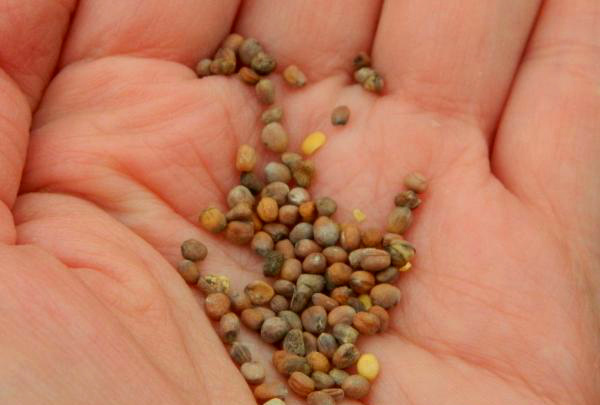
This treatment significantly accelerates germination. However, more often, the seeds are soaked in water for 24 hours to encourage germination—place them on damp cheesecloth, cover with another layer of cheesecloth, and place in a warm place. The next day, sprinkle them with chalk or starch to make sowing easier, and the sowing season begins.
Planting methods
Radishes are planted in early spring, as soon as the ground thaws. In most regions, this occurs from the second half of March to mid-April. In areas where the snow doesn't melt until May, seedlings are used.
European varieties of annual radish are planted in the spring, while biennial varieties (Asian varieties) can be sown in the fall, when frosts have already set in. They won't freeze over the winter, will undergo natural stratification, germinate, and, once the snow melts, will yield a harvest two weeks earlier.
Seeds in open ground
Furrows are made in the garden bed, 2 cm deep, leaving 5 cm between them, and at least 15 cm between each pair of furrows. This spacing prevents the newly grown plants from shading each other. For the same purpose, seeds are placed individually in the furrows, spaced 5 cm apart, in a staggered pattern—this is the most common sowing pattern. Varieties with larger roots are planted less frequently.
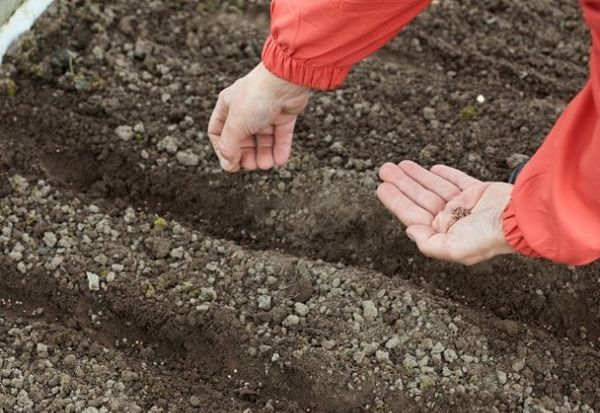
The furrows are watered. Then, the hatched seeds are placed in them by hand or using a special device. Some people glue the planting material to paper strips with paste, then simply lay them on the soil and cover them. The filled furrows are lightly pressed down with a roller or the back of a sap. It is advisable to mulch the seedlings with high-moor peat or sawdust, then water them and cover them with plastic film or (even better) non-woven fabric. Remove the plastic film when the seedlings appear, but the non-woven fabric can be left on until the weather warms up – water, air, and even sunlight penetrate it, allowing the plants to emerge and grow by lifting it.
Growing seedlings and planting
You can prepare radish seedlings at home: sow radishes in 10-cm-high trays, provide them with regular moisture, bright light for 12 hours, and an air temperature of 20°C during the day and 10°C at night. As you can see, this type of radish care is simple. It's a good idea to lower the temperature to prevent the seedlings from becoming too leggy if the planting time is delayed.
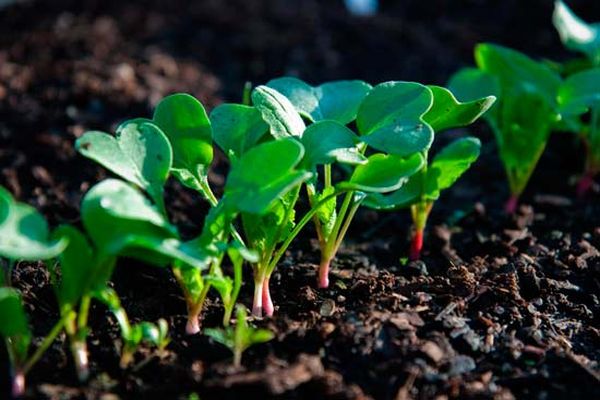
Thinning crops can easily damage delicate roots. Vegetable growers are smart to simply pinch off weak plants at the ground rather than pull them out. Plants can be transplanted into the garden whenever weather permits, regardless of leaf count. However, pricking out is not recommended—even the slightest damage to the roots will cause the plant to produce a flower stalk.
Tips and further care
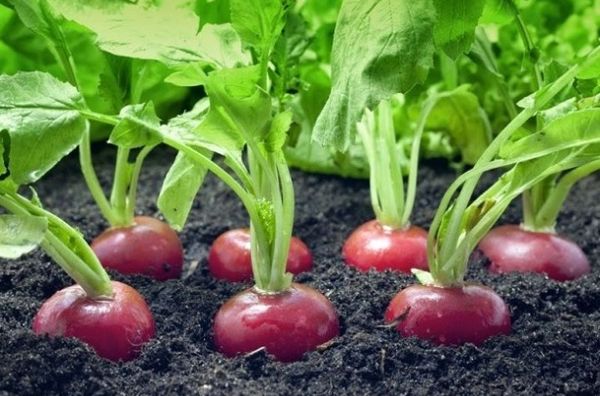
Planting and caring for radishes doesn't take much time compared to growing other vegetables. They thrive in moisture, warmth, and light. They're tolerant of light frosts, but thrive in warm weather. They need frequent watering, but don't overwater. Sometimes, during periods of frequent rain, the bed is even covered with plastic.
Irregular watering harms the root crop: insufficient watering makes it tough, while excessive watering causes cracking.
Furthermore, excess moisture can lead to rot. Carefully loosen the space between the rows, preventing grass from growing too large; as the vegetables ripen quickly, weeds won't have time to choke them. Fertilizing isn't necessary if the plot has been well prepared. If you do use fertilizer, use it sparingly: too much nitrogen will result in lush foliage and weak roots, while too much potassium will result in crooked turnips.
Spraying with solutions of ash, tobacco, onion peels, and garlic with soap provides excellent protection against pests. You can grow your own seeds over the summer by replanting 2–3 plants. The weather will determine how many times you can harvest per season: you can sow again when the temperature doesn't exceed 26°C, providing 12 hours of shade per day.
Video: Planting Radishes
This video will show you how to plant radishes correctly.