
Ground Weed Killer – Plant Rescue (Instructions for Use and Reviews)
Content
Purpose and characteristics of the herbicide
Gardeners and vegetable growers know firsthand the difficulties of weed control. This is especially true for farmers, who must cultivate large areas and find it impossible to pull out every single weed by hand. However, not all herbicides have selective weed control.
The active ingredient in the herbicide Ground is glyphosate, a derivative of the amino acid glycine. Once applied to a plant, it spreads throughout its entirety. From leaves to roots, glyphosate blocks the synthesis of active enzymes responsible for these processes. Therefore, this product belongs to a group of non-selective herbicides that negatively affect all weeds and can harm crops.
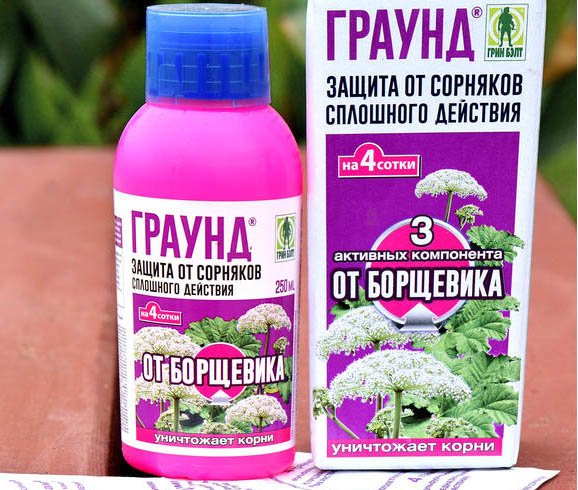
The active ingredient in the herbicide Ground is glyphosate.
"Ground" is recommended for use in the following cases:
- to destroy weeds growing in areas intended for irrigation and drainage;
- to combat unwanted vegetation near power lines;
- to destroy perennial grasses and weeds before planting berries, vegetables, and grain crops;
- to destroy weeds during forest restoration;
- to get rid of weeds in areas intended for human recreation;
- as a preventative agent for spraying before sowing grain;
- for processing highways and railway tracks.
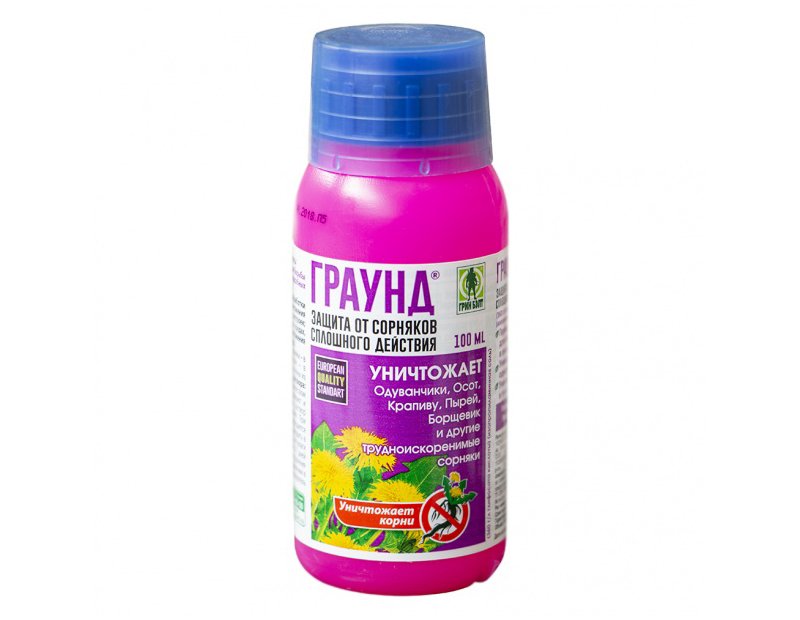
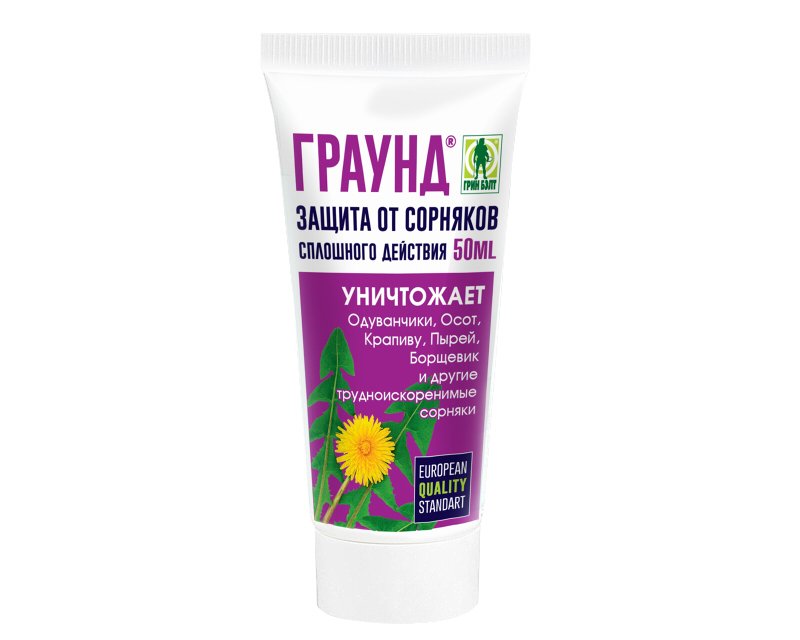
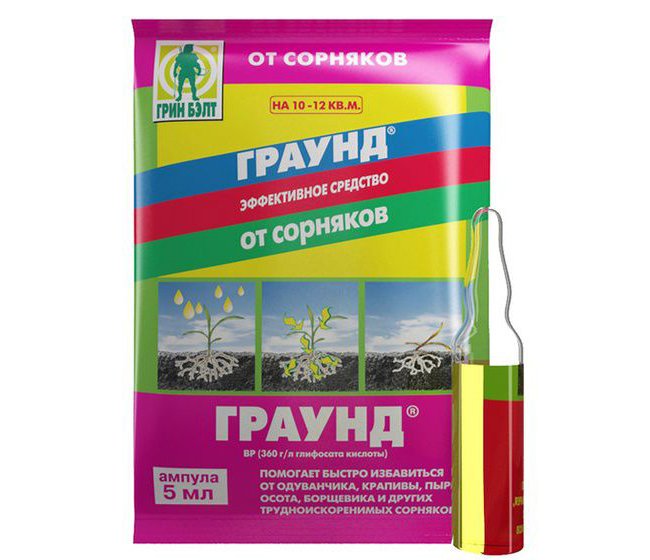
The product is available in three types: 5 ml ampoules, 150 and 200 ml tubes, and 250 ml and 1 l bottles.
Video: "Ground Herbicide for Weeds"
This video shows how to properly use a product to protect plants from weeds.
Features of the impact on weeds
According to expert recommendations, treatment with Ground should not be postponed until the end of the active growing season. The best time to apply is during the growing season, before the weeds have finished flowering. Weed seeds are not affected by the preparation.
Changes in the plants aren't visible for the first few days. However, after five days or a week at most, you'll notice yellowing and drooping leaves, followed by wilting and drying out.
Since the preparation has a broad spectrum of action, before treating weeds in beds, flower beds and other areas where cultivated plants are grown, they must be covered.
To achieve the full result, it is necessary to take into account the following features of using the product:
- Treatment should be carried out in warm, windless weather. It is advisable to check the forecast for the next precipitation event.
- It is better to start treating weeds in the evening, when the sun has set, since the sun's rays activate the plants' defense mechanisms.
- Another advantage of using Ground in the evening is the sensitivity of insects, particularly bees, to the product. While the herbicide may not cause significant harm, there is a risk of insect aggression.
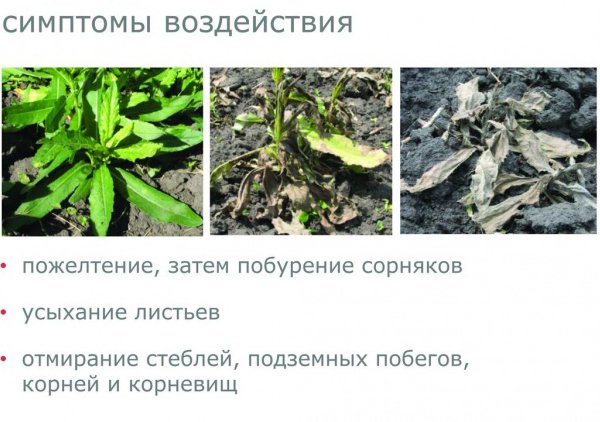
Symptoms of herbicide effects on weeds
Instructions for use
All the details of preparation and use of the product are described in the instructions. Before diluting the product and beginning treatment, we recommend considering the following:
- To avoid reducing the effectiveness of the drug, do not prepare the solution in advance.
- The dosage and dissolution rate are indicated on the packaging; preparation instructions vary depending on the type of treatment. Fill the sprayer one-third full with warm water, and the rest with the herbicide.
- Spray pressure should be kept to a minimum to reduce the risk of spray solution getting on crops. A special long spray nozzle is ideal.
- Never leave any remaining solution in the sprayer. It should be poured onto the weeds, and the container itself should be thoroughly washed with a solution of laundry soap or dishwashing liquid.
- The effectiveness of the product does not depend on the characteristics of the site, so it can be used even on wastelands.
Dosage
Ground should be diluted strictly according to the instructions and dosages. The following table will help:
|
Type of culture
|
Dosage |
How to apply |
|
Citrus plantings, fruit trees and vineyards |
Annual weeds – 80 ml per bucket of water (10 l) |
According to the instructions, spraying should be done using a targeted method, covering other plants with protective material. The solution consumption rate is 100–200 l/ha or 5 l/100 sq. m. |
|
Perennial weeds – 120 ml per 10 liters of liquid |
||
|
Vegetables and melons, flowers |
For annual weeds – 80 ml/10 l of water; for perennial weeds – 120 ml/10 l of liquid |
Spraying weeds during the growing season after harvest. Consumption rate: 100–200 l/ha or 5 l/100 sq. m. |
|
Potato beds |
80 ml/10 l of liquid and 120 ml/10 l of water for annual and perennial weeds |
Spray growing weeds 3–4 days before crop emergence. Rate: 100–200 l/ha or 5 l/100 sq. m. |
|
Cereals |
120 ml of substance per bucket of water (10 l) |
The treatment is carried out using a sprayer twice: in the spring and after harvesting. |
Advantages and disadvantages of using
Like any other toxic substance, Ground has its advantages and disadvantages. Among the drug's benefits:
- effectively combats all types of weeds, including malicious perennials;
- can be used as a desiccant to accelerate the ripening of tuber and grain crops, but immediately before harvesting;
- According to gardeners, it does not accumulate in the soil, and therefore causes virtually no harm to the environment;
- low price and availability of the product.
It would be fair to note some of the product's drawbacks, which must be taken into account during treatment: the possibility of causing irreparable damage to crops and the sensitivity of insects, particularly bees, to the product.
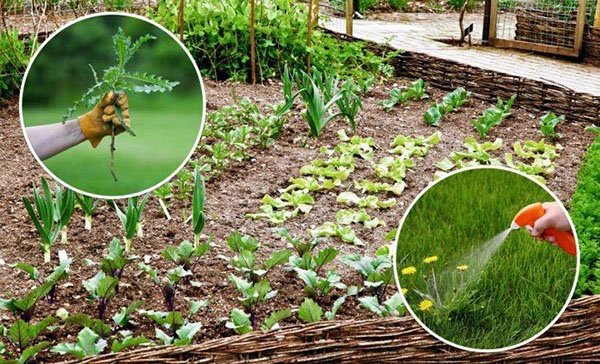
The drug effectively combats all types of weeds
Compatibility of Ground with other drugs
As noted in the instructions, the product can be combined with other medications with a similar spectrum of action. However, other sources recommend checking compatibility before use.
Farmers recommend using the herbicide with other nitrogen fertilizers, which enhance the effect.
Excellent results were noted by users when combining Ground with Propol.
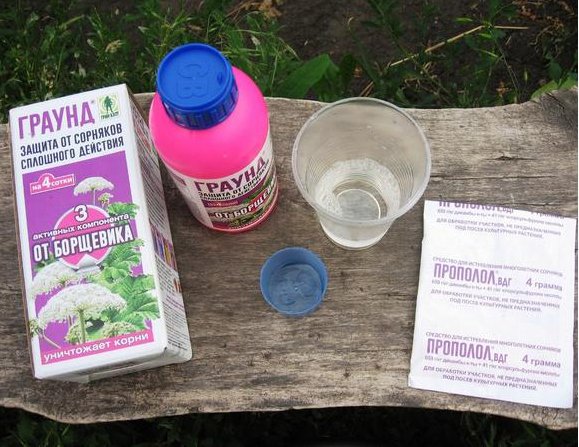
When combining Ground with Propol, the barrier effect is enhanced.
Precautionary measures
When working with herbicides and other toxic preparations, it is essential to follow certain safety rules:
- use personal protective equipment (respirator, mask and glasses, gloves) and wear special clothing;
- Smoking, drinking and eating are prohibited during treatment;
- dilute the drug immediately before use;
- Do not exceed the doses indicated in the instructions;
- After working with the product, you need to carefully remove your clothes and wash yourself in the shower;
- a large amount of spilled solution must be covered with sand;
- The sprayer needs to be washed and the clothes need to be washed.
Before using Ground, we advise you to weigh all the advantages and disadvantages, and be sure to protect yourself and your crops during treatment.