
A Review of the Best Fungicides for Plants – 35 Popular Products
Content
The principle of action of fungicidal preparations
Many garden crop diseases are caused by pathogenic fungi. Gardeners who have encountered them firsthand know that fungicides are the most effective way to protect plants from damage.
The term comes from the Latin words fungus and caedo, which translate as "mushroom" and "to kill." The main characteristic of such preparations is their destructive effect on fungi.

The modern choice of fungicidal preparations is huge.
Regardless of the characteristics of a particular fungicide, its effect on the pathogen is as follows:
- Splitting of fungal cells and their removal from the plant.
- Blocking the ability of the fungal cell nucleus to divide, thereby preventing the proliferation of pathogenic microorganisms.
- Stopping the so-called fungal respiration.
- The infected plant produces a type of antibody—a substance that destroys bacteria. It's worth noting that these antibodies are completely harmless to the plant itself or the environment.
- The formation of necrosis in the tissue of the affected plant. The infected area of the shrub or tree dies, which, in turn, prevents the spread of the fungal disease to healthy parts of the plant.
- Stopping the production of ergosterol and nucleic acid by fungi, which are considered to be activators of the vital activity of pathogenic organisms.
- Blocking the energy exchange process between the cells of pathogenic microorganisms. This ultimately suppresses the pests' vital functions.
Video "Preparations for Plant Protection from Diseases"
This video presents the most effective fungicidal preparations.
Types and functions of drugs
To obtain more detailed information about the principle of action of these substances, it is necessary to know their chemical properties, nature of action and mode of distribution.
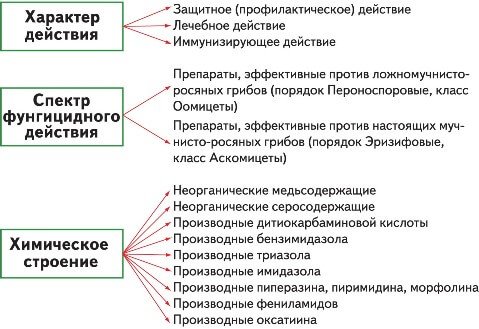
Types and characteristics of fungicidal agents
By chemical properties
Fungicidal agents are divided into:
- Organic. Contains active microorganisms that inhibit fungal activity. Biological products can be used throughout the entire growing season of garden crops, including during fruit ripening.
- Chemical fungicides. These contain toxic components. Typically, the basic ingredients of these poisons include copper sulfate, mercuric chloride, colloidal sulfur, copper chloride, and potassium permanganate. These products are used before flowering and after harvest. When working with fungicides, caution and precautions must be observed.
By the nature of the action
Depending on this characteristic, pesticides are divided into:
- Protective. Used prophylactically to prevent crop infection by pathogenic fungi.
- Medicinal. Contain more active ingredients. These are what destroy pathogenic organisms.
- Immunizing. Given the drug's mode of action, plant treatment can be compared to vaccination. The introduction of active components alters metabolic processes in the plant tissue, thereby preventing fungal infections.
By method of distribution
The effectiveness of a product directly depends on this criterion. Thus, according to their mode of action, fungicides are classified as:
- Contact pesticides. Active ingredients remain on the surface of plant tissue. Therefore, upon contact with the pest, they have a detrimental effect. The effectiveness of contact pesticides depends on weather conditions, the dosage, and its toxicity level.
- Systemic. These are characterized by absorption into the plant tissue, after which the active ingredients are transported throughout the plant. The main advantage of systemic products is their high level of effectiveness, which is completely independent of weather conditions.
- Systemic-contact. These are characterized by the presence of components with both contact and systemic action.
Pros and cons of using
Fungicidal agents have a number of significant advantages, which determine the demand for such preparations:
- high level of effectiveness and impact on many different fungi;
- fast acting;
- economic feasibility of acquiring funds.
However, there is a fundamental drawback: the toxicity of the components, which undoubtedly harms the plant and the environment.The use of fungicides requires the gardener to carefully study the instructions for use and observe all safety precautions.
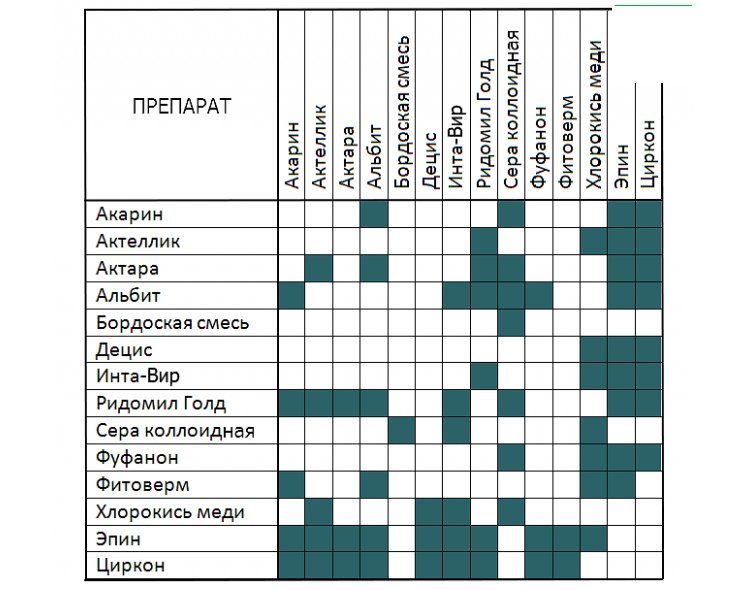
Table: Compatibility of popular fungicides
Systemic
Systemic fungicides are able to penetrate the plant. This list of systemic fungicides will help you find the right product.
Gliocladin
It is characterized by a biological composition, ensuring safety for garden crops and humans. The application method is extremely simple: 2–6 tablets should be placed several centimeters into the soil. The dosage is determined by the degree of infestation, the size, and the condition of the plant.
Quadris
Effective against late blight, brown spot, and powdery mildew. The main active ingredient is azoxystrobin, which is effective for both preventative and therapeutic measures.
"Quadris" is used for the following garden crops:
- potato;
- pepper;
- peas;
- cabbage;
- tomatoes.
Available in a 6 ml sachet and a 1-liter bottle. The active ingredients last for up to two weeks.
Mikosan
This product is based on organic ingredients. Mikosan works by increasing the plant's resistance to various diseases. This boosted immunity is due to the active production of lectins, which have a detrimental effect on fungi.
Planriz
Planriz is effective against ascochyta blight, early blight, root rot, and phoma. The product consists entirely of organic elements. The bacteria contained in the formula penetrate the plant, reaching the root system. There, they accumulate and begin producing biological antibiotics.
Forecast
This is a fairly powerful fungicide due to its chemical composition. The active ingredients it contains are effective against spot, scab, and powdery mildew. The chemicals it contains can cause significant harm to health. Therefore, it is advisable to use special protective equipment, such as a respirator and rubber gloves.
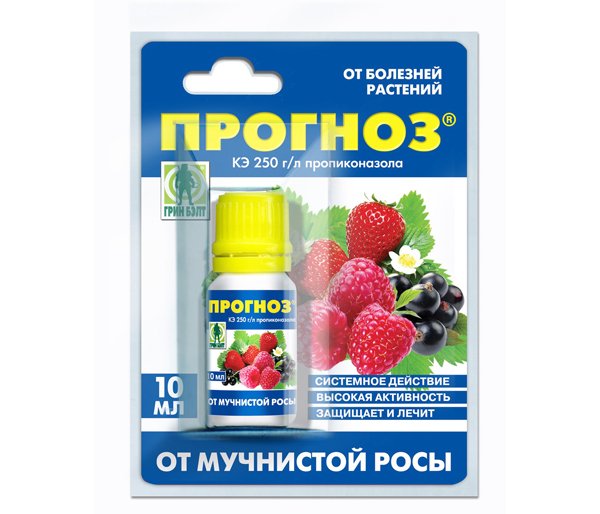
The drug "Prognoz" is used to combat pathogens causing spotting, scab, and powdery mildew.
Rayek
"Raek" is available in 2 ml ampoules, as well as in 10, 50, and 100 ml containers. Its active effect begins within 2–3 hours after application. The effect lasts for a long time.
One ampoule of "Raek" is diluted in 10 liters of water. Insecticide treatments should not be carried out too frequently, otherwise they may destroy the plant. The optimal interval between treatments is 2.5 weeks.
Skor
The mechanism of action and composition of "Skor" are virtually identical to "Raek." It has a relatively low toxicity level, making it virtually harmless to humans and animals. To combat powdery mildew, scab, and other diseases, dissolve one ampoule in 10-15 liters of water.
The effect of the drug lasts for 2-3 weeks.
Thanos
The active ingredient is cymoxanil, which penetrates plant tissue and can eradicate even advanced diseases. Thanos is produced as water-soluble granules. The substance is moisture-resistant, so it will remain on the plant's surface for a long time.
Topaz
This product is characterized by relatively low toxicity. For maximum results, it is recommended to begin treatment with Topaz immediately. 2 ml of the product should be diluted in 10 liters of water. The active components will begin to take effect within 2–3 hours.
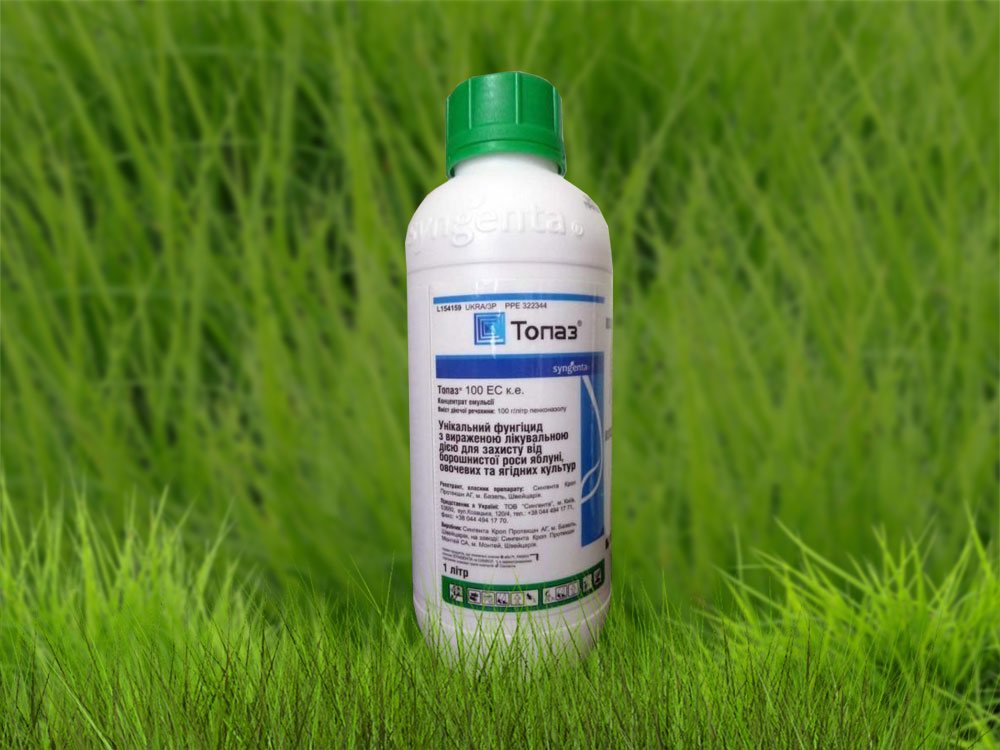
Topaz is characterized by relatively low toxicity
Fundazol
Effective as a preventative measure and for treating fungal diseases. No more than two treatments should be performed per season, otherwise the pathogens will develop resistance to the product.
Horus
The fungicide is used to protect apricots, cherries, and peaches. An interval of 10–12 days should be observed between treatments. It's also important to remember that the components are sensitive to air temperature. For example, temperatures below 25°C reduce the activity of Horus.
pureflower
"Chistotsvet" is absorbed into the tissues of garden plants within 2-3 hours, maintaining its protective properties for two weeks. The fungicide is produced as a concentrated emulsion that must be dissolved in 5-7 liters of water.
Contact
Contact preparations are effective only when in direct contact with the pest.
Agate
The active ingredients are organic substances. The product not only combats diseases but also increases crop yields. This is due to the beneficial effects of biological elements on the plant's root system.
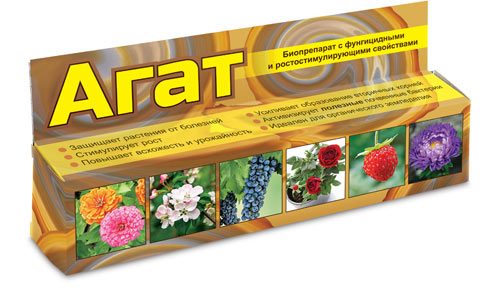
"Agate" effectively increases crop yields
Albite
Harmless to humans and animals, but effective against fungal infections. Albit is used as a growth stimulant. Furthermore, the fungicide has a positive effect on crop yields.
Bravo
Chlorothalonil is the active ingredient in this product, which kills pathogens that cause late blight and powdery mildew. Bravo is resistant to temperature fluctuations and maintains its effectiveness for two weeks. It can be combined with other fungicides.
Baktofit
It is used to protect flower and fruit crops from fungal diseases. It is most effective in cool weather. It is important to maintain an interval of 5–6 days between treatments.
Bona Forte
Used for indoor plants. The treatment consists of several stages: treatment, fertilizing, and growth stimulation. The fungicide targets powdery mildew and rust pathogens. Sold in 2 ml ampoules.
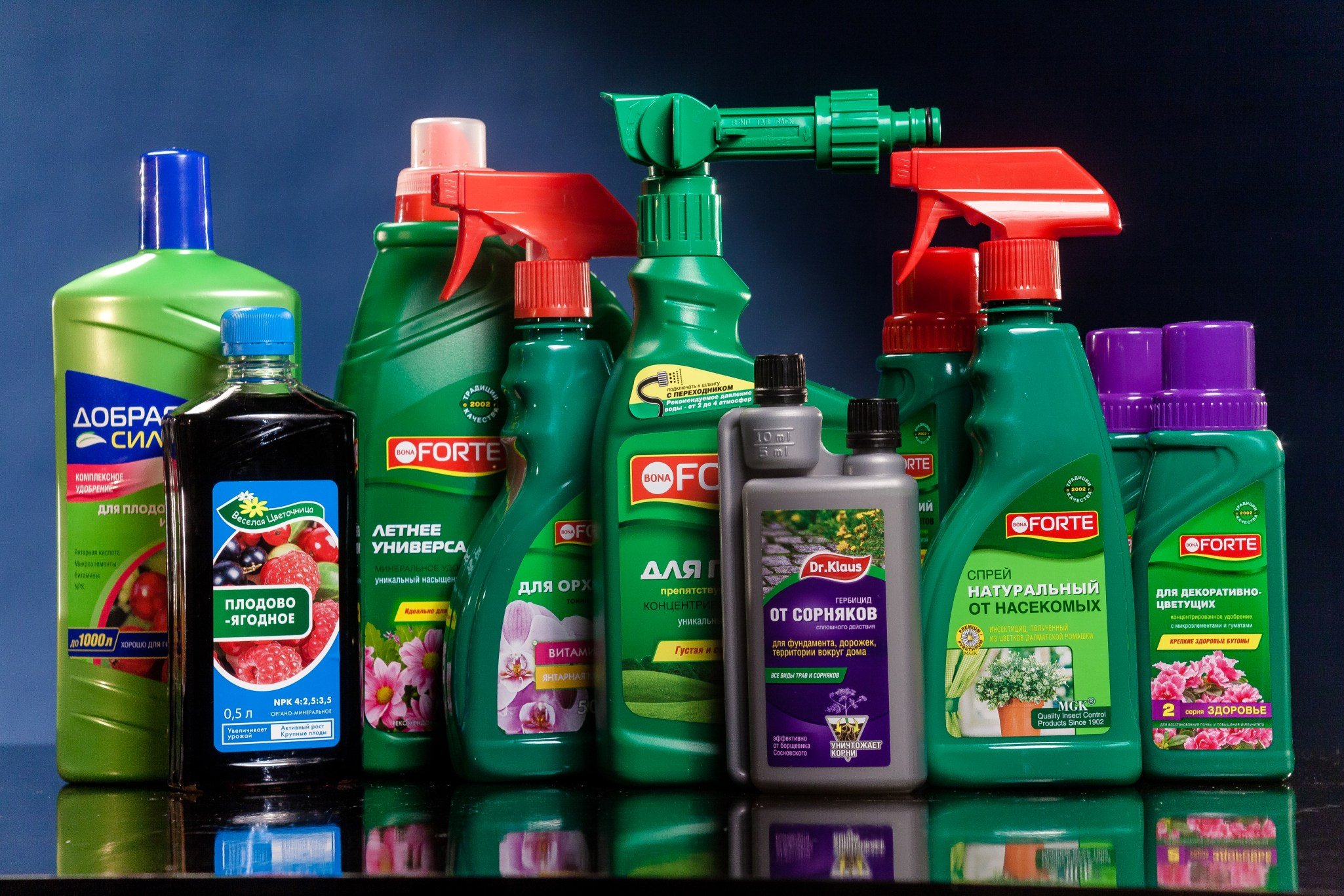
The Bona Forte line of products for plants
Gamair
It is used for flowers and fruit and berry plants. It is available in tablet form. One Gamair tablet should be dissolved in 5 liters of water.
To destroy pathogens, the plant should be treated 3 times, with a week's interval.
Maxim
It is available in 2 ml ampoules. One ampoule of "Maxim" should be diluted in 2-3 liters of water. Application is carried out either by watering the soil or by spraying the above-ground parts of the crop.
Strobe
It comes in granules that dissolve quickly in water. 4 ml of granules should be diluted in 10 liters of water. "Strobi" can be used even during the flowering period. Furthermore, its components are completely harmless to humans, animals, and bees.
Trichodermin
It has a beneficial effect on the root system of plants, stimulating vegetative processes. Trichodermin contains fungal spores that, when released into the soil, destroy approximately 50 species of pathogenic bacteria.
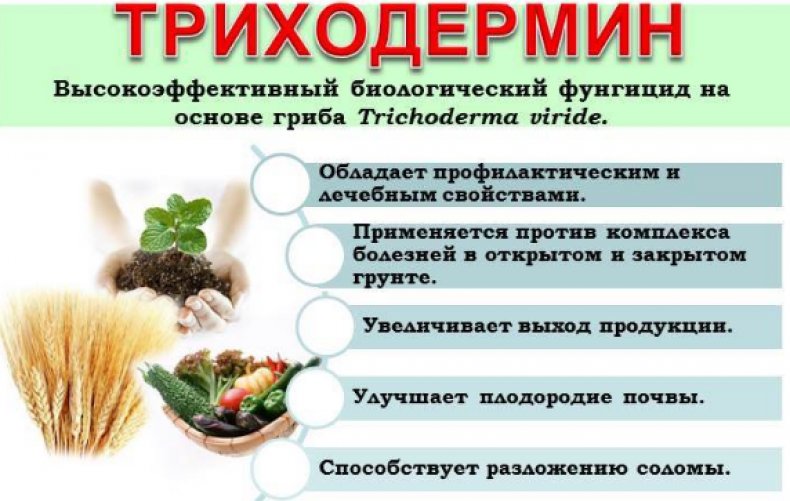
Trichodermin has a beneficial effect on the root system of plants.
Trichophyte
Effective in combating gray mold. It's available as a suspension. For treatment, dilute 25 g of the product in a liter of infused water. Spray the foliage or water the root zone with the liquid.
Fitosporin M
Suitable for use on garden, indoor, and greenhouse crops. Available in powder, paste, and liquid forms. Effective immediately after application.
Systemic contact
Such fungicides are considered the most effective, as they work both externally and internally.
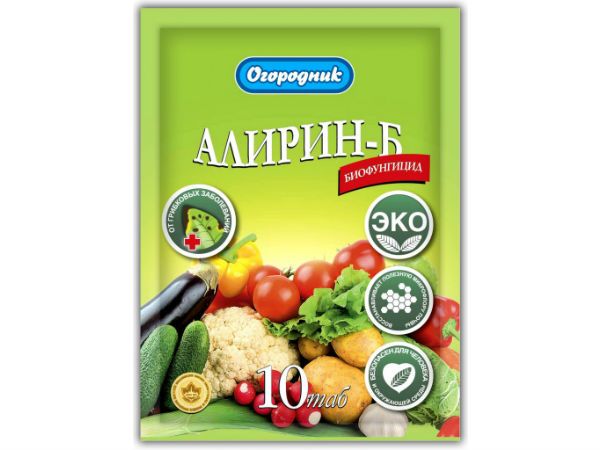
Alirin
Available in tablet form. For irrigation, it is recommended to dilute two Alirin tablets in 10 liters of water. For spraying, the solution should be more concentrated – two tablets per 1 liter of water.
Vectra
It is used for preventative purposes and to treat phytopathogenic fungi. 0.3 ml of the product is required per 1 liter of water.
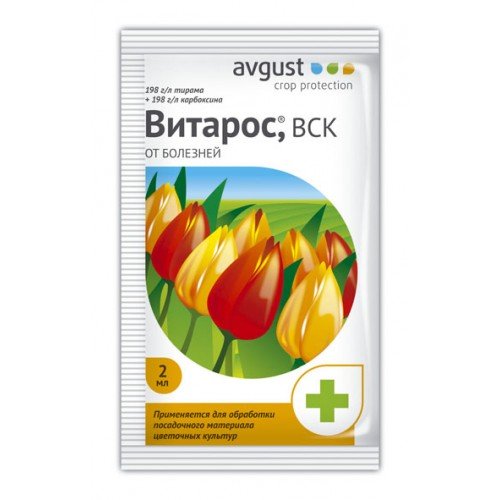
Vitaros
Available in 2 ml ampoules and 10, 50, and 100 ml bottles, Vitaros eliminates both superficial and internal fungi.
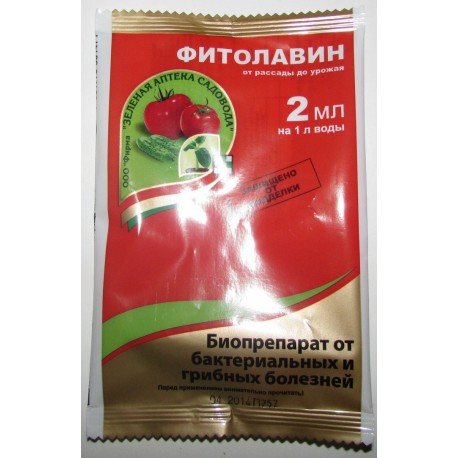
Fitolavin
Used to prevent root rot. Available in ampoules and vials. The product is harmless to plants and humans. After spraying, it penetrates plant tissue fairly quickly.
Copper-containing
They are considered to be one of the most effective fungicides, used both for preventative purposes and for the treatment of serious fungal infections.
Abiga Peak
The product contains copper oxychloride. When exposed to fungi, the substance releases pure copper, which inhibits the growth of pathogenic microorganisms. "Abiga Peak" is used to treat grapevines, medicinal plants, and fruit crops.
Bordeaux mixture
The product contains lime, copper sulfate, and water. It is effective for protecting watermelons, melons, onions, and beets. When preparing the mixture at home, it is important to maintain the correct proportions. Too much of one component can cause the plant to burn.
Kurzat
Most often used for cucumbers and potatoes, it controls powdery mildew and late blight. "Kurzat" has a moderate toxicity level, so it's important to take precautions when handling it.
Copper sulfate
It comes in powder form and must be prepared into a solution. The dosage for each plant is strictly individual. Please read the instructions carefully before use.
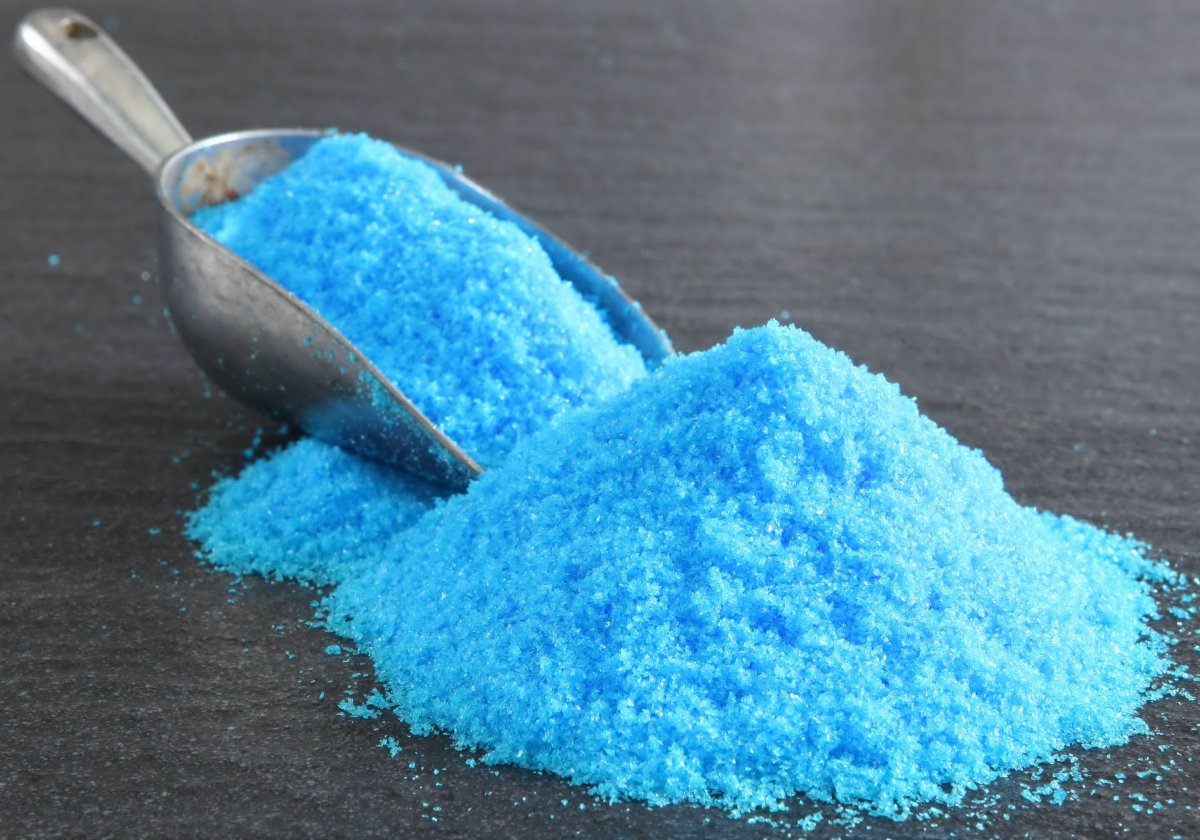
Copper sulfate is produced in the form of a blue crystalline powder.
Ordan
It is available in the form of a milky powder in a volume of 25 g. To treat fungal diseases, dilute the contents of 1 packet in 5 liters of water.
When preparing the solution, it is important to thoroughly stir the powder until it is completely dissolved.
Profit Gold
The main component, cymoxanil, is rapidly absorbed into plant tissue. Famoxadone, an equally active ingredient, remains on the surface. The product is sold as granules that must be dissolved in water.
Oxychom
Available in 4g packages. To treat the plant, dissolve the contents of the sachet in 2 liters of water. It is recommended to spray at intervals of two weeks.
Hom
The product consists of copper oxychloride and is available as a powder in 20g and 40g sachets. To use, dissolve 40g of the product in 10 liters of water. It is recommended to spray garden crops at least five times, with a two-week interval.
Information about fungicide types is useful not only for beginners but also for experienced gardeners. Depending on the severity of the plant infestation, you can make the right choice.