
What is agrofibre and how to use it in a garden plot?
Content
History of the origin of the material
Agrofibre was originally conceived as a camouflage material for soldiers. Its production began in the mid-19th century in the United States. In the post-war years, agrofabric began to be used in light industry, particularly clothing. It was only in the final decades of the last century that it began to be used for covering and insulating various agricultural and ornamental crops.
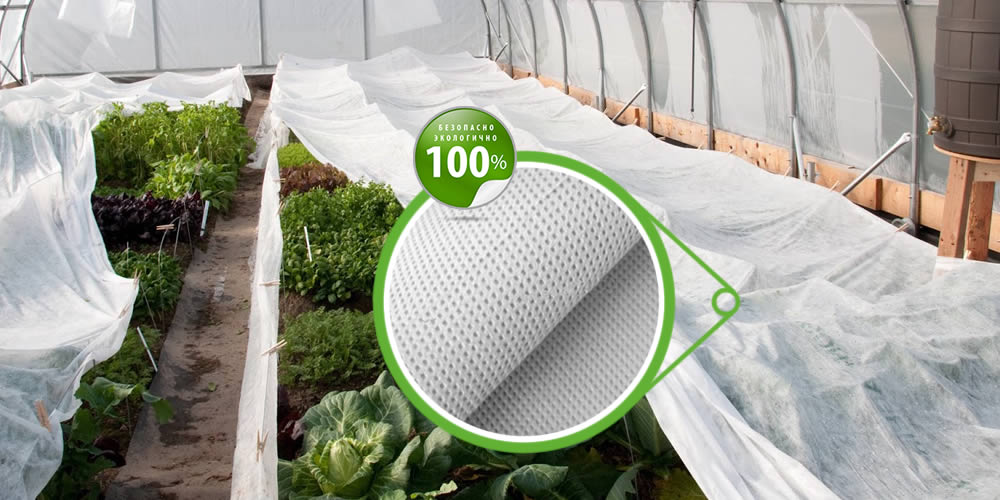
Agrofibre is an environmentally friendly covering material
The first examples of agrotextiles consisted of fibers randomly bonded together using starch. The technology was later refined, and the fibers began to be pressed mechanically. According to statistics, agrotextiles are used in most European countries to protect plants from adverse weather conditions and ensure an early, bountiful harvest.
Properties and features of agrofibre
Agrofibre, or spunbond, is a thin, lightweight, yet durable material made of stabilized polypropylene. Spunbond's main advantages are its complete non-toxicity and eco-friendliness—the material neither absorbs nor emits harmful substances. It is also resistant to the damaging effects of ultraviolet radiation.
The ability to absorb and accumulate heat is provided by the carbon black included in its composition. Furthermore, plants can be watered directly through the material. It is highly permeable to moisture and air.
Geotextile has the following properties that distinguish it from other covering materials, in particular polyethylene film:
- special filters help protect crops from the negative effects of ultraviolet radiation even under direct sunlight;
- perfectly transmits heat and light, distributing it evenly;
- the ability to provide a stable microclimate under shelter: provides protection not only from the cold, but also from abnormal heat;
- reliably protects against strong gusts of wind, precipitation and hail, but at the same time provides air exchange, penetration of steam and water;
- helps protect the plant from attacks by insects, birds and small rodents.
Video "Agrofibre: Advantages and Disadvantages"
This video explains the specific uses of non-woven covering fabric.
Selecting the density of non-woven fabric
The material should be selected based on its intended use—this will determine not only the type and size, but also the density. Geotextile weight, price, and other properties (light and moisture transmission, heat storage capacity) also depend on density. The lightest options, weighing 17, 19, and 23 grams per square meter, are available only from white agrofibre.
This option is ideal for crops that require a lot of light. However, it's important to note that the greenhouse effect created by light options won't protect the plant from frost, as it's designed for light frosts of -3 to -5°C.
Higher material density provides better protection from frost, but has lower light transmittance.
Denser options can be used not only for tunnel greenhouses but also for covering greenhouses. 30g and 42g densities provide protection from frosts of -7–8°C, while the denser 60g densities provide protection down to -10°C.
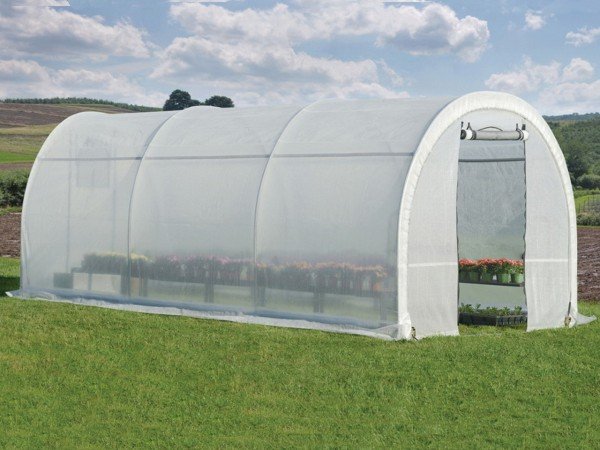
Dense agrofibre can be used for covering greenhouses
We recommend choosing geotextiles based on the climate and location of your garden. In southern regions, lighter options are suitable.
Dense agrofabric transmits significantly less light than lighter fabric, but it lasts much longer and can withstand heavy precipitation and gusts of wind.
Uses and types of material
Today, agrofibre is available in a variety of colors: black, white, and black and white. They differ not only in their application but also in the technology used.
Black
Black agrofibre is often referred to as mulch. Its dense structure allows only a small amount of light to pass through, but it allows moisture and air to pass through very well. Its low light transmittance minimizes the risk of weed growth.
Typically, the entire bed is covered with it, cutting out only openings for the crop. Berries are often grown this way. This ensures the plant receives sufficient light, but there's no need to worry about weeds choking it out. Watering and fertilizing the soil can be done without removing the film.
Black fabric perfectly accumulates heat and promotes rapid crop growth. It can also protect against frost down to -20°C. It is very durable, so it can last for several years.
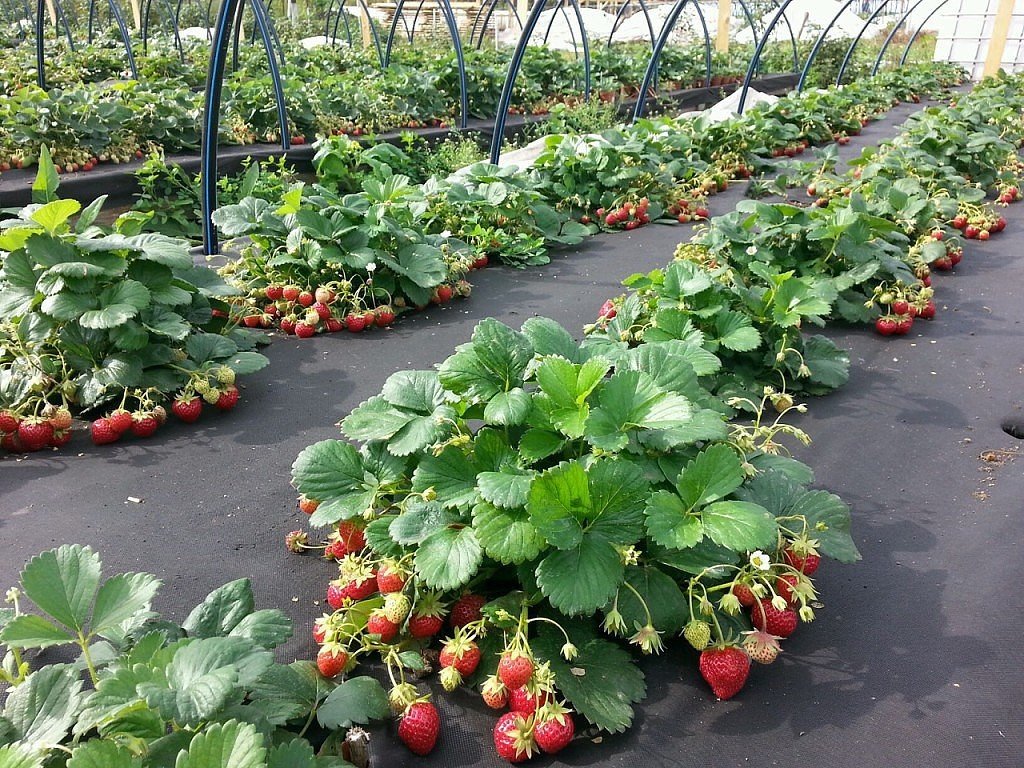
Black agrofibre is often called mulching
White
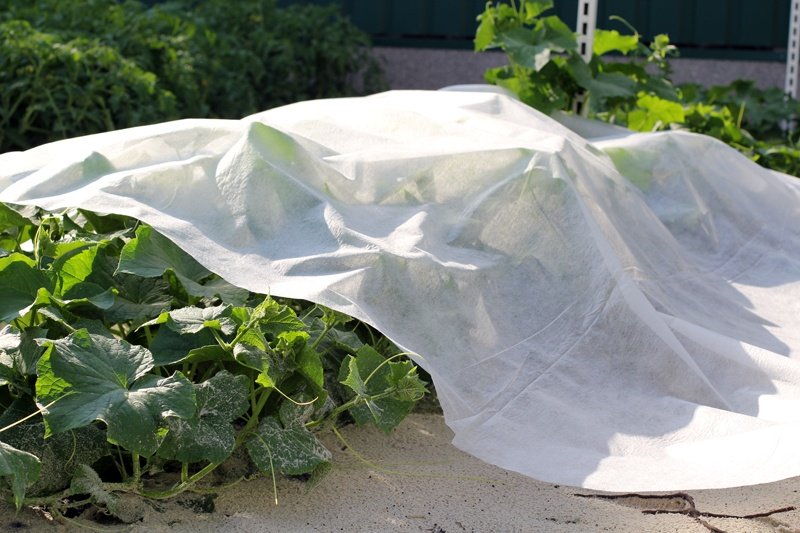
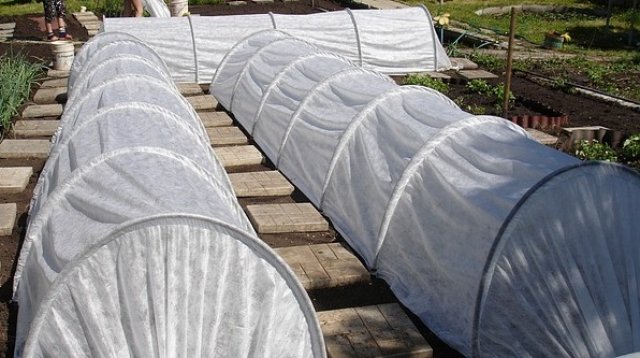
The main difference between black and white geotextiles is their ability to transmit light. White material is not used as mulch; it serves as a full-fledged covering material. It can be used to cover frameless plants (such as ornamental shrubs, grapes, currants, and raspberries), or as a covering for framed structures such as hotbeds and greenhouses.
White canvas ensures rapid ripening of crops, so it is often used for growing vegetables at home at any time of year.
However, it needs to be removed periodically to loosen and fertilize the soil.
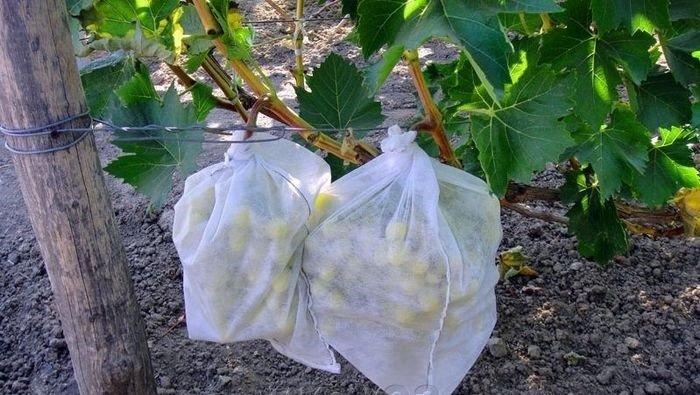
Benefits of shelter
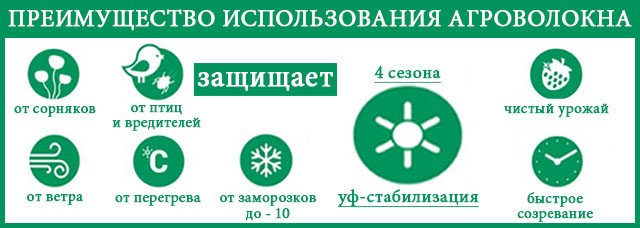
The use of various types of agrofibre is entirely justified by its undeniable advantages:
- low cost and the possibility of use for several seasons;
- light weight allows the material to be laid without supporting structures;
- has high light transmittance;
- provides access to air and moisture;
- protects crops from the negative effects of ultraviolet rays;
- accumulates heat;
- ensures microclimate stability – protects against sudden temperature changes;
- protects from precipitation and gusts of wind, pests and infectious diseases;
- suppresses weed growth, which significantly reduces the time required to cultivate the beds.
Advantages of using non-woven covering material
Proper storage and service life of agrofibre
The lifespan of geotextiles directly depends on their storage and care. Dirty material must be cleaned and washed thoroughly. Then, dry the material thoroughly, fold it, and store it in a dry, dark place. Rolling it is best. It's also important to ensure that the area is free of rodents that could damage it.
According to reviews, with proper storage and use, the material can last up to 3 years. However, avoid walking on it, placing heavy objects on it, or leaving it in direct sunlight or extreme cold (especially when wet).
Choosing the right agrofibre for its intended purpose will ensure the desired results and protect your crops from the negative impact of environmental factors. Therefore, before purchasing, be sure to consult a specialist or thoroughly review the material's terms of use.