
When is Easter in 2025 and how to celebrate it: traditions and symbols
Content
What date is Easter in 2025?
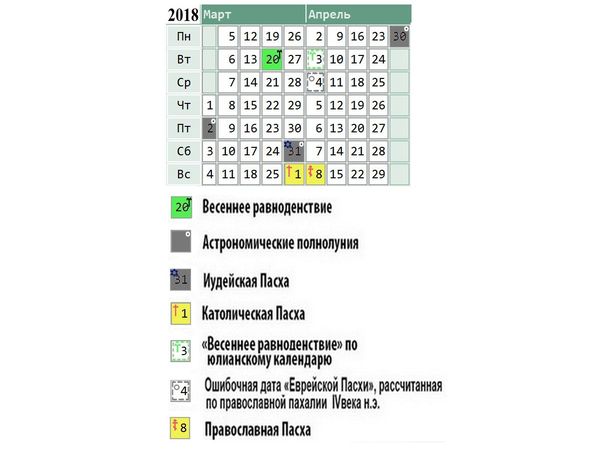
After the split between Orthodox and Catholic Christians, Easter began to be celebrated twice a year. The celebration is determined by the position of the moon and sun. Catholics celebrate Easter according to the Gregorian calendar, while Orthodox Christians calculate the holiday's date according to the Julian calendar. Therefore, Easter falls on a different date each year. In 2025, Catholic Easter will be on April 21st, while Orthodox Christians will celebrate it on April 28th.
Video "Easter: Rituals and Traditions"
This video will teach you about the main rituals and traditions of the bright holiday of Easter.
History and essence of the holiday
Easter is a Christian holiday, but its origins lie in the history of the Jewish people, who have their own holiday, Passover. The Bible tells how God helped free the Jews from 430 years of slavery in Egypt by commanding Moses to lead his people. According to Scripture, Pharaoh refused to let the Jews go, leading to the Ten Plagues of Egypt. The most terrible was the final punishment: every firstborn in Egypt was to die, including animals.
To prevent the punishment of the Jewish firstborn, each family was required to cook a year-old, unblemished lamb over the fire and quickly eat it whole with spices and unleavened bread. The doorposts and lintels of their houses were to be anointed with its blood.
After the misfortune that befell them, the Pharaoh allowed the Jews to leave Egypt.
From that day on, God commanded the Jews to celebrate Passover (the Hebrew word for "passed over," meaning the Almighty did not touch Jewish homes during the extermination of the firstborn) every year, commemorating His liberation. Since then, Passover has become the most important Jewish holiday.
The imagery of the New Testament Passover is interpreted as follows: the lamb is a prototype of Jesus Christ; just as the Jews were once freed from slavery through the death of a lamb, so Christ died for us, atoning for the sins of every person with his blood.
Customs and traditions
According to Easter traditions of old, girls would climb the bell tower and ring the bell—whoever rang the loudest would promise a bountiful flax harvest. People who missed church during Holy Week might be doused with water. In some villages, believers still go door-to-door singing songs praising Jesus, while hosts invite guests into their homes and treat them generously.
The well-known tradition of dyeing chicken eggs for Easter is shrouded in legend. One legend tells that after the Savior's resurrection, the disciples carried the good news from house to house. Mary Magdalene, a follower of Christ, decided to inform Emperor Tiberius himself. However, it was forbidden to approach him without a gift in hand. So the woman took a chicken egg and, entering the emperor's presence, exclaimed, "Christ is risen!" The emperor, laughing, replied that he would believe the dubious news only when the egg's shell changed color. At that very moment, a miracle occurred: the shell turned red. The emperor could only exclaim in amazement, "He is risen indeed!"
Many believe that the tradition of dyeing chicken eggs for the holiday originated from that time. Today, decorative Easter eggs are made from wood, glass, chocolate, sugar, and even gold.
Preparations for the holiday begin in advance. The week preceding the holiday is called Holy Week. On Maundy Thursday, believers rise before sunrise and bathe to cleanse themselves of all sins, and only then attend church. Then they begin dyeing eggs and baking Easter cakes.
On Saturday evening, all the faithful, dressed in their best, go to church for the all-night vigil. After the bells finish ringing, the procession begins, symbolizing the Church's journey to the risen Savior. To the sound of bells and singing, they circle the church three times. After the fast ends during the feast, the faithful break their fast at church or at home.
Symbols
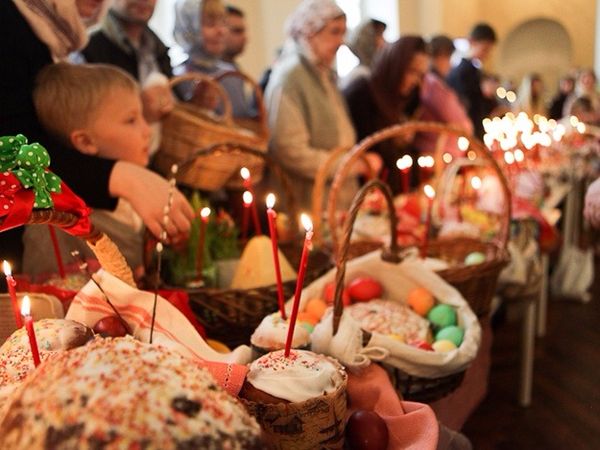
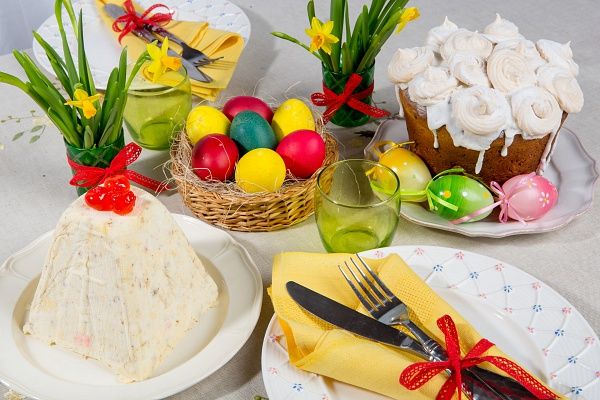
Painted eggs and Easter cake (kulich) are the most common attributes of the holiday.
Traditionally, after the pre-holiday fast, the first thing to eat is an egg that has been blessed in church. It's called a "krashenka" or "pysanka" (a "painted egg") because the eggs are decorated with various colors and beautiful designs the day before. These eggs are traditionally exchanged with friends throughout Easter week. The color red symbolizes the blood of Christ.
On Thursday, a sweet cottage cheese kulich must be made to dedicate it in church on Saturday. The kulich symbolizes the cave where Christ was buried. It testifies to the Savior's sacrifice, which reconciled God and man.
The Easter kulich (Easter cake) symbolizes the eating of bread by Christ and his disciples before the crucifixion, so that they would believe in his resurrection. This symbolic baked good is made from yeast dough.
For some cultures, the rabbit is the symbol of Easter. On the eve of the holiday, stores are filled with sweets shaped like this animal, symbolizing prosperity. Rabbit-themed designs adorn tablecloths, napkins, and plates. People dressed in Easter costumes stroll the streets.
In some countries, the Easter lamb, a reminder of the sacrifice of Jesus Christ, is the symbol of the holiday. During the holiday, people decorate their homes with sheep figurines, and roast lamb is the main dish on the table.
Another symbol is a flower wreath or bouquet, indicating eternal life.
Easter is also a spring holiday, symbolizing the awakening of all living things. So, a simple bouquet of fresh flowers can be a great gift for friends.
How to prepare and how to celebrate
After the service in the morning, everyone they meet is told, "Christ is risen!" to which they respond, "He is risen indeed!" After which, relatives or acquaintances kiss each other three times.
At Easter, you need to wear a new outfit, symbolizing the beginning of everything new.
On this day, a table rich in all sorts of delicacies is set. Easter is preceded by Lent, which involves dietary restrictions, and avoiding visiting. Close relatives and friends gather at the table. Symbolic dishes, as well as pies and Easter cookies, are always present. Meat dishes are a must-have on the festive table.
Many families make crafts for the holiday and decorate their homes. This activity is often entrusted to children, who hang Easter garlands, make envelopes with invitations to visit, and make candles in eggshells.
In Poland, for example, they hold folk festivals with circle dances around a bonfire. On Thursday, women bake "mazuriki" and "babas" (babs) from sweet yeast dough with various fillings. Marzipan and chocolate fillings are especially delicious.
Each day of Easter week is called bright (for example, Bright Monday).
Easter signs
- People prepared for the holiday by performing good deeds. It was believed that doing good to the disadvantaged would remove sin from the soul.
- According to legend, when the bell rings, one should wash oneself in the spring to gain health.
- On the night before the holiday, it's a good idea to bathe in a spring and bring some water home. This should be done silently, to bring prosperity to the home.
- To have a successful year, you need to greet Sunday sunrise outside.
- Easter cake baked according to old recipes can stay fresh for 40 days.
No matter how people celebrate Easter, the holiday means one thing: Jesus Christ died for us, for our sins, and rose again to give us eternal life with him in heaven.