
How Orthodox Christians celebrate Honey Savior
Content
History and essence of the holiday
It is believed that the word "Spas" itself is an abbreviation of "Savior." Thus, all three holidays are dedicated to Jesus Christ. Several important events are associated with the Honey Savior.
First and foremost, celebrations are held in honor of the All-Merciful Savior and the Most Holy Theotokos. The feast was established in 1164, when the Russian prince Andrei Bogolyubsky defeated the Volga Bulgars, and the Greek emperor Manuel defeated the Saracens. According to several sources, both victories were marked by a miracle: the icons carried by the troops began to emit enormous rays of fire, visible to all the combatants. After the victory, both rulers agreed to establish the feast, and church officials blessed this decision.
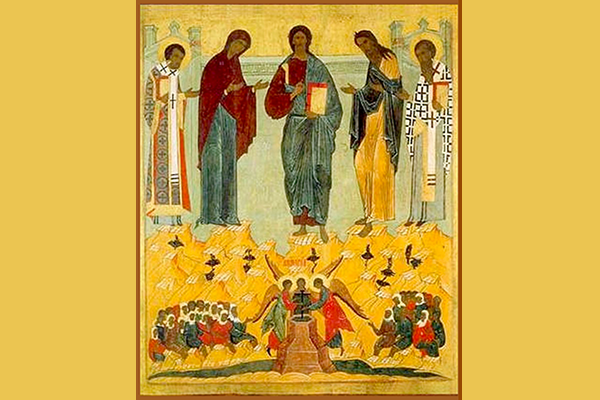
This day also commemorates the Procession of the Precious Wood of the Life-Giving Cross of the Lord. This is because in the 9th century in Constantinople, a piece of the Life-Giving Cross was brought to Hagia Sophia every year on these days. It was used to bless drinking water, and parishioners venerated it. This helped heal people from illnesses, which were particularly prevalent at this time of year due to the heat.
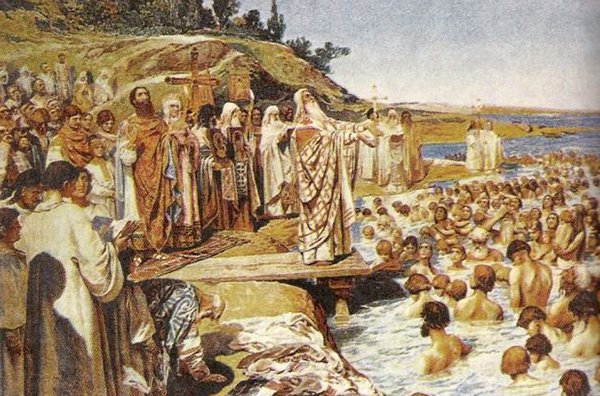
Historically, this date is marked by the baptism of Kievan Rus' by Prince Vladimir in 988. In memory of this momentous event, a minor blessing of the water is held. For this reason, the first Savior is also called the "wet" Savior or the "Savior on the Water."
This day is also associated with the veneration of the memory of the Maccabean martyrs: seven brothers, their mother Solomonia, and their mentor Eleazar, who were cruelly tortured and executed in 166 BC by order of the Syrian king Antiochus Epiphanes.
The Dormition Fast, which begins on this day, is the shortest but quite strict. People even call it "cut off" from Great Lent.
Finally, traditions associate this Savior with the collection and blessing of honey, since by mid-August the honeycombs are usually full.
Video "Honey Savior"
This video will tell you the history of the holiday and the traditions of Honey Savior.
When is it customary to celebrate?
According to the old calendar, Honey Savior Day fell on August 1st. According to the new calendar, it is celebrated on the 14th of the same month. On this day, people begin to bid farewell to summer: the days gradually shorten, the temperatures drop. The harvest and sowing of winter crops begin.
Honey Savior in 2025 falls on Tuesday.
Main traditions and rituals
Let's now find out how to celebrate this holiday.
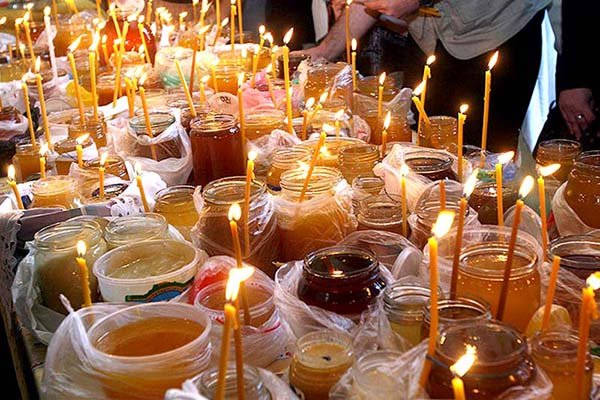
- Honey Blessing. According to tradition, this healthy delicacy can be enjoyed for the first time this year only after its blessing in church. It can be brought either in storage containers or in the honeycomb. Some of it should be donated to the church, so a separate jar or portion of the honeycomb should be prepared in advance. Beekeepers select the hive with the largest amount of honey and collect it in a special container—necessarily wooden and new. After visiting the church, some of the honey is given away to the poor. It is also used to prepare holiday dishes: gingerbread, cakes, meringues, pies, kvass, etc. It is customary to give appropriate sweet gifts to friends and relatives on the first Savior. Honey collected before this day is considered the most beneficial.
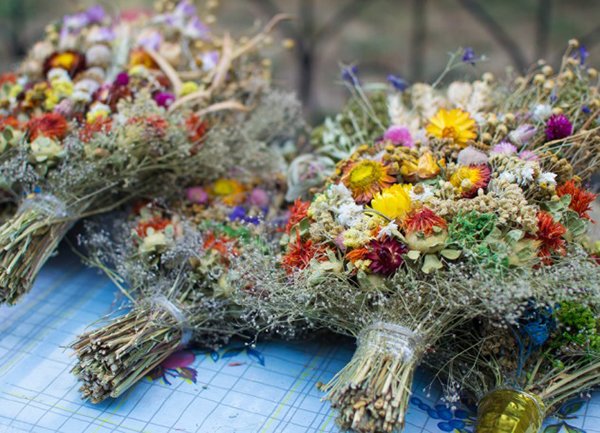
- Blessing of Flowers. In addition to honey, bouquets of herbs and flowers are also blessed in church on this day. The most important of these is the poppy. According to legend, its seeds should be sprinkled in the corners of the house to ward off evil spirits. On this day, they are also used in preparing sweet dishes. Other plants added to the festive bouquet include oats (which bring prosperity to the home), mint (which maintains peace and harmony in the family), viburnum (which bestows beauty upon young women), and rue and calendula (which protect against illness). This bouquet is tied with a red ribbon and kept in the house throughout the year. It is believed that women or young girls should gather it.
- Water Blessing and Bathing. On this day, water, new wells, and ponds were traditionally blessed. This day is considered the last day when one can swim in lakes and rivers—they become too cold later. On this day, any water has healing properties, strengthening not only physical but also mental health.
- Charity. An important tradition of this holiday is helping elderly or poor neighbors. For example, in villages, they were helped stock up on firewood for the winter or harvest the crops. In urban areas, you can give such people food (like honey or honey-based baked goods), repair something in their apartment, and so on. A good deed from a spiritual perspective would be to take gifts or treats to an orphanage or nursing home.
Following traditions will help you spend this day in a way that benefits your soul and body.