
The history and main traditions of Trinity Day
Content
History and description of the holiday
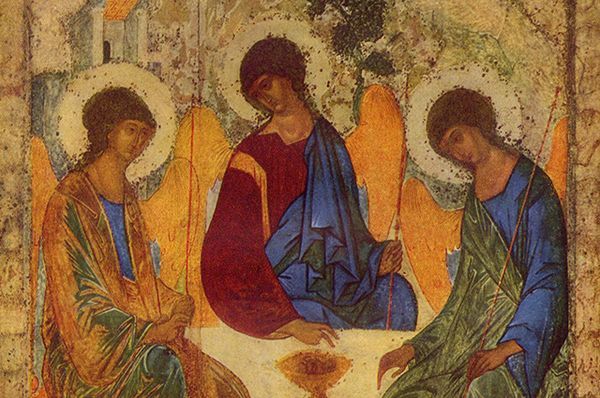
Trinity Sunday, or Pentecost as it is often called in church circles, is one of the great Christian holidays. Despite differences between Orthodoxy and Catholicism, it is celebrated by followers of both religions. The origin of this holiday goes back to the New Testament, which describes Christ's appearance to the apostles with instructions intended to prepare them for the descent of the Holy Spirit.
The descent occurred 10 days after the ascension and appeared to the apostles first as an all-consuming sound, then as fire. The fire was shared among the apostles, and by accepting it, they gained the ability to communicate in all known languages, bringing Christianity to all nations. For this reason, Trinity is also the feast of the founding of the Holy Church.
The Trinity of God—God the Father, God the Son, and the Holy Spirit—gives its name to the holiday, which symbolizes the divine unity that creates the world and bestows grace. The celebration of Trinity falls on the fiftieth day after Easter, hence its second popular name.
The holiday itself consists of two days: the first celebrates the Holy Trinity and the descent of the Holy Spirit (Pentecost Day), and the second honors the All-Holy Life-Giving Spirit (Spirit Day). The holiday was established in the fourth century, following the emergence of the dogma of the Trinity. Rus' adopted the celebration only three centuries after baptism. The holiday's extraordinary popularity is evidenced not only by its widespread religious services but also by the many folk rituals and customs associated with it.
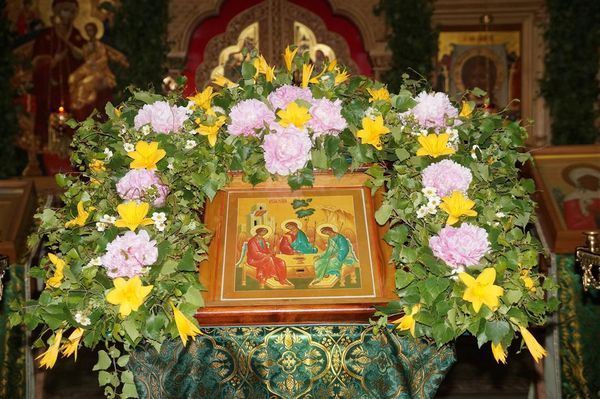
The symbol of the Holy Trinity, depicted not only on icons and church relics, is an equilateral triangle, indicating the equality of the components of the divine essence. The following symbolism is also well known: the hand symbolizes the Father, the lamb – the Son, the dove – the Holy Spirit.
Video "Traditions for Trinity Day"
This video will tell you about the main traditions of Trinity Sunday.
Divine services
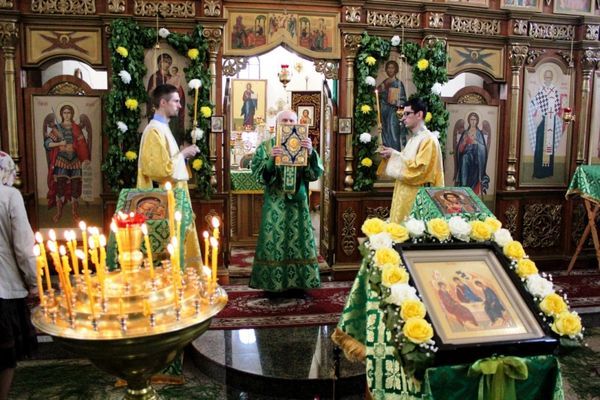
In churches, the holiday begins with a solemn service: an all-night vigil, a festive liturgy, and vespers, during which they ask for the sending of the Holy Spirit and commemorate the departed.
The extraordinary splendor and beauty of the decorations testifies to the importance and grandeur of the day. The canon stipulates that the service be celebrated in green vestments, as green is considered a symbol of the life-giving, creative power of the Holy Spirit.
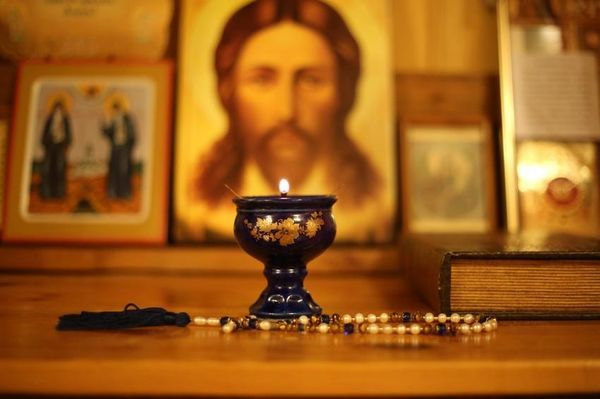
During the service, they ask for forgiveness of sins and salvation for the dead, mentioning those who died unnatural deaths. Those unable to attend church can pray at home, before the icons. On this day, all prayers will be heard and accepted.
Folk rituals and traditions
The celebration of Trinity became so ingrained in people's lives that very soon, in addition to religious services, folk traditions and customs for celebrating the holiday emerged. Many of these are still observed today.
Home decoration
On the eve of the significant day, homes and churches are meticulously tidied and all manner of lavish feasts are prepared. All rooms and fences are decorated with birch or maple branches, and the floors are covered with freshly cut grass. Historically, these branches were believed to act as a talisman against misfortune and misfortune, and the herbs were imbued with special healing powers. People would try to shed at least one tear on the herbs gathered on these special days to prevent the summer drought.
What can and cannot be done
On this day, it's customary to hospitably open the doors of the home and pamper family members and guests with festive dishes and baked goods. Traditionally, mothers of unmarried girls would save a piece of the celebratory cake until their daughter's wedding, to ensure her family life would be happy and prosperous.
As on any major Orthodox holiday, on Trinity Sunday one must not defile oneself with sins, slander, aggression, quarrels, gloating, or hypocrisy. Those who have quarreled must reconcile and forgive each other, those in need must be helped, and those suffering must be consoled. Greenery used to decorate the home or church must not be thrown away. It must be burned after Trinity Sunday.
On this day, it was unacceptable to engage in heavy work, especially any agricultural work. Getting married on this day was also discouraged, as married life promised to be difficult and full of adversity. However, asking for a wife on this day was considered very fortunate. Swimming was prohibited, as people believed that mermaids would rise from the seabed on this day and could do anything to a careless swimmer, even drag him to the bottom.
The Church forbids any fortune-telling, but customs proved stronger than the prohibition.
Divination
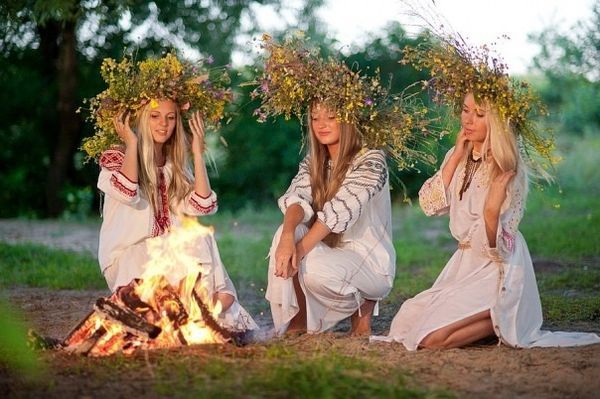
Young unmarried girls typically used fortune telling to discover their future, the name of their betrothed, love, and marriage. One of the most popular was fortune telling with a wreath. On a festive evening, girls would weave a wreath of certain herbs and leave it overnight in the yard. A withered wreath was a sign of minor troubles, while a fresh one meant prosperity.
Wreaths with lit candles were also floated down the river. A wreath that sank near the shore signified a short-lived relationship, one that floated far down the river signified a fateful meeting, and one that washed happily ashore signified a quick wedding.
Fortune telling using St. John's wort was very popular, the purpose of which was to find out about the feelings of a loved one: the herb had to be twisted until juice appeared; if the juice was clear, then the feelings were unrequited, red juice meant strong mutual feelings.
Signs and beliefs
The purpose of omens and superstitions was to predict the near future. Their significance was confirmed by centuries of folk experience. A rainy holiday meant a rainy summer, but a good mushroom harvest. Herbs had healing properties, and a person encountered by chance in the forest could be a forest spirit.
Thunder and lightning signified the expulsion of evil spirits, which could be appeased by leaving food in the forest. Clear weather meant a fruitful year. Also, on Trinity Sunday, people could commune with the departed by decorating their graves and visiting the cemetery for a conversation, sending them a message of remembrance and grief in the form of food left on their graves.