
Should honeysuckle be covered for the winter and how can I do it myself?
Content
Which species are afraid of the cold?
There are approximately 200 known species of honeysuckle, most of which are poisonous. A prominent example of the inedible honeysuckle is the common honeysuckle, commonly known as wolfberry. However, there is also an edible honeysuckle, renowned for its array of beneficial properties.
Edible species of shrubs include:
- blue;
- Caucasian;
- Altai;
- Kamchatka;
- honeysuckle.
Consuming this healing berry helps prevent diseases of the cardiovascular system, gallbladder, and gastrointestinal tract.
Heat-loving varieties of shrubs are:
- Brown;
- Japanese;
- shiny;
- pointed.
Frost-resistant varieties of honeysuckle include:
- azure;
- Blue Bird;
- long-fruited;
- Cinderella;
- Gerda;
- Leningrad giant;
- Moraine;
- Malvina.
Video: "How to Cover Honeysuckle Cuttings for Winter"
This video will show you how to properly cover honeysuckle cuttings for the winter.
Preparation for insulation
Preparing honeysuckle for winter is carried out in mid to late September. The main measures that help the shrub adapt to new weather conditions include:
- Watering. If the fall is dry, the plant needs regular and generous watering. If there is precipitation, additional watering should be either minimized or avoided altogether.
- Fertilizing. Applying phosphorus and potassium fertilizers nourishes the honeysuckle root system during the winter. Nitrogen-rich fertilizers are not used to prepare the shrub for cold weather. They stimulate the plant's vital processes, causing it to produce buds that will die under the influence of low temperatures.
- Repotting. Honeysuckle awakens quite quickly in the spring, so repotting is done in the fall, during its dormant period. The plant is carefully dug around, removed from the old hole, and moved to a new location fertilized with compost. The hole should be 10 cm deep.
- Pruning. This is performed on fruit trees older than five years. This procedure will give the bush an aesthetically pleasing shape, increase subsequent yields, strengthen the plant against cold weather, and rejuvenate it. Dry, damaged, pest-infested, and densely growing branches are pruned.
What to cover with
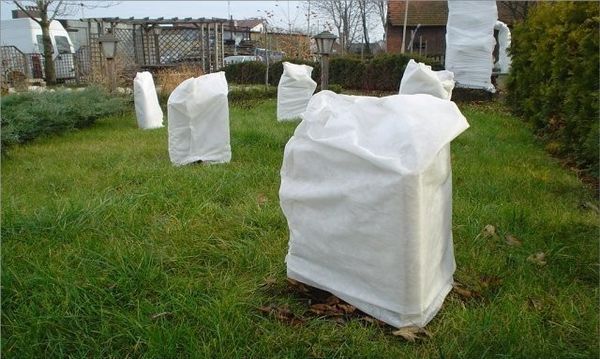
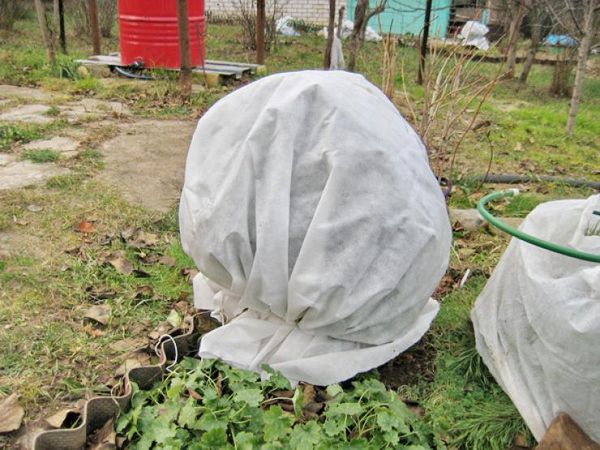
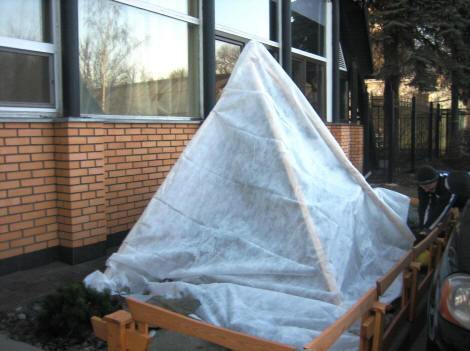
Most honeysuckle varieties don't require any winter protection. They can even withstand temperatures as low as -50°C without damage to their roots or buds. Ornamental varieties, particularly climbing ones, require insulation.
You can cover the bushes using improvised means:
- spruce branches;
- dry leaves (after making sure that there are no insect pests in them);
- humus;
- burlap.
Technology
The climate of a given region is the primary guideline for choosing autumn plant preparation. Shrubs growing in the Moscow region and the Volga region don't require special care or insulation. In this case, mulching is quite sufficient. Gardeners in the Urals also don't worry about their plants; snow is the main insulator in this region. As it melts, it is replenished. In Siberia, before winter, the shrub's branches need to be prepared—cut and tied with twine. The plant is bent to the ground and covered with netting to protect it from birds.
Honeysuckle is a frost-hardy and undemanding plant. Even periods of severe frost are no problem for most varieties.
Ornamental varieties will do just fine with light cover. It's the shrub's resistance to cold and fungal diseases that attracts many gardeners designing their own gardens. With timely pruning, watering, and harvesting, the shrub will become a true pride of the gardener, and the ripe honeysuckle berries will delight the whole family.