
How to cover garlic for the winter and what materials to use for this
Content
Planting and shelter time
One of the most important requirements for planting garlic is choosing the right time. It's important not only not to rush, but also not to prolong the process; you need to choose the optimal time based on the region's climate. In temperate climates, the optimal planting period is from late September to mid-October. If you plant the crop earlier, when daytime temperatures are still quite high, the seedlings will begin to sprout in the fall and will die with the first hard frost. Delaying the process is also not recommended: the soil may become too cold or overly wet, making the soil unsuitable for the cloves.
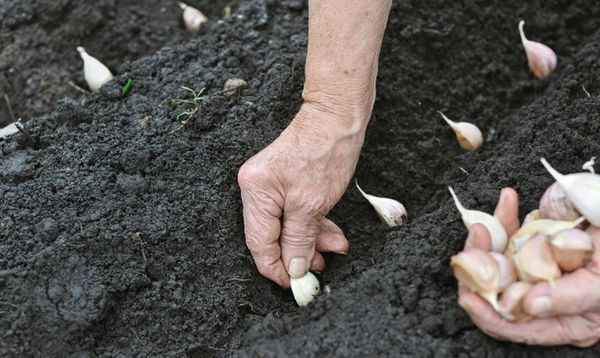
Planting in October has its own peculiarities. The cloves must be prepared by soaking them for several hours in a humate solution or lukewarm water. If the soil has already frozen in October, water it with warm water before planting the garlic cloves. Next, mulch or cover the bed. The choice of covering material depends on the weather conditions in the region.
Whether garlic needs to be covered for the winter depends directly on the growing location and climate conditions, specifically the presence of severe frosts and temperature levels. The course of the cold season is also important: whether there are any thaws, how frequent they are, the level of precipitation, etc. Properly designed cover serves several important functions:
- helps protect the planting from temperature fluctuations: short-term thaws can stimulate growth, but after they end, the sprouts will freeze and die;
- insulation ensures higher yields;
- Covering with organic materials promotes the growth of stronger and healthier early shoots;
- provides additional protection against fungal spores and pests;
- prevents excessive soil moisture and, as a result, rotting;
- The probability of garlic dying without cover is much higher than with it.
Video: "Why Cover Garlic and Onions for the Winter"
This video will tell you how and why you need to cover onions and garlic for the winter.
Materials and equipment
Immediately after planting, the bed is mulched with sand and ash in equal quantities. Then, the type of cover is chosen depending on the region.
Leaves
In regions with a moderate monsoon climate and clear, dry winters, where temperatures do not drop below 15°C (Primorye, for example), garlic is left uncovered or covered with a light, airy shelter made from a layer of dry leaves (oak, maple, or birch). The key is to ensure adequate airflow to the sprouts. Otherwise, they may rot.
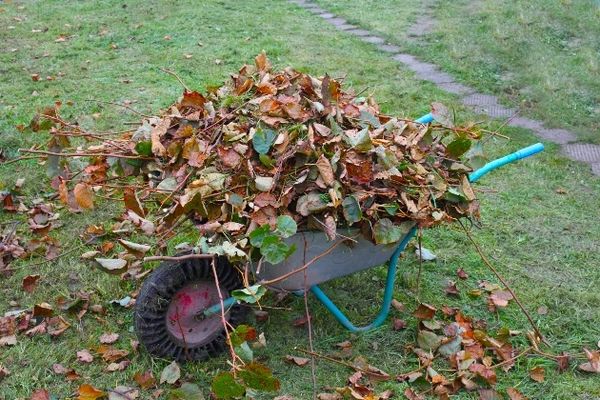
However, it's important to consider that damp foliage becomes covered with a frosty crust, preventing air from reaching the plantings and allowing moisture to evaporate. Another danger of this type of cover is that many larvae and fungal spores easily survive the most severe frosts in warm foliage.
Hay made from plant stems, without flowers or seeds, is also often used for cover. This lightweight covering not only allows air to pass through but also retains heat well. However, when wet, it becomes heavy and can become moldy.
Peat
In temperate climates, particularly in the Moscow region, peat is considered the best insulator for garlic, as it not only retains heat well but also absorbs moisture. However, peat also has its drawbacks: it increases soil acidity, and frequent thaws and subsequent frosts can cause a crust to form, creating unfavorable conditions for the cloves. Peat is most often used as mulch.
Sawdust
Sawdust is suitable as a cover for regions with dry, cold winters and very low-acid soil. The advantages of this covering material include high thermal insulation, excellent moisture absorption and retention, and a structure ideal for mulching. However, when sawdust gets wet, it blocks normal air circulation, impedes heat penetration, and increases soil acidity.
Agrofibre
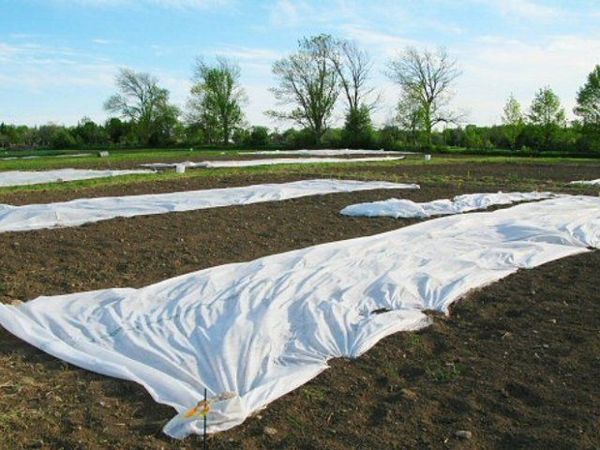
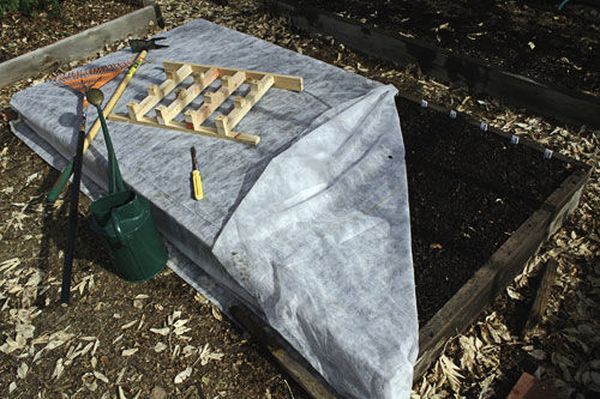
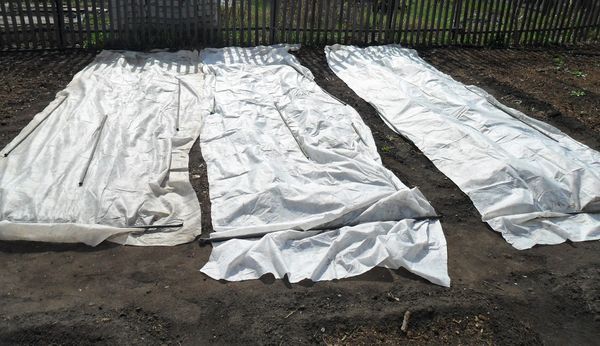
In northern regions, including Siberia, garlic must be covered. Severe frosts freeze and dry out the soil to a depth of more than a meter, so without cover, the crop will die. Synthetic materials such as agrofibre or spunbond are ideal for covering garlic in these areas. They create the most comfortable conditions for germination.
However, caution is advised – it's best to use only white material for covering. Black coverings attract too much sun, which can cause the sprouts to rot during thaws. At particularly low temperatures, agrofibre and spunbond should be additionally covered with spruce branches or dry leaves.
The main requirement for covering garlic is to take into account the region's climate. The covering material should be selected so that the garlic does not become too cold, too hot, or too wet. If the covering is made of natural materials, it should be replaced as needed.