
When and how to graft a peach tree
Content
What to vaccinate on
Despite the abundance of information online and elsewhere, many gardeners choose the wrong peach rootstock. If the rootstock is chosen incorrectly, the desired result will not be achieved. It's important to know what to graft the peach onto and which fruit trees are compatible with it.
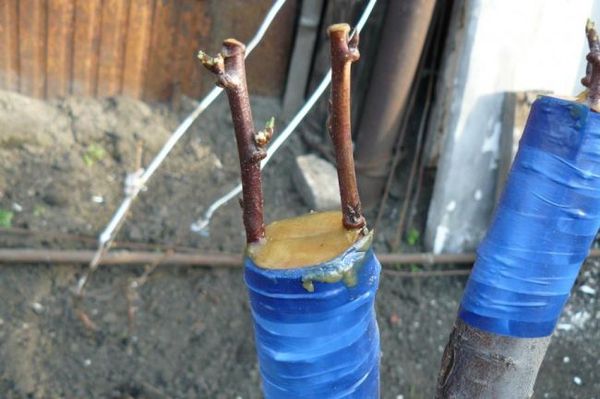
The following are considered the most successful options:
- cherry plum;
- plum;
- apricot.
Let's look at each of the plants in more detail.
Cherry plum
If you plan to graft a peach tree in a region with moist, saline soils, cherry plum is the optimal choice. Semi-wild cherry plum seedlings are ideal for grafting peaches in such soils. Peach trees in this environment grow to a medium size and produce a good harvest every year.
Plum
Plum seedlings are used as dwarf rootstocks for peach trees. For successful peach grafting, it's best to choose plum varieties such as the 'Hungarian Donetsk' variety. The 'Anna Shpet' variety is not recommended for this purpose. With this rootstock, approximately one-tenth of grafts fail. Although the trees will produce a good harvest, they can encounter numerous problems during cultivation, including the emergence and development of a number of diseases. Therefore, grafting a peach onto a plum tree requires complex tree care.
Apricot
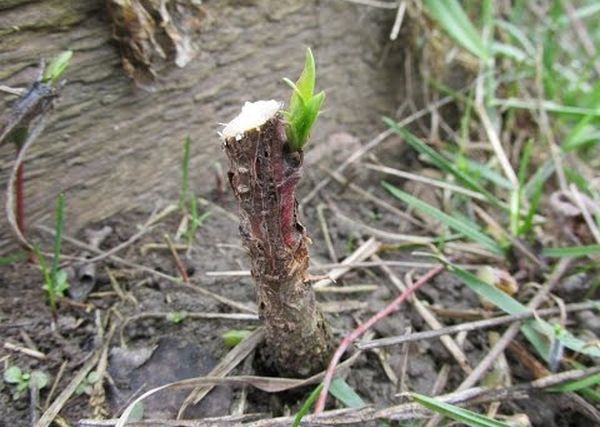
Grafting peaches onto this plant is very common among gardeners, as the two crops combine beautifully. Varieties such as 'Sochy' or 'Greensboro' are excellent choices. Apricot is generally considered a unique rootstock for peach (different varieties). Many apricot varieties are frost-resistant. They thrive in any soil and require little care.
Selecting scion and rootstock
Almost any peach variety, including nectarine, can be used as scion. Suitable rootstocks include those that won't negatively affect the peach tree and will complement it well:
- Spring Flame. This is a plum-cherry plum hybrid. The trees are medium-sized, suitable for southern and temperate regions. They are frost-resistant;
- Kuban 86. A semi-dwarf rootstock that has a powerful root system and is also characterized by resistance to nematodes;
- VVA-1. This is also a hybrid form of cherry plum and plum. It is resistant to frost and drought. The optimal scion variety is Sverkhranniy or Kievskiy ranniy.
- Speaker. A hybrid of cherry plum and plum. Suitable for growing in temperate climates. Resistant to diseases.
When to vaccinate
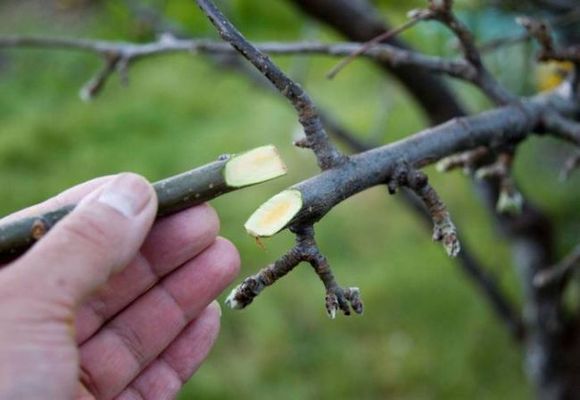
The answer to this question depends on the tree's age and the chosen technique. Experts recommend bud grafting (inoculating a peach tree with a bud) in the spring or summer. If you're a beginner gardener, it's best to perform this procedure during the summer months. Butt budding should be done in the morning or evening, as the buds will dry out too quickly during the day. If crown budding is used, the optimal time is August. Copulation grafting is best done in the spring.
Basic methods and step-by-step instructions
There are several basic methods for grafting a peach tree. The first method is to take a scion and cut off a bud. The bud should be approximately 3.5 cm long. It must have a bud located approximately in the center of the bud. Then, cut a strip of bark from the rootstock.
Its length should also be 3.5 cm. Trim the resulting strip, leaving about 1 cm at the bottom. Place the shield underneath it so that it fits over the bark you removed. Wrap the attachment point in plastic.
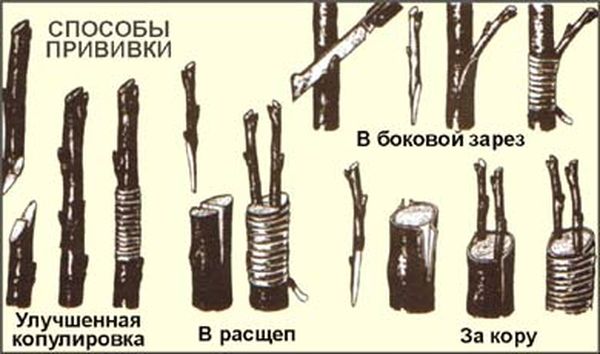
Another method is copulation. How to graft a peach tree this way? First of all, it's important that the rootstock and scion be the same thickness. A diameter difference of no more than 25% is acceptable. First, make diagonal cuts on both trees. They should be the same size for best fusion. On the scion, make a third of the cut and make a slit. Repeat the same steps with the rootstock. A length of 1.5 cm is sufficient. Attach the scion to the rootstock and wrap them in plastic wrap.
Further care
It is important to properly care for grafted crops.
You'll know if the plant has taken root by the condition of the petiole. This usually happens on the seventh or tenth day. After a month, you can remove the plastic wrap or tape. The cut sites should be treated with garden pitch. If you grafted onto a standard tree, you'll need to prepare the tree for winter. It should be earthed up high. The following spring, the graft site should be treated with 3% Bordeaux mixture.
Video: Peach Budding
This video will show you how to properly graft a peach tree.