
Why Grow a Flat Fig Peach
Content
Description of the hybrid peach
Upon learning the name of flat peaches, many people conclude that these fruits are a cross between peaches and figs. However, this is a mistake: despite the name, the fig peach is a variety of the peach itself, not a hybrid of the two plants.
The most common theory about the origin of this variety is that the "peach-fig" was developed from a wild fruit that grew in Asia. The first mentions of these fruits are found in China, which is why they are also called "Chinese peaches."
The tree with a spreading crown often reaches 5 m in height. Standard varieties are also available. The flowers are light pink, reminiscent of rose hips. Fig peaches are more frost-hardy than nectarines or common peaches, including those susceptible to recurrent spring frosts.
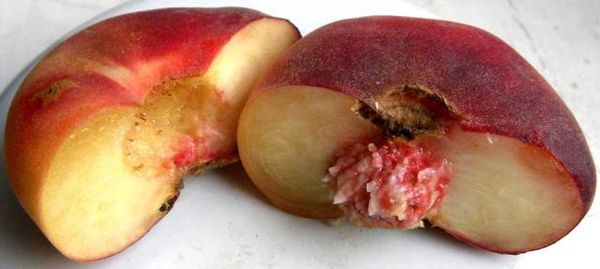
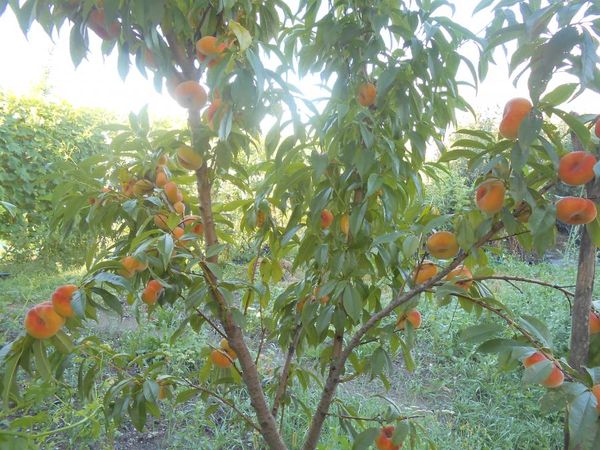
This fruit looks like a peach, only flattened. It's this disc-shaped shape that gives it the nickname "fig." The fruit's flavor is exactly like that of a peach, but richer and more uniform. The skin is less hairy than other varieties. The pit is small.
The best varieties
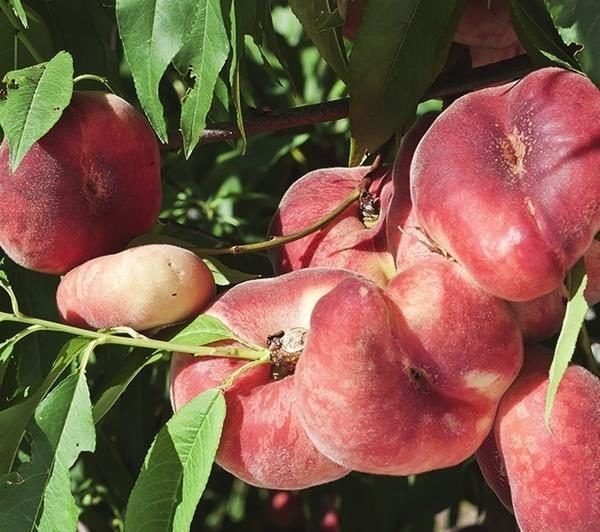
Now let's get acquainted with the description of the best varieties of fruit.
Nikitsky Flat
The Nikitsky Flat peach is considered the most suitable for growing in temperate climates. It is a relatively short tree with a spreading crown. The fruits are sweet, slightly spicy, juicy, and high in sugars (approximately 12.63%), with virtually no acidity. The flesh is light creamy and fibrous. Weight ranges from 94 g to 120 g. The aroma is mild and pleasant. The harvest ripens in mid-August.
This fig peach appeared when the Rogani Gou and Chinese Turnip varieties were crossed.
Vladimir
This variety is characterized by high resistance to a number of physiological and infectious diseases. Frost resistance is average. The fruits are large (up to 180 g). The flesh is juicy and sweet, without tartness, creamy in color, and fibrous. The skin is firm. The pit separates easily. The harvest ripens in early August. The tree is medium-sized, with a compact crown. The yield is high.
Sweet Cap
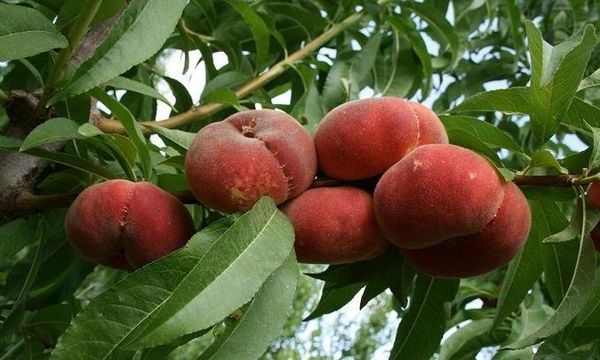
The tree is medium-sized. Fruiting begins in the third or fourth year. An important characteristic of this variety is that all the fruits ripen almost simultaneously (around mid-August). The yield is good. The fruits have burgundy skin and white flesh, weighing approximately 140–150 g. They have a sweet and sour taste, pleasant to the palate.
Features of cultivation
Let's look at how to properly grow a fig peach.
Landing
This tree thrives and produces fruit in a sunny location; in shade, the harvest may not ripen. The optimal planting location is a south-facing garden, protected from the wind. Observations have shown that the fig peach grows well in the same conditions as grapes. It does not tolerate damp or waterlogged areas, partly due to its weak resistance to gray mold. Groundwater should be at least 3 meters below the soil level.
To begin, choose a flat peach variety that's suitable for your area. One-year-old seedlings take root best.
Keep in mind that this variety begins flowering relatively late—in mid-April. The harvest ripens in August, so flat peaches can only be grown in regions with long summers.
Planting is recommended in the fall (late September - early October), but spring (March) is also acceptable. The planting hole should be approximately 60 cm deep and in diameter. Before planting, mix the garden soil with fertilizer. For black soil, add 800 g of wood ash and mineral fertilizers (100 g of potassium and 200 g of superphosphate). Poor soil should also be enriched with humus, compost, or manure (2 buckets).
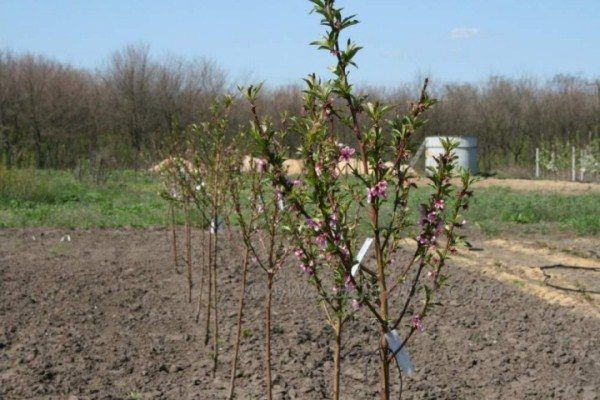
The root collar of the seedling should be located above ground level.
After planting the seedling, the soil must be compacted, watered generously (2 or 3 buckets) and mulched with a layer of up to 10 cm.
By the way, you can grow a flattened peach from a seed. To do this, soak the seed in water for a week, then prick it (without damaging the kernel) and plant it in a pot. In the spring, before flowering, transplant the seedling into open ground.
Care
To grow a good harvest, you need to provide the tree with regular watering: once every two weeks, 20–25 liters per peach.
Proper fruit growing also requires regular fertilization. Nitrogen fertilizers, such as urea, are recommended in the spring. This will strengthen the growing shoots and promote faster development. In the fall, phosphorus and potassium are added. Organic matter (manure, compost, or humus) is added every 2-3 years.
If too many ovaries are formed on a tree, some are removed to form a larger crop.
Autumn and spring pruning are necessary. Prune away diseased, drying, or winter-frozen branches. Remove shoots growing vertically upward (sucker shoots) and inward. During formative pruning, all branches are shortened to 50 cm. Treat the cuts with garden pitch to prevent infection.
Peach tree care includes preventative treatments against pests and diseases. Leaf curl and fungal infections, particularly gray mold and powdery mildew, are particularly dangerous for these plants. Spring spraying with copper sulfate (1%), as well as systemic and contact fungicides, can help prevent these infections.
It's recommended to insulate the trunk for the winter. This can be done with burlap or plastic. You can also cut a cardboard box with a bottom and place it around the tree. The distance from the trunk to the walls should be approximately 60 cm. When the temperature drops to -5°C, fill the box with straw.
Advantages and disadvantages
Why do many gardeners prefer to grow fig peaches?
Important advantages include the trees' frost resistance and the flower buds' greater resistance to spring frosts compared to other peach varieties. Many prefer this variety for its rich flavor: unlike regular peaches, the flesh doesn't become watery near the pit. The flattened shape of the fruit makes it much easier to transport.
The disadvantages include low resistance to gray mold.
Video: Growing Saturn Fig Peach
This video will tell you about the Saturn fig peach variety and how to grow it.