
What diseases and pests are peaches susceptible to and how to get rid of them?
Content
Typical tree diseases
Firstly, this plant is considered demanding in terms of care, requiring considerable effort. Secondly, not every region's climate is suitable for planting this fruit tree. To top it all off, peach trees are also susceptible to numerous diseases and pests. This last factor requires careful management.
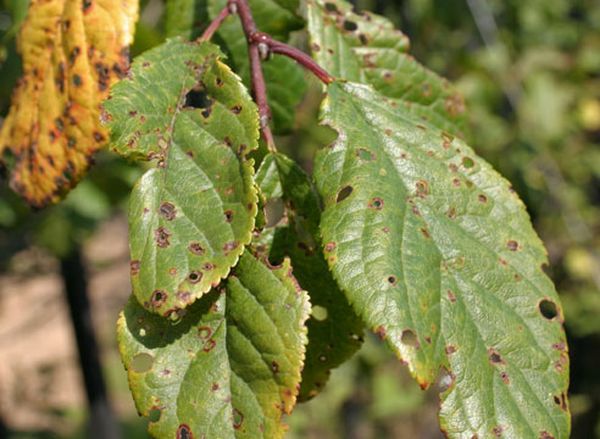
Why do leaves curl, then crack, and fall off? Other causes also occur: raised red spots appear on the tree's leaves, or the tree suddenly begins to turn yellow and drop its leaves. All of these events, including yellowing and leaf drop, occur for a reason and are usually just the first sign of a disease. To know for sure what to do if your peach tree's leaves crack and curl, you need to understand the wide variety of diseases. That way, when a threat arises, you'll already be familiar with it.
Clusterosporiasis
How does peach clasterosporium leaf spot manifest itself? Initially, you may notice small brown spots with a crimson border appearing on the tree's leaves. When the affected part of the plant turns red, bursts, and dies, a hole forming in its place. This is why peach clasterosporium leaf spot is often called hole-in-the-hole.
This disease can harm not only the peach leaf blade, but also its shoots. Orange spots form on them, eventually killing the entire branch. This leaf disease occurs in damp weather or due to winds that carry the fungus that causes the disease. Spraying the tree with copper oxychloride during bud swelling will help eliminate the disease.
Leaf curl
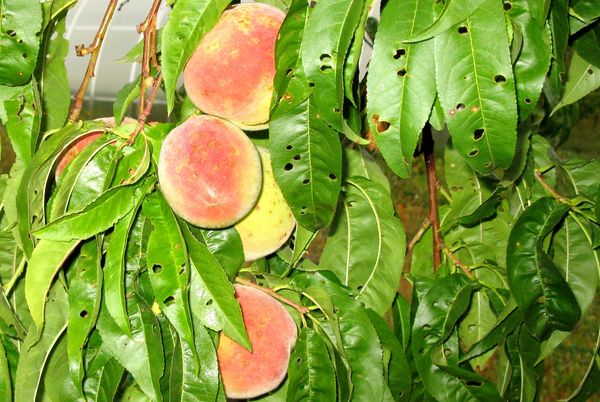
Peach tree treatment for diseases and pests (such as chlorosis) may also be necessary in the case of leaf curl. Initially, reddish swellings appear on the leaf blades, which later become covered with a white coating. The disease is caused by a fungus that spreads from tree to tree during prolonged, rainy springs. This affliction poses a serious threat to peach trees: if not treated promptly with a fungicide (such as "Delan"), the affected leaves will fall off, and the plant itself will initially be stunted and eventually die. The primary control measure is pruning the affected parts of the tree. After removal, all affected parts must be burned.
Powdery mildew
Powdery mildew is one of the most dangerous diseases of garden peaches. This disease is dangerous not only to the plant's leaves, but also to the shoots and even the fruit. All of them become covered with a light coating, somewhat reminiscent of a spider web. Colonies of this fungus are spread by the wind, especially during hot summers, so even after effective treatment with "Delan," your plant may become infected again.
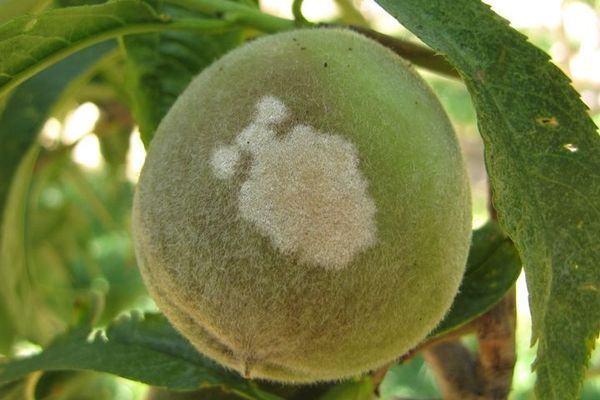
Powdery mildew is best controlled by removing affected shoots, branches, fallen leaves, and fruit. This will prevent the disease from spreading further. Treating the tree with Topsin or Topaz has also proven highly effective. For added effectiveness, you can also spray the plant with insecticides in June.
Moniliosis of stone fruits
Moniliosis of peach trees is also considered dangerous. This disease manifests itself during the growing season, but infection occurs during the flowering stage. The curled flowers turn brown and fall off. But this is only the beginning. As the disease progresses, it causes the wood to dry out, penetrates the ovaries and fruits, causing them to die. Treatment includes timely pruning and burning of affected parts of the tree. Remove fallen fruit from under the plant. Control measures include preventative spraying of the tree with Bordeaux mixture.
Fruit rot
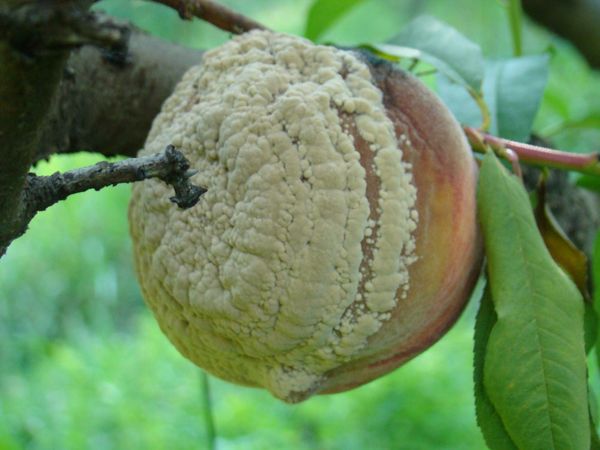
This peach disease primarily affects the fruit. It gradually becomes covered with gray spots, eventually resulting in completely rotten fruit. Interestingly, if the fruits touch each other, further infection is inevitable. The disease can only be prevented by treating the plant prophylactically before it blooms.
It is recommended to repeat spraying after the flowering phase and during the fruit formation period.
Tree pests
Having discussed peach diseases and their treatment with Delan and other fungicides (read the instructions), don't relax. Pest infestations also pose a serious threat to the plant. Even if you spot the first suspicious signs early, you need to know exactly what you're dealing with. Therefore, it's important to understand which pests can harm garden peaches.
Aphid
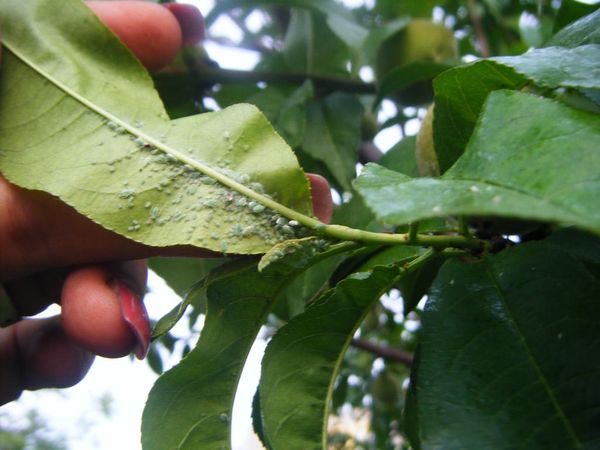
A frequent infestation of aphids primarily affects the shoots, not the leaves. The insects literally suck the plant juices from them, causing entire parts of the tree to dry out. Over time, the leaves also curl and fall off. It's best to combat an aphid infestation at an early stage, as if the disease progresses, only strong pesticides can save your peach.
Weevils
This disease is especially dangerous for the plant's buds, flowers, and buds. While the peach fruit itself won't be affected, the parasites can lay eggs inside, which can initiate the development of various fungal diseases on your fruit tree. How do you combat these pests? The best solution is to spray the tree before the buds swell. Whitewashing the peach tree trunk with lime has also proven quite effective.
Ticks
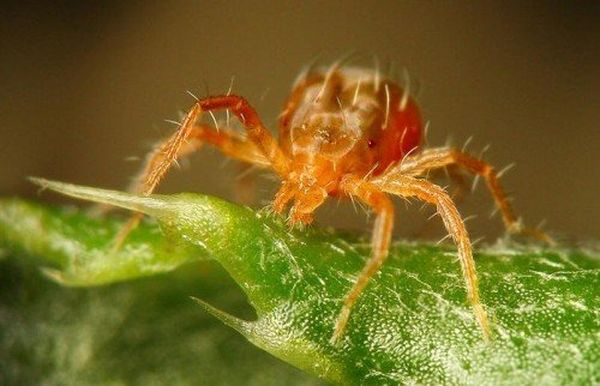
These peach pests are somewhat spider-like in appearance. They can survive even low winter temperatures, finding shelter in the cracks of the tree's bark. In the spring, the pests "resurrect" and begin sucking plant sap. This causes the peach leaves to curl and fall off, shoots to stop growing, and the tree itself to stunt. If your peach tree is already infested with a colony of mites, a full harvest is unlikely. Regular preventative pruning can prevent this infestation. If the pests have already established themselves on the plant, use organophosphates and pyrethroids.
Fruit moth
Spraying the tree against fruit moth is also recommended. This gray, narrow-winged moth overwinters under the bark, much like mites. In the spring, this pest becomes active and begins to eat peach shoots, including the core. This slows the growth of the fruit tree, as shoots begin to wilt and die, and this is precisely the fruit moth's cause.
To avoid having to buy Delan and other fungicides to combat it, promptly remove fallen leaves and fruits from under the tree, and trim off dying parts of the plant.
Codling moth
This pest can easily survive the winter under tree bark, fallen leaves, or damaged parts of shoots. It's dangerous not only because it actively feeds on shoots, peach buds, and even young pits, but also because it transmits various fungal diseases. Purchase a high-quality fungicide to combat codling moths.
Effective prevention
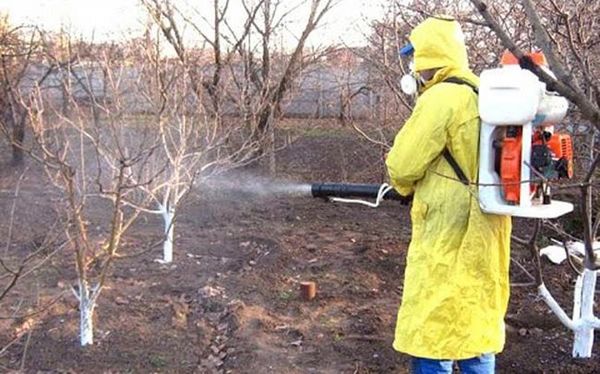
To avoid having to learn how to combat certain diseases of your peach tree (such as chlorosis), it's important to know what preventative measures will prevent illnesses and pest infestations. You can prevent chlorosis and other diseases by following these recommendations:
- Before flowering, cut off dried branches;
- After pruning, the shoots are burned;
- with the arrival of spring, you need to take care of spraying the tree with chemicals;
- When the fruits form and ripen in July, it is very important to apply complex fertilizers and water the tree well.
To avoid treating shoots against chlorosis or powdery mildew on garden peaches, preventative measures are necessary.
Video: "Proper Care of Peach Trees"
This video will show you how to care for peaches in your garden to ensure a bountiful harvest.