
Signs and treatments for pepper diseases
Content
Alternaria
This disease is often called dry spot, which is also common on tomatoes. Alternaria leaf spot is a fungal infection caused by sudden temperature changes, such as intense heat followed by frequent heavy rainfall. Both newly planted seedlings and established bushes in the open ground are susceptible.
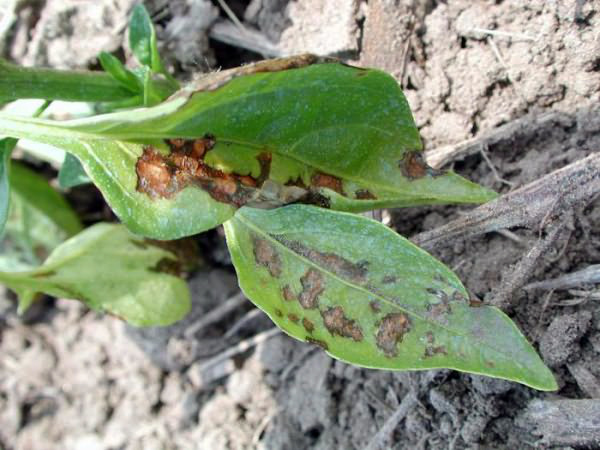
Main features:
- the appearance of brown spots on the lower leaves, which gradually spread to the trunk and fruiting part;
- black plaque on the damaged surface of the plant (especially after rain or in high humidity, if care consisted of excessive watering).
Control and prevention measures:
- compliance with crop rotation rules, when peppers are grown again in the same place no earlier than after 4 years;
- preliminary seed treatment with Fundazol;
- immediate treatment of plants with organic agents (Trichodermin or Fitosporin) if the first signs of disease appear;
- application of fungicides Ridomil Gold, Quadris or Tatu in advanced stages of pepper disease.
Gray mold
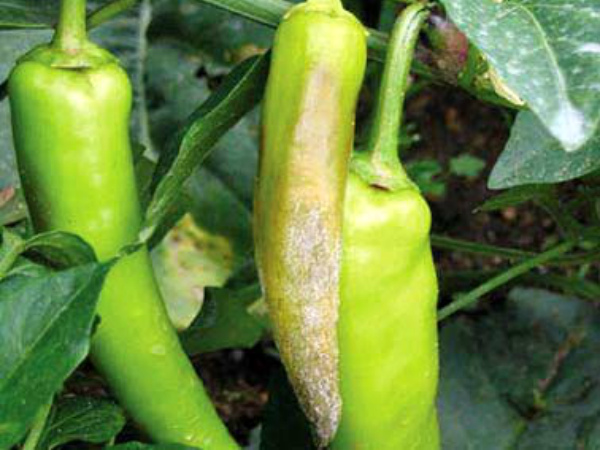
The disease is caused by another nasty fungus that attacks the fruit at all stages of ripening. As a result, the peppers become covered with rotten spots and gray mold. The most favorable period for the disease to develop is rainy weather, when the plant is growing outdoors.
The following will help get rid of gray mold:
- spraying with fungicides - Barrier and others;
- removal of affected parts of the bush.
White rot
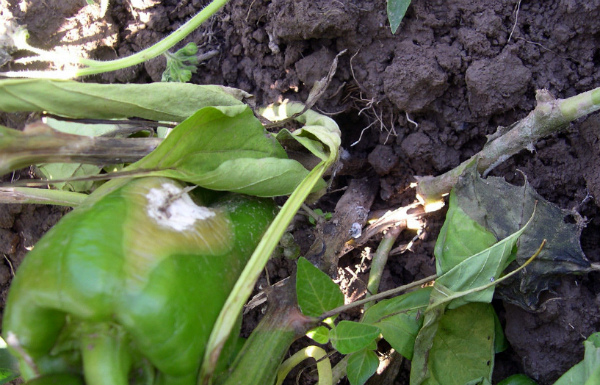
Sclerotinia leaf spot is common among many vegetable crops and is characterized by the appearance of a white, fluffy coating on the base of the stem and hard, black growths within it. The fungus softens the tissue and disrupts the flow of water and nutrients. As a result, the affected plant, all parts of which turn white, wilts and dies, and the vegetables become pale and watery, covered in white flakes.
Sources and causes of white rot:
- contaminated soil that was not properly cared for before sowing;
- failure to comply with storage and maintenance conditions in the greenhouse;
- acidic soil oversaturated with nitrogen fertilizers;
- rain and cool weather.
Preventive and control measures to help get rid of sclerotinosis:
- Peppers and other plants shouldn't be grown in the same bed. Lettuce, parsley, cucumbers, carrots, cabbage, horseradish, beans, and onions are commonly affected.
- It is necessary to remove all plant debris from the previous season, both in open ground and in greenhouses.
- Highly acidic soils need to be treated with lime.
- It is necessary to disinfect greenhouses and hothouses before planting seedlings.
- It is necessary to regularly inspect the plants (at least once every 10 days) and remove damaged areas that have turned white or black, wilted leaves and shoots.
- It is important to follow the watering rules - only warm water and an optimal level of humidity.
- Affected areas should be treated with copper-containing preparations and then powdered with crushed chalk or charcoal.
Blossom end rot
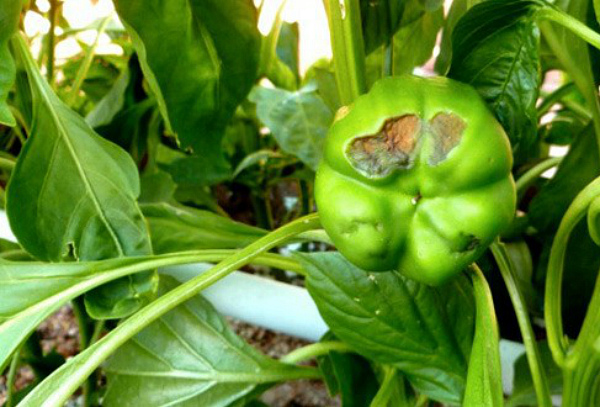
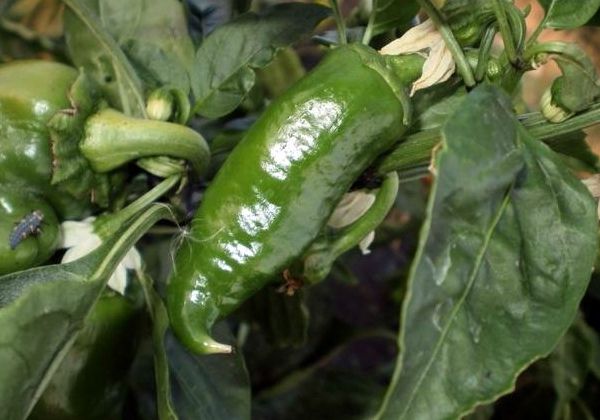
One of the most common problems affecting peppers is blossom-end rot, which often affects young plants, especially in greenhouses. Bacterial lesions cause gray spots with a dark border on the fruit, while infectious lesions are characterized by water-soaked spots that gradually harden and lead to rotting of the peppers. Another sign of the disease is leaf curling and wilting.
Most often, this type of pepper disease is caused by an excess of nitrogen or a lack of calcium in the soil, as well as insufficient care with a violation of the moisture level due to irregular watering, which peppers do not like.
What will help get rid of blossom-end rot:
- abundant watering;
- burning of affected specimens;
- spraying with 0.4% potassium chloride (1 ampoule in 30 parts water) and root feeding with calcium nitrate (20 g of nitrate per 10 liters of water), which are carried out 3-4 times during the growing season;
- control of nitrogen fertilizer concentration in greenhouse soil.
Withering
There are several types of pepper wilting. Why they occur and how to deal with them are discussed below.
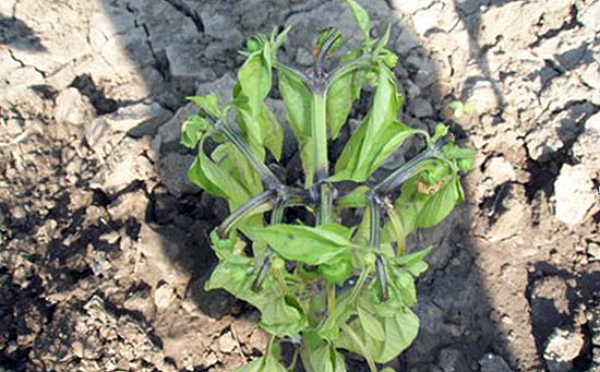
Verticillium wilt, caused by fungi, affects many vegetable crops, including tomatoes, potatoes, eggplants, and cucumbers. Shortly before flowering, their leaves begin to deform at the internodes, turn black, and stunt, with mottled spots appearing. If the disease progresses and is left untreated, the leaves turn yellow and die in dry, hot weather or hang limply along the stems during rainfall. A dirty white coating appears on the affected tissue, similar to that left by spider mites on peppers.
Verticillium wilt spreads from the roots to the top of the plant, gradually killing the entire plant. Fruit either fails to set or becomes small and wrinkled. Pathogenic fungi survive in open soil or plant debris and enter the plant through roots or wounds caused by tillage or transplanting. The disease is typical for greenhouses and hotbeds, but can also affect open-ground plants, which require very careful maintenance. The fungus can survive in the soil for a very long time, forming chlamydospores and microsclerotia, which are very difficult to eradicate. The parasite actively develops at low humidity and elevated temperatures in soil with a neutral reaction.
Verticillium wilt should be combated in a comprehensive manner, which involves the following measures:
- growing plants in a 4-5 year crop rotation;
- destruction of all plant debris;
- planting only healthy seedlings that are provided with proper care;
- soil disinfection;
- maintaining the humidity level within 85%, which is achieved by regular and abundant watering;
- loosening the soil after moistening is a mandatory criterion for caring for pepper seedlings;
- fertilizing with phosphorus-potassium fertilizers, no more than 3-4 times per season;
- increasing resistance to disease through foliar treatment with solutions of microelements (10 g potassium permanganate, 2 g copper sulfate, 3 g boric acid and 2 g zinc per 10 liters of water);
- treating the roots with wood ash (1 glass per 10 liters of water) and 0.5% superphosphate extract;
- spraying plants with fungicidal preparations (Trichodermin or Previkur) if the disease is in the active stage.
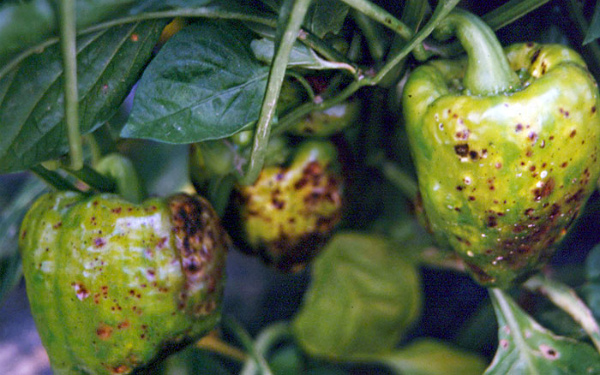
Fusarium wilt is particularly troublesome, affecting crops at all stages of development. The disease begins with characteristic yellowing and leaf drop, gradually leading to root rot and death of the plant. Treatment and care rarely cure the disease, so the most effective method is careful uprooting and destruction of the affected plant.
Preventive measures against fusarium are reduced to the following actions:
- choose varieties and hybrids resistant to the disease;
- 2 weeks before planting, treat the seeds with Fundazole (0.1 g of the product per 10 g of seeds) or dust them with Trichodermin in the same ratio immediately before sowing;
- Get rid of weeds and plant debris in a timely manner, especially nightshade plants.
Spotted wilt, often called pepper bronzing, is also difficult to get rid of. A brown coating and gray (or purple) spots appear on the leaves, gradually affecting the petioles and young branches. Over time, the upper part of the plant wilts and dies, and the peppers themselves become covered with green, brown, or yellow ring-shaped spots. If the first signs of the disease are detected, stop watering and harvest the mature crop. Treating the plants with Fundazol produces good results.
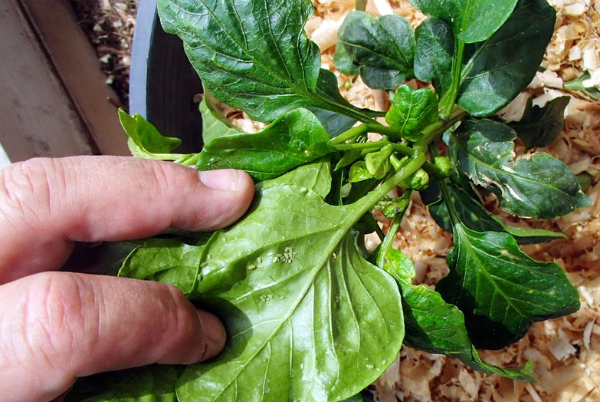
Wilting is also caused by pests that feed on plant sap and attack plants in open soil. The most common pepper pests are slugs, mites, and aphids. These are the main carriers of infections and viruses.
Ants are often found on the plant, feeding on the honeydew secreted by the aphids. They infest the young and most nutritious parts of the plant, causing the plant to wilt if not addressed promptly.
Having ants in close proximity has its advantages and disadvantages. These tireless workers constantly loosen the soil, which improves its structure and fertility by enriching it with potassium and humus. However, they also increase acidity, which can be detrimental to peppers. Ants are excellent at controlling spider mites and slugs that infest the plant's leaves, but they also enjoy feeding on seeds and young seedlings planted in the greenhouse.
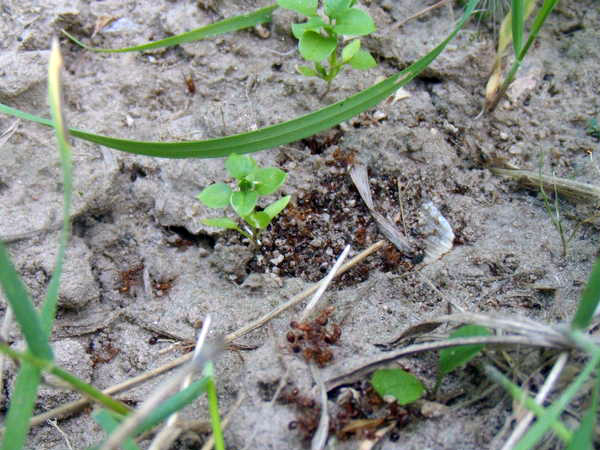
There are many ways to eliminate ants, ranging from simply destroying the nest, which will force them to move elsewhere in the garden, to using sweet baits and chemicals. Experienced gardeners do not recommend completely eliminating these "neighbors" from their garden beds. Ants have a painful bite and can damage crops and seedlings, but the benefits of their presence are far greater.
Over the course of a season, an ant colony consumes a huge number of insect pests, which form the basis of their diet, significantly aiding in pest control. Ants mix the soil to a depth of up to 70 cm, enriching it with magnesium, potassium, phosphorus, and magnesium, improving air access to plant roots. The exceptions are red ants, pharaoh ants, and carpenter ants, which cause irreparable damage to many crops, leading to their wilting and complete death.
Insect infestations can be prevented by spraying the leaves and stems of peppers and other vegetable plantings with infusions containing strong scents of mint, garlic, wormwood, or onion peel, and by watering ant paths with them.
Video "Slugs on Pepper"
After each watering, slugs crawl to the surface and destroy the peppers. Watch the video to learn how to deal with them.
Blackleg
Inadequate care of seedlings and saplings, especially in a greenhouse, can lead to the fungal disease blackleg. The fungus thrives in low light, contaminated soil, high humidity, overly dense seedling planting, and low temperatures.
Signs of disease in seedlings are:
- gray coating with darkening on the root collar;
- stem rot;
- root wilting and death of the entire bush.
In mature plants, the stem becomes dark brown at the base, and their leaves turn yellow and wilt.
There are few effective methods for combating blackleg, even with the most careful care. Some gardeners prefer to treat with Zaslon and reduce watering. Typically, damaged seedlings are untreatable, making any effort to ensure their survival pointless. Therefore, it's important to remove such seedlings to prevent the disease from spreading to healthy plants.
Preventative and disinfectant measures include watering the seedlings with a 3% solution of copper sulfate or potassium permanganate (pink). The soil should be thoroughly loosened and sprinkled with wood ash.
Video: "Black Legs of Pepper Seedlings"
Due to improper care, my pepper seedlings have become infected with a disease called blackleg. See what this disease looks like on seedlings.