
Growing bell peppers at home
You can eat sweet bell peppers year-round; you don't have to wait until summer. Growing them on your windowsill is quite simple. Just follow all the care instructions. Then, even pests won't be a problem.
Content
Selecting a variety
Dwarf varieties of bell peppers are best grown indoors. Firstly, these plants are undemanding of environmental conditions, and secondly, their short stature is ideal for window space. Taller varieties do not grow well in apartments.
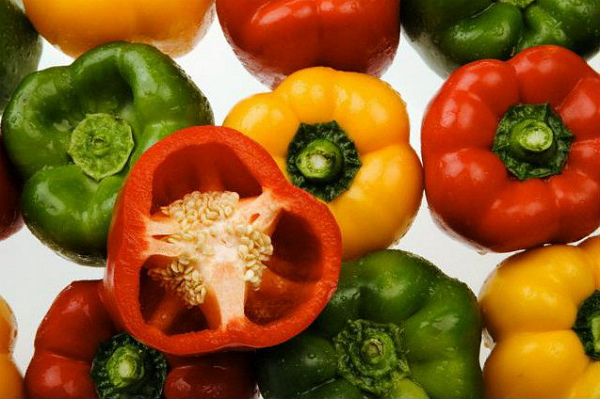
Some of the best varieties for growing on a windowsill:
- Treasure Island. The first harvest can be collected 100 days after planting. The fruits are juicy, orange-red, and heart-shaped.
- The firstborn of Siberia. The variety's fruits can be tasted 113 days after planting. The fruits are red, large, and juicy.
- Dwarf. This vegetable produces cone-shaped red fruits. They appear 110 days after planting.
- Watercolor. The scarlet, conical fruits of this variety have a glossy finish and thin skin. The fruits are small and can be eaten whole.
- A gift from Moldova. Large, dark-red fruits have a rich, sweet flavor. They appear four months after planting.
- Swallow. A variety with juicy, aromatic red fruits. They are medium-sized and thick-walled.
All these varieties have high yields. Their fruits can be enjoyed all year round..
Growing seedlings
Growing bell peppers requires a certain amount of effort. Before planting, prepare several containers, as seedlings need a "home" first and foremost. The containers should be wide enough to allow the underground portion of the plant to grow freely and comfortably. Drainage (pieces of red brick or gravel) should be added to each container.
You can plant bell pepper seeds at different times:
- Late February – early March. Planting seeds during this period will be successful, given the weather conditions. Warm weather a few days after sowing will slow the growth of the vegetable. During this period, it's best to place the plant on a north-facing window.
- Winter. Planting vegetables during the winter months will only be successful if there is 12 hours of daylight. Therefore, seedlings require supplemental lighting, including artificial light.
- Late July or early September. During this period, seeds germinate well. The only problem may be excessively hot days.
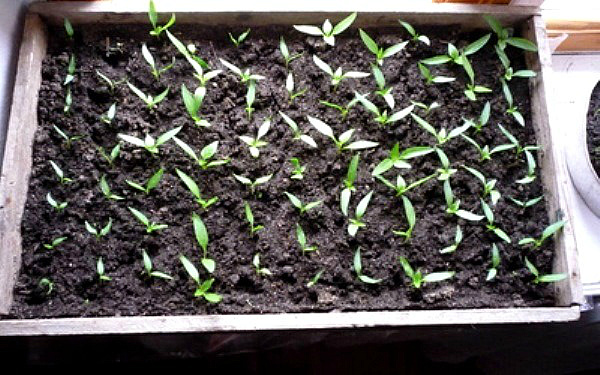
Plant a couple of seeds in small containers made of peat and humus, filled with fertile soil. Water the soil thoroughly and cover the containers with plastic wrap. Keep the pots in a warm place (at least 25°C). You can bury the pots under mature plants if you're already experienced with growing peppers indoors.
The first sprouts appear a couple of weeks after planting the seeds. If this process takes longer, you can extend the daylight hours to 14 hours using additional light sources.
As soon as the first shoots appear, they will need more air. Therefore, use a thin, sharp object to make small holes in the plastic film. When the first leaves appear, the plastic film can be removed from the containers. During this period, strong, vigorous shoots are transplanted into larger pots. Weak plants are removed.
Video: Planting Sweet Pepper Seeds for Seedlings
In this video, you'll see the process of planting seeds for seedlings using special peat tablets.
Landing
Red bell peppers, or more precisely their sprouts, require transplanting and pricking out. Why? When the plant's roots are pruned, they begin to branch out. Subsequently, the roots and sprouts become stronger and actively hold onto the soil. As a result, the bell pepper produces more fruit.
To properly care for vegetables, you need to know how to transplant. This procedure is quite simple:
- The soil into which the seedlings are planned to be transplanted must be watered generously in advance (24 hours).
- Before picking, you need to make a hole in the center of the soil.
- A couple of hours before the procedure, the soil around the sprout must be thoroughly watered.
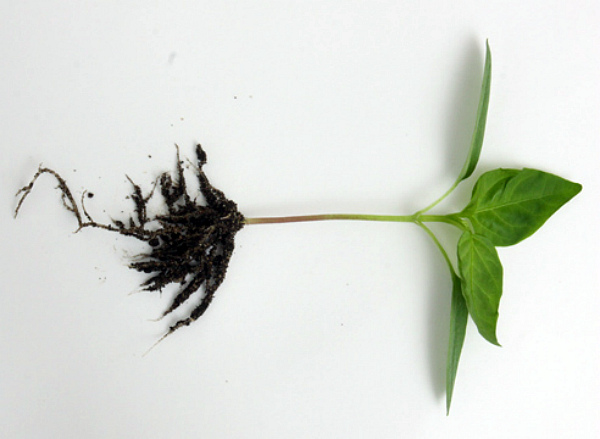
- Next, you need to take the sprout and lift it with the soil, and then shake off the remaining soil.
- One third of the root should be removed (pinch with nails).
- The seedling should be placed in the prepared hole. The taproot should be straight, and the leaves should be 2 cm above the soil.
- The soil around the planted sprout needs to be compacted with your fingers.
- Water the seedling with warm water.
Before transplanting, it's important to harden off the seedlings, acclimating them to harsh weather conditions. To do this, the plants should be exposed to the elements, gradually increasing their time there. This strengthens the plant and makes it virtually pest-free.
At the same time, it is important to ensure that small green bell peppers are not exposed to drafts, as low temperatures have a negative effect on the vegetable.
Care
Caring for bell peppers is fairly simple. Pests rarely attack indoor plants. The key is to follow all recommendations: watering, proper temperature and light conditions, and pest control.
Bell peppers require watering only as needed. Saturate the window box with warm water. It's also worth misting the plant daily. To prevent overheating in winter, cover the radiator with a damp cloth. Be sure to loosen the soil.
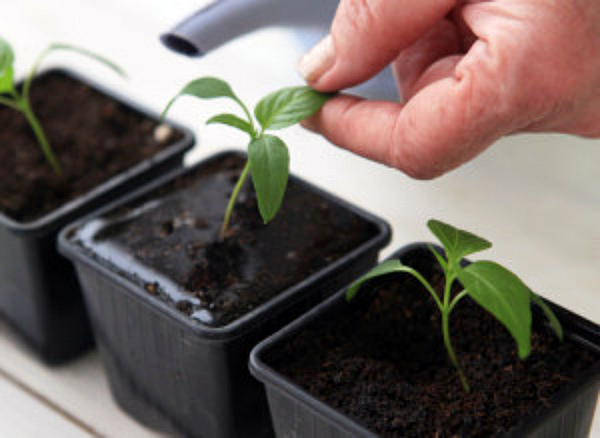
Even in cold weather, the plant requires 12 hours of daylight. Therefore, it should be turned to face the light differently and artificial fluorescent lamps should be used.
Under no circumstances should the plant be exposed to direct sunlight!
During the warmer months, this plant should be grown on a balcony, and in winter, on south-facing windowsills. Drafts and sudden temperature changes are dangerous for the plant and should be avoided.
Why do plants sometimes turn yellow and their leaves fall off?
Seedlings require periodic fertilization. It's best to apply nitrogen fertilizer for houseplants after watering. You can also use a solution of nettle, clover, or other herbs. The plant does not tolerate nutrient deficiencies well.
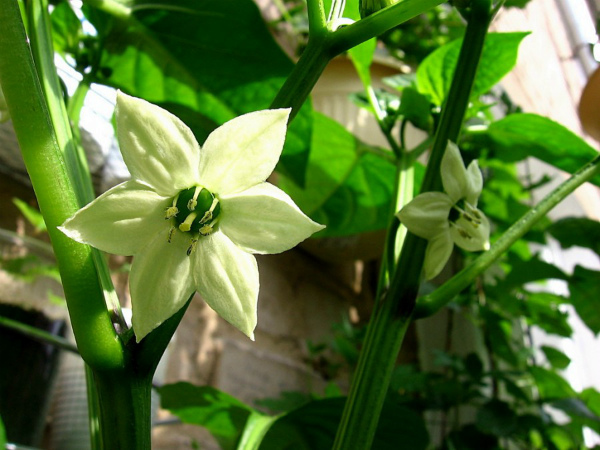
How to grow bell peppers? Leaves are the main indicator of a plant's health. If signs of disease appear, apply appropriate fertilizers:
- If the leaves curl, their edges turn yellow, and then fall off, this is a sure sign of potassium deficiency.
- The leaves have a matte color and become small – the plant requires nitrogen.
- The leaves are purple at the bottom and they stretch upwards – the plants need to be supplied with phosphorus.
- Leaves become marbled – magnesium is needed.
The vegetable does not tolerate excess potassium well, and a large amount of nitrogen does not harm the plant at all.
If leaves are turning yellow or falling off, pests may be the cause. Therefore, pest control measures should be implemented.
Bell pepper diseases are usually caused by pests. The most common pests are aphids, Colorado potato beetles, spider mites, slugs, and root-knot nematodes. These pests either feed on the leaves or negatively affect them. As a result, the leaves curl, turn yellow, or fall off. These pests negatively affect the plants and can lead to their death or a sharp reduction in yield. To combat them, spray the green parts of the plant with special solutions, either chemical or homemade.
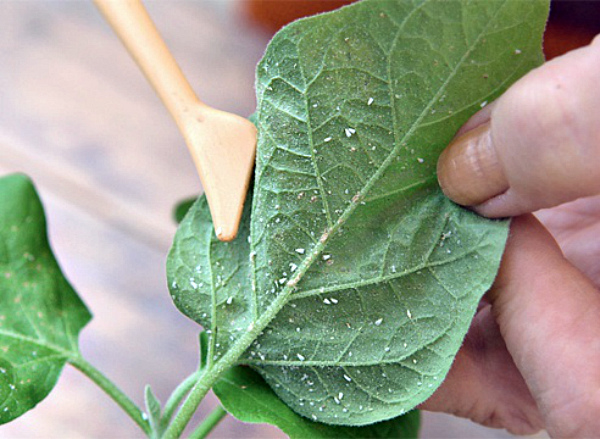
Secrets of successful cultivation
Planting and growing vegetables should be done in large containers. Only then will the plant grow large and produce a good harvest.
Most varieties, including yellow peppers, can be pollinated and cross-pollinated. Therefore, it's best to plant vegetables at a distance from each other.
When the first fruits appear, don't overload the plant with them. It's best to leave just 4-5.
Peppers need to be replanted once a year. For a good harvest, the plant requires fresh, renewed soil.
Vegetables need to be replanted carefully. Why? To avoid damaging the roots. Otherwise, the plant may die.
After two years of plant life, it needs to be replaced. Why? Because peppers are biennial plants.
You can grow bell peppers on your windowsill. Why is this plant most often grown on windowsills? Because it's the most suitable indoor plant. Pests rarely attack indoor peppers, and they're easy to control. And the vegetable can be harvested year-round.
Video: "10 Mistakes in Growing Sweet Peppers"
Use the tips in this video to grow good seedlings of the crop at home.