
The 20 hottest peppers in the world, with names, descriptions, and photos.
Content
- 1 Scoville heat scale
- 2 Video: "Hot Pepper Varieties and Hybrids"
- 3 A Review of the World's Hottest Peppers
- 3.1 7 Pot Brain Strain Red
- 3.2 7 Pot Douglah
- 3.3 7 Pot Primo
- 3.4 Bhut Jolokia
- 3.5 Carolina Reaper
- 3.6 Chili Infinity
- 3.7 Komodo Dragon
- 3.8 Naga Viper
- 3.9 Trinidad Scorpion Butch T
- 3.10 Trinidad Scorpion Moruga Blend
- 3.11 Trinidad Small Cherry
- 3.12 Astrakhan 147
- 3.13 Double abundance
- 3.14 A fiery bouquet
- 3.15 Indian elephant
- 3.16 Cayenne red
- 3.17 Chinese fire
- 3.18 Miracle of the Moscow Region
- 3.19 Habanero
- 3.20 Jalapeño
Scoville heat scale
With the development of the hot pepper market, the need to quantify their heat levels has arisen. The substance capsaicin is directly responsible for the burning, pain, and heat felt by human receptors.
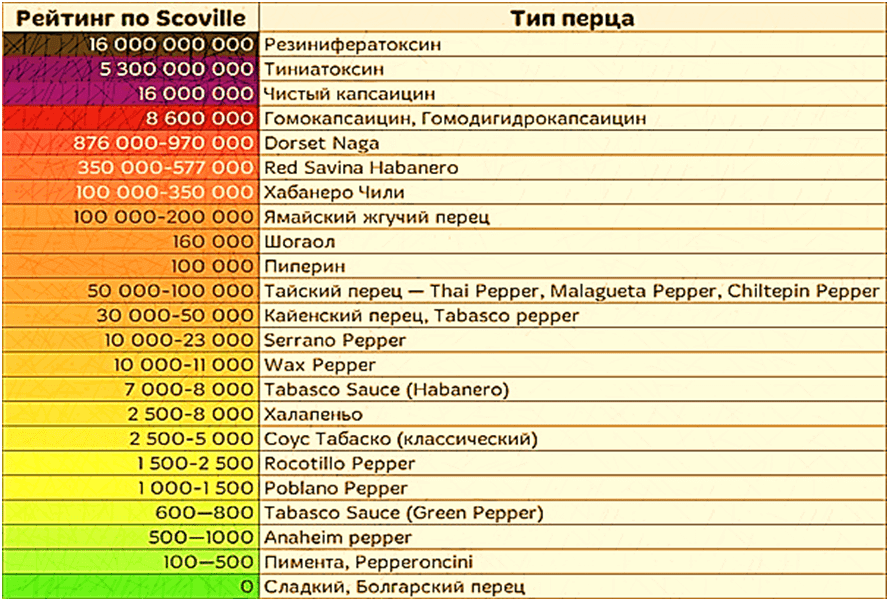
Wilbur Scoville came up with the idea of measuring the concentration of this chemical compound in peppers. Some species have levels exceeding several million, so a simplified scale of 10 is used. The measurement method is as follows:
- the extracted hot extract is diluted in sugar water;
- it is tasted by five tasters;
- The extract is diluted until three out of five people no longer feel the burning sensation.
The popular method has errors, since the sensitivity of receptors is individual for each person.
Video: "Hot Pepper Varieties and Hybrids"
This video features the hottest peppers in the world.
A Review of the World's Hottest Peppers
In the early 1990s, the Habanero was considered the hottest pepper. However, its hundreds of thousands of SHU (Scoville Units) are eclipsed by superhybrids, which produce scores in the millions. Below is a list of the hottest representatives that will not leave connoisseurs of spicy food indifferent.
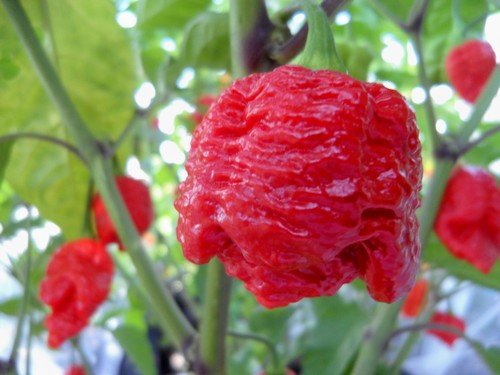
7 Pot Brain Strain Red
The pepper is classified as a selective non-hybrid variety that has retained the ability to reproduce itself. Its heat rating is 1,350,000 Scoville units. The fruits have a citrus aroma and a sweet, smoky flavor.
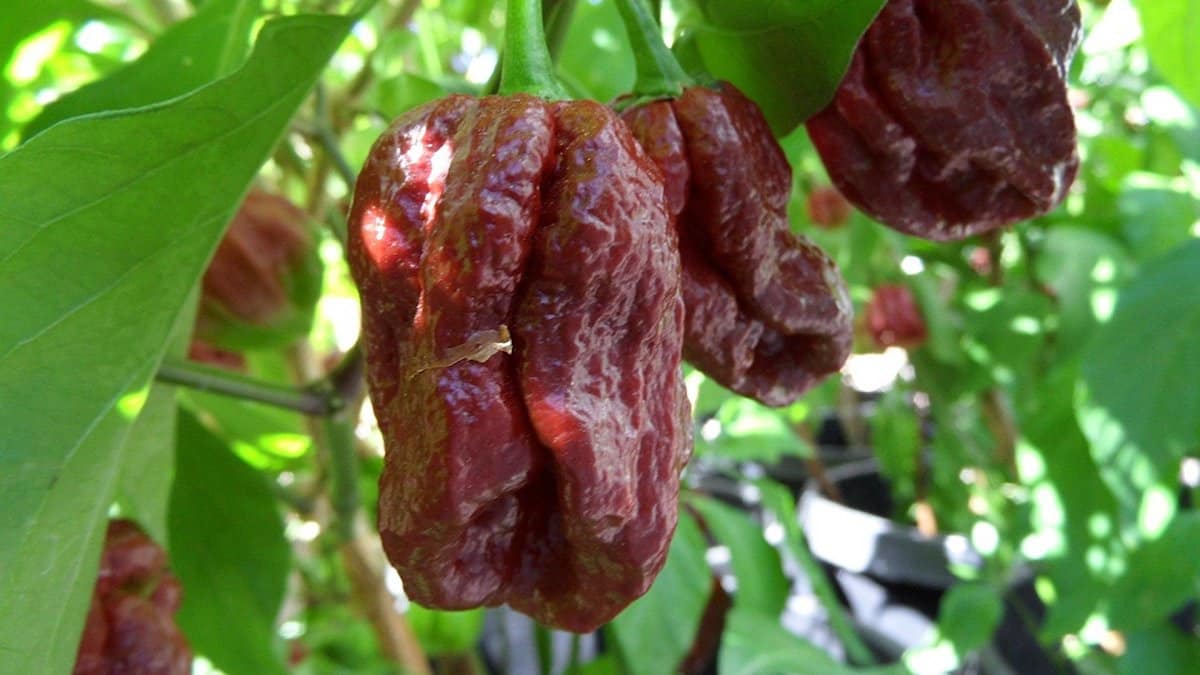
7 Pot Douglah
This hot pepper, with a heat rating of 1,853,986, was grown in Trinidad. Its name derives from the unusual color of its skin, which can be dark brown or deep purple. It is commonly known as chocolate pepper. The fruits have a fruity, sweet flavor with a distinct nutty aroma.
7 Pot Primo
The orange-yellow fruits have a rich, fruity, floral flavor. On the Scoville scale, the pepper has a rating of 1,473,480 units. It has a compact shape, with a prominent, deformed tip. Its name suggests that a single peppercorn can fill seven pots (saucepans) with heat.
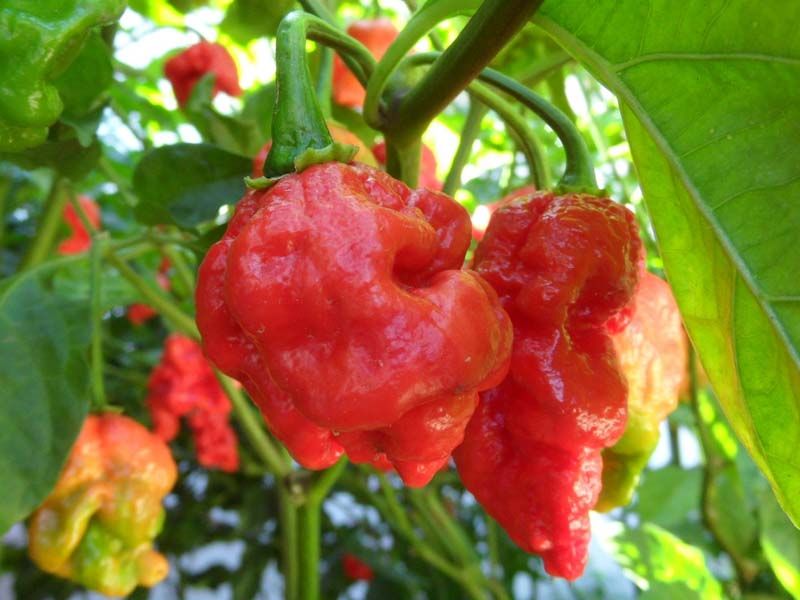
7 Pot Primo has a compact shape
Bhut Jolokia
The pepper originated in northeastern India, where it acquired a unique tropical fruit aroma. However, this is quickly replaced by a strong heat, rated at 1,040,000 SHU. It held the leading position for a long time (until 2007), but even today it has retained its appeal among gourmets.
The pepper's color ranges from yellow and red to chocolate brown. It has a pointed shape and a wrinkled outer skin. It's suitable for making dried seasonings, which are used sparingly (1-2 pinches).
Carolina Reaper
The world's hottest pepper was bred by Puckerbutt Pepper in South Carolina. A hybrid of the red habanero and the Naja Viper, the Carolina Reaper was named. In 2013, it was awarded the title of hottest known pepper, a title it retains to this day.
The poisonous raspberry hue only confirms its level of heat. Sauces made with it have a unique aroma.
It is strictly forbidden to eat peppers fresh, as they cause severe burns and can lead to serious injury to the esophagus.
Chili Infinity
It won the title of hottest pepper in February 2011, but 14 days later, it was replaced by the Trinidad Scorpion Butch T. This variety was created in the Albion region by Nick Woods. Its flavor features unusual fruity notes, followed by a sharp heat. This heat can cause pain, so eating it fresh is not recommended.
-
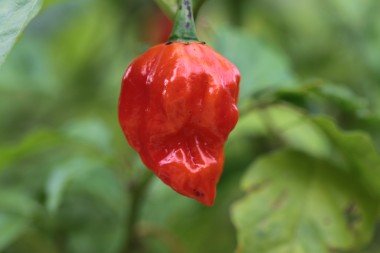
- Chili Infinity
-
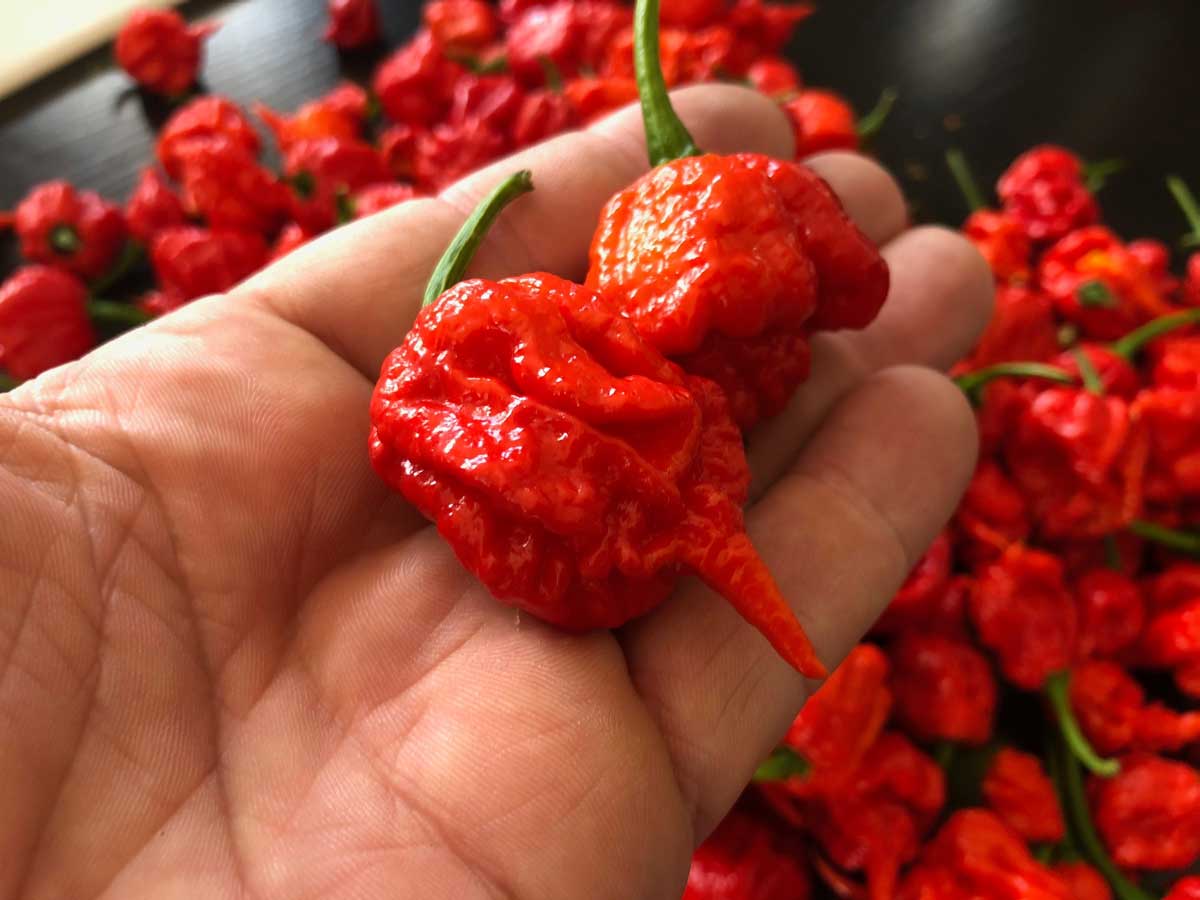
- Carolina Reaper
-
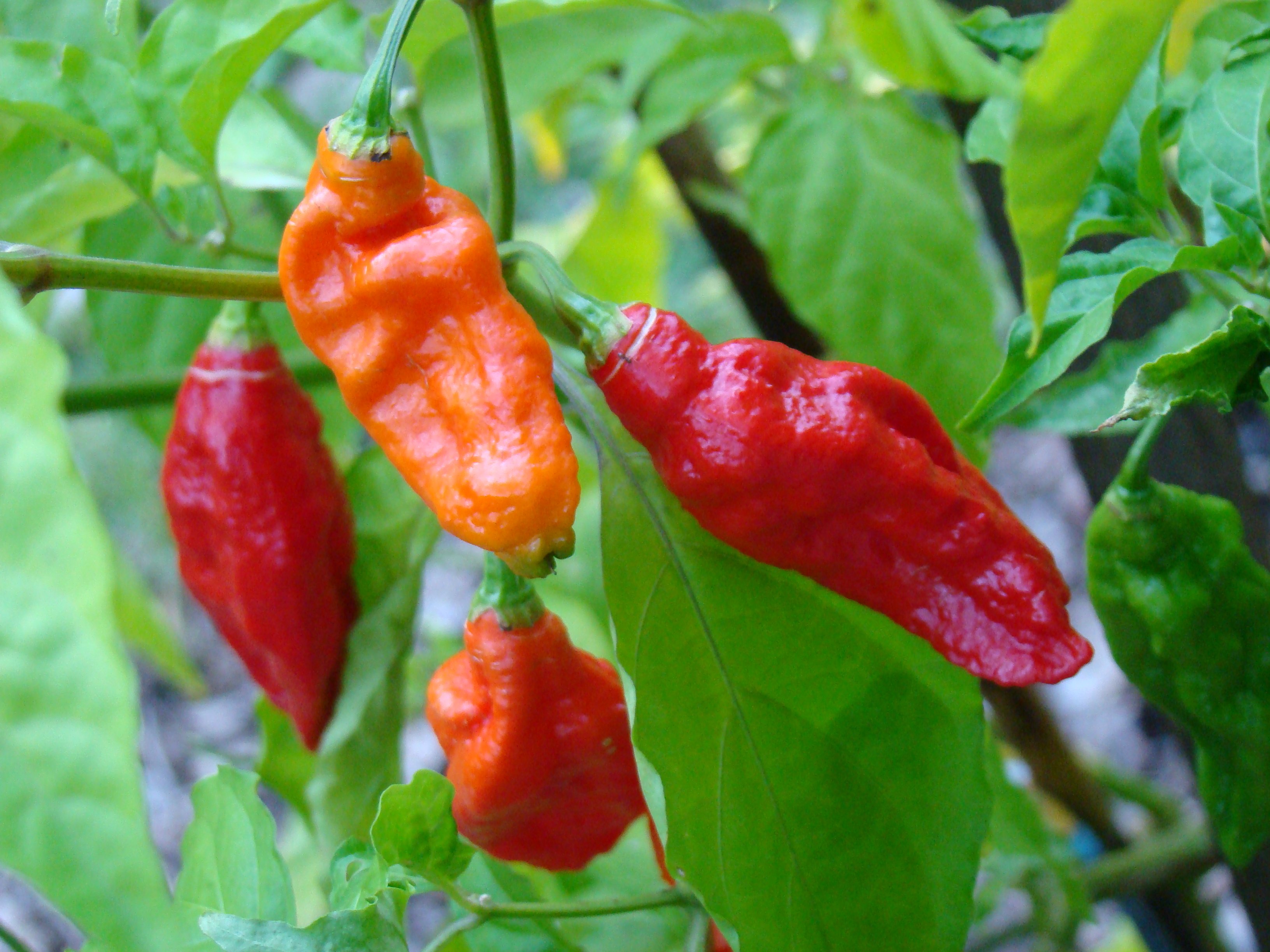
- Bhut Jolokia
Komodo Dragon
This variety belongs to Salvatore Genovese, the largest pepper producer, and is grown in the UK. Its heat level is 1.4 million SHU. In the summer of 2015, the pepper became available for purchase in Tesco supermarkets. Many describe its taste as insidious, initially lulling one's guard with its sweetness, but within minutes, burning the mouth and esophagus.
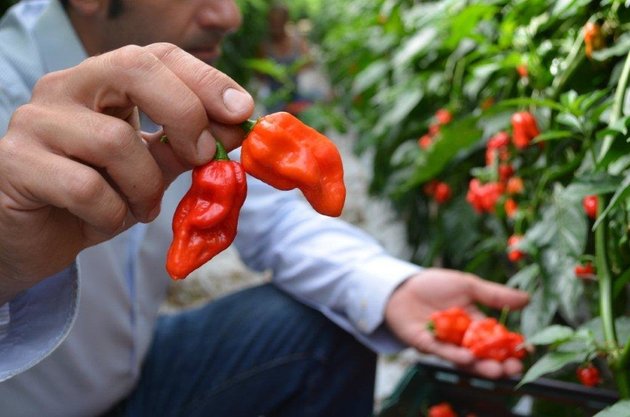
Komodo Dragon's heat level was 1.4 million SHU.
Naga Viper
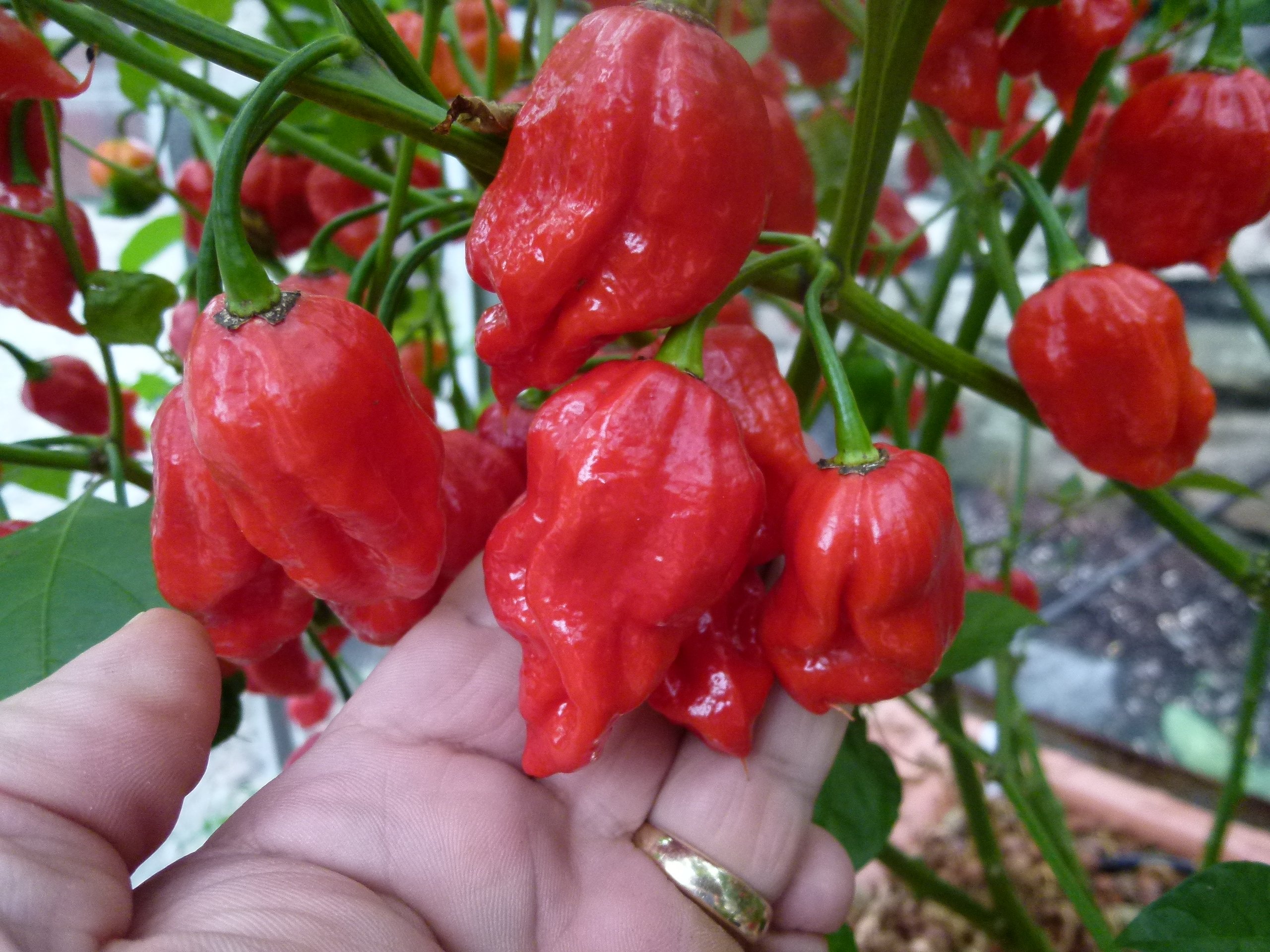
In 2011, it won the title for hottest pepper, but it didn't hold the title for long. Its heat level on the Scoville scale was 1,382,118 units. The Naga Viper was bred by English farmer J. Fowler, who worked for the Chilli Pepper company. The variety is classified as a hybrid, so it's impossible to grow seeds yourself. Planting material is only available from the manufacturer.
Trinidad Scorpion Butch T
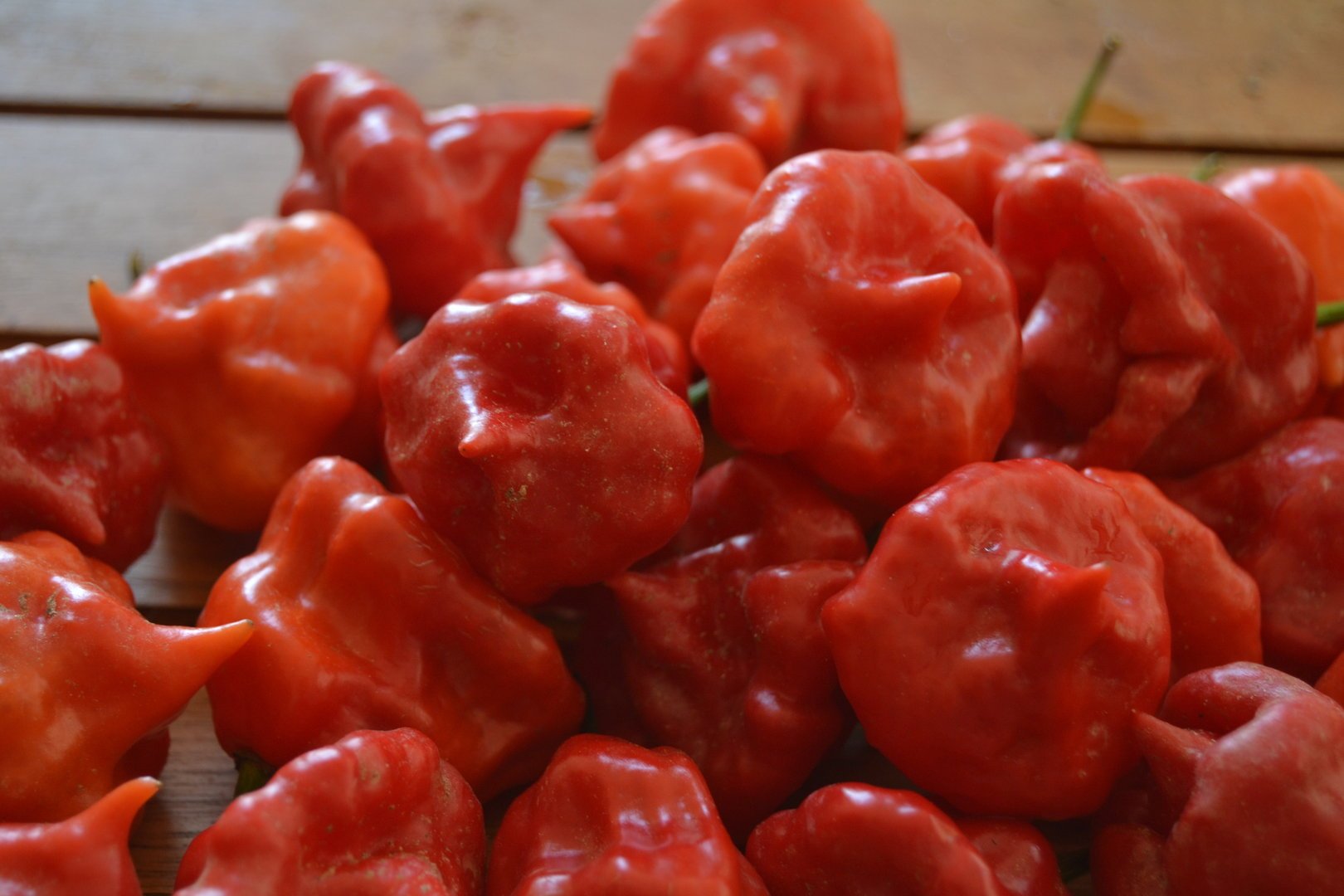
A hot pepper grown in the Caribbean region of Trinidad and Tobago was listed in the Guinness Book of World Records (March 2011). Its heat level was measured at 1,463,700 SHU. Its flavor features fruity notes that are noticeable before the deeper, fiery essence unfolds. The pepper can cause burns, so eating it raw is not recommended.
Trinidad Scorpion Butch T
Trinidad Scorpion Moruga Blend
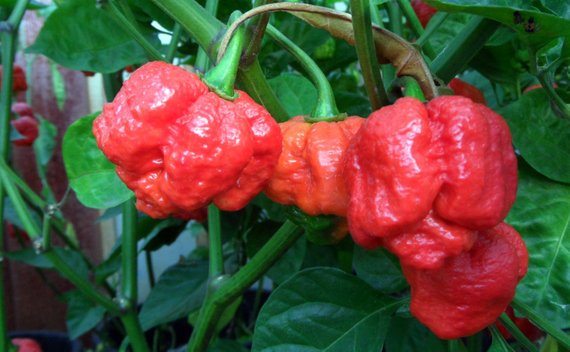
One of the hottest peppers in the world, it reaches 1.2–2 million Scoville units. While studying its properties, scientists had to wear protective equipment (a gas mask and two pairs of gloves).
Pepper is extremely hot, yet has a pleasant fruity aroma. This gives dishes a piquant flavor. Those brave enough to try the pepper in its pure form won't notice the spiciness at first. After a few minutes, the throat, tongue, and esophagus become engulfed in flames. Subsequently, blood pressure rises, the face turns red, and the eyes water.
Trinidad Scorpion Moruga Blend Hot Peppers
Trinidad Small Cherry
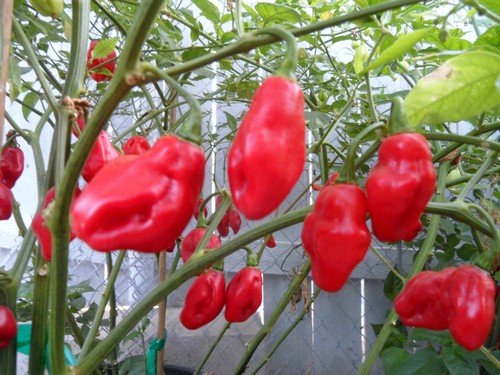
A super-early variety that yields fruit 70 days after the first shoots emerge. The tall (80 cm), vigorous, spreading plants require staking. The peppers are round, reminiscent of cherries, and reach up to 2 cm in diameter. Each plant produces numerous orange and red peppercorns.
Astrakhan 147
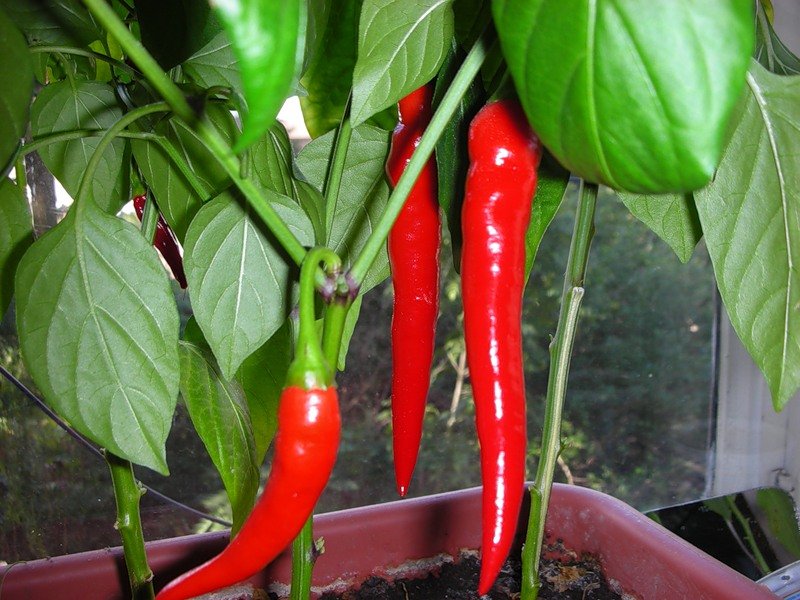
A mid-season, high-yielding variety grown in greenhouses and open ground. The fruit ripens gradually, ensuring a fresh harvest throughout the summer. The plant reaches no more than 50 cm in height and forms compact lateral shoots.
Per season, up to 4 kg of pungent, cone-shaped peppers are harvested per square meter. As they ripen, the peppers change from a rich green to a deep red. Astrakhan 147 is ideal for drying due to its thin, smooth walls.
Double abundance
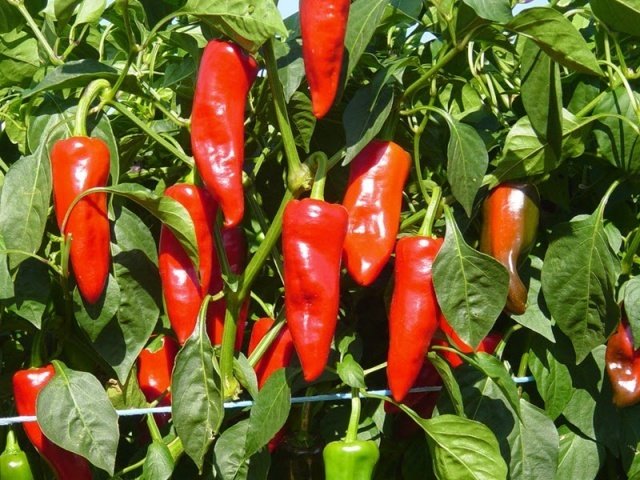
Seedlings can be planted in open ground or in a greenhouse. In the latter case, yields increase significantly, allowing up to 40 peppercorns to be harvested from a single plant. The fruits ripen gradually, allowing for harvesting up to 4-5 times per season. The plant is resistant to severe drought and most diseases.
The elongated, trunk-shaped peppers are 20 cm long and weigh 70 grams. As they ripen, the fruit changes color from deep green to red. This variety is not suitable for drying due to its thick walls. Experienced home cooks prefer to jar or freeze the fruit.
-
- Double abundance
-
- Astrakhan 147
-
- Trinidad Small Cherry
A fiery bouquet
Peppers are grown in greenhouses and open ground. The compact bush reaches about 50 cm in height. The plant requires little support, as the fruits weigh no more than 15–20 grams.
Peppers have an elongated, conical shape. The fruits are small in diameter, thin-walled, and turn a bright scarlet when ripe. Experienced gardeners dry and crush the pods, which are then used as a seasoning for any dish.
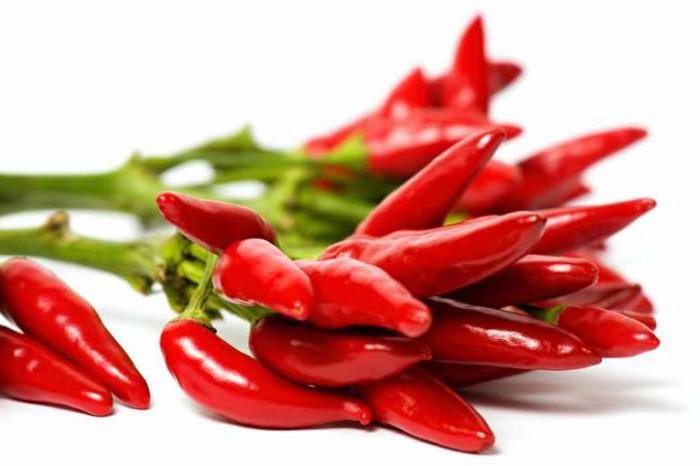
The fiery bouquet has an elongated, conical shape
Indian elephant
A mildly spicy variety with a distinct paprika aroma and pleasant flavor. The plant reaches 130 cm in height and forms spreading branches. Indian elephant cherries require staking, so they are easier to grow in greenhouses. This method yields up to 2 kg of fruit per square meter.
The peppercorns have a slightly drooping, trunk-like shape. The fruits take on a deep red hue and are divided into two seed chambers. A peppercorn can weigh up to 30 g. Due to its flavor, the fruits are used as a seasoning for most common dishes or added to sauces.
Cayenne red
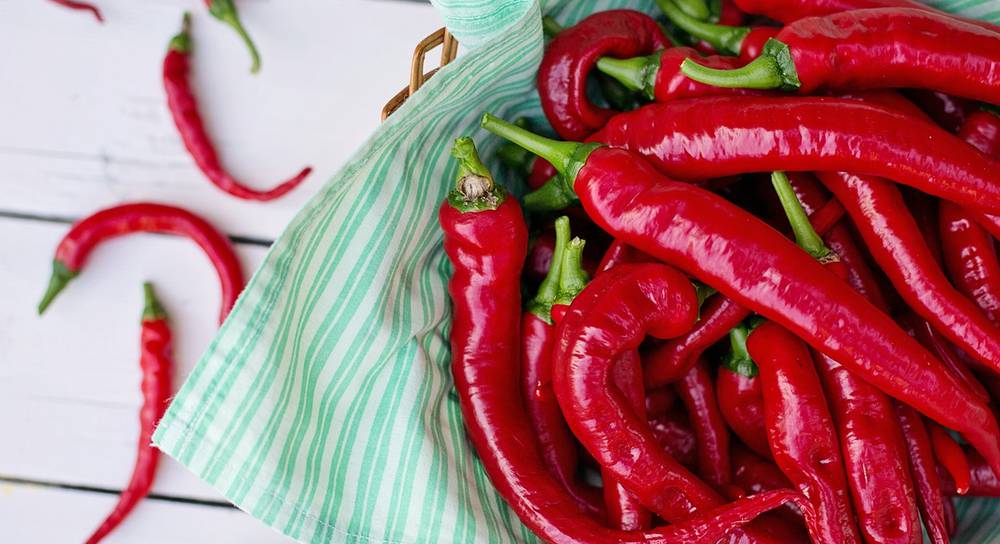
The most sought-after variety among consumers worldwide, this pepper scores around 40,000 Scoville units. Its bushes are tall, reaching 1–1.5 meters, depending on growing conditions. A trellis is required in the selected planting area. The plant is tied to this trellis to prevent it from breaking under the weight of the fruit.
Cayenne peppers are typically shaped like elongated pods, but unusual varietal variations (such as spherical ones) can sometimes be found. Up to 40 peppercorns, weighing up to 60 grams, can ripen on a single plant at a time. The color of the berries also varies, sometimes with purple or yellow hues. However, the classic hot pepper stands out with its deep red color.
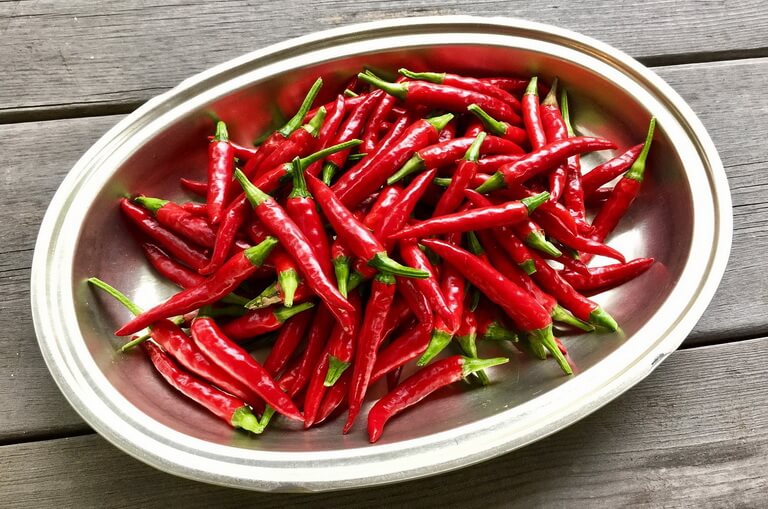
Chinese fire
This pepper is considered one of the hottest. The bushes reach 65 cm in height. The fruits are small in weight (70 g) but long (25 cm) and have a deep red hue. The peppers are cone-shaped, with a curved tip.
This variety is considered an early-ripening crop, as the first harvest occurs three months after germination. The pepper is resistant to various viral diseases and pests that are common to nightshade plants.
Miracle of the Moscow Region
An early-ripening variety adapted to the Moscow region's climate. Its heat levels reach 17,000–25,000 SHU. It is highly productive, yielding up to 4 kg of peppers per square meter per season. The plant is tall, with vigorous side shoots and a sparse foliage cover.
The fruits of this variety are cone-shaped with smooth, shiny skin. The peppers reach no more than 25 cm in height and no more than 3 cm in diameter. Their main characteristic is their distinctive flavor without a pronounced pungency.
Proper care promotes the simultaneous ripening of up to 20 fruits on one bush.
Habanero
The pepper reaches 7,000–8,000 Scoville units and is an ingredient in Tabasco sauce. Several varieties have been developed, with skins that range in color from red, yellow, orange, and chocolate. The main difference is the bruised appearance of the pepper.
The conical fruit weighs no more than 15 grams. However, a single bush can produce up to 100 fruits at a time. The flavor profile includes sweet notes that alternate with a strong spiciness and pungency.
-
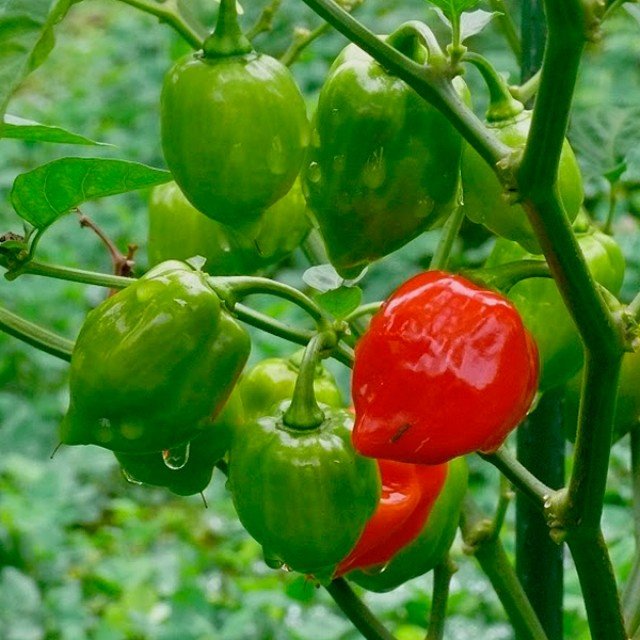
- Habanero
-
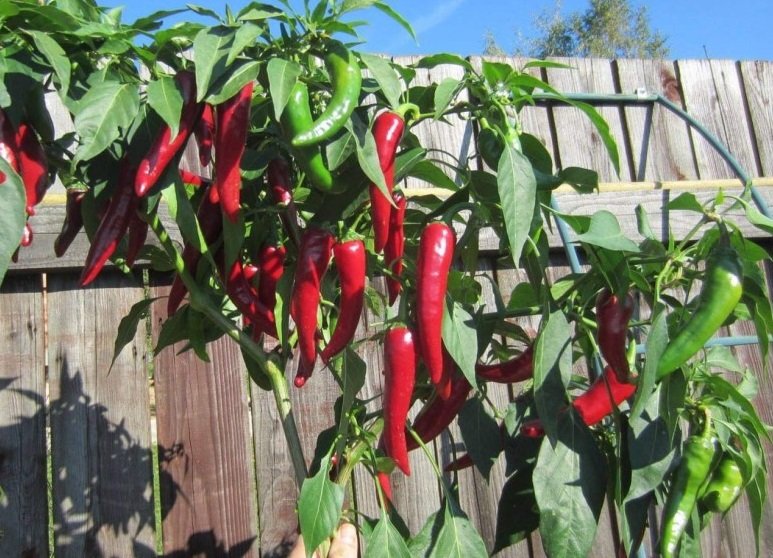
- Miracle of the Moscow Region
-
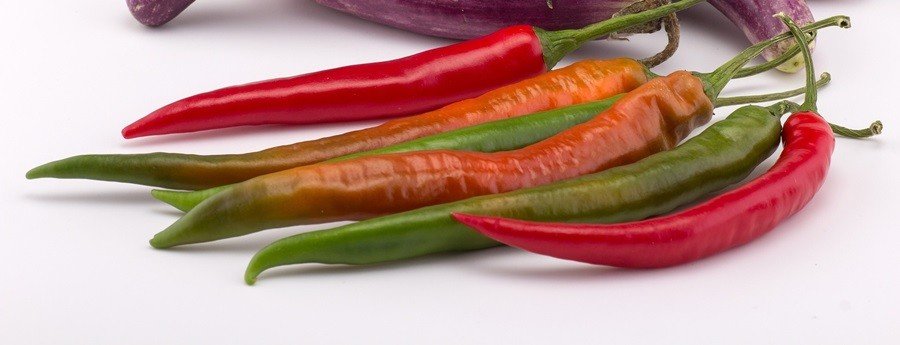
- Chinese fire
Jalapeño
The mildest pepper among its relatives, its heat level does not exceed 2,500–8,000 SHU. The hot pepper's homeland is the Mexican city of Jalapa in the state of Veracruz. The plant grows tall with spreading, vigorous shoots. Up to 40 peppers can ripen simultaneously on a single plant.
The peppers are small (about 10 cm) and barrel-shaped, slightly elongated. When ripe, the fruits acquire a deep red color, indicating their heat. They are used in a variety of dishes, paired with Habanero and Ravit varieties, which together create a unique flavor.
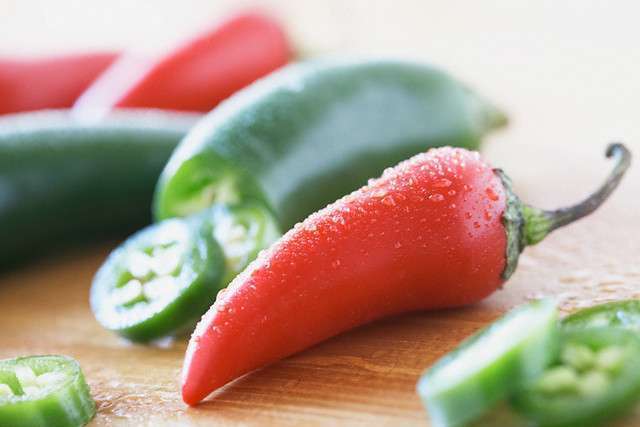
Hot peppers are a wonderful addition to a variety of dishes, adding a piquant and rich flavor. However, they aren't just used for food—in some regions of the world, their spiciness is used to repel wild animals from human settlements.