
Growing and caring for cucumbers in a polycarbonate greenhouse
Content
How to arrange beds and when to plant
To grow cucumbers in a greenhouse, prepare raised beds 15–25 cm high. In the fall, the soil is completely cleared, dug over, and fertilized. In the spring, the soil is dug again, compost or humus with added mineral fertilizers is added, and the soil is watered with a hot solution of potassium permanganate. Then the soil is covered with plastic film and left to rest. Under the black film, it will warm up faster.
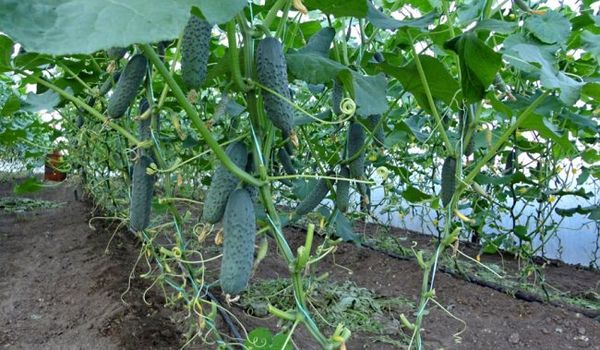
Warm beds are conveniently set up in greenhouses – this allows you to plant cucumbers early, when the soil in the garden is not yet ready for seedlings, resulting in a truly early harvest. A trench up to 1 meter deep is dug under the bed, filled with manure (a mixture of cow and horse manure), and topped with a 25 cm layer of fertile soil. This cushion will radiate heat for two months, gradually turning into fertilizer.
The timing of planting cucumbers in a polycarbonate greenhouse is less dependent on weather conditions, but the soil in the beds should warm up to +18 °C by the time the seedlings are planted.This typically occurs from early April to late May. The distance between plants should be 50–60 cm. It's most convenient to plant in two rows, staggering the plants, leaving 80 cm between these double rows.
Selecting varieties and preparing seeds
The specifics of greenhouse cultivation require careful variety selection. Preference is given to modern hybrids that are disease-resistant, produce abundant yields, and require little attention to shaping. There are self-pollinating varieties that don't require bees or bumblebees to produce fruit.
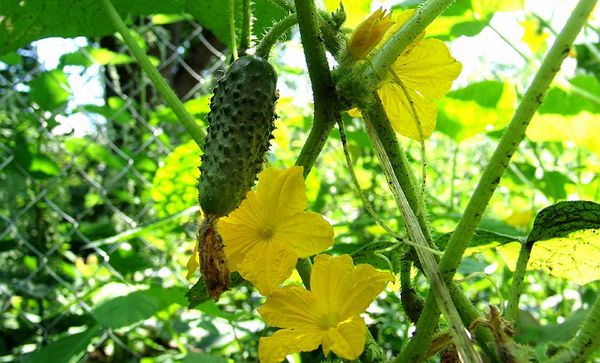
Gardeners often choose parthenocarpic varieties, which don't require pollination at all, but they won't produce seeds. Hybrids also can't be propagated from their own seeds, as they don't pass on their characteristics to their offspring. For greenhouses, common seeds include Estafeta Plus F1, Orfey F1, Emelya F1, Masha F1, Vnuchok F1, Aprelskiy F1, Zozulya F1, Buran F1, and Tournament F1.
Cucumbers are planted in a polycarbonate greenhouse when they are seedlings with 4-5 true leaves or prepared seeds. Growing techniques vary: cucumbers can be transplanted into the greenhouse as seedlings, or they can be grown right there in the greenhouse, in small hotbeds, covering the seedbeds with plastic film stretched over wire arches. In this case, the seeds should be disinfected by soaking them in a pink solution of potassium permanganate for 15 minutes, then placed on cheesecloth folded several times or a soft, water-retentive cloth. This substrate is moistened with water and kept warm until sprouts appear, about 5-6 days later, and then planted in fine-grained, nutrient-rich soil.
Necessary conditions for growing
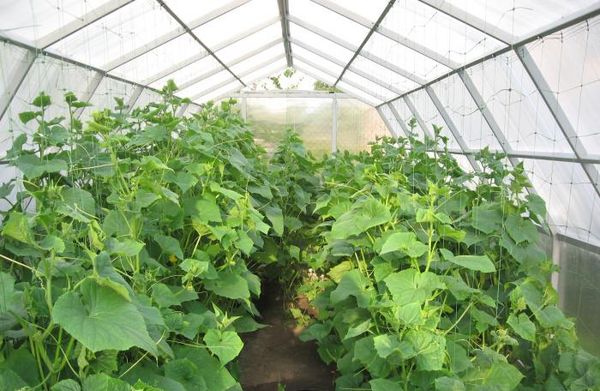
Cucumbers in a polycarbonate greenhouse require specific planting and care conditions. They thrive in stable temperature and humidity conditions. The optimal air temperature is 25–28°C, and the humidity level should be 60% for the soil and 80% for the air.
Cucumbers thrive in 10 hours of daylight. Polycarbonate diffuses sunlight well, protecting plants from direct, harsh rays and excessive UV radiation. It's important to maintain a distance of at least 50 cm between plants to ensure adequate ventilation and even exposure to light. The greenhouse should be regularly ventilated to maintain humidity levels and ensure adequate oxygen supply, but avoid drafts.
Care Features
Caring for cucumbers in a polycarbonate greenhouse is somewhat different from caring for them in open ground, although the basic processes are the same: watering, weeding, loosening the soil, fertilizing, disease prevention, and pest control.
Greenhouse plants need to be cared for carefully. If there is a deficiency of any element, excessive moisture, dry soil, disease, or pests, trouble can quickly spread throughout the greenhouse.
Pollination
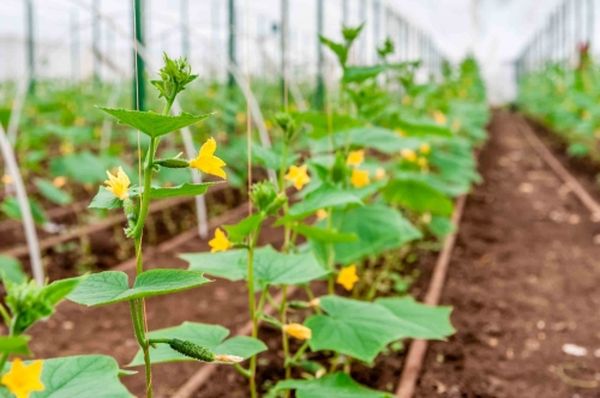
Greenhouse-grown cucumbers cannot be pollinated by bees. Therefore, it's best to plant self-pollinating varieties. However, to increase the yield, vegetable growers often hand-pollinate their cucumbers. Simply take a soft, natural art brush and walk around the greenhouse, touching the stamens and pistils or at least shaking the flowers.
Varieties with both male and female flowers can also be pollinated by hand. Carefully pluck the male flower from the stem, carefully remove the petals, and then touch the stamens to the pistil of the female flower, leaving a small amount of pollen. One male flower (of which there are always fewer) can pollinate up to 10 female flowers.
Watering and fertilizing
Water only with warm water, preferably by making shallow furrows near the stem. Watering frequency depends on many factors. Typically, water every 3-4 days until fruit set, then every other day or daily if temperatures are high. Fertilize 3 to 5 times per season, depending on soil conditions.
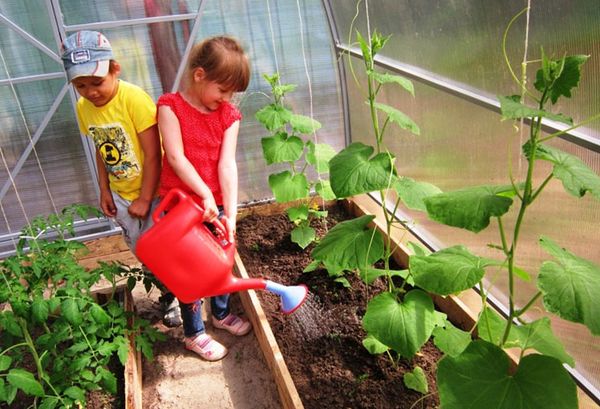
Cucumbers respond well to watering with slurry or fermented herbal infusion. Before flowering, use fertilizers containing nitrogen and phosphorus. Once fruiting begins, the vegetables require more potassium. Fertilizers are applied in the evening, followed by watering with clean water.
Pest and disease control
Powdery mildew and downy mildew can appear on leaves and are best treated with specific products. However, vegetable growers often spray with a solution of 1 liter of mullein and 2 tablespoons of urea per 10 liters of water. Root rot and brown spot affect different parts of the plant, but for similar reasons: watering with cold water, high humidity and low temperatures. These conditions must be corrected immediately, the soil must dry out slightly, and repotting, if necessary.
When melon aphids appear, treat the plants with an infusion of hot pepper and tobacco. Greenhouse whiteflies appear where there are weeds and require control with specialized products.
Tips and challenges of growing
You already know how to properly grow cucumbers in a polycarbonate greenhouse. The key is to follow the basic recommendations. And don't forget to carefully loosen the soil, using narrow skewers.
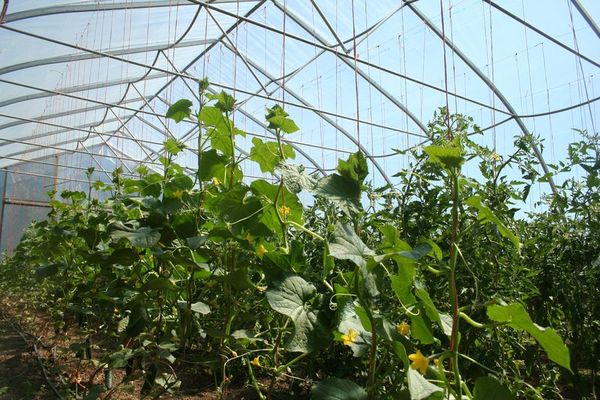
There are two more important aspects: shaping and staking. Cucumbers are typically grown on trellises or simply tied vertically. This requires a sturdy structure and soft rope that won't damage the stem. Shaping depends on the variety—some branch naturally. For common varieties, all shoots and flowers are removed before the fourth or fifth leaf; for sixth to ninth leaves, side branches are pinched after the first cucumber (1–2 leaves); for 10–14 cucumbers, two fruits are left. The main stem is pinched at a height of 1.5–2 m to limit the number of fruits.
Video: Growing Cucumbers in a Greenhouse
In this video, you will hear useful tips on growing cucumbers in a greenhouse.