
Secrets of growing cucumbers in a greenhouse in the Urals
Content
Hardy varieties
All greenhouse cucumber varieties grown in Siberia and the Urals are considered hardy. Moreover, these varieties typically produce abundant, excellent yields. The fruits of greenhouse cucumbers grown in this region are characterized by a wonderful taste and aroma.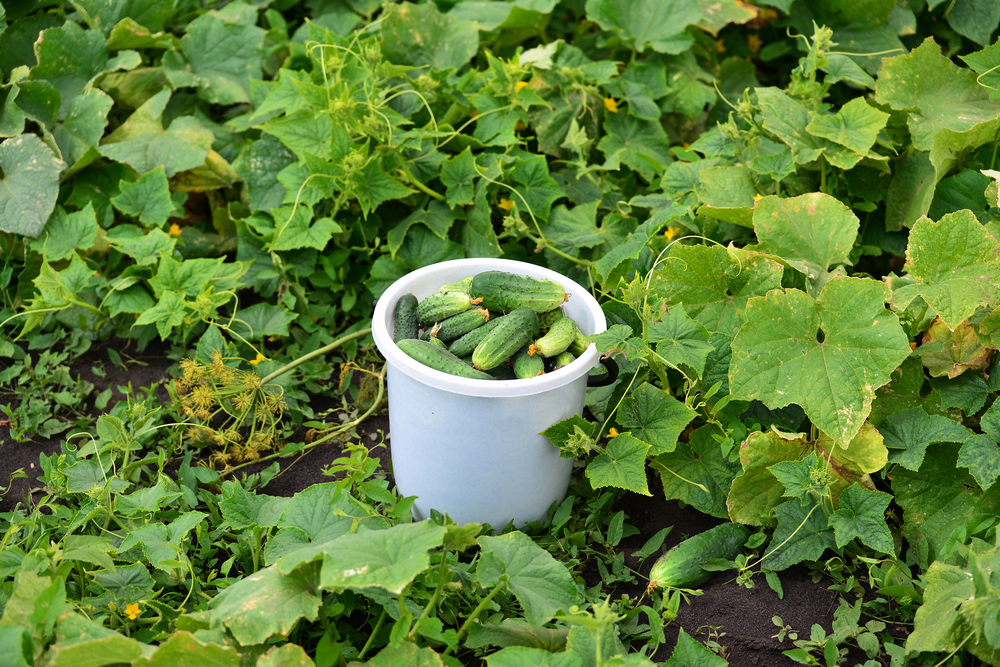
So, which vegetable varieties are best planted in Ural greenhouses? Let's take a closer look.
Karelian F1
This hybrid produces excellent fruit and tolerates cold and frost. Furthermore, the plant is self-pollinating, which means you won't need to spend a lot of effort organizing pollination in a greenhouse.
The fruits of these cucumbers typically reach 0.1 meters in length and ripen simultaneously. Gardeners typically harvest the first crop 45 days after the young shoots emerge.
To obtain larger cucumber yields, plant three cucumbers per square meter. Regularly spraying the plants with boric acid at a rate of 1 gram per liter of water will help increase the size of the pods. This procedure should be performed before the start of fruiting.
Don't forget about pinching: shoots formed above the 3rd leaf are subject to elimination.
Chinese disease-resistant F1
This variety is a hybrid. Its development cycle is 50 days. It is usually formed into a single stem. This cucumber hybrid produces large fruits (approximately 0.3 meters long), which are widely used in various salads and preserves.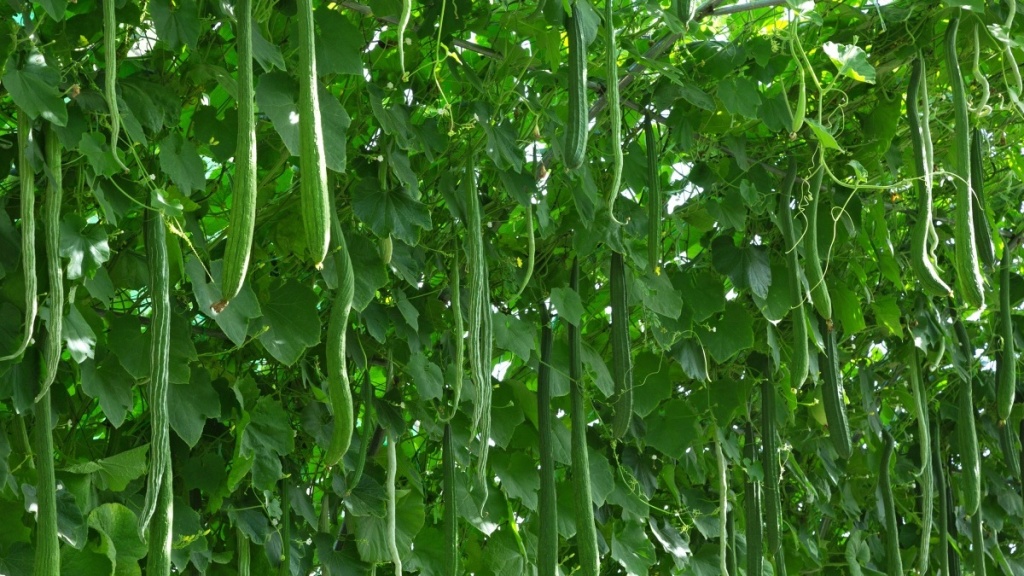
This variety is particularly valuable for its high resistance to various diseases. It also tolerates low temperatures and low light levels well. Thanks to these qualities, the plant can rightfully be considered one of the easiest to care for.
Miranda F1
Cucumbers are planted relatively early, and the harvest can be collected within 40 days of the first sprouts appearing. The hybrid is considered parthenocarpic, meaning it doesn't require pollination, making it much easier to grow.
The hybrid's fruits are typically about 0.12 meters long and weigh 120 grams. They are covered with small white spines and are widely used in salads and pickles.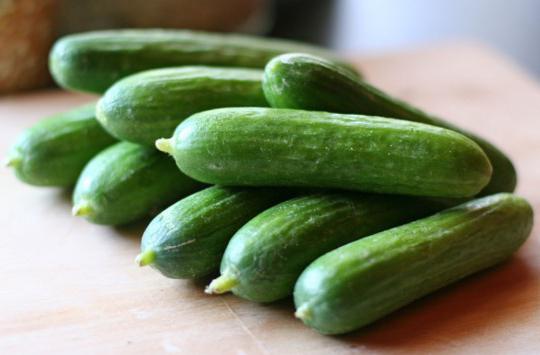
Planting in a polycarbonate greenhouse should be done at temperatures above 15°C. Seeds are sown in holes no more than a centimeter deep. Another option is to plant month-old seedlings at a rate of three per unit of area.
Hybrid Voyage
This hybrid is widely grown in the Urals. The first harvest can be collected 40 days after the young plants emerge. The cucumbers have a pleasant flavor and are not bitter. Typically, the cucumbers weigh up to 0.1 kilograms and are 0.12 meters long. A single bush produces an average of 4 kilograms of fruit.
This crop can be grown in greenhouses, using seedlings or simply by sowing seeds into the soil.
Hybrid Arina
This vegetable is resistant to low temperatures, and it can grow even in conditions of insufficient light.
The hybrid's fruits are crisp and very juicy. They reach approximately 0.17 meters in length.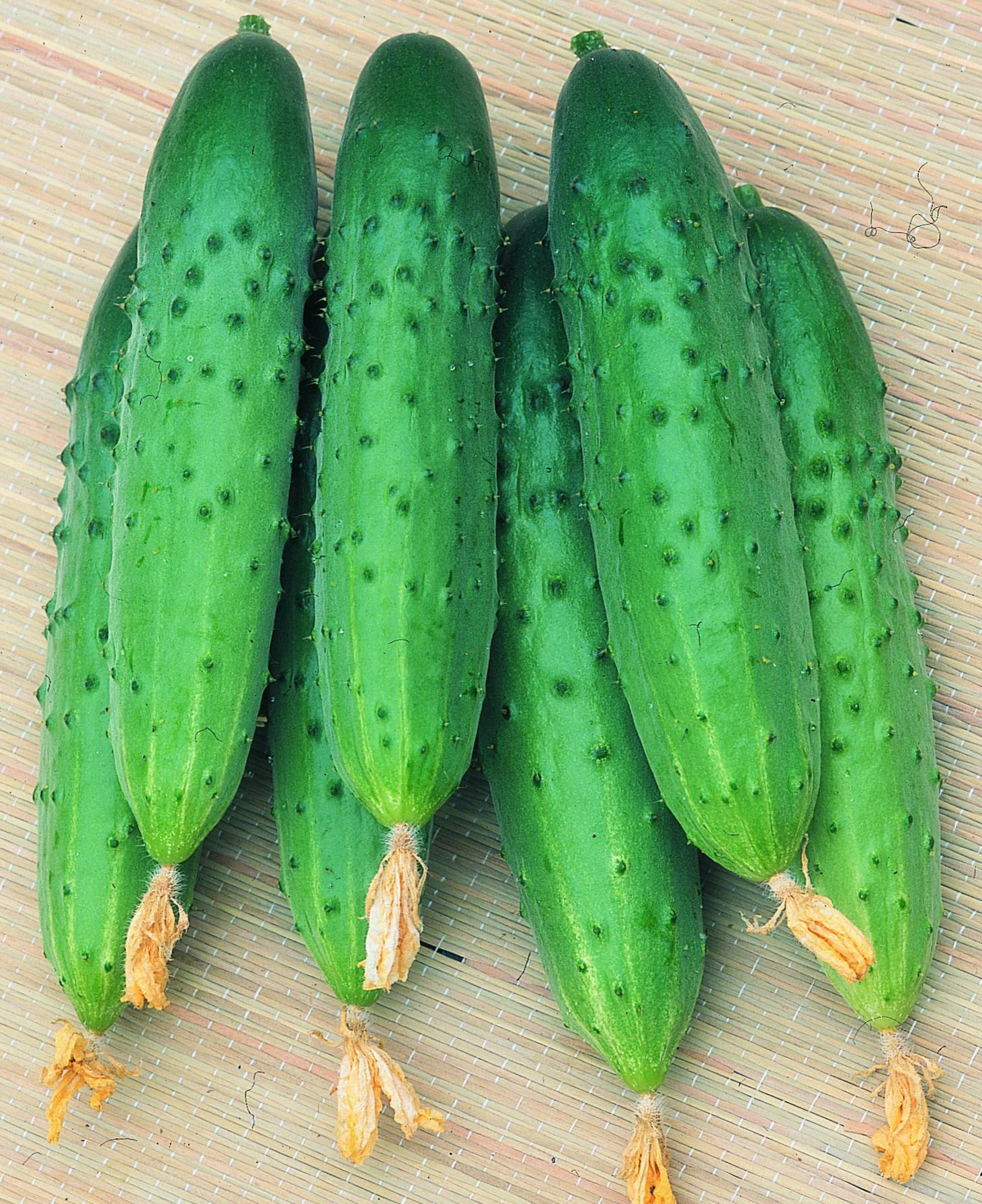
The crop bears fruit for a long time and is virtually immune to olive spot.
Hybrid Amur
These cucumbers produce fruit quickly. Within 40 days of planting, you can harvest up to 10 cucumbers at a time, each weighing no more than 70 grams. Moreover, the fruits are completely free of bitterness.
The hybrid is highly resistant to low temperatures and a number of diseases. The fruits are widely used for pickling and preserving, and are an ingredient in many salads.
Altai variety
Many people grow this vegetable in greenhouses. It's highly resistant to diseases. It continues to thrive even in temperatures as low as -12°C.
These fruits taste excellent when pickled. Short stems produce a yield of approximately 6 kilograms per unit area. Harvesting begins as early as a month after the young seedlings emerge.
The hybrid is not susceptible to any of the cucumber diseases.
Serpentine
This variety is ideal for growing in a polycarbonate greenhouse during the winter. The plant produces short branches studded with small fruits (approximately 0.07 meters long), making the harvest widely suitable for canning.
The first fruits appear on the 36th day. The bush is actively forming multiple ovaries.
The largest vegetable harvest can be collected in the first 14 days of fruiting.
Far Eastern 27
This variety is considered early, as it produces fruit 40 days after planting. These cucumbers typically reach 0.15 meters in length. To produce fruit, the crop requires insect pollination.
The average yield of this variety is 3 kilograms per square meter. Each fruit weighs 200 grams and is covered with a light whitish coating.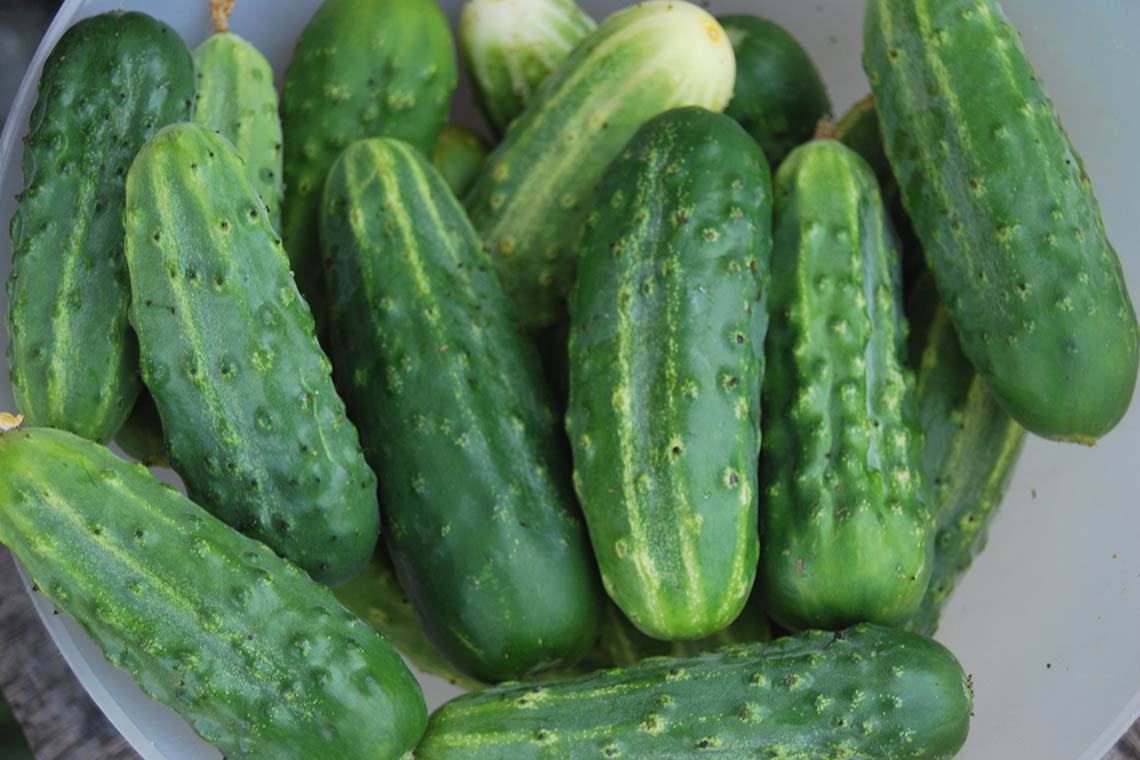
The plant is not susceptible to powdery mildew.
To prolong the fruiting process, cucumbers should be removed from the plant every few days.
All seeds are affordable, so your final choice of variety depends on the conditions in your greenhouse.
So, it can be said that the strengths and characteristics of the varieties mentioned above are:
- short branches that do not need to be pinched;
- high yield;
- resistance to low ambient temperatures;
- long fruiting period;
- parallel formation of several ovaries;
- fruiting is possible even in poor soils;
- Lack of light does not have a detrimental effect on crops.
Video "Varieties"
This video will show you which cucumber varieties are suitable for growing in a greenhouse.
Growing cucumbers in winter greenhouses
In the North, cucumbers are actively grown in greenhouses; planting cucumbers in a greenhouse should only be done when the room temperature is between 18° and 22°.
The most successful soil composition for growing cucumbers in it contains 50 grams of ammonium nitrate, superphosphate and potassium sulfate, as well as 6 grams of magnesium sulfate per 100 kilograms of soil.
The soil should be lightly moistened three times, then watered with a solution consisting of a bucket of water, 0.1 grams each of boric acid, manganese sulfate, zinc sulfate, and 0.3 grams of copper sulfate. This solution concentration is suitable for 36 units of area.
The seeds are planted lightly in the soil: just half a centimeter is enough. Afterward, they are covered with plastic film, which helps retain moisture until the first sprouts appear. Watering should be avoided during this period, as it can disrupt the "greenhouse" microclimate.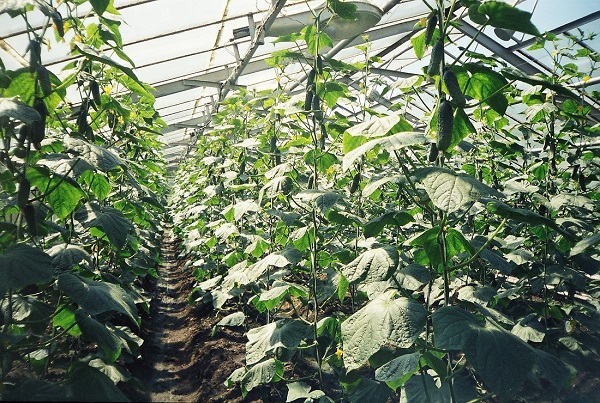
As soon as the first shoots form, the film should be removed from the plantings.
The most acceptable humidity level is 75%. If the plants are located under lamps, they need to be watered more frequently.
If the soil warms up to 30°, this will have a positive effect on plant productivity and significantly accelerate their development.
If the soil warms up to less than 22°C, the plants are more likely to develop root rot. Therefore, warming the soil is very important. Biofuel, a stove, or electric appliances can be used for this purpose.
It's best to create beds with a slope, from the center, which is elevated, to the lower sides. This will allow water to spread evenly. "Sloping" beds also warm up significantly better.
If the variety requires bees for pollination, it is worth opening the windows and transoms in the greenhouse.
Even one overgrown cucumber significantly slows the crop's development. The seeds formed in such a fruit "draw" all the nutrients, causing the plant to dry out.
It's not uncommon for the plant's fruits to taste bitter. Why does this happen? The reasons can be varied:
- lack of irrigation;
- there are not enough nitrogen or potassium substances in the soil;
- excessive shading of plantings;
- increased ambient temperature.
When should cucumbers be planted in a polycarbonate greenhouse in the Urals?
In December and January, it is worth sowing strong plants with a large number of formed shoots in warm shelters (under film or in a greenhouse).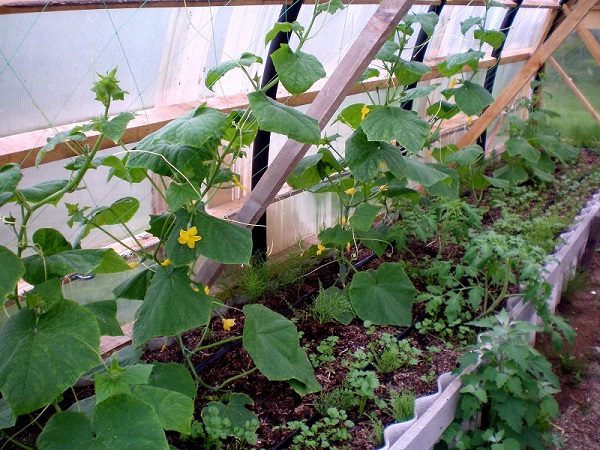
The later you plan to plant cucumbers in a greenhouse in the Urals, the lower the planting density should be. This allows the cucumbers to grow freely under these conditions.
Seeds for seedlings are sown under cover after December 20th and germinated under lamps. Using lamps, up to 50 plants can be obtained per unit area.
Landing dates
When planning to grow cucumbers in the Urals, it's important to consider that plants in this region have a short growing season. Frosts can persist until the beginning of summer. They can recur as early as early fall or late summer. Therefore, to get an early harvest, it's best to grow the crop from seedlings.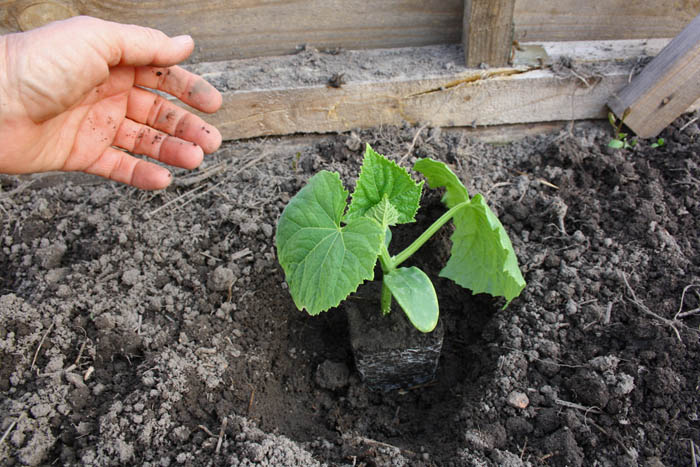
It's not just the region's climate that needs to be considered when growing cucumbers. Soil temperature is also important. Young plants should only be planted in soil that has reached a temperature of 20°C or higher.
Planted seeds that have grown into seedlings should be transferred to a plastic greenhouse in the second half of May. Fertilizing the seedlings with manure will allow for this process to be done earlier in the month (if you have a plastic greenhouse rather than a polycarbonate greenhouse). If using manure in a glass greenhouse, planting should take place on April 25-26.
Cucumbers prefer soil with specific properties. Specifically, high levels of air permeability must be maintained at all times.
The soil should also have sufficient organic matter. Cucumbers thrive in loamy soil. The soil solution should contain no more than 15 grams of salt per liter. Before sowing the seeds, prepare a mixture of garden and vegetable soil. To eliminate excess acidity, it is advisable to add a solution of fertilizer to the soil (a few tablespoons of fertilizer per bucket of water). The nutrients should include calcium, boron, and magnesium.
So, the most common method for growing cucumbers in the northern regions of the country is from seedlings. However, the seeds must be sown in a polycarbonate greenhouse. Only under these conditions can a bountiful harvest of the vegetable be achieved.
Video "Growing"
This video will show you how to grow cucumbers in a greenhouse and get a good harvest.