
Cucumber greenhouses: DIY instructions
Content
Technical requirements
The main purpose of a greenhouse is to create a favorable microclimate for the healthy development and fruiting of cucumbers. To achieve this, the structure must meet the following requirements:
- be located in a sunny place, away from tall buildings and trees and illuminated by the sun for more than half the day;
- the area under the greenhouse must be level - areas on a slope, in a lowland, or with close groundwater levels are not suitable for this purpose;
- have a small size and height - such a structure heats up faster and, if necessary, is easier to heat artificially;
- easy to open and provide access to plants;
- have a ventilation hole to provide access to fresh air during cold weather and at night;
- retain maximum heat during the night hours;
- have a durable yet transparent coating.
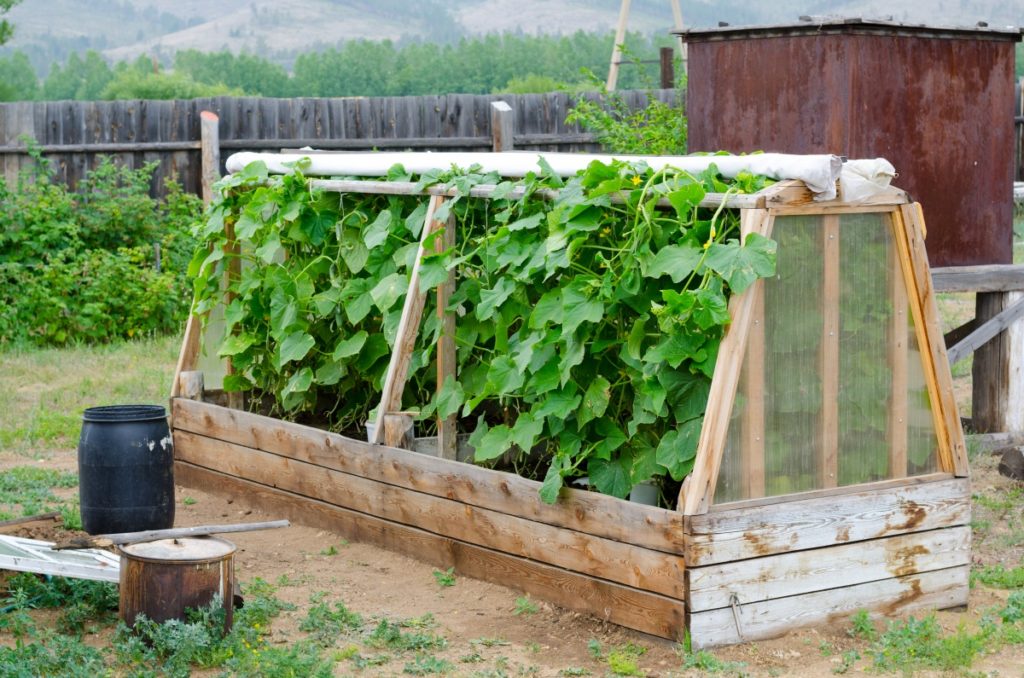
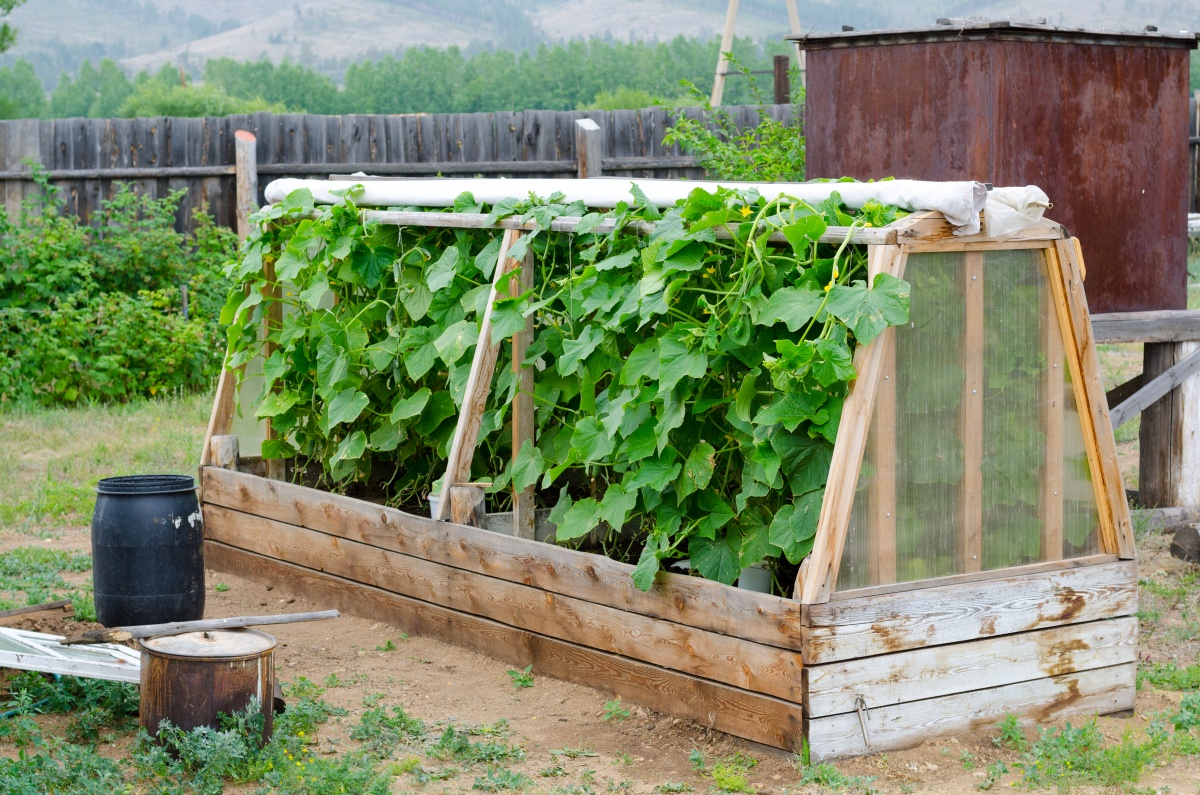
To ensure that the greenhouse is better heated by the sun's rays and that drops of condensation do not remain on the surface, the northern side of the structure should be raised by 10 cm relative to the southern side.
Video: Growing Cucumbers in a Greenhouse
This video will show you how to grow cucumbers in a greenhouse to get a good harvest.
Design options
A hothouse is a simplified version of a greenhouse. Its construction does not require the installation of permanent heating, lighting, or an irrigation system. However, the required structural elements are a sturdy wood or metal frame attached to a box and a translucent top covering. Let's look at several simple options that can be built at home.
Arc greenhouse
The simplest homemade structure, consisting primarily of metal, or less commonly plastic, arches secured to a wooden box or directly into the soil. It's a kind of tunnel of varying length and height, covered with a translucent material—film—attached with wooden stakes or bricks.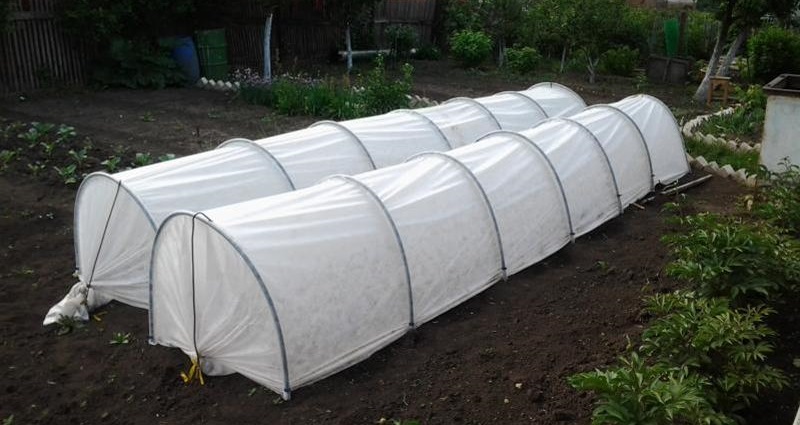
The Ogurcik greenhouse is especially popular among summer residents – a compact structure no more than 1 m high and up to 5 m long. This structure consists of film-covered metal arches anchored in the ground at intervals of 0.5 meters. This model requires little investment and is capable of maintaining a favorable microclimate for cucumber seedlings during the gardening season.
The undeniable advantage of such structures is their mobility, which is important when maintaining crop rotation, as well as the ability to transform – removing the covering when warm weather sets in.
Wooden
This involves constructing a wooden frame from planks, beams, and boards in a box-like shape. The roof of such a structure can be flat or pitched, and the covering can be glass, polycarbonate, or, more commonly, film. A greenhouse can be made from any construction scraps, making this option considered economical and simple.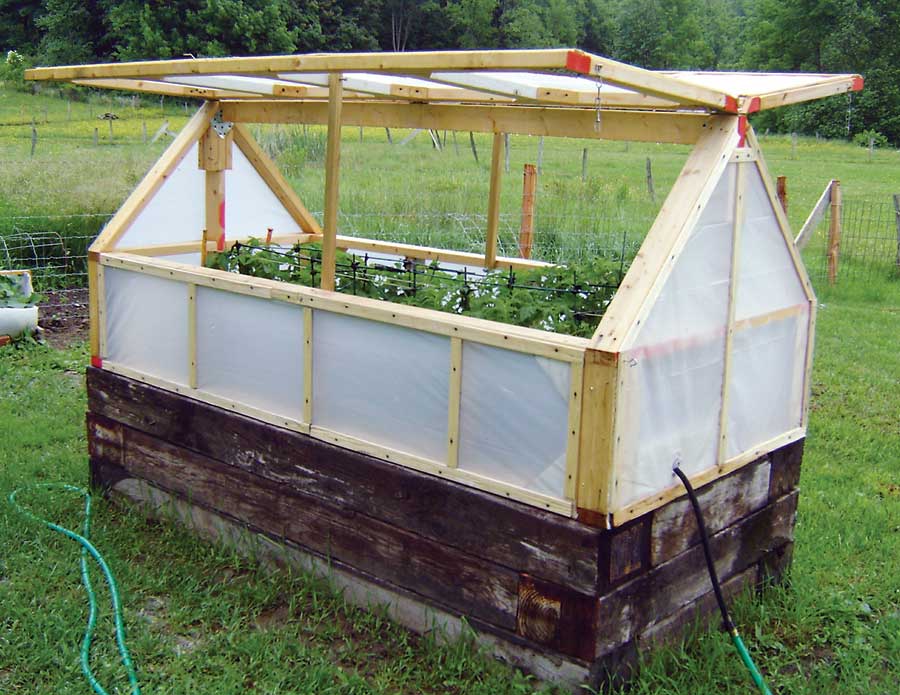
The wooden model can be portable or permanent. In the former case, several pairs of wooden slats are knocked together, the sections are assembled and connected to each other, and then covered with thick film.
To create a permanent structure, first build a wooden base to which the frame is attached. This greenhouse is then covered with a thick, transparent material.
Made of polycarbonate
A polycarbonate greenhouse for cucumbers can hardly be called economical, but this covering is considered the best for growing agricultural crops due to the following qualities:
- high strength and resistance to wind, hail, and snow cover;
- the presence of an air gap that retains heat inside the structure;
- minimal heat transfer coefficient (cools slowly);
- despite its density, the material is very transparent (transmits about 85% of sunlight);
- frost resistance (can be used in the production of winter greenhouses);
- Durability – the warranty period is 10 years, but with proper care the material can last much longer.
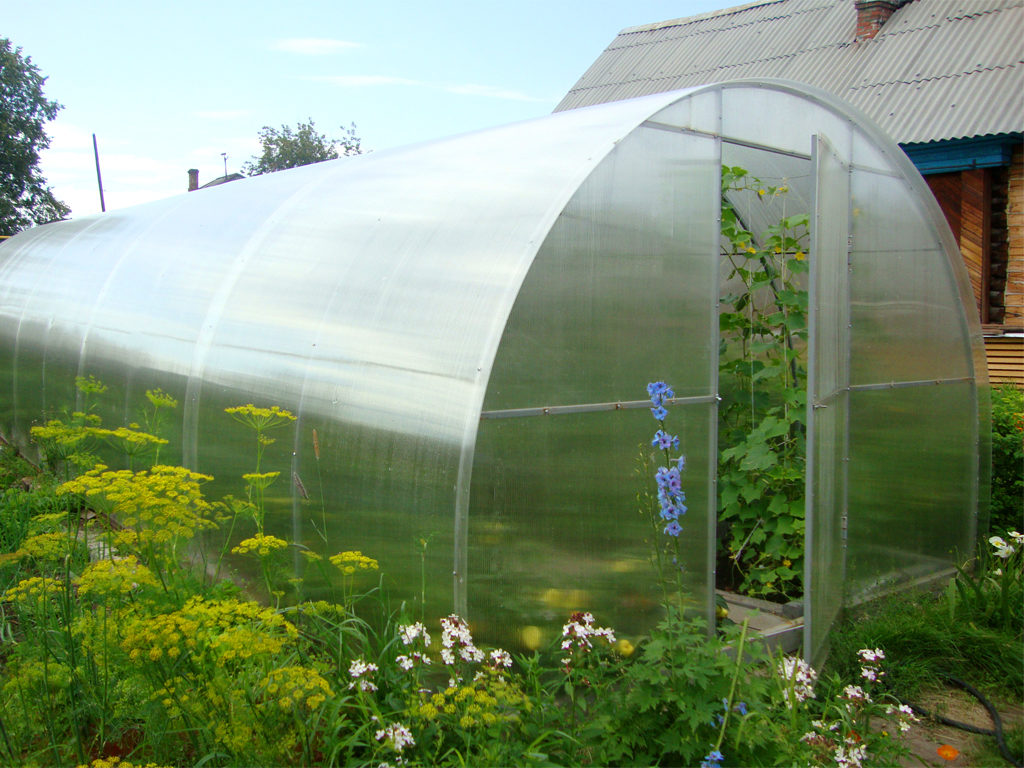
To ensure that such a greenhouse can provide and maintain the necessary microclimate for cucumbers, several points must be taken into account during construction:
- The sheets for covering should be selected with a thickness of 4-6 mm;
- the structure must have ventilation holes;
- Despite the material's durability, it must be handled with care, as it scratches easily and becomes cloudy when used with detergents, which reduces its light transmittance.
Instructions for making
While even a novice vegetable grower can build a simple arched or wooden greenhouse, constructing a permanent wooden or polycarbonate structure yourself requires specific skills and technical knowledge.
Polycarbonate
The following materials are required for construction: metal profile or wooden beams for the roof and frame (size and quantity depend on the size of the structure), film or roofing felt, polycarbonate, screws, a screwdriver, and a plane. Before use, the wood should be treated with a preservative, and the profile, if not galvanized, with an anti-corrosion agent.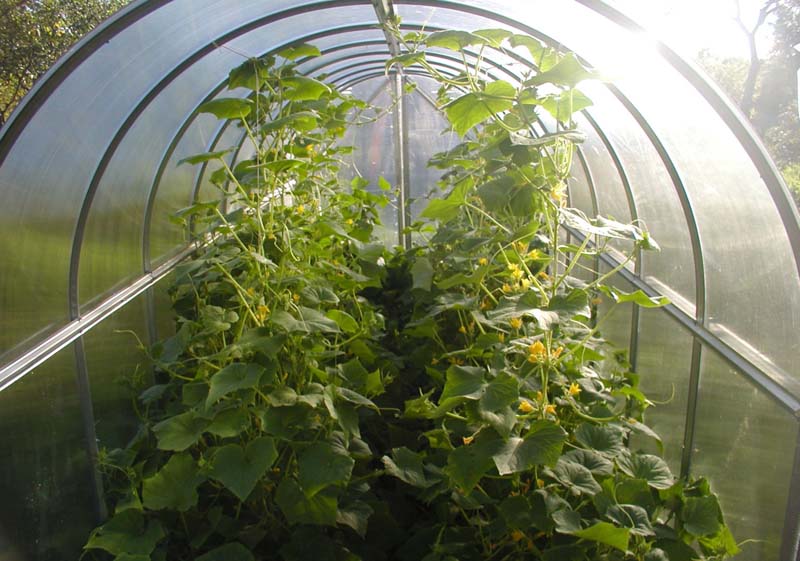
The manufacturing technology is as follows:
- we prepare the foundation - we dig a trench about 0.5 m deep, up to 2 m wide, length - as desired;
- We pour a mixture of sand and gravel into it, then a 30 cm layer of soil on top, after which we waterproof it with film or roofing felt;
- We prepare a wooden base according to the size of the foundation, install it and strengthen it;
- we construct posts with a pitched top from beams or boards;
- we attach the posts (frame) to the base at a distance of 1 m;
- We attach polycarbonate sheets to the frame. To prevent the covering from cracking during installation, it is recommended to place metal washers under the screws.
Pyramid
This structure will not only provide a warm home for cucumbers but also beautify the plot if built correctly and aesthetically pleasing. Typically, it's a low, compact greenhouse no more than 2 meters diagonally. To build it, you'll need:
- 4 beams for the base, 1.4 m each;
- a pipe or beam 3.2 m high for the center;
- beams from 0.5 m to 3 m high for making triangular side faces;
- film or polycarbonate;
- nails or screws.
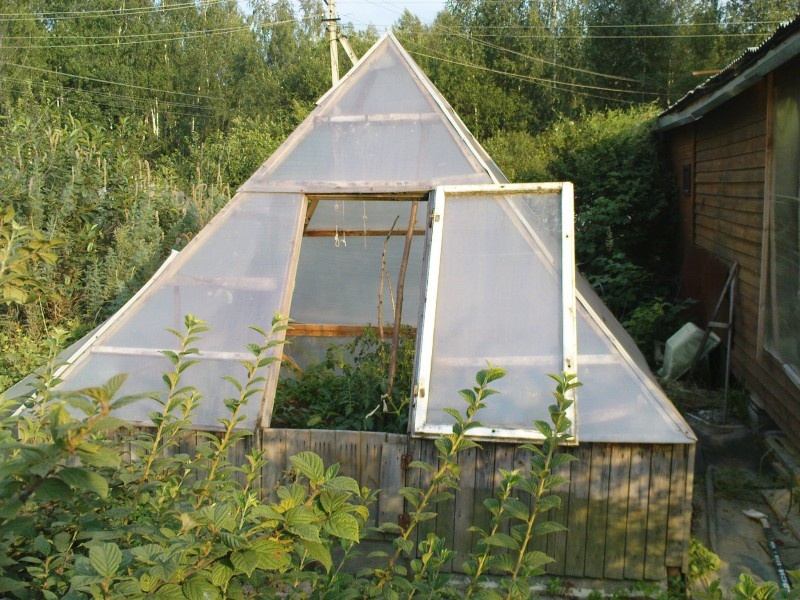
Now we assemble the frame:
- connects 4 beams for the base;
- we fasten the beams in the shape of a triangle (there should be 4 sides) - a door needs to be provided on one side;
- in the center we dig a pipe (beam) to a depth of 0.5-0.6 m;
- We attach each edge to the base and connect them at the top point - the edge with the door is installed on the south side;
- We cover the structure with film or polycarbonate.
The top of the structure should be provided with ventilation. This could be a hood that can be put on during cold weather and removed in summer, or a small window. This way, with minimal effort and materials, you can grow cucumbers in any climate and get early harvests.
Video: "How to Build a Greenhouse Yourself"
From the video you will learn how to make a greenhouse yourself.