
Pollination of cucumbers in a greenhouse: choosing a variety, implementation rules
Content
Selecting a variety
All varieties and hybrid forms of cucumbers can be divided into two groups:
- parthenocarpic (self-pollinating);
- insect-pollinated.
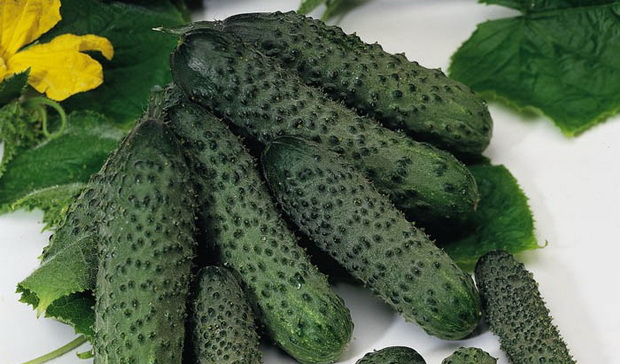
The first type is characterized by a predominance of female flower stalks, which contain pollen that pollinates the pistils of their own flowers without the intervention of insects, wind, or humans. Pollinated varieties are characterized by the opposite qualities: they are unable to independently set fruit, as the plants produce flowers of mixed sex, with male flowers predominating. For such plants to produce fruit, they must be pollinated by bees or humans, who transfer pollen from the male flower to the female flower.
The main reason for the low yield in greenhouses is that many vegetable growers still prefer to plant bee-pollinated cucumbers. This is understandable, as these varieties are considered more natural and, if properly pollinated, offer several advantages, including:
- high profitability of the crop;
- higher taste qualities of fruits;
- good resistance to changes in growing conditions (lack of light, moisture, heat).
However, there is one drawback that can negate all the advantages of pollinated cucumbers: the formation of too many male flowers (empty flowers) on the plants, which, of course, affects the overall yield. Reputable seed companies solve this problem by including several colored seeds in the seed packets. In this case, a special symbol is placed on the packet—a yellow seed in a square, indicating that the colored seeds are the pollinator. Planting such cucumbers can result in a higher yield.
For those who want to avoid the hassle of selecting seeds and pollinating, there's an alternative: planting self-pollinating varieties. These cucumber varieties are very popular with most modern gardeners. They surpass the previous group in their ability to independently form large numbers of ovaries, but even with them, things aren't so simple. Active ovary formation is only possible under favorable conditions. However, if the plants experience even the slightest stress, they may stop forming ovaries or shed existing ones.
To avoid the situation where you're left without a harvest by growing only a parthenocarpic cucumber variety, experienced gardeners recommend planting several varieties in a greenhouse, using the following scheme:
- the first ones to be planted should be early self-pollinating varieties;
- the bulk of the seed material for the greenhouse should be insect-pollinated varieties;
- The final planting is best done from self-pollinating hybrids of mid-season fruiting.
Video "Best Varieties"
From the video you will learn which varieties are best suited for growing in a greenhouse.
Self-pollinating varieties
Thanks to the hard work of breeders, the seed market today offers a wide variety of cucumber varieties that don't require pollination. These hybrids, primarily intended for greenhouse cultivation, are labeled "F1" on the packaging:
- German F1 is an early-ripening hybrid of Dutch selection, very resistant to adverse external factors, universal in use, the fruits are small, smooth, pimply, completely free of bitterness;
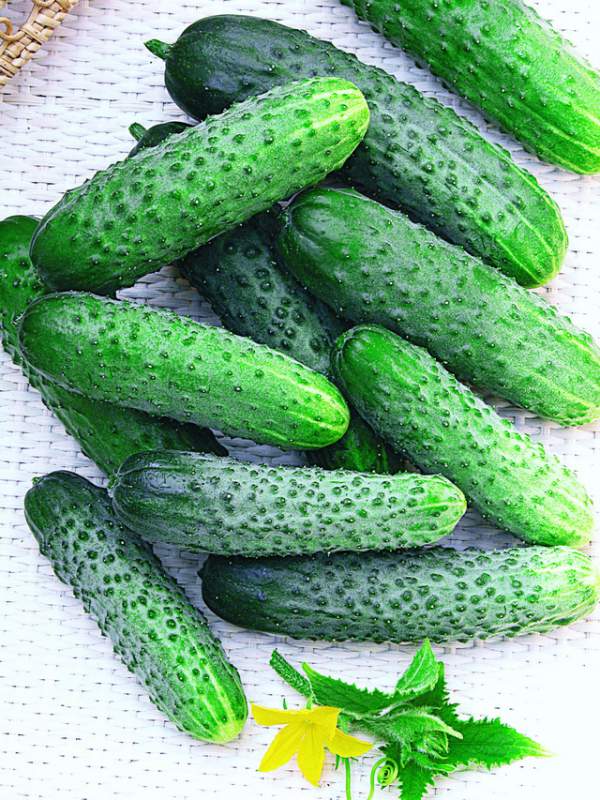
- Emelya F1 is an early-ripening greenhouse hybrid with an impressive yield (up to 16 kg/1 m²), resistant to diseases, the fruits are medium-sized (about 15 cm), even, bumpy, with a sweetish, refreshing taste;
- Zozulya F1 is a very old variety, proven by many generations of gardeners. It ripens evenly, the fruits are elongated, smooth at the bottom, slightly bumpy at the stalk, and very aromatic;
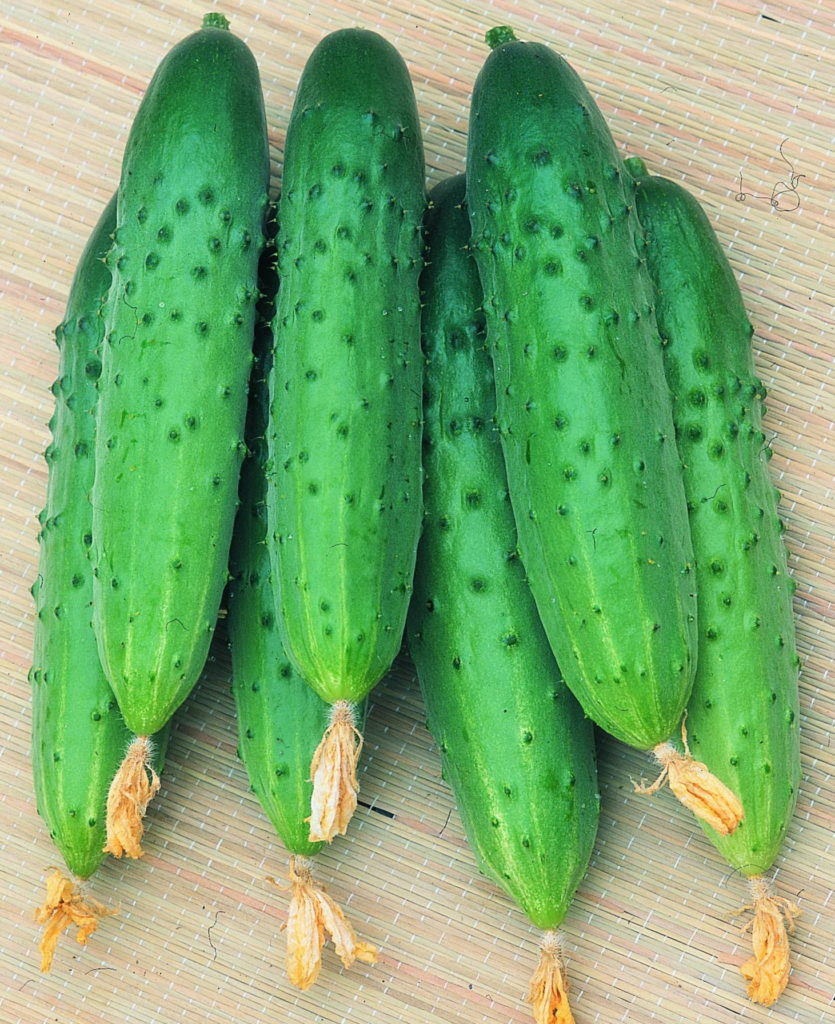
- Dynamite F1 is an early-ripening (40-43 days) hybrid with strongly growing vines, the fruits are beautifully rounded, slightly bumpy, and can be used for canning and pickling;
- Dachnik F1 is an early (42 days) hybrid with an impressive yield (up to 18 kg/1 m²), the gherkins are small (7-9 cm and weigh 70-80 g);
- Millionaire F1 is a new early-ripening gherkin-type hybrid. The fruits are small (5-7 cm), pimply and prickly, located in bunches of 8-10 pieces on the bush, do not overgrow, have an excellent sweetish taste;
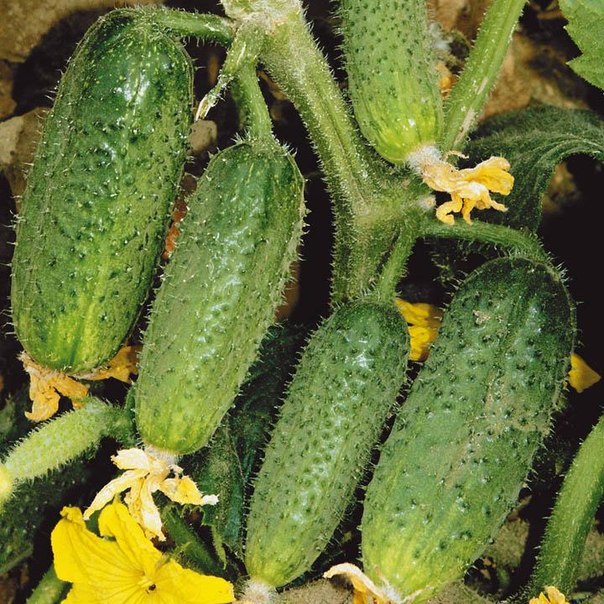
- Zyatek F1 is an early (45 days) domestic hybrid with high yield and excellent taste of fruits, the cucumbers are medium-sized (12-15 cm), heavily pimply, suitable for preparations.
Rules of execution
Let's first understand the pollination process. As scientific terminology indicates, for a flower to form an ovary, pollen from the male flower stalk must land on the pistil of the female flower, and in significant quantities. This is because the female flower contains many seed buds, and for successful fruit set, as many of them as possible must be pollinated. Every gardener knows that the more active the bees are in the garden, the more ovaries will form.
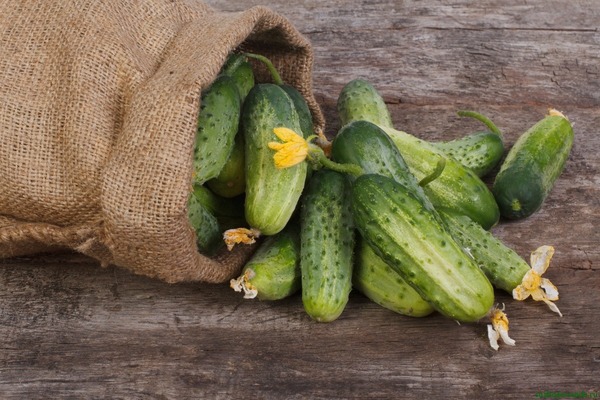
But while this is a routine process for bees, it can be challenging for humans. To successfully pollinate cucumbers, you need to know a few rules:
- It is advisable to carry out the procedure in the morning (in extreme cases, before lunch);
- The humidity in the greenhouse should be at 70% - humidity affects the condition of the pollen: at a higher level, it acquires a lumpy consistency, and at low humidity, it dries out;
- Pollination is best carried out the next day after the flower has fully blossomed;
- The pollinated inflorescences should be marked somehow so that later it will be possible to check whether the procedure was successful. If the flower was fertilized, the ovary will increase in size in a few days, and if not, it will dry up and fall off.
It's important to learn how to distinguish male flowers from female ones. Male flower stalks are typically arranged in clusters in the leaf axils, while female ones are borne singly. But the biggest difference is that male specimens are sterile, while a small ovary is located beneath the female flower.
Pollination
There are two ways to artificially pollinate greenhouse cucumbers: manually by humans and using insects. Let's take a closer look at each method.
Insects
This pollination method requires bees to be kept in a greenhouse. During warmer months, you can open the windows or place the hive next to the greenhouse. It's recommended to make a circular opening in the greenhouse wall and place the hive against the outside. This allows the bees to easily return home and fly outside.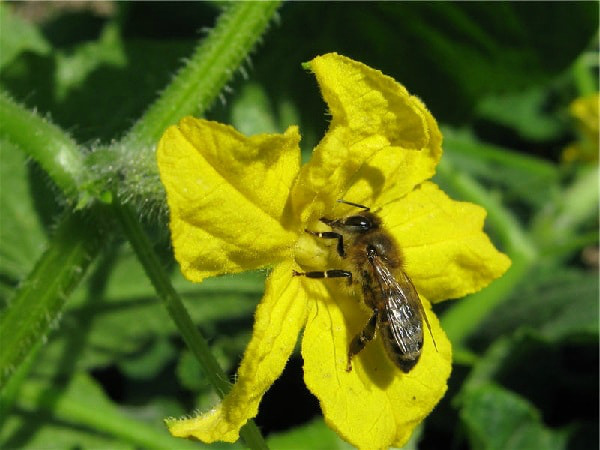
You can attract bees to your greenhouse by spraying the plants with sugar syrup at a concentration of 1-2 tablespoons of sugar per 1 liter of water. Instead of sugar, you can use candied honey or other sweet preserves (jam, preserves).
It is ideal to add 0.1 g of boric acid to this solution – this will ensure the plants look healthy and will serve as a small fertilizer.
If cucumbers are grown in a greenhouse during the cold season, the beehive should be installed early, before flowering. Naturally, the greenhouse should be warm during this time. To ensure the bee colony survives in the greenhouse, it should be placed there before the bees make their cleansing flight after winter. Once the weather warms up and the honey plants bloom, the bees should be provided with free access, or the hive should be moved outside.
Manually
If you can't attract bees to pollinate your cucumbers, you'll have to do it manually. First, learn to distinguish between male and female flowers and try to find them on the bushes in advance. There are two ways to manually pollinate cucumbers:
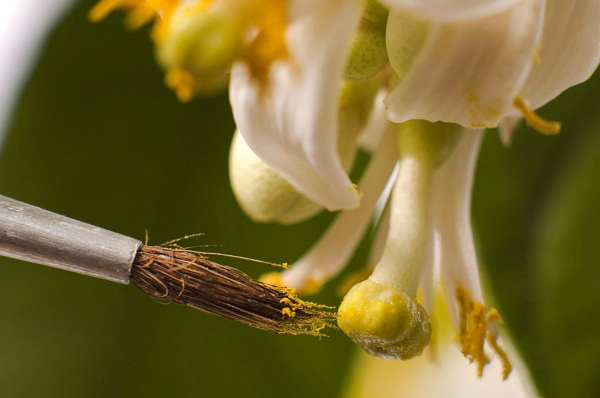
- Using a brush. The tool should be made of soft natural bristles, which will easily capture and release pollen. First, gently remove pollen from the male flower with the tip of the brush (yellow specks on the bristles will indicate that it has been removed), then transfer it to the pistil of the female flower. It's a good idea to cover the center of the pollinated flower with a piece of cotton wool until the ovary beneath it begins to grow.
- Using a flower. Pick a pollinating (male) flower and check for pollen with the back of your hand (it should stick to your hand or fall out). Then, gently touch the pistil of the female flower with the male flower. For best results, leave it there until pollination is confirmed.
Experienced gardeners recommend not limiting themselves to a single procedure to ensure results. Artificial pollination of cucumbers can be repeated several times over the course of two weeks from flower opening until the ovary begins to enlarge. This is a sign that pollination has been successful and the harvest is about to begin.
Video "How to Pollinate"
This video will show you how to properly pollinate cucumbers.