
Greenhouse cucumber growing tips for beginners
It's important to consider the properties and characteristics of plants, even when it comes to watering. The same amount of water may be optimal for one plant species, but nearly fatal for another. A novice vegetable grower should be aware that growing cucumbers in a greenhouse requires careful consideration of the following factors:
- the correct choice of location for the greenhouse and the advantageous arrangement of the beds in it;
- proper soil preparation;
- choosing a cucumber variety that best suits your needs;
- correct planting or sowing;
- proper care of plants;
- formation of the most fruitful bushes;
- the necessary knowledge to combat possible diseases and pests.
Content
Greenhouse placement and arrangement
Before discussing how to plant beds in a greenhouse, we need to talk about the greenhouse itself. This structure must stand firmly on the ground. Some experienced vegetable growers even build a special foundation to ensure the entire structure remains stable for many years. But these are just guidelines for beginners. A regular greenhouse will be enough to start with; it will ensure profitability for the first few years.
The greenhouse should be protected from strong north and west winds. A fence is the best way to achieve this. The soil should be level for the greenhouse site; this will make plant care easier. The frame can be metal or wood. Each has its advantages. However, it's important to keep in mind that a wooden frame will only last a few years before needing to be replaced. Polyethylene film remains the best material for creating the enclosing surface. It ensures the reliability of the structure with slopes at a 20-degree angle.
It's important to plan your irrigation system in advance to avoid major renovations or remodeling in the future, allowing you to care for your cucumbers with peace of mind. The optimal ratio of volume to area is 2:1. This will maintain sufficient heat and humidity in the room to ensure rapid plant growth.
Video: "Greenhouse Cucumbers at the Dacha"
This video is about how to conveniently set up a greenhouse and grow a large harvest of cucumbers in poor soil.
Selecting a variety
Cucumber varieties are divided into groups, including specialized ones that are best suited for greenhouse cultivation. These include both regular and hybrid varieties. Some are ideal for eating immediately after harvest. Others are ideal for pickling and marinating. They may also differ in their pollination methods.
The most popular varieties to plant are:
- Hercules F1 hybrid. Fruit weight ranges from 150–170 g and is spindle-shaped. Compared to other varieties, this one is late-ripening. On average, 62 days pass from germination to the first harvest. It blooms in clusters. A disadvantage is pollination by bees. Therefore, artificial pollination is necessary in greenhouse conditions.
- Emelya F1 hybrid. Weighing 120-150 g, it has an elongated shape. The fruit reaches a maximum length of 15 cm. This special hybrid cucumber variety was developed for greenhouses and hotbeds. Suitable for eating raw or pickled. Self-pollinating due to the unlimited number of vines, minimizing plant maintenance. High yield. Particularly suitable for heated greenhouses.
- Annushka F1. Small fruits with a bumpy, ribbed texture. Weight 95-110 g, length 10-12 cm. Medium maturity. Bee-pollinated. Its special advantages include disease resistance and profitability.
- Dynamite F1. Showed high yields under plastic. Fruit size is 12–14 cm, weighing 100–120 g. It prefers open spaces, so beds should not be too dense. This variety does not require pollination, making it particularly practical.
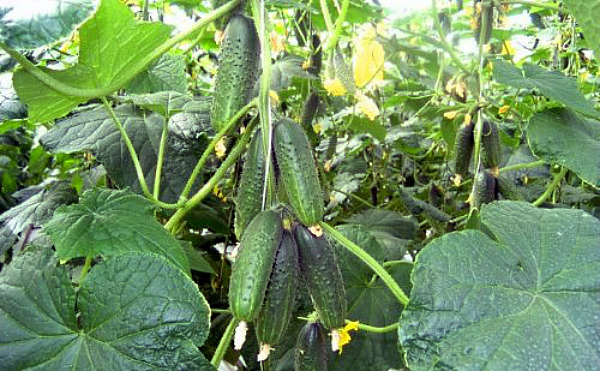
Many experienced vegetable growers also recommend planting hybrid F1 cucumber varieties: Atlet, Anyuta, Belyi Angel, Pyzhik, Vicenta, Marta, and Kurazh. Suitable varieties for winter cultivation in glass greenhouses include Estafeta, Domashniy, Rossiyskiy, Zarya, Moskovsky Teplichniy, Iva, Marfinskiy, Regata, Rykovsky, and others.
Self-pollinating varieties for early harvest:
- Muromsky 36;
- Altai early 166;
- Othello;
- Satan;
- Bushy;
- Graceful, etc.
Soil and sowing
Maintaining and maintaining high-quality soil is crucial. Soil properties largely determine the quantity and quality of the harvest. First and foremost, cucumbers thrive in soil with approximately zero pH.
For beginning gardeners, there are the following signs that can easily determine the soil acidity level:
- High - in this area grow mint, buttercup, fireweed, wood sorrel, horse sorrel, plantain, horsetail, etc.
- Neutral – creeping wheatgrass, coltsfoot, scentless chamomile, garden thistle, field bindweed, etc. are common here.
High acidity levels are best reduced using readily available substances, easily found even by inexperienced gardeners. Cement dust, ash, slaked lime, and the like can be used for this purpose.
To ensure the maximum amount of nutrients in the soil, fertilization should begin in the fall. When spring arrives, the soil should be dug to a depth of at least 25 cm. Next, add the compost you prepared in the fall and mix it into the soil. You can create this compost yourself using straw, dried leaves and grass, manure, and sawdust. Next, water and cover the area intended for growing cucumbers. Under the cover, the soil should warm up to 150 degrees Celsius.
Care
The main steps that characterize the proper care of cucumbers in a greenhouse:
- regular watering;
- maintaining the required soil temperature;
- detailed monitoring and maintenance of air temperature.
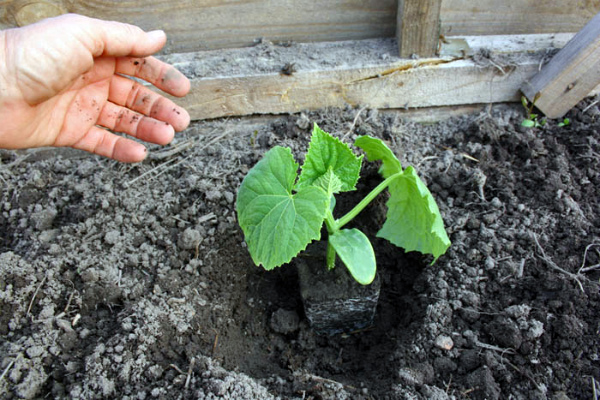
Cucumbers require a lot of moisture. Until fruiting, watering should be done every two or three days, depending on the specific situation. Once the first fruits begin to develop, increase the frequency to daily watering. Fertilizing the soil after watering is recommended.
There are various methods for soil moistening. The most suitable are special sprinklers, which can be optimally positioned in the greenhouse. Plants appreciate regular and generous watering. The best time for this process is sunny weather, but it's important to avoid any drafts and close all windows or doors.
To know how to properly grow cucumbers in a greenhouse, you need to know a few secrets.
To increase the number of female flowers, and thus increase the yield, you can use the following trick: after the first buds appear, watering is reduced, and the previous frequency and amount of water is resumed only after the flowers disappear.
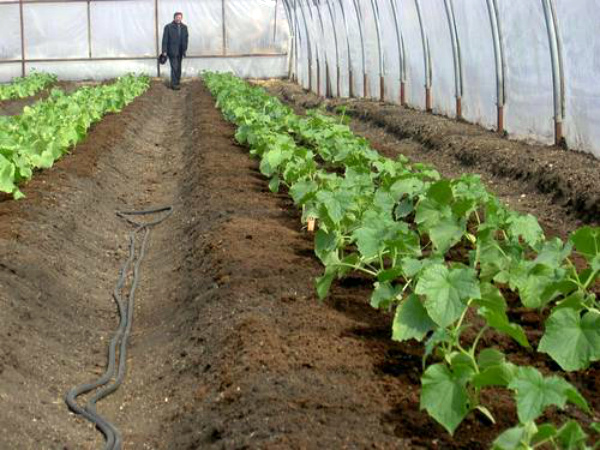
During plant growth and development, the optimal temperature is 20°C or higher during the day and 17–18°C at night. During active fruiting, the air temperature should not drop below 18°C at night, and a maximum of 28°C during the day. The soil should remain warm at all times, between 22°C and 24°C.
Humidity is also crucial: 80% before fruit development, 90% later. Sudden fluctuations in temperature and humidity negatively impact many factors. They can lead to disease development. The flavor of cucumbers, like peppers, is significantly reduced.
Formation
Growing cucumbers in a greenhouse involves forming a vertical bush. To do this, wire or a ledge made of various materials is installed at a height of 170–200 cm above the rows. The bush is connected with a soft cord, tying a light and loose knot on the stem. Then, simply wrap the stem lightly around the cord as the plant grows. This is one of the easiest methods used by gardeners.
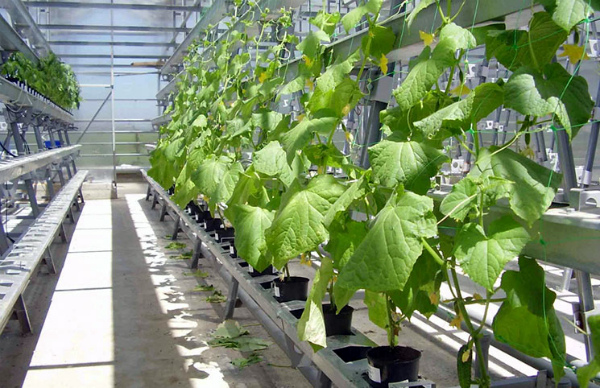
The bush should be trained after the sixth, or at most eighth, leaves appear. Flowers that appear in the first three axils should be pinched. The average stem length ranges from half a meter to three meters.
Possible difficulties
Growing cucumbers in a greenhouse is a rather labor-intensive process.
Here are the most common problems and how to solve them:
- Leaves turning yellow or simply lightening. This is a sign of too much nitrogen in the soil. Similar symptoms can appear in peppers and tomatoes. This problem should be addressed gradually with urea. To do this, add 50 grams of urea per 10 liters of water and water the plants.
- The plant grows vigorously, but flowering is sparse and late. To ensure profitability, it is necessary to fertilize with potassium-phosphorus solutions. The recommended dosage is one bucket of solution per 8-10 plants.
- Few ovaries are set. In this case, proper care is provided by fertilizing with chicken manure. It is also important to maintain an air temperature of 17-18 degrees Celsius and provide ventilation at night.
Video: "Technology for a Bountiful Cucumber Harvest"
You need to watch this video if you dream of harvesting abundant cucumbers. It explains how to grow vegetables using the Mittlider method.