
How to increase cucumber yield in a greenhouse: expert advice
Content
The best varieties
Many factors influence cucumber yield, and variety selection is not the least important. While it's true that any cucumber will yield a harvest with proper care, it's also true that some greenhouse cucumbers fail to produce at all or simply die from heat and humidity. This is often because the variety is intended for open ground, not greenhouse cultivation.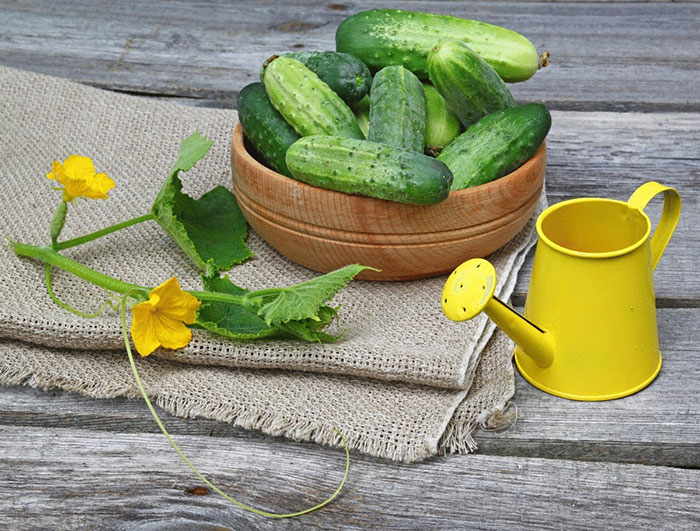
For greenhouse planting, choose hybrid varieties designated "F1." The number "1" indicates that it's a first-generation hybrid, meaning it was created by crossing two purebred varieties. These cucumbers have superior characteristics:
- tolerate temperature changes, increased humidity, cold or heat well;
- capable of self-pollination;
- have a short growing season (ripen earlier);
- characterized by abundant fruiting;
- disease resistant;
- the taste does not have the characteristic bitterness.
Ideally, all these characteristics should be combined in a single hybrid, as cucumber yields will be high. However, it's also beneficial if the variety is undemanding of growing conditions, as even the most modern and well-equipped greenhouses can experience unforeseen circumstances. Imagine the tragedy if a slight drop in temperature causes the plants to stop setting fruit, or worse, if they start dying because the greenhouse wasn't properly ventilated and became too hot. To prevent this, choose hybrids that can withstand both heat and cold.
White Night F1
An early-ripening hybrid (40-44 days) with abundant, mass-producing fruiting and high yields (up to 12 kg per square meter). The fruits are small (8-9 cm), cylindrical, and average 90-120 g in weight.
Pinocchio F1
An early-ripening hybrid (42-46 days) with high cold tolerance. Can be grown outdoors. 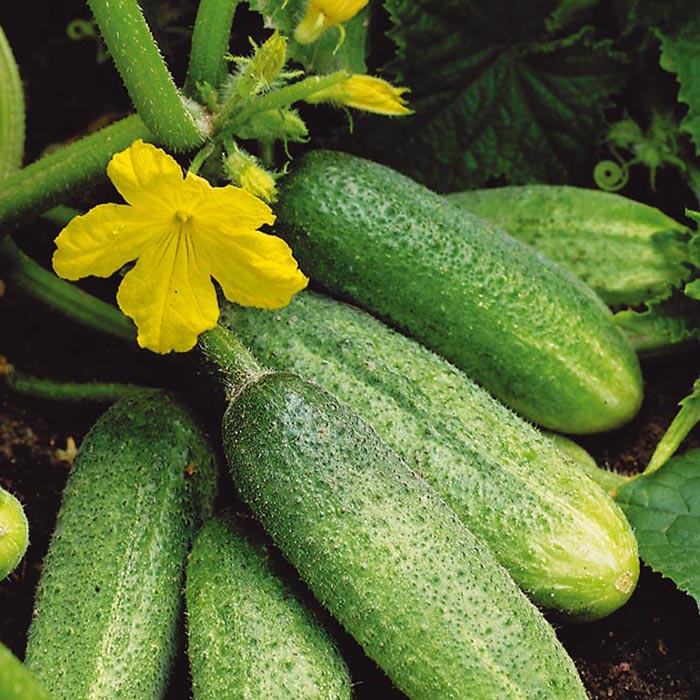 The fruits are medium-sized (8-9 cm and weighing approximately 100 g), wide, and bumpy along their entire length. They ripen early and transport well. Yield is 11-13 kg/m².
Emelya F1
An early (40-42 days) hybrid for greenhouse cultivation. The bushes are vigorous and produce predominantly female flowers, resulting in high yields (up to 16 kg/m²). The variety is resistant to diseases, particularly fungal ones. The fruits are uniform, with a bumpy surface, 13-15 cm long, and weigh up to 150 g.
Cellar F1
This versatile, early-ripening hybrid can be grown in the ground under plastic or in greenhouses. The fruits are medium-sized (up to 11 cm and weighing approximately 100 g), very bumpy. Yield: 10-11 kg. Insect pollination is required.
Dacha F1
An early fruiting hybrid – 42-45 days. 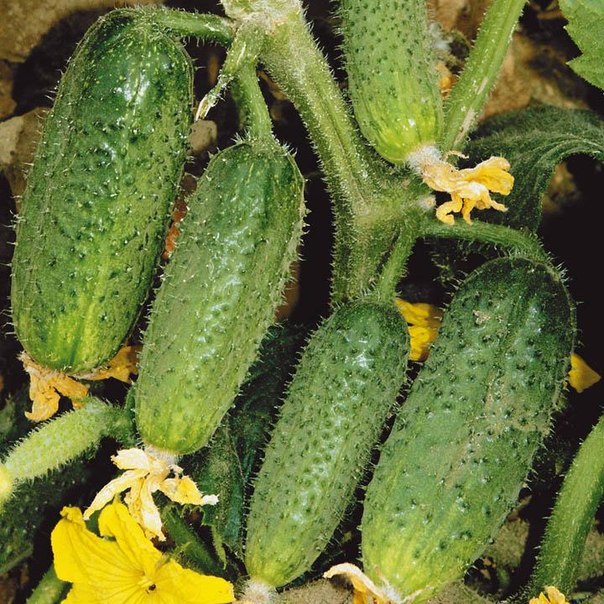 The gherkins are small in weight (70-90 g), but due to the large number of ovaries formed by female flowers, the yield is impressive - up to 18 kg / 1 m².
F1 Mascot
A mid-season hybrid (50-54 days) with remarkable resistance to virtually all diseases. Fruits are medium (up to 12 cm), wide, very bumpy, weighing up to 200 g. Yield: up to 14 kg.
Barcelona
An early (40-42 days) hybrid with moderate disease resistance. Fruits are long (up to 16 cm), uniform, moderately bumpy, weighing approximately 140 g. Female flowering is predominant. Yield: up to 13 kg.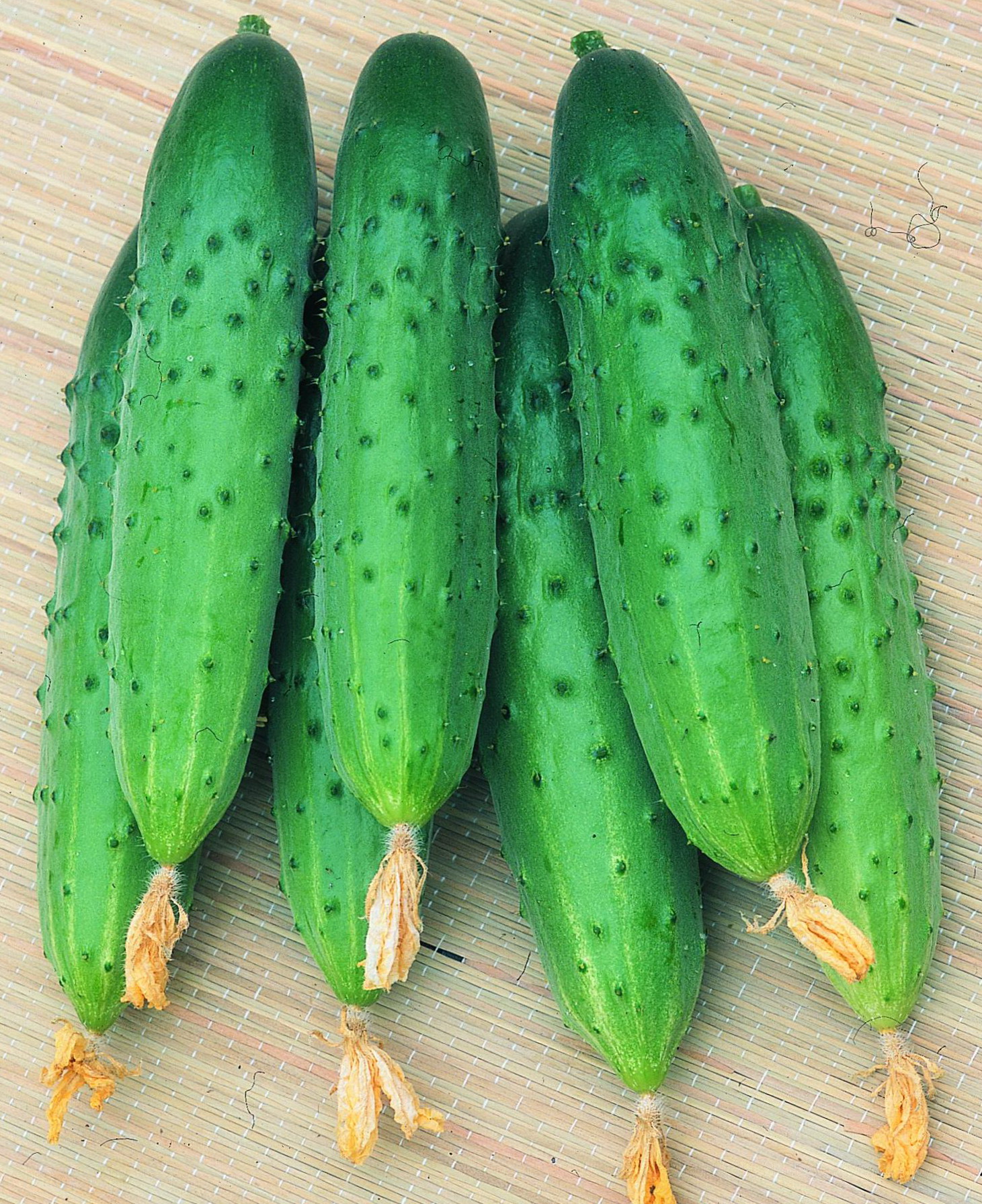
To this list we can add the cold-resistant varieties "Bobrik", "Matrix", "Izumrud", early ripening: "Zozulya", "Sharzh", "Kurazh", "Maisky" and many others.
Video: "The Best Varieties for Greenhouses"
This video will show you which cucumber varieties are suitable for growing in greenhouses.
Seed preparation
Once you've selected a variety, you should pay attention to seed preparation. Simply sowing and watering isn't an option, as half of the seeds may never germinate. Pre-preparing the seeds doesn't take much time, but it will significantly improve the speed of germination and the quality of the seedlings, leading to an overall higher yield.
The preparatory process consists of the following stages:
- First, we soak the seeds in warm water for several hours to soften the shell;
- then we drain the water and place the seed material in a saline solution (50 g salt/1 l water), after which we carry out calibration - we remove the seeds that float to the surface, as they are empty and unsuitable for sowing;
- We wrap the full-weight seeds that have sunk to the bottom in gauze and place them in a thermos with water at 45-50°C for a few more hours;
- We disinfect the heated material in a solution of potassium permanganate for about 30 minutes, after which we thoroughly rinse it with running water.
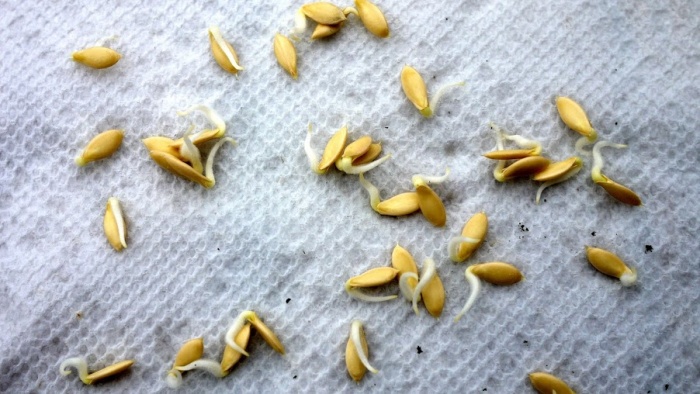
If desired, you can prepare a nutrient solution of ash (2 tablespoons per 1 liter of water) and soak the prepared seeds in it for 1.5-2 hours. This treatment promotes earlier germination and makes the plants immune to external factors.
Growing technologies
Growing greenhouse cucumbers requires following all agricultural practices and guidelines—only then can you hope for a good, high-quality harvest. What do cucumbers need for abundant fruiting? Proper care and maintaining the necessary growing conditions:
- Moisture. Cucumbers enjoy ample watering, but only at the roots and in the evening. Sprinkler irrigation in a greenhouse is not recommended, as it increases the risk of fungal diseases.
- Growth stimulants. There are special products to accelerate plant growth, but if you're more of a natural person, you can place a container of water in the greenhouse and add fresh nettles. After a few days, when the nutrient solution turns dark, you can use it to water the plants, and the remaining solution will evaporate, creating a favorable microclimate for the plants.
- Bush formation. Almost all greenhouse varieties are indeterminate. If their stems are not pinched and excess shoots are not removed, the vines can grow indefinitely, creating impenetrable thickets at the expense of fruit production.
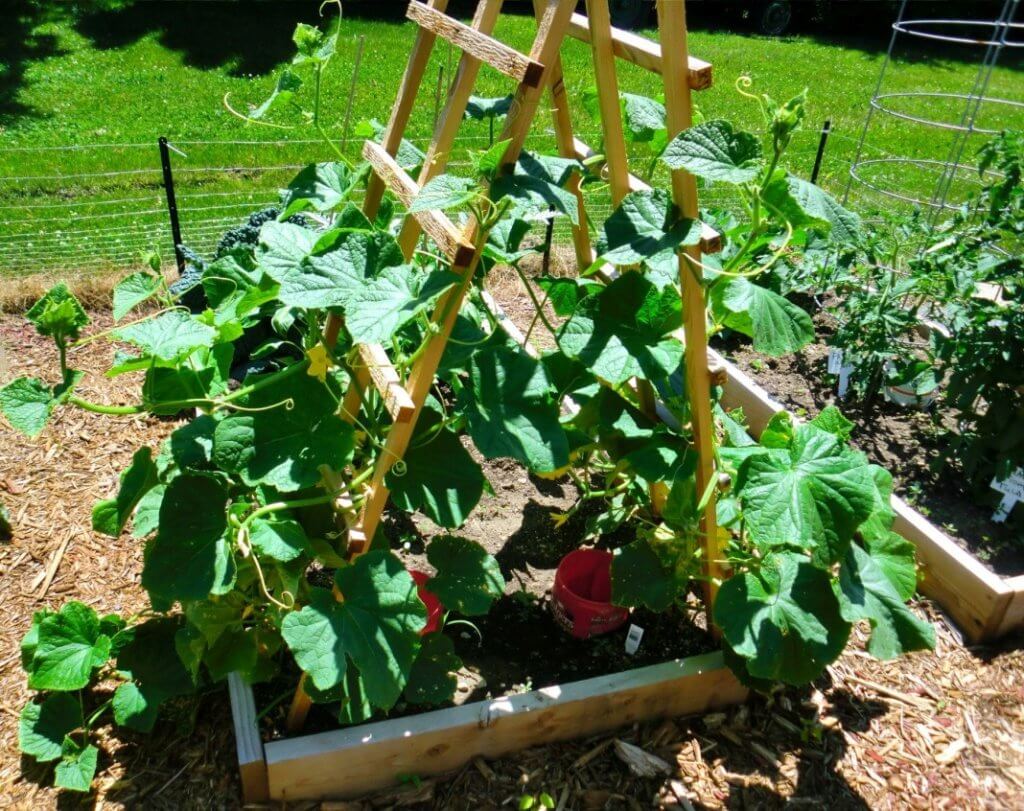
- Tying to a support. In greenhouse conditions, tying the shoots is essential, otherwise they will unravel along the ground. Regular vertical trellises or netting are used to support cucumbers. A classic trellis is a frame made of durable material with hooks and loops, to which metal rods (or wire) are attached. Strong rope can be used instead of wire. The trellis structure is installed vertically, which significantly saves greenhouse space and allows the plants to be trained upward.
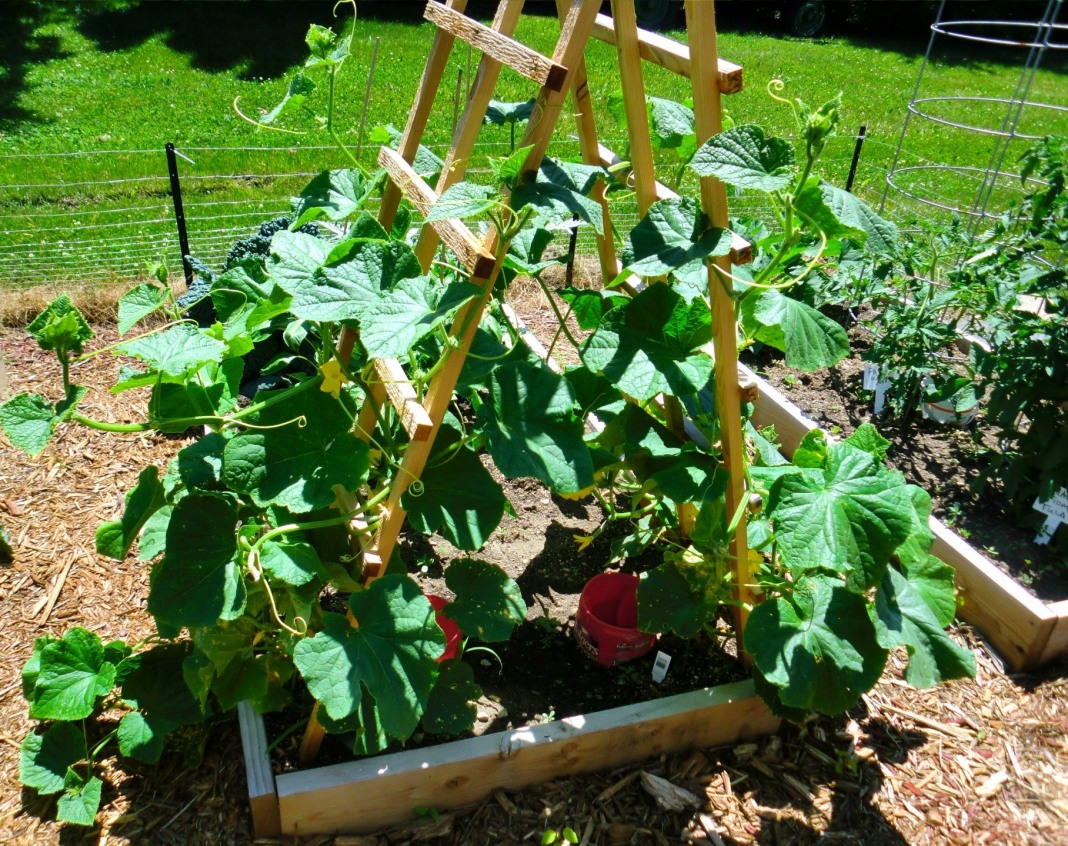
Alternatively, for climbing vegetable crops, you can use a special net, which, similar to a trellis, is stretched between two support posts. It's also convenient to use two pieces of mesh attached to each other at an angle, forming a tent-like structure. Ripening fruit hangs gracefully from this structure, making harvesting much easier.
Soil preparation
It's a known fact that plants don't thrive in poor soil, so high yields can't be expected. Before planting seeds or seedlings in a greenhouse, it's necessary to prepare and improve the soil. 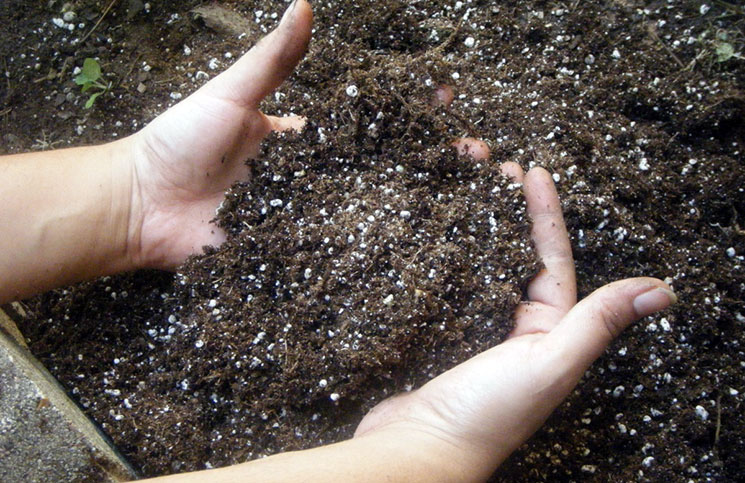 A high-quality soil mixture for cucumbers should have the following characteristics:
- be porous, light, well-drained;
- have a neutral or slightly acidic reaction;
- The top layer must contain organic matter and a balanced composition of minerals.
To improve its quality, particularly fertility, humus or compost is added to the sod soil, or a substrate is created from peat (50%), humus (30%), and meadow or sod soil (20%). Drainage can be improved by adding sawdust (preferably from coniferous trees) or coarse river sand.
Soil preparation for growing cucumbers should be done well in advance. For spring planting, preparatory work is carried out in the fall, immediately after harvest. If cucumbers are grown in a greenhouse year-round, the bed should be prepared at least a month before planting. It's important to understand that the soil in the greenhouse needs to rest periodically—at least a month after the end of fruiting.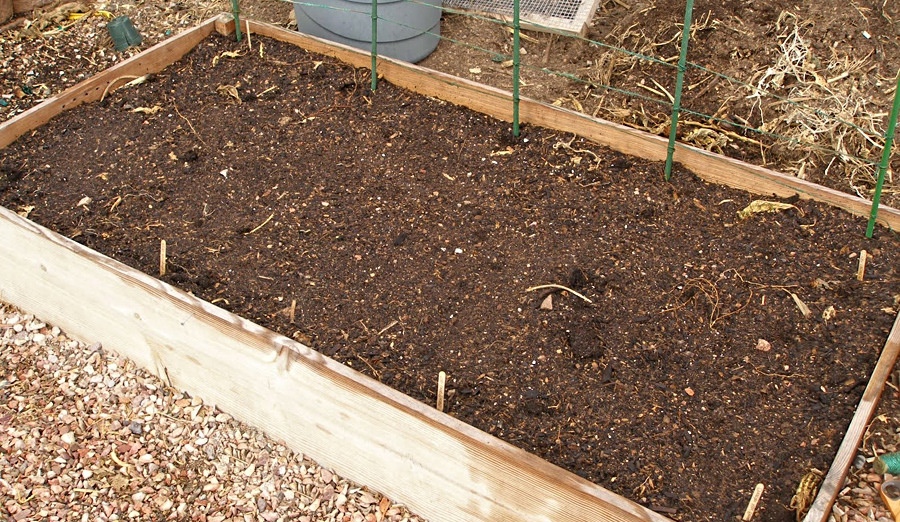
Once the harvest is complete, clear the garden bed of all plant debris, dig to a depth of 25-30 cm, simultaneously removing any remaining roots, and disinfect with a 7% copper sulfate solution. If the soil is depleted, add organic matter (humus or compost). Leave the garden bed in this condition until the next planting. Immediately before planting cucumbers, but no sooner than a month later, apply mineral fertilizers such as superphosphate, potassium sulfate, and ammonium nitrate.
Planting seeds
The sowing time for seeds depends on the variety's characteristics. By this time, the soil and air in the greenhouse should be warm. The optimal period for planting is considered to be from early April to the first ten days of May. For year-round cultivation, it is better to use ready-made seedlings, as the vegetative process is less active during the winter season, and the plants require special care.
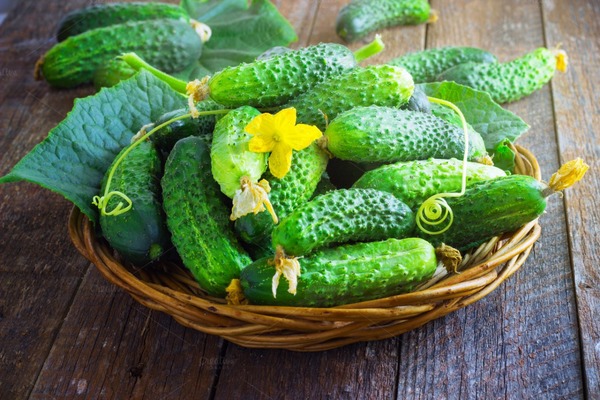
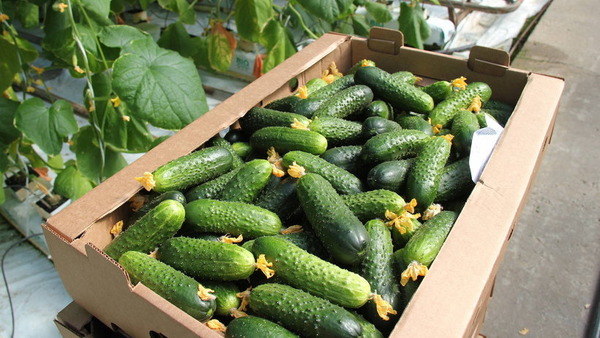
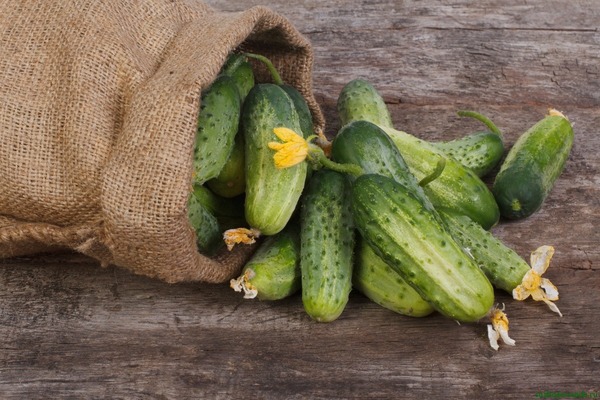
If the seeds are sown directly into the greenhouse, then this is done in the following order:
- the bed is leveled and well watered;
- in the moistened soil, depressions (rows or holes) are made about 2 cm deep;
- Place 3-4 seeds in each hole or row at a distance of 10-15 cm;
- Next we cover the seeds with soil.
To prevent moisture from evaporating from the soil, the bed is covered with transparent film until the first shoots appear. The cover is periodically removed for ventilation and watering—the soil should remain moist until the seedlings emerge. This sowing technique ensures simultaneous germination of seedlings in the shortest possible time.
Growing in winter
Modern permanent greenhouses allow cucumbers to be grown year-round, and with the right approach, the winter harvest can be as productive as a traditional spring-summer crop. Year-round cultivation is more often practiced commercially, but many gardeners prefer to have their own fresh cucumbers on the table in winter rather than store-bought ones.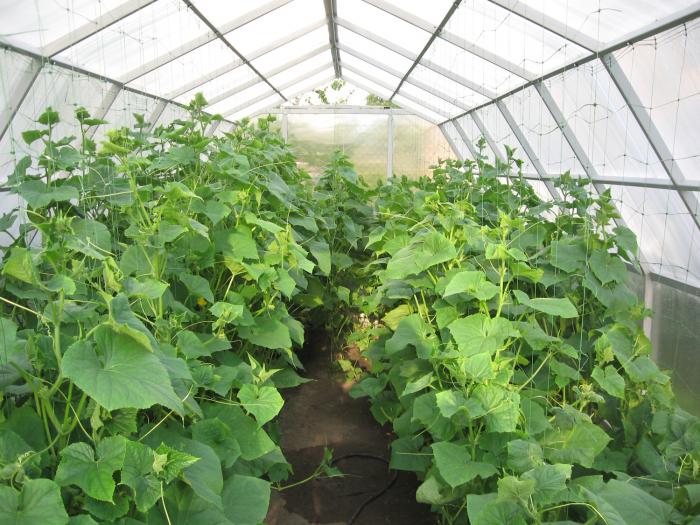
In winter, cucumbers in a greenhouse should be grown from seedlings, and only cold-hardy varieties should be selected, which don't require pollinators or long daylight hours to produce fruit. It's best to grow seedlings in disposable pots or cups on a peat substrate – these plants can easily be removed from the planting container along with the root ball, which is required by cucumber cultivation practices.
Growing seedlings in winter is challenging. Plants need additional lighting, protection from drafts and cold, and care must be taken to ensure the air and soil temperature does not drop below 23°C. Once the plants have 3-4 leaves, which will occur approximately a month after sowing the seeds, they can be transplanted into a greenhouse.
In a greenhouse, seedlings are planted at a distance of 20-25 cm and 70-90 cm between rows. This distance is necessary because greenhouse hybrids tend to grow vigorously and branch. Planting them more densely will result in overcrowding, which will negatively impact yields.
In general, growing winter cucumbers is no different from summer. The only difference is that in spring, the greenhouse can be left unheated, and daylight is sufficient for normal growth. In winter, heating and supplemental lighting are essential for creating a favorable microclimate. For heating, it's advisable to use a permanent hydronic system rather than portable heaters. Heaters dehydrate the air significantly, and to maintain the desired temperature, they must be constantly on, which adds to the cost.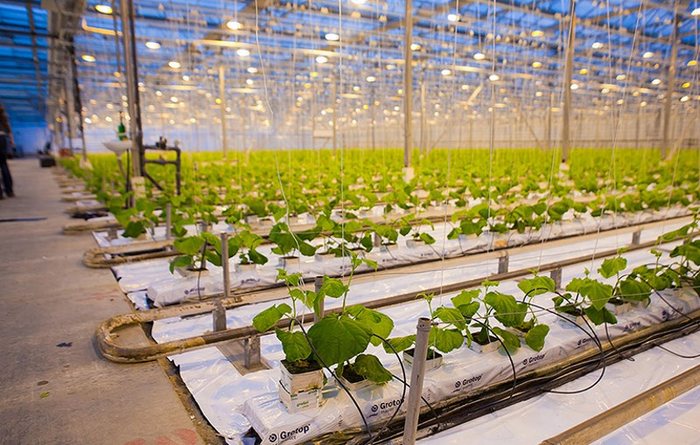
Regarding lighting, even if you use shade-tolerant varieties that set fruit in short daylight hours, artificial lighting in the greenhouse is still necessary. Insufficient light delays flowering and delays fruit set. Humidity in winter greenhouses is usually not an issue, but the temperature should always be maintained at a consistent level: 23-25°C during the day and no lower than 18°C at night.
Video: Growing in Winter
This video will show you how to grow cucumbers in winter.