
How to tie cucumbers in a polycarbonate greenhouse – instructions
Content
Basic rules for tying cucumbers
Cucumbers, like vines, are capable of climbing supports, making growing this crop more comfortable and convenient. Properly staking cucumber plants in a greenhouse has many advantages. However, this process, carried out in a polycarbonate greenhouse, requires a number of rules and considerations to ensure a bountiful and delicious harvest at the end of the growing season.
To tie up cucumbers in a greenhouse, you need to stretch a net to secure the cucumber plants. This plant is secured in three stages, allowing it to achieve a strong grip on the net surface using its tendrils.
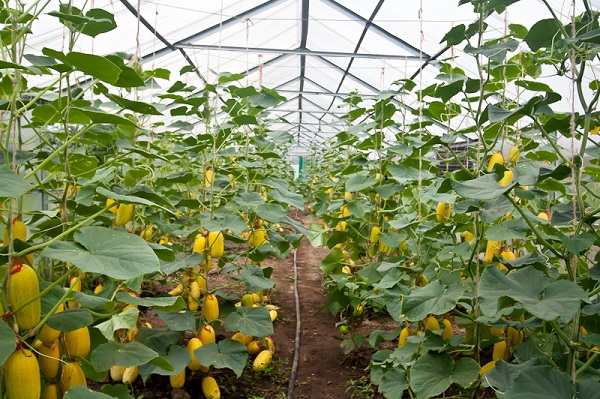
When growing cucumbers in greenhouses made of film or polycarbonate, garters will be considered properly performed if the following rules are followed:
- tying up should begin when the bushes reach a height of 30 cm. Before this, tying up is pointless, as the bush has not yet grown enough and will not be able to properly secure itself to the net;
- Don't delay staking the plant, as the stem will become hardened and more brittle as it grows. This will make staking it more difficult.
- To ensure proper gartering, you'll need certain materials. You'll need ribbons made of durable fabric. However, they shouldn't be too stiff. Therefore, natural knits, cotton, or linen are best. When choosing fabric, remember that it shouldn't stretch. The ribbons used for gartering should be the same length (approximately 25 cm) and width (about 3-5 cm). You'll also need wire and wooden or metal supports.
The rules listed above apply to any type of garter. However, it's important to remember that each method will have its own specific characteristics and rules. Only by following these guidelines can you properly garter cucumber plants.
Video: "Tying Up Cucumbers in a Greenhouse"
The rules for tying up cucumbers in a greenhouse can be clearly seen in the following video.
Methods
Today, tying up cucumbers in greenhouses made of polycarbonate or film can be done in the following ways:
- horizontally;
- vertically;
- mixed.
Let's consider each option in more detail.
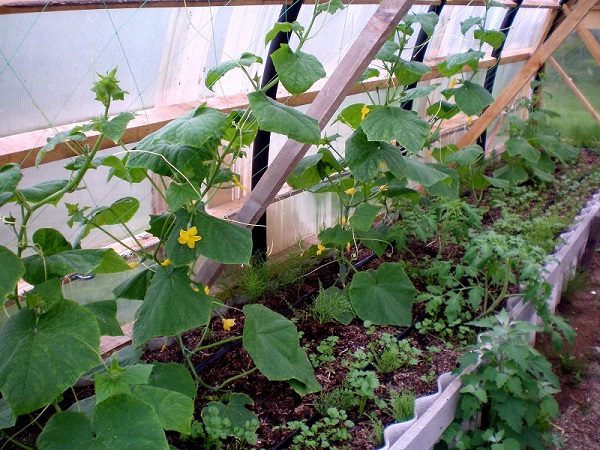
Horizontal garter should be carried out in small greenhouses and hothouses. Today, this is one of the most common methods for tying up cucumber bushes. As you might guess, the tying is done horizontally. The procedure in this case is as follows:
- metal or wooden supports are dug into the ground on both sides of the bed;
- a string or wire is stretched between them;
- the first stage is formed at a distance of approximately 25-30 cm from the ground;
- The distance between the next steps should be 30-35 cm.
Please note that instead of steps, you can use a mesh trellis. It will be much cheaper, and the entire structure will be highly durable. When installing the trellis, the distance from the ground is the same as when creating a stepped arched structure.
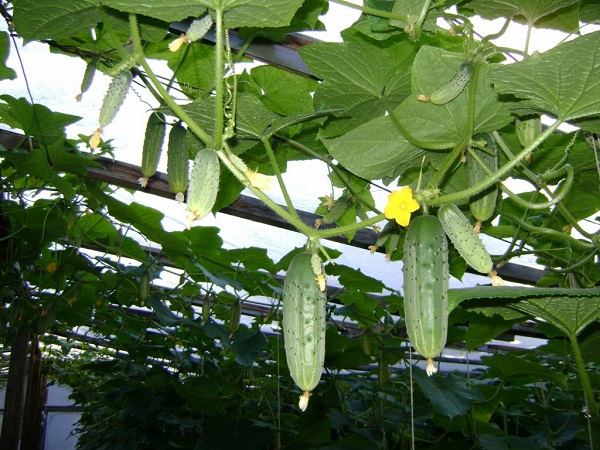
Once the structure is complete and the plant in the greenhouse has reached the desired size, the main stem is secured. It is wrapped around the wire and secured with ribbons. If necessary, side shoots can be secured to adjacent steps in the same manner.
When tying horizontally, the top of the tied stem must be pinched. This is necessary to properly shape the bushes.
The main drawback of this method is the short size of the cucumber plants. Once they grow, caring for them becomes difficult and inconvenient. Harvesting the crop will also be a bit of a hassle.
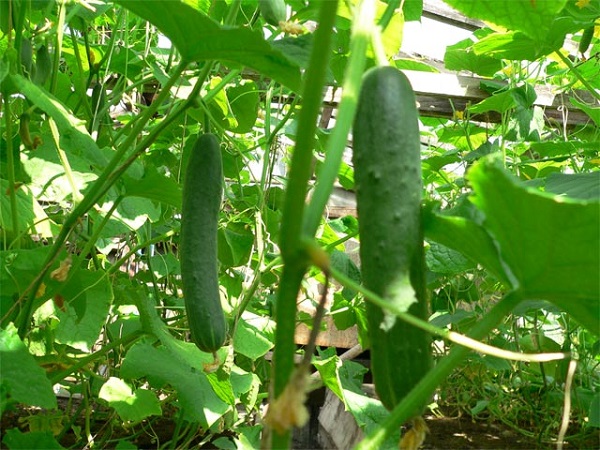
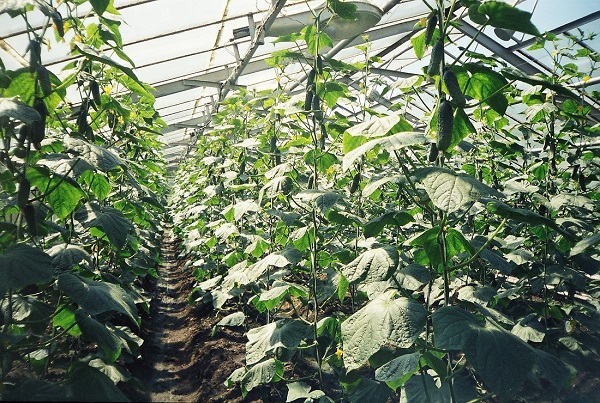
Vertical staking is used in high greenhouses and hothouses. The structure should be at least 2 meters high. The advantage of this method is that the plants receive plenty of sunlight. A metal or wooden frame is used for staking. The top bar should be positioned in the greenhouse near the ceiling, and the bottom bar should lie on the ground. A strong rope or wire should be stretched between the top and bottom bars. The total number of guy wires required for this structure is determined by the number of plants planted. Each bush should be wrapped around its own rope.
To make the task of creating a vertical staking structure easier, many gardeners stretch rope along the greenhouse frame itself. To achieve this, hooks are installed on the inside of the greenhouse. With this design, a wooden block serves as the bottom bar, which should be driven into the ground like an anchor.
When using this method of staking, pinching off the top of the plant's stem is necessary when it reaches the top of the support. This will slow the growth of the main stem, preventing the cucumbers from climbing the greenhouse walls, shading other plantings and themselves.
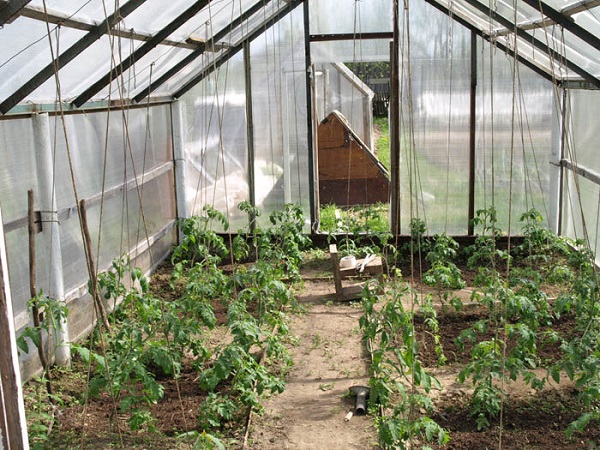
Cucumbers in a greenhouse can also be supported in a similar way to tomatoes. To do this, bury a wooden plank or metal rod in the ground. The length of the rod is determined by the height of the greenhouse. The plant stems can be easily tied to these stakes using ribbons. This method is similar to vertical staking.
Video "3 Interesting Ways to Stake Cucumbers"
The video demonstrates three methods of vertically tying cucumbers in a greenhouse.
The third method for staking cucumbers in a polycarbonate greenhouse is a mixed method. It's used when using a circular planting pattern. The mixed method is performed as follows:
- 8-10 metal rods should be buried in the ground. They are placed in such a way as to form a cone;
- a net is stretched over such a cone-shaped structure;
- The plant's tendrils should be inserted into the holes. The cucumber will then begin to grow around the pyramid itself.
The end result is a kind of green hut.
It is necessary to create a cone-shaped structure in the greenhouse before sowing the planting material. If you install it near young plantings, you can mechanically damage their leaves and shoots.
Whatever method you choose to tie cucumbers, always use wide ropes. Thin ropes can cut into the stems, damaging them.
If you choose the right tying method and follow all the tips for caring for cucumber bushes, you can reap an excellent harvest in the most convenient way for you.
Why tie it up?
As we can see, tying cucumbers requires a certain amount of time and effort. Not only must the structure be properly constructed, but the tying must also be done carefully, so as not to damage the stems and leaves. However, if done correctly, all the effort will be well worth it with a higher-quality and tastier harvest.
Tying up cucumber bushes allows you to achieve the following positive aspects:
- avoid loss of part of the harvest;
- Create more favorable conditions for planting growth and development. This will ensure the bushes are well ventilated and receive sunlight;
- prevention of rotting and spoilage of fruits;
- reducing the risk of parasites appearing on crops;
- increasing the yield of bushes by improving the preservation of flowers and ovaries, which often fall off or rot when lying on the ground;
- the convenience of harvesting increases, since all the fruits will be clearly visible and there is no need to search for them in the thickets;
- reducing the risk of damage to bushes during harvesting;
- The tendrils of neighboring plants do not intertwine, which makes harvesting and caring for the plantings easy.
Tied bushes are easy to water and fertilize, and can also be treated with solutions to prevent various pathogens and insect pests. Diseased leaves and shoots, as well as barren flowers, can be easily removed from such plants.
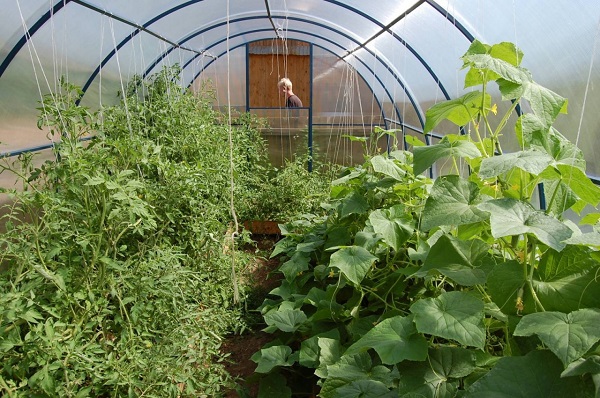
Thus, tying cucumbers, although labor-intensive, still offers many benefits that result in an excellent and delicious harvest. The main thing is to follow all the tips and recommendations for growing cucumbers using this method.