
Tips on pruning cucumbers in a greenhouse
Content
Why is pruning necessary?
Pruning cucumbers planted in a greenhouse is necessary, although some novice gardeners doubt the wisdom of this procedure. This is because pruning reduces the plant's vegetative mass, which consumes a lot of liquid and nutrients, while all its energy is directed toward normal fruit development.
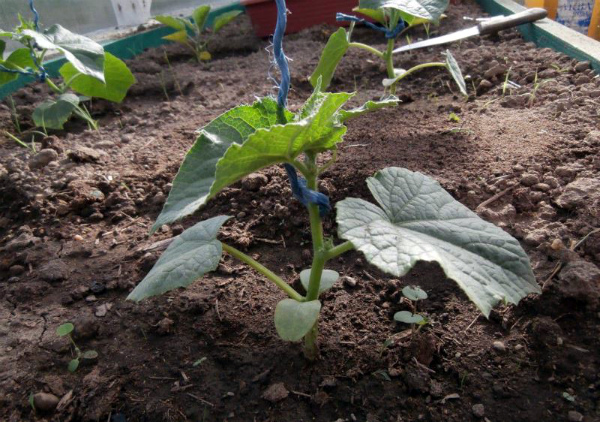
The main goal of pruning is rightfully considered to be the proper formation of plants. At the bottom (this is important for self-pollinating varieties), you should remove sections of the plant where 2 to 4 rows of leaves grow, removing lateral shoots in the axils. This will ensure excellent ventilation, thus protecting the plant from root rot.
When can I prune my cucumbers? In a greenhouse, this should be done as often as possible. This will make caring for the vegetables easier, and they will thrive and produce a bountiful harvest.
Side shoots should always be trimmed, removing the so-called growth point and leaving no shoots. You'll need high-quality, sharpened scissors. To avoid causing wounds, do not pluck the shoots by hand.
To ensure nutrients reach the fruit, if the bush has many shoots, don't rush into pruning. A better approach is to remove the growing tip, reduce nitrogen fertilizer, and allow the soil in the greenhouse to dry out.
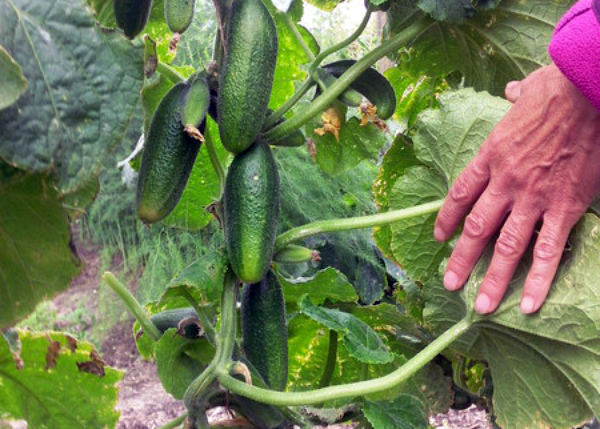
It's recommended to remove yellow leaves, which are usually located below the fruiting area, every couple of days. To avoid stunting the plant's growth and yellowing fruits when harvesting, remember not to change the position of the upper ovaries.
Formation rules
When pruning, remember that greenhouses grow different vegetable varieties, each with its own characteristics. When pruning, consider the variety's pollination method. When performing pruning, reduce the growth of shoots and leaves.
It's recommended to schedule the entire procedure for early morning. This will allow the wound to dry and begin to heal during the day. For older bushes, dead, brown foliage should be removed every five days. This prevents air and light from reaching the main part of the stem, which can lead to rot due to moisture accumulation.
You cannot direct the vines along the trellises, so as not to provoke poor lighting and a decrease in yield.
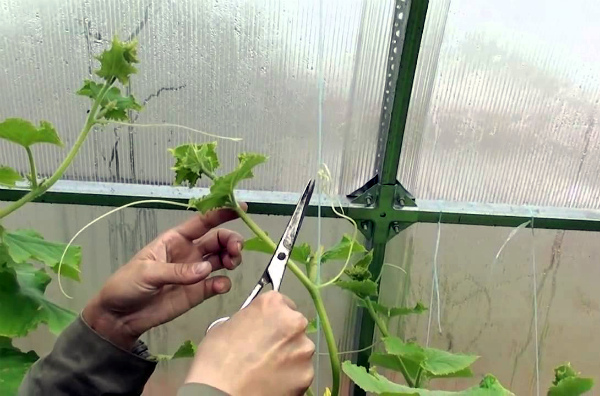
Pruning crops, no matter what variety you grow, is always carried out with sterile and well-sharpened tools.
Do not rush to remove barren flowers if there are too many of them on the shoots.
It's essential to remove any diseased or yellowed foliage, which isn't contributing to nutrition and metabolism and can also cause fungal infections. It's recommended to inspect the plant every three days, identifying and removing dead leaves.
The upper part of the shoot, which is in the active growth stage, should be adequately illuminated. Avoid allowing cucumber vines that have reached the top of their supports to grow horizontally along the greenhouse trellis. Ignoring this recommendation will create a canopy-like structure, which will reduce light and yield. Be sure to monitor the vine, which will continue to grow upward. It will need to be directed downwards once a week, using a stake to do this.
Medium-sized vegetable varieties pollinated by bees can be trained into a single stem. The main stem is pinched once it reaches the top of the trellis. Three to four lower side shoots should be pruned, and shoots above the second or third leaf should be pinched.
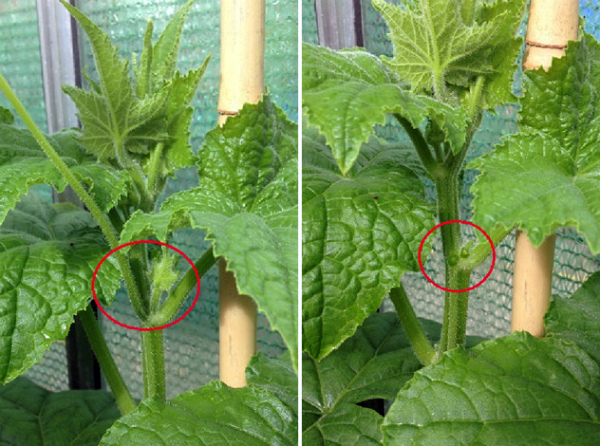
Trimming procedure
We've already covered whether it's possible to pluck leaves and when it's best to do so. Let's move on to the technology of pruning vegetables in a greenhouse.
You can effectively trim leaves using general and thinning pruning. General pruning is recommended for self-pollinating varieties, which are the majority. Thinning pruning is useful when dealing with weakened or diseased plants.
Self-pollinating or parthenocarpic cucumber varieties are grown on a single stem. This stem produces a third of the crop, with the remainder coming from shoots located on the sides.
It is recommended to divide the vines into 4 zones. First, remove flower buds and side shoots with leaves 2–4. In zone 2, where nodes 3–4 are located, leave 1 cucumber and 1–2 leaves on the side shoots, and remove the growing point. In zone 3, where the plant is 1–1.5 meters tall, leave 2 fruits and 2 leaves at nodes 3–4. In zone 4, the highest part of the stem, leave 3 cucumbers and 3 leaves.
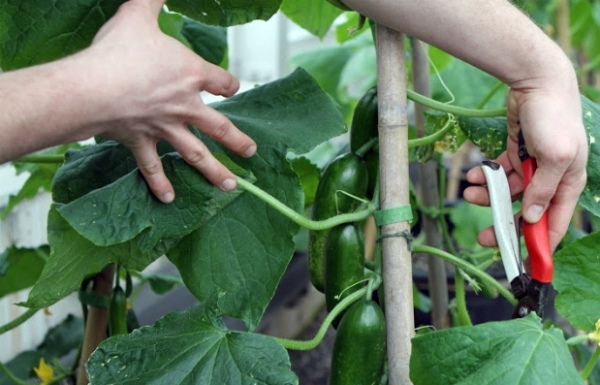
As the central stem grows to the wire, it is wrapped around it several times, and after the fourth leaf, the growing point is removed. The vine is tied to the trellis with twine. The first shoot emerging from the axil of the first leaf should be pruned. The three shoots that emerge after this are staggered along the wire—two to the left and one to the right. This will ensure better light exposure for the plant. As the vines grow, it's best to pinch them back every 0.5 m. The new shoot will act as an extension of the vine. All shoots should be pinched back when the fruit begins to ripen en masse. Their growth should be directed downward. This applies to general pruning.
Thinning pruning involves removing side shoots and wilted, downward-facing leaves. This can be done anywhere they are located. Excess ovaries are also removed. By the end of this process, six ovary nodes and a few leaves should remain. Your plants will receive enough light and air for normal growth. If a side shoot is visible from one node near the ground, it should not be removed; instead, it's best to place it in the soil along the hedge.
Video: How to Remove Stepchildren and Shape Cucumber Culms
This video will show you how to train cucumber vines to speed up fruit set and ensure long-lasting fruiting.