
Description and features of agricultural technology of the early ripening cucumber variety Shosha
Content
History and description of the hybrid
The F1 designation indicates that Shosha is a first-generation hybrid, inheriting the best qualities of its parent varieties. It was developed by breeders from the seed company "Partner," who successfully adapted the crop to various climatic conditions. The new variety was included in the State Register in 2018.
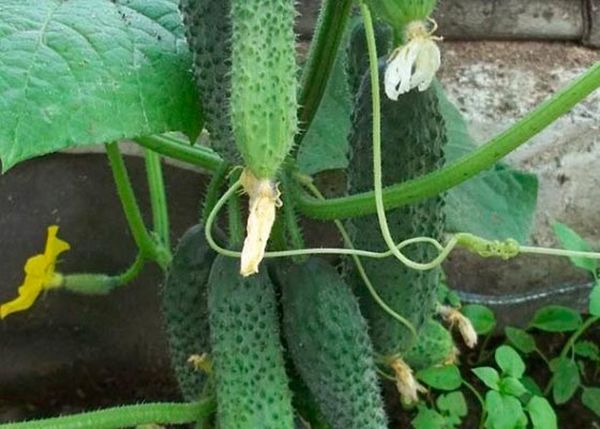
Shoshi bushes have medium growth vigor. The central shoots reach 1.5-2 m in length, while the lateral shoots are short. The root system is robust but shallow. The leaves are large and dark green. Flowers form in nodes, each containing 3-4 cucumbers.
The fruits are small, about 10 cm long and weighing 60-80 g. The surface is bumpy, and in smaller cucumbers, prickly. The skin is thin, dark green with a slight bluish tint. The flesh is light green, sweet and not at all bitter. Cucumbers transport well and can be stored in a cold place for about two weeks.
Video: "A Proven Method for Planting Cucumbers"
In this video, an expert will explain how to properly plant cucumbers in the ground.
Characteristics of the Shosha cucumber
Productivity and fruiting
It is a parthenocarpic hybrid that does not require insect pollination., which is very valuable when grown in protected soil. Moreover, this characteristic allows for a harvest regardless of weather conditions. It ripens early, with active fruiting beginning 38-42 days after germination.
Yields depend on temperature and humidity, so in greenhouse conditions they are higher, approximately 18 kg per square meter, while in open beds they reach only 12 kg. Planting density is equally important. According to gardeners who have reviewed the hybrid, it's best not to plant more than 3-4 bushes per square meter. Overall, Shoshi's productivity is good due to its long fruiting period.
Scope of application
As the description states, this is a salad variety, but its uses are much broader. The small green cucumbers are ideal for preserving and pickling. It's worth noting that these cucumbers are often used in dietary nutrition and homemade cosmetic masks.
Resistance to diseases and pests
The hybrid is highly resistant to powdery mildew, mosaic, and leaf spot, which is another advantage. However, during periods of high humidity, fungal infections are possible, so it is recommended to treat the seeds with a fungicide and water the soil with a copper sulfate solution before planting.
Shosha can be attacked by pests such as aphids, leaf rollers, and root knot nematodes. If pests appear, immediately treat the soil and leaves with a garlic infusion or wood ash solution.
-
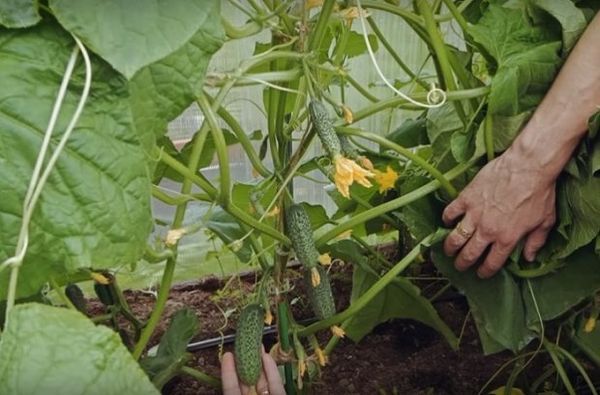
- The hybrid has high resistance to powdery mildew.
-
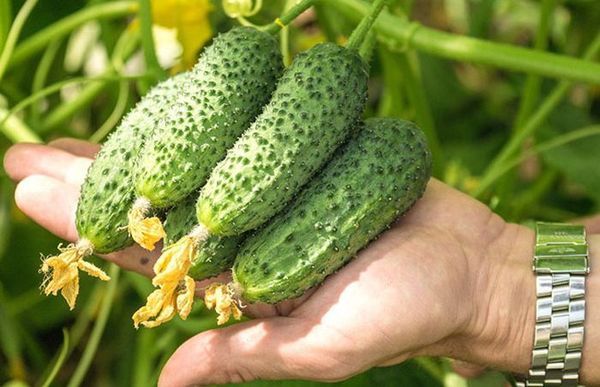
- Yield depends on temperature and humidity
-
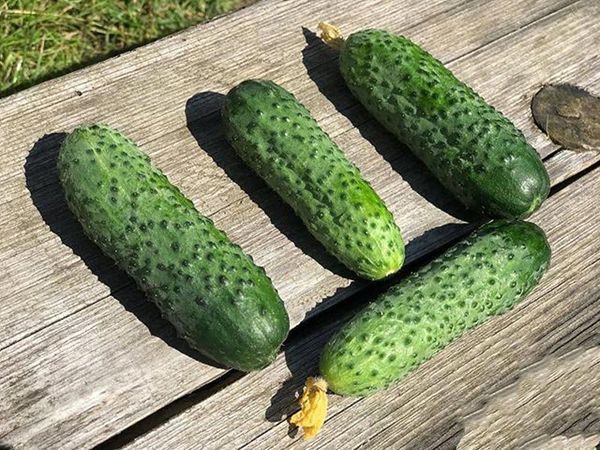
- The productivity of the variety exceeds 20 kg
Advantages and disadvantages of the variety
- excellent taste of fresh fruits;
- their attractive presentation (small size, rich color);
- good transportability and preservation;
- diverse use of the harvest;
- good yield (above average);
- high resistance of bushes to major diseases;
- the possibility of growing in any conditions.
- productivity (since there are cucumbers with a productivity of over 20 kg);
- There is no point in collecting seeds for the next sowing, since this is a hybrid.
Growing cucumber Shosha F1
Cucumbers aren't particularly demanding in terms of agricultural technology, but there are some nuances that affect productivity—proper care and the choice of cultivation method, whether from seeds or seedlings.
Planting seedlings
Sow the seeds approximately 4 weeks before planting. The seeds are soaked in a potassium permanganate solution, discarded, and kept in a cool place for 2-3 days. It's best to sow in trays or peat pots, as cucumbers don't transplant well. A mixture of turf, sand, sawdust, and vermiculite is suitable as a substrate. Keep the containers warm (20-25°C) until germination, then lower the temperature to 18°C. Harden off the seedlings before transplanting.
Direct sowing into the ground
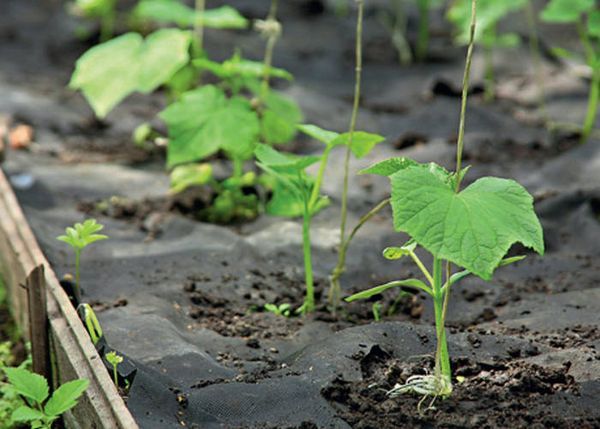
Sow seeds only in soil warmed to 15°C. The bed is dug beforehand and fertilized with compost, sawdust, and humus. Immediately before sowing, the soil is loosened and leveled, shallow holes are dug, moistened, and 2-3 seeds are placed. Until the seedlings emerge, the bed is kept under plastic film, which is then removed.
Aftercare
This hybrid thrives on moisture, so the bed should be watered regularly as it dries out. Weeding and loosening the soil at least once a week are essential for cucumbers, as weeds harbor pests and microbes. To avoid these problems, mulch the bed with organic matter.
Cucumbers need to be fertilized 2-3 times throughout the season using liquid fertilizers: a 1:10 manure solution or a 1:20 litter solution. During fruiting, it's best to fertilize with a weed or ash infusion. Foliar feeding with yeast (1.5 teaspoons per bucket of water), bread infusion, or whey diluted 50/50 with water can increase yield.
Formation and pinching
For better fruiting, it's recommended to train the bushes into 1-2 stems using trellises. Also, as they grow, remove any extra shoots (side shoots) that have reached 5-6 cm in length, located in the axils of leaves 3-4 and 5-6. It's important not to confuse side shoots with fruiting shoots. This procedure not only promotes proper nutrient distribution but also prevents the bush from becoming overcrowded.
Reviews from gardeners
I planted this hybrid on a neighbor's advice and didn't regret it. They're truly delicious and perfect for pickling.
I planted Shosha for the first time and was disappointed. It rained, and the plants got downy mildew, but I still managed to try it; the cucumbers were very tasty.
In a very short time, this hybrid has gained widespread popularity. Its cultivation is simple, and its early fruiting and excellent commercial qualities make it possible to grow vegetables not only for personal consumption but also for sale.