
5 Best Cucumber Varieties to Grow in 2025
Content
Balcony Miracle F1
The F1 hybrid "Balkonnoye Chudo" (Balcony Miracle) is the most successful for growing on loggias, in pots, greenhouses, and under plastic. These cucumbers are distinguished by their small, compact size, long, thin stems, small, narrow leaves, and strong, well-developed roots. They are an early-ripening variety, producing numerous ovaries, each producing four cucumbers.
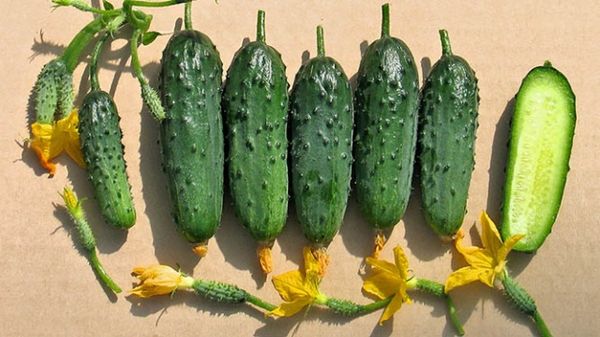
The cucumber is a small, gherkin-like vegetable, reaching no more than 8 cm in length and weighing an average of 70 g. The fruit is rich green, oblong, and covered in small tubercles. With proper care, each plant produces 9–10 kg of fruit. The cucumbers are pleasantly sweet, lacking bitterness, and have a distinctive aroma. The first green cucumbers begin to ripen six weeks after the leaves appear.
Main advantages of the variety:
- Suitable for fresh consumption and used in Lenten salads. Also excellent for pickling;
- high resistance to many diseases;
- self-pollinating species;
- drought resistance and shade germination;
- high productivity.
General's F1
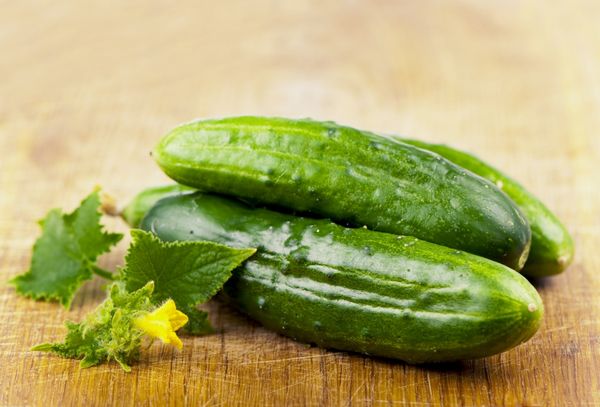
An early maturing, self-pollinating hybrid, well suited for cultivation in Siberian regions, central Russia, and the Moscow region. The biggest advantage of this variety is that it significantly extends the summer season. Since this variety is undemanding of environmental conditions, it quickly adapts to cool evenings and nights in late summer and early fall. The plant's nodes produce 10-12 ovaries, indicating a high yield. The fruits are small, elongated, and glossy. The surface is shiny, covered with small pimples, and the skin is bright green. The variety is genetically resistant to disease.
Connie F1
Connie F1 is also a new cucumber variety. It has only recently appeared on the market, so not all gardeners have yet tried it. This variety is easy to grow and can be planted outdoors, kept in a greenhouse, and even on a balcony. It can be propagated from seedlings. This cucumber does not require pollinators. The stem is dense, thick, and capable of unlimited growth. The leaves are medium-sized, regular, and slightly wrinkled.
The first fruits ripen 45–50 days after the leaves emerge. They are medium-sized, no more than 9 cm long, and weigh 80 g. Even if the harvest is not timely, Connie F1 does not overgrow, maintaining its perfect shape and appearance. The cucumbers are finely covered with tubercles and a small white fuzz. This variety is highly resistant to infectious diseases and tolerates drought well. The cucumbers have a perfect taste, a wonderful aroma, are crisp, juicy, and suitable for canning and eating fresh.
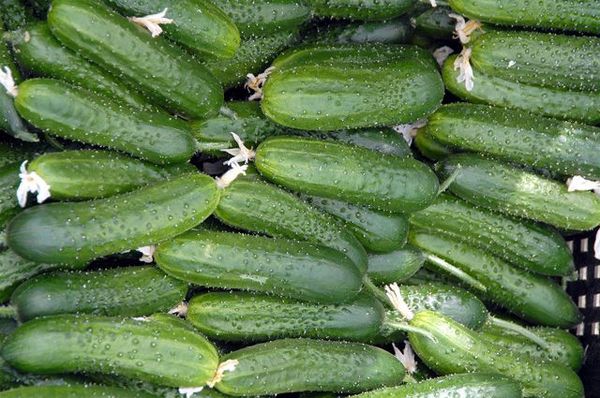
F1 is the envy of everyone.
The "Everybody's Envy" F1 variety is one of the finest achievements of modern breeding. The name speaks for itself. It can be grown anywhere: in greenhouses, outdoors, and in plastic tunnels. The hybrid is resistant to all diseases and adverse environmental conditions. Furthermore, it is considered the most productive variety, regardless of growing conditions.
The plant grows rapidly and has well-developed lateral shoots, ensuring long-lasting and abundant fruiting. Each node produces more than six ovaries. The fruits are smooth, attractive, and neat, bright green with a slight white fuzz. The cucumber reaches 9–12 cm in length and weighs 80–100 g. The flesh is juicy, dense, and crisp.
The hybrid requires no additional pollinators and is shade-tolerant. Its only minor drawback is its susceptibility to certain pests.

Mels F1
Breeders distinguish this F1 hybrid from other new varieties due to its abundant fruiting. Each individual node produces up to eight ovaries, with active fruiting occurring 35 days after the leaves emerge. The surface is densely covered with tubercles, the skin is bright green, and there is white fuzz. The fruit does not exceed 11 cm in length.
The variety has a small peculiarity: cucumber seeds can be sown directly into the soil, but it is important to purchase high-quality planting material.
There aren't many reviews of F1 hybrids at this time. However, these varieties are very promising, so in a couple of years, many will know about them. Of course, hybrids require specialized knowledge of growing techniques, but following general agricultural practices will ensure a bountiful harvest.
Video: Caring for Cucumbers After Planting
This video will teach you how to care for cucumbers after planting.