
Cucumber leaves are wilting: what to do?
Content
Causes of leaf wilting
One of the first causes of cucumber wilting is simply poor growing conditions and poor gardening practices. Often, watering is either irregular or so excessive that the plant's roots rot and are unable to recover for further growth. Watering cucumbers with cold water will not only result in a wilted plant but also create a risk of fungal diseases.
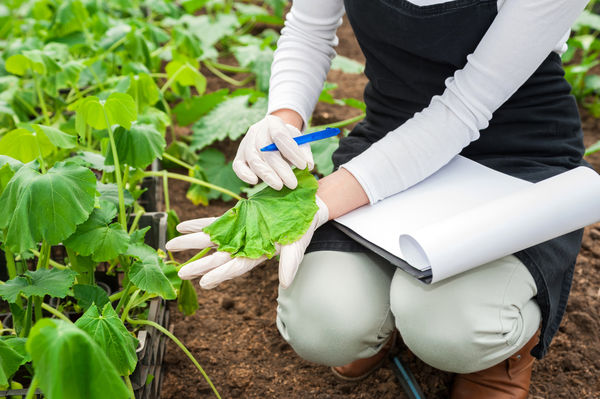
It's not uncommon for cucumbers to be grown in a small plot of land and planted very densely. This causes competition for nutrients in the soil, leading to some plants being starved and wilting. If side-shoots and pinching aren't performed to limit growth, cucumbers can create veritable thickets that require too much energy to nourish. Ultimately, the depleted plant begins to wilt.
One of the reasons why cucumber leaves wilt is due to poor placement. Cucumbers are sun-loving plants, requiring abundant light. Excessive shade (including due to dense planting) can cause the leaves to wilt. However, the opposite can also occur: during hot periods, leaves wilt due to excess sunlight. They then curl up to reduce their surface area exposed to sunlight and retain more moisture. Temperatures that are too high or too low can cause cucumbers to turn yellow and wilt.
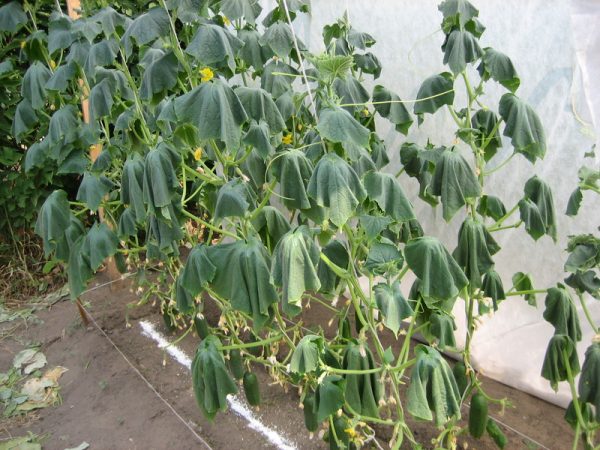
Excessive phosphorus and potassium fertilizers combined with a complete lack of nitrogen compounds leads to abundant fruit and flower production, but negatively impacts leaf shape and appearance. Herbicides also cause cucumber leaves to wilt.
If a plant is infected with a fungal disease, it will begin to wilt rapidly. Cucurbitaceae are particularly vulnerable to powdery mildew, gray mold, root rot, copperhead, and downy mildew. Insects, such as melon aphids, spider mites, and whiteflies, are also possible.
Video: "Problems of Growing Cucumbers in Greenhouses"
A video demonstrating examples of wilted leaves that formed when growing plants in greenhouses.
What to do?
What should you do if your cucumbers are wilting? Of course, you need to start saving them immediately! Otherwise, you risk damaging not only your cucumber harvest but also that of the surrounding plants. If the problem is overwatering, stop watering for a few days to allow the soil to dry out. Incidentally, this will positively impact the development of female flowers, thereby increasing the yield of each plant.
If your vegetables haven't been getting enough water, try increasing watering frequency by adding iodine or yeast to the water. This will stimulate vegetative growth and help the plant produce healthy, green leaves again. It's important to avoid watering plants with cold water and avoid pouring water directly onto the leaves. Watering is recommended either early in the morning or in the evening, when the sun's rays are weaker.
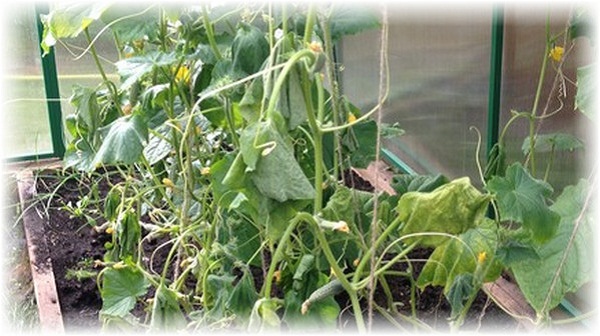
If the plant experiences excessive sunlight, you'll need to provide shade, at least for a few days, and increase watering to ensure the cucumbers absorb enough moisture for growth. Otherwise, be sure to remove some shoots to ensure free access of light to all parts of the plant. When removing side shoots, be sure to coat the cuts with wood ash or lime. This will prevent the plant from spreading itself too thinly across multiple shoots and instead focus on nourishing the remaining leaves and shoots. Wilting will subside within a week.
If there is a lack of fertilizers, it is worth carrying out complex foliar feeding with phosphorus, potassium, nitrogen, and copper. If you don't like mineral fertilizers, use organic ones: mullein infusion (1 kg of mullein infused in 10 liters of water), yeast solution (10 g of dry yeast infused in 10 liters of warm water, then diluted 1:10), iodine solution (5-6 drops of iodine per 10 liters of water), chicken manure infusion (1 kg of manure infused in 10 liters of water), or wood ash (0.5 liter of ash infused in 10 liters of water for 3 days). These fertilizers contain all the necessary micro- and macronutrients for greening cucumbers.
If fungal diseases occur, it is essential to treat the plants with antifungal agents: Topsin-M or Topaz for powdery mildew, Ordan and Ridomil for downy mildew, Oxychom for brown spot, and Rovral and Bayleton for gray mold. Between treatments with specific agents (usually 1-2 weeks), treat the plant leaves with whey (1 liter of sour milk steeped in 1 liter of water, strained before use) or a solution of baking soda and soap (50 g of baking soda and 50 g of grated laundry soap dissolved in 10 liters of water). The soil around the plants can be watered with a 1% Bordeaux mixture or copper sulfate solution for disinfection. For additional support, water with a yeast solution, which strengthens the plant's immune system. To get rid of insects, you can use an infusion of onion peels (1 liter of peel is steeped for 24 hours in 10 liters of water, then the bushes are sprayed) or a garlic infusion (1 glass of garlic cloves are ground into a pulp, poured with 1 liter of hot water, steeped for 24 hours, then diluted 1:10 before use).
Video: "Cucumber Diseases and Control Methods. Proper Watering"
An informational video that explains the most common cucumber diseases and helps you understand how to properly water cucumbers.