
Why cucumbers don't grow: the most common mistakes
Content
Poor quality seeds
The primary reason for poor cucumber growth is poor quality planting material. Difficulty in seed germination is the most common cause. Poor quality seeds may be improperly selected during preparation.
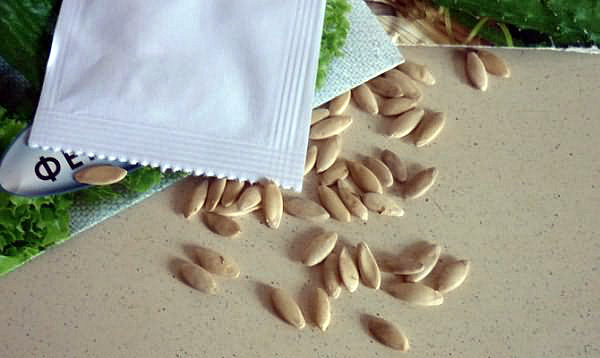
Seeds that need to be selected for growing seedlings or planting them in open ground must meet the following parameters:
- be of medium size;
- have no visible defects;
- do not freeze during storage;
- have no signs of illness;
- be dry.
Only such seeds, when properly managed, can germinate well and produce a bountiful harvest. However, if even one of the above-mentioned deficiencies is present, plant growth may be slow or even stop. Furthermore, the fruits produced from such plants may be small and lack a strong cucumber flavor.
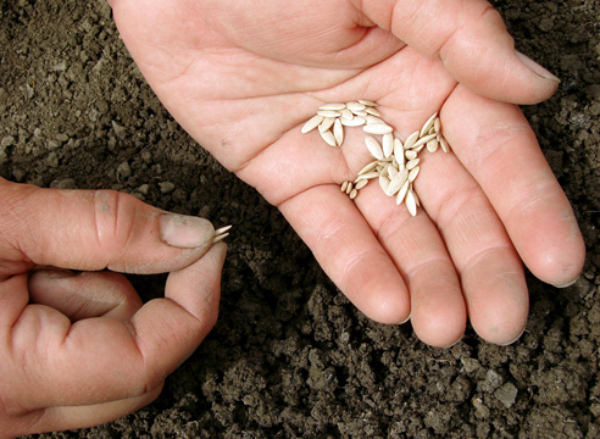
Moreover, some amateur gardeners, due to their ignorance, may use infertile, hollow seeds as planting material. These are unable to produce strong, healthy seedlings or high-quality fruits.
If the seeds were improperly prepared or germinated for some reason, the resulting sprouts will develop slowly after planting and will not begin fruiting until much later. These signs alone can indicate that the planted seeds were of poor quality.
It's important to note that slow growth and poor development of cucumber bushes can result from annual seeds left over from the previous year's harvest. Such planting material will germinate poorly, and the growth and development of the bushes themselves will be characterized by a large number of barren flowers.
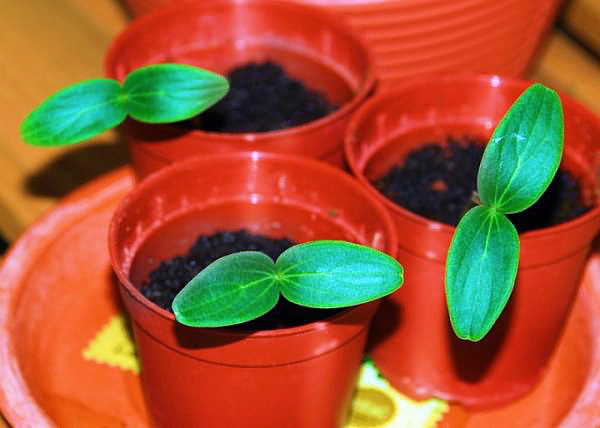
That's why you shouldn't neglect the rules for proper preparation of planting material if you want your plants to grow and develop properly.
It is essential to check the seeds for germination in order to weed out non-viable specimens in advance.
Failure to comply with sowing rules
The second reason for slow growth and poor plant development is failure to follow proper sowing procedures. In such a situation, even high-quality and properly selected planting material will fail to produce the desired result—a bountiful harvest and delicious fruit.
Sowing cucumber seeds should include the following points:
- Sowing seedlings on time is essential. This is especially important when sowing in open ground. Remember, to ensure a high germination rate, the soil in the beds must be well-warmed.
- Proper seedbed formation. The depth at which seeds will be planted must be strictly observed. If they are planted more than 2–2.5 cm deep, their growth will be slow. Moreover, the risk of seedling failure in this situation is quite high.
- If you're growing cucumber seedlings outdoors, maintain the correct soil temperature. For germination, it should be 15–16 degrees Celsius. Lower temperatures can damage the seeds.
- Proper and correct soil cultivation to destroy pathogens.
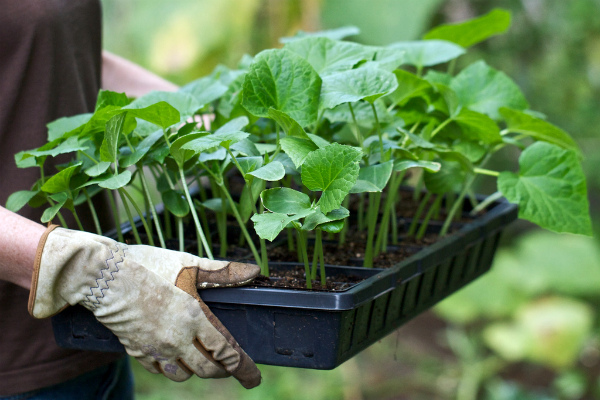
Furthermore, after sowing the seedlings and until strong, mature shoots emerge, it's important to strictly maintain the temperature and water regularly. Furthermore, care for the bushes is essential throughout their entire growth period. Failure to do so may result in stunted growth and fruiting.
To obtain good seedlings, cucumber seeds are sown either in special peat pots or by direct sowing into the soil in the permanent growing area.
Video: "How to React if Cucumbers Don't Grow After Planting"
After planting seedlings or sowing seeds, you may discover that your cucumbers aren't growing. This video will explain what's happening and how to respond.
Incorrect conditions
The third reason why cucumber bushes stop growing is that they are not being given the right growing conditions.
Today, a wide variety of cucumber varieties and hybrids are grown in our country's gardens. Each plant species has not only its own fruit characteristics but also its own growing conditions. Therefore, before starting to grow, it's essential to thoroughly understand all the growing conditions of the chosen variety or hybrid to assess its potential. Failure to do so will likely result in a poor harvest from such plants.
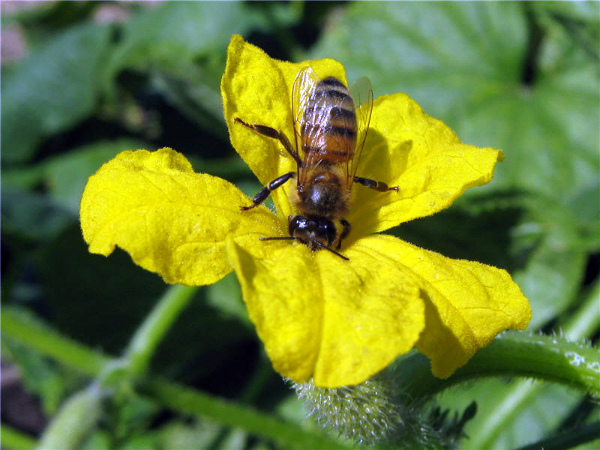
It's important to remember that, despite the diversity of hybrids and varieties, they will still require similar care procedures (e.g., watering, weeding, etc.). However, it's important to remember that the growing conditions for hybrids and varieties will differ significantly. For example, to obtain fruit from bee-pollinated varieties, it's important to remember that such bushes cannot be grown in a greenhouse, as fertilization will not occur without insects. Meanwhile, parthenocarpic hybrids don't require this pollination procedure and can be grown in greenhouses, producing numerous fruits.
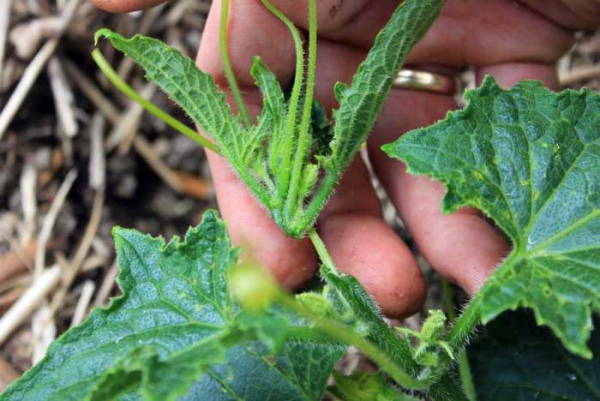
Caring for cucumber bushes should definitely include pinching (shaping the bushes). Pinching can effectively stimulate the growth of additional lateral shoots. These shoots will produce new ovaries and, eventually, fruit.
Plants grown in greenhouses require special attention. Constantly monitoring the temperature regime is essential. If it's disrupted, the plants will quickly begin to wither and die. At temperatures above 35°C, pollen becomes inviable and the plants themselves become sterile. The optimal temperature for growing cucumbers in a greenhouse depends on the time of day and weather conditions:
- at night +19–20 °C;
- during the day in clear and sunny weather +26–28 °C;
- during the day in cloudy weather +22–23 °C.
In addition to temperature, watering also affects cucumber growth. Very often, the reason cucumber growth slows or stops entirely is overwatering. This mistake is common among novice gardeners, who believe that too much water is impossible. In such a situation, there is a high risk of root rot, as well as foliar growth, which will inevitably lead to the death of the plant.
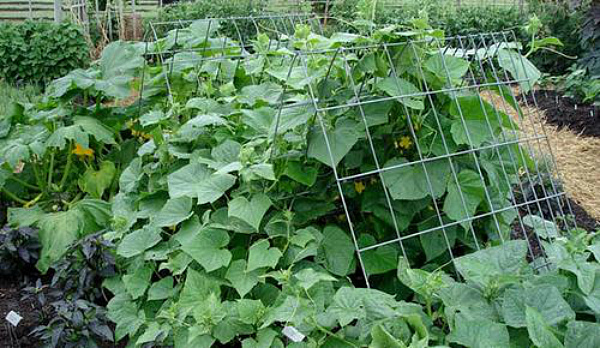
Watering should be done especially carefully during the initial period, after sowing seeds or transplanting seedlings to their permanent growing location. The following signs will indicate that cucumbers are overwatered:
- the lower part of the stem will become glassy and brown;
- cessation of root system growth (noticeable if you dig up the bush);
- yellow-brown color of stems and leaves.
Cucumbers need to be watered every 2-3 days. The water should be pre-warmed in the sun. After watering, cover the exposed roots with soil.
A lack of nutrients can also lead to poor cucumber growth. Both mature plants and seedlings require additional feeding.
The following signs will indicate that plants need fertilizing:
- smaller and pale foliage (indicates a lack of nitrogen);
- upward tendency of the leaf blade (indicates a lack of phosphorus);
- the appearance of a brown border on the leaf blade (indicates a lack of potassium);
- the appearance of light green or marbled dark green coloration of leaves (indicates a lack of magnesium).
Any improper care of cucumbers, whether it be irregular watering or lack of fertilizing, can ultimately lead not only to a reduced yield, but also to the complete destruction of the plantings.
Abundance of barren flowers
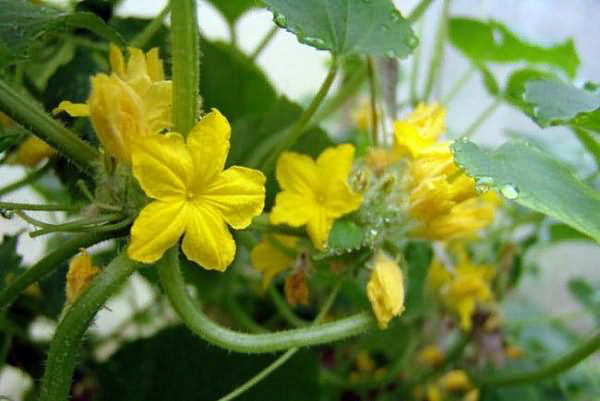
Another factor that can slow cucumber growth and reduce yield is an excessive number of barren flowers (male flowers). Barren flowers are unable to produce fruit. This occurs due to poor-quality planting material (fresh, poorly heated seeds from the previous year). However, other possible causes of excessive barren flowers include:
- Dense planting. The distance between adjacent bushes should be at least 1.5 meters.
- The bushes become very dense. This occurs when sowing seeds directly into open ground. After the first shoots emerge, they need to be thinned out, leaving only the strongest seedlings at an optimal distance from each other.
- Planting in a shaded area will prevent cucumber plants from receiving the required amount of sunlight.
- Unfavorable climatic conditions. These may include prolonged cold spells, prolonged rains, etc.
Excess nutrients
In addition to the above-mentioned reasons, poor cucumber growth can be caused by an excess of nutrients in the soil. We've already written about how a lack of fertilizer is detrimental to plants. Here, the situation is diametrically opposed. Cucumbers thrive on fertilizer. But if overfed, they experience vigorous growth, producing rather lush foliage. However, they produce virtually no fruit. Therefore, to prevent this, it's important to strictly adhere to the fertilizer application guidelines developed for these crops.
Pests and diseases
One of the most common causes of slow cucumber growth and poor yields is disease and pest infestation. A novice gardener is unlikely to detect disease or pests at an early stage. And by the time their symptoms become apparent, it's already too late. Therefore, preventative measures are recommended for both pest and pathogen control. These methods vary depending on the insect and disease species.
As we can see, a wide variety of factors can lead to poor cucumber growth. Therefore, the best solution is to strictly adhere to established agricultural practices for growing cucumbers.
Video: "Cucumbers Not Growing: Causes and Solutions"
This video discusses situations that may cause cucumbers to stop growing, as well as measures that can help correct or prevent this problem.