
Is it possible to plant cucumbers in a bucket and what will come of it?
Content
Preparing for landing
Cucumbers are considered a rather capricious vegetable crop. To ensure they bear fruit normally and produce a good harvest, favorable growing conditions must be created.
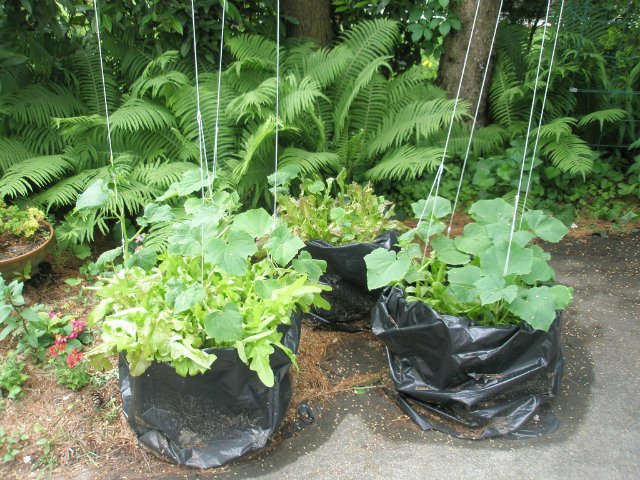
Growing cucumbers in a bucket is possible. You can also use bags filled with a nutrient mixture and punch holes for planting and watering.
If gardeners plan to grow cucumbers in buckets, they should carefully select the seeds they want to germinate. To achieve this, they should choose high-yielding varieties, despite their more demanding and finicky characteristics.
Growing common varieties isn't always practical, as it can be unprofitable. Furthermore, there's always the risk that some seeds won't germinate or the seedlings won't establish themselves in the soil.
It's important to note that when harvesting seeds from high-yielding varieties, you should choose ones that are at least 2-3 years old. A characteristic of cucumber seeds is that the older they are, the more female flowers they produce, and therefore, the more ovaries they produce.
If the planted crop will grow outdoors, you can choose any variety based on ripening time, but it is better to give preference to early-ripening ones.
For greenhouse cultivation, preference should be given to parthenocarpic hybrids or self-pollinating varieties. These are completely different crops, which requires different propagation methods.
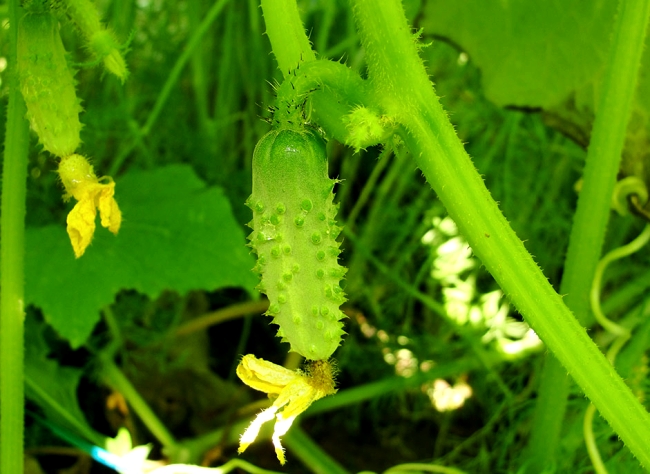
Self-pollinating cucumbers have a stamen and pistil, allowing them to pollinate independently at the right time of ripening. Parthenocarpic hybrids don't require pollination at all, as they develop using their own ovaries. Choosing such varieties will increase your yield and allow you to easily grow cucumbers in bags, buckets, or other suitable containers.
Gardeners can also purchase ready-grown cucumber plants that have begun to bear fruit in a large bucket. These should be placed in areas with adequate sunlight. With proper care, you can ensure long-term fruiting of the bushes until the seasonal cold snap.
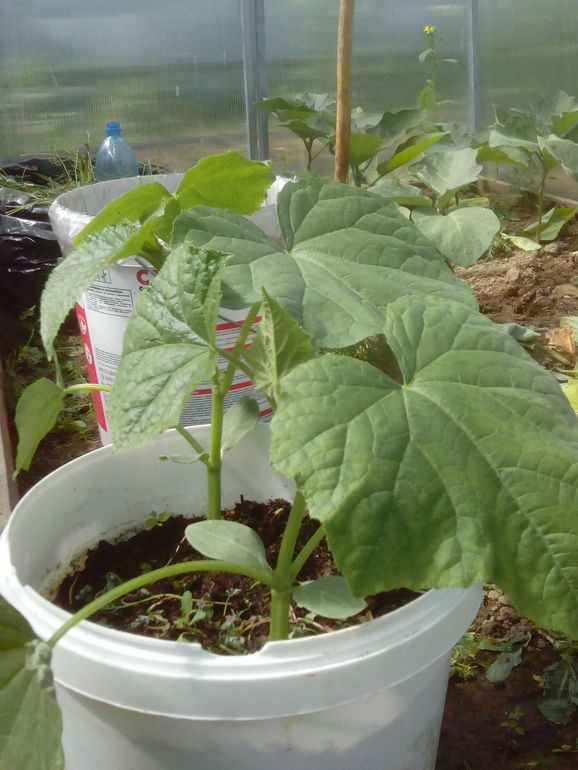
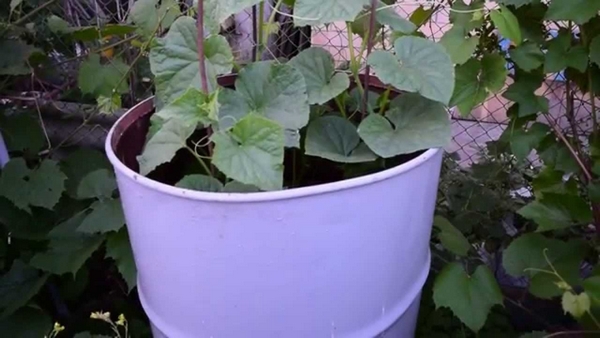
Once you've decided on the cucumber variety you'll be growing, you need to prepare a container for them. A bucket with a minimum capacity of 5 liters is ideal. It should be wide enough to allow for loosening the soil without damaging the seedling stems and root system. You can also use bags if you have enough soil to fill them.
Poke holes in the bottom of the bucket to allow excess moisture to drain. Then, line the bottom with drainage material. Eggshells, small river stones, expanded clay, or tree bark can be used for this purpose.
You can take soil from the fields, add a little organic fertilizer, prepare the base yourself, or buy soil in the store.
Gardeners should know that cucumbers prefer fertile soil. Well-rotted manure from herbivores and bird droppings should be used as fertilizer. They contain sufficient nutrients for the plants.
If you want to prepare the soil yourself, you need to mix several components in equal proportions: wood ash, sand, rotted manure, old manure, and turf. For every 20 liters of soil, you'll need to add about 20 grams of complex fertilizer. It should contain potassium, nitrogen, and phosphorus.
A small amount of iodine can also be added. Mix all ingredients thoroughly and place them in a container of hot water. Then water the soil to warm it up and compact the loose soil.
You'll need to plant several seeds in each bucket; 3-4 is sufficient. This number increases the chance of germination. Make small holes in the bags and place several seeds in each.
If all the seeds sprout, you can transplant one or two to a new location. This isn't difficult, as the root system hasn't yet fused, and they separate easily. The seedling should be transplanted with the root ball intact to avoid damaging the root.
Video: How to Plant Tomatoes, Cucumbers, Peppers, and Eggplants in Buckets
The video's author shares his method for planting cucumbers and other vegetables in buckets.
Care
To get a good harvest from growing cucumber seedlings in buckets or bags, you will need to care for them properly.
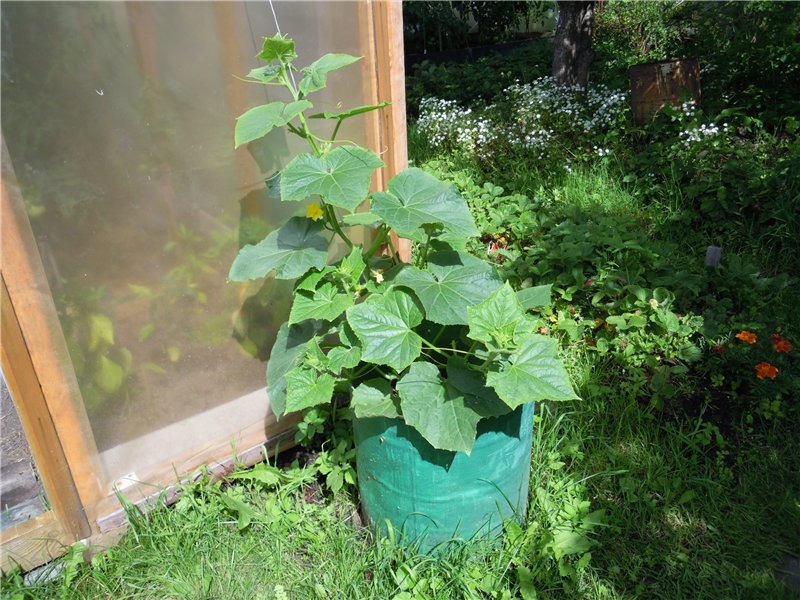
Experts recommend maintaining a temperature of around 18 degrees Celsius for cucumbers. If it gets cold at night, you can cover the bucket with glass and the bags with plastic until the ovaries appear. This will also protect the plants from wind and rain.
Growing cucumbers in special conditions requires patience and attention to detail. Since the unusual growing method significantly complicates the process, it's important to remember that the soil must be constantly moist. Cucumbers thrive on water, so they will need to be watered regularly. Growing cucumbers in tall buckets is limited by the available space, which accelerates moisture evaporation from the soil surface.
You'll need to periodically loosen the soil around the stem and hill it up to prevent the plant from leaning over and to help it grow stronger and firmer. When the seedlings develop about 5-6 leaves, you can add a little compost to the soil.
If buckets or bags of cucumbers are to be placed in a greenhouse, ensure sufficient sunlight. This can be achieved by moving the containers to a sunnier location at specific times of day or by using artificial lighting.
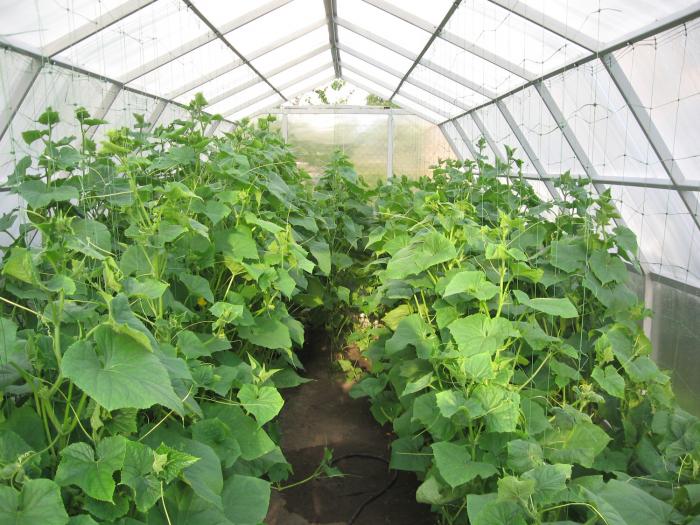
The latter method requires constant electricity consumption, so the greenhouse must be connected to the grid. Also note that using artificial lighting entails additional costs.
If cucumbers are growing poorly, additional foliar feeding may be necessary. It's best to use micronutrient fertilizers specifically designed for melons. This will prevent excess nitrogen or potassium from entering the soil where the seedlings are planted.
You can buy special growth stimulants for cucumbers. They can strengthen and boost the growth of cucumbers within a few weeks. When the first flowers appear on the plant, the ovaries should be treated with the stimulant to increase fruit production.
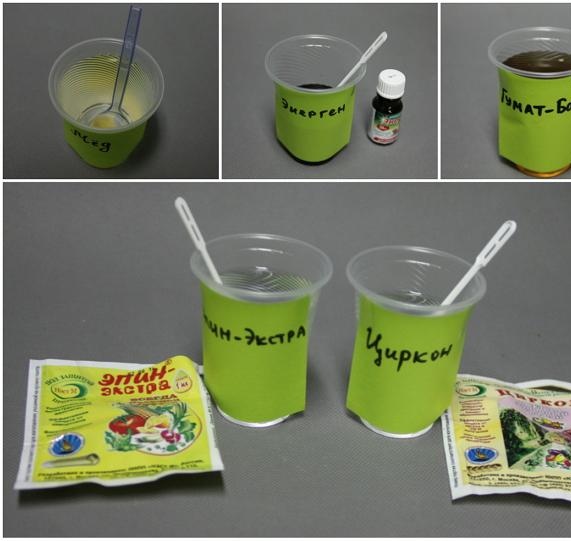
If you take proper care of your seedlings and water them on time, you can achieve a good harvest.
A special method for planting and caring for cucumbers—upside down—deserves special attention. The seeds should be planted so that the sprout emerges through a hole in the bottom of the bucket. To use this method, fill an empty bucket with soil without a drainage layer, then seal it with a plastic bag, tie it tightly, and turn it upside down. Make a hole in the bottom, and then plant several seeds in it.
After this, wait for the first shoots to emerge. Then, turn the bucket upside down again. Hang it by the handle on a crossbar above the ground. This way, the cucumbers will continue to grow upside down. They will produce well if you continue to follow all the care instructions.
Pros and cons of this method of growing
Beginning gardeners should understand that when planting cucumbers in buckets or bags, they can't be left to fend for themselves. The soil won't receive the moisture it needs to naturally flow. Careful care is essential, otherwise the crop will perish.
The seedlings must have constant access to sunlight and be watered regularly. It's also important to remember that if the soil in the bucket or bag contains fungus or harmful bacteria, the plant will quickly die, and all your work will be for naught.
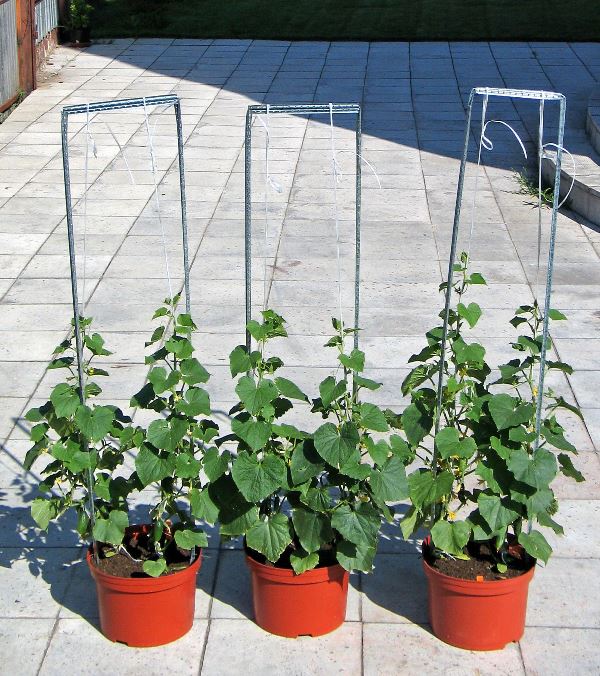
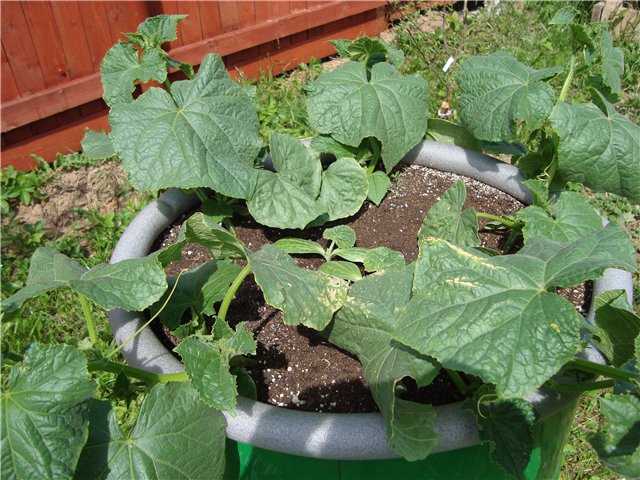
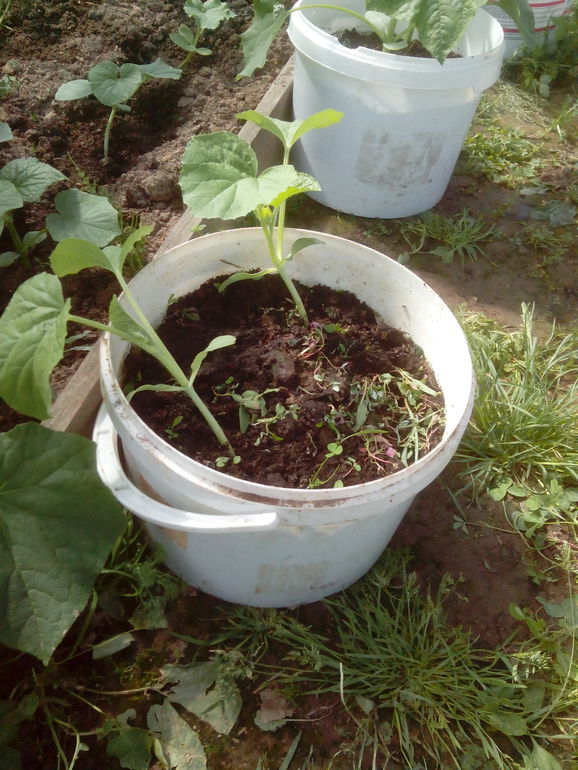
There are several advantages to using this growing method:
- When land is limited, it allows for additional harvesting. Once the weather warms up nicely, the cucumbers can be moved out of the greenhouse, freeing up space for new plantings.
- Planting cucumbers upside down, hanging buckets on poles, can significantly increase the yield, as more seedlings fit in the same space. You just need to find the required number of planting containers.
- Growing cucumbers upside down at a certain height from the ground prevents the fruit from rotting due to high humidity and also prevents pests from eating them. A very interesting and original method.
Video: "What to fill buckets with for growing tomatoes, cucumbers, peppers, and eggplants"
The video's author explains in detail what to fill buckets with for growing vegetables.