
How to water cucumbers correctly, when and with what water
Content
When to water
Cucumbers require a humid microclimate in the air and soil to thrive. Remember that this vegetable is 95% water.
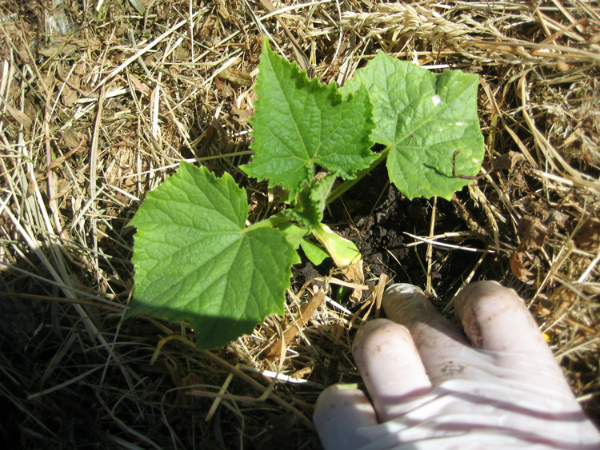
You can determine when it's time to water your cucumbers based on a number of factors. The soil around the base of the stem should be dry, while the soil below should be well-moistened. This will prevent root rot and disease.
It's best to schedule watering for cucumbers early in the morning or evening. If you water in the morning, check to see if the water has dried on the leaf surface before the sun begins to shine. If not, the plant may get sunburned. In the evening, water the plants so that the water has time to be absorbed before the cold weather sets in. Otherwise, the roots may rot. On particularly hot days, you can water cucumbers both morning and evening. Use a sprinkler system.
It's best to stop watering during rainy season. Since cucumbers are tropical plants with roots located very close to the soil surface, they don't tolerate overwatering. Unlike their garden-grown counterparts, greenhouse cucumbers prefer abundant watering during hot weather, so it's recommended to water them more frequently. When flowering begins, watering should be stopped for several weeks.
How often should I water cucumbers? Typically, 6-7 times a week.
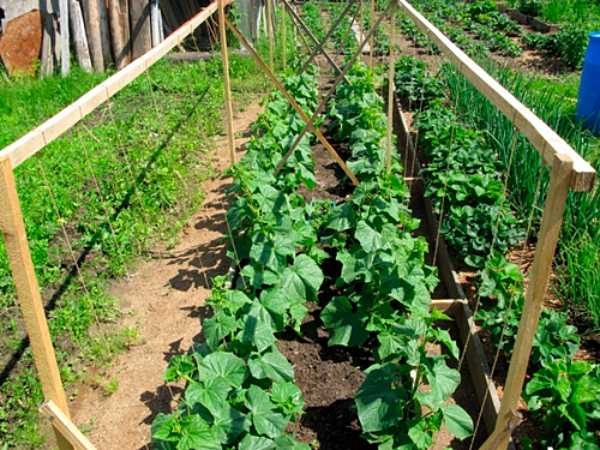
What to water with
Plant care involves watering them with water at the right temperature. To prevent disease, avoid using cold water, which is less than 12 degrees Celsius. Instead of a good harvest, cold watering can lead to a host of problems.
The ideal temperature for vegetables is between 20 and 25 degrees Celsius. Some sources recommend watering with warm water, typically between 23 and 25 degrees Celsius. In cool, dry weather, vegetables prefer hot water, typically around 55 degrees Celsius. Proper care in this case involves watering directly under the plant. Avoid allowing water to come into contact with the foliage.
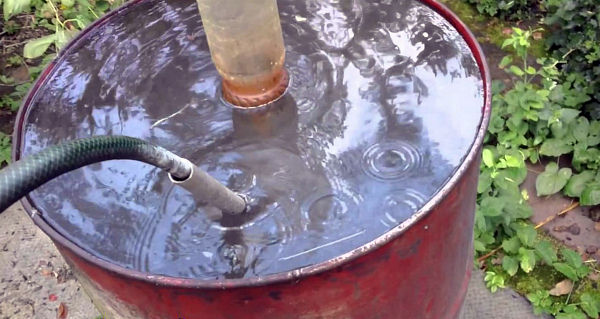
To water vegetables in a greenhouse, you can obtain a warm liquid by settling it in a special barrel. Fill the container and place it in a sunny spot on the plot. During the day, it will warm up nicely, producing an excellent watering solution.
By watering your favorite vegetables with warm liquid rather than cold, you are guaranteed to get a good harvest of non-bitter cucumbers.
In addition to watering with plain water, cucumbers respond well to spraying with potassium permanganate, also known as potassium permanganate. This simple and readily available solution contains manganese, which is essential for the normal development of vegetable crops. Fertilizing with potassium permanganate as part of a comprehensive care program should be done in the spring, once the seedlings have been placed in their permanent "home." A combination of potassium permanganate and boric acid is also used. This will protect plants from various diseases.
How to water properly
Now that we've covered what to water cucumbers with, the important question arises: how to water them properly. To ensure the plant is safe, water with a watering can and a sprayer. This will always prevent the root system from being exposed and the topsoil from becoming compacted. If this isn't possible, you should hill the plant, filling the base right down to the cotyledons. If you don't have a sprayer, be sure to avoid spraying the water directly at the roots. Another option is to water into furrows between the beds, which should then be mulched.
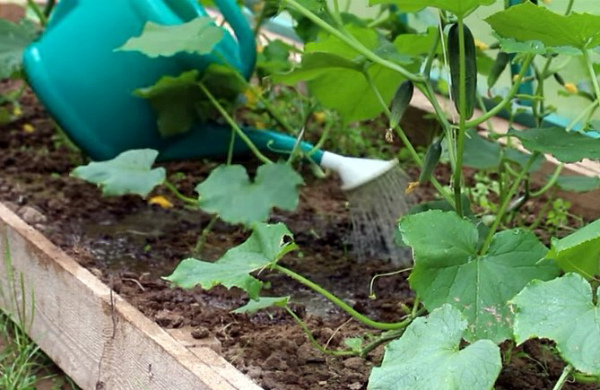
With proper care, plants should be watered regularly and generously, using only warm water. If the leaves begin to wilt, water again immediately. Avoid watering cucumbers with a strong stream, as this will wash away the soil around the roots. In the garden, it's best to water the vegetables directly from a watering can into the holes.
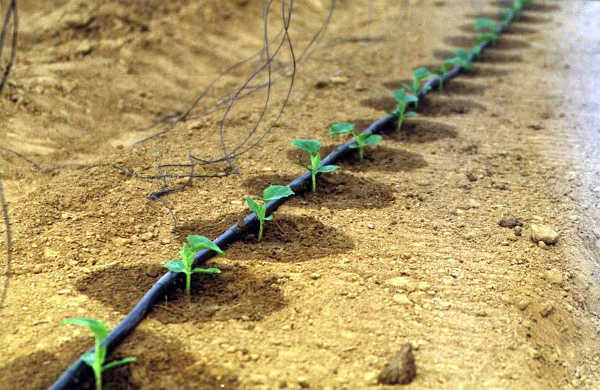
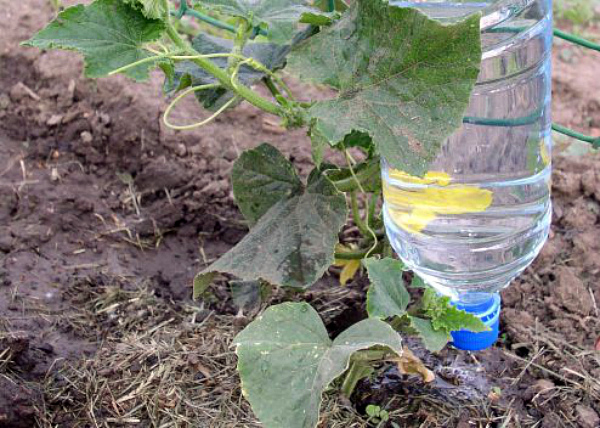
A drip irrigation system has proven itself in open ground. You can even make one yourself. It's done using two-liter plastic bottles. Poke holes in them with a hot nail, then bury them upside down in the ground. Make sure the bottles are always filled with liquid.
Watering cucumbers in a greenhouse with proper care is also simple. The soil should be kept loose to ensure the root system receives sufficient oxygen and does not protrude. Add new layers of soil several times per season. If the soil hasn't settled significantly, you can simply loosen it with a rake or pitchfork. However, do this carefully to avoid damaging the roots.
Avoid overwatering the soil for cucumbers grown in a greenhouse. Uneven watering is also unacceptable. If for some reason you were unable to water the plants twice, use less water on the third watering.
Many gardeners' experience shows that it's important to allow the soil to dry out at the beginning of the fruiting period. This will limit leaf growth, and the plant will focus all its energy on developing buds and then fruit. Return to the normal watering schedule when the plants are in full bloom. The result will be crisp and juicy cucumbers.
As with open-ground cultivation, a drip irrigation system is used in a greenhouse. This simulates natural rainfall. Leaves, stems, and fruits require irrigation. Watering cans, sprinklers, and hoses are used. You can buy an irrigation system at a store or make your own. To do this, make a series of holes in a hose, and fill a canister with a spigot with liquid. A hose is connected to the canister and extended through each bed.
Irrigation rates
To stimulate fruit set before flowering, cucumbers are watered at a rate of 3-4 liters of liquid per square meter. This should be done every 5-7 days. During the important flowering and fruiting period, with proper care, the watering frequency is 6-12 liters per square meter.2 every 2-3 days.
Garden crops should be watered as the top layer of soil dries out. This means every 5 days, at a rate of 8–9 liters per square meter.
Once your plants flower, water them once a week. During fruiting and ovary formation, cucumbers require watering every few days at a rate of 25 liters of water per square meter.2.
How much water do your favorite vegetables need in hot weather? It's recommended to place containers of water between the rows or to refresh the leaf surfaces with a watering can. If it rains, there's no need to water the vegetables during this time.
When growing vegetables in a greenhouse, the amount of liquid for young cucumbers is 4-5 liters per 1 m2 area, taking into account soil drying. During flowering, the soil should be moistened every few days. Thereafter, water every other day, using 9-12 liters per square meter. On hot days, additional evening irrigation is recommended. The water rate should be reduced by 2-3 times.
Video: Watering Cucumber Plantings
This video is about the correct watering of cucumbers, as well as about mistakes made when irrigating cucumber beds.