
What to do if cucumber leaves turn yellow?
Content
Possible reasons
The reasons for yellowing of cucumber leaves can be both natural and agricultural.
Insufficient lighting
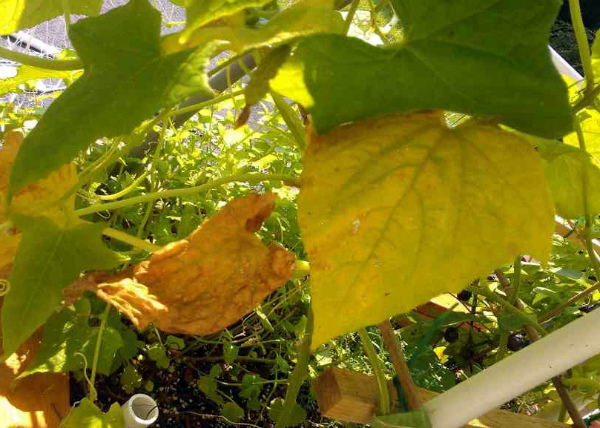
As trivial as it may sound, lower leaves often turn yellow due to a lack of light. Cucumber tops tend to grow excessively, creating a veritable jungle through which sunlight cannot penetrate. This problem often doesn't affect the yield, so the only thing you can do is periodically pluck off the discolored leaves.
Incorrect organization of the garden bed
If cucumbers are planted in a location with intense sun from early morning until sunset, there's a high risk that not only the leaves but also the buds will turn yellow—they'll simply dry out under the scorching rays. When growing cucumbers outdoors, it's best to choose a site that receives full sun during the first half of the day and partial shade in the afternoon.
Insufficient or excessive soil moisture
Both factors negatively impact the health of cucumber greens. In hot summers, plants may lack moisture, forcing their roots to reach the soil surface to obtain it. This leads to root drying and, consequently, yellowing of the leaves. Heavy rainfall or frequent watering are equally harmful to cucumbers, as they cause root rot and the shoots and leaves to turn yellow.
Ascochytosis
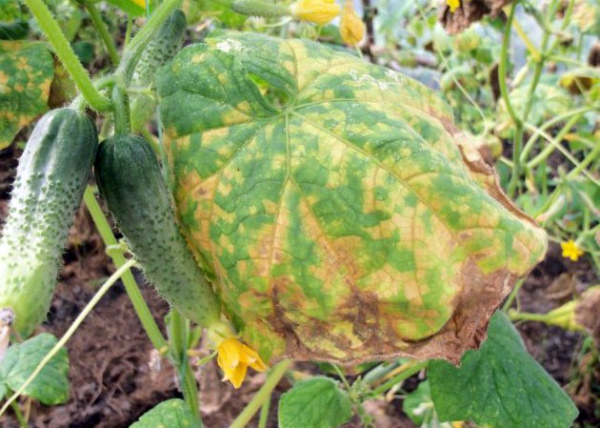
This disease most often appears on greenhouse cucumbers, but can sometimes also affect open-ground plants. It primarily affects hybrid and non-adapted cucumber varieties. It develops during the fruiting period and manifests as gray or brown spots on all parts of the plant, with leaf edges drying out and becoming deformed.
Pests
Aphids, spider mites, and other insects feed on plant foliage, squeezing out all the juices, causing the leaves to become damaged and dry at the edges. The only way to combat this problem is to treat the garden bed with insecticides or other alternatives.
Fungal flora
Fungal diseases (fusarium, pythium) are indicated by small brown spots on the leaves, which gradually increase in area until the entire leaf turns red and falls off.
In this case, only spraying at the very initial stage can help. That's why it's important to closely monitor weather changes—fungi appear during sudden temperature changes, for example, when intense heat is followed by heavy rains.
Nutritional deficiencies
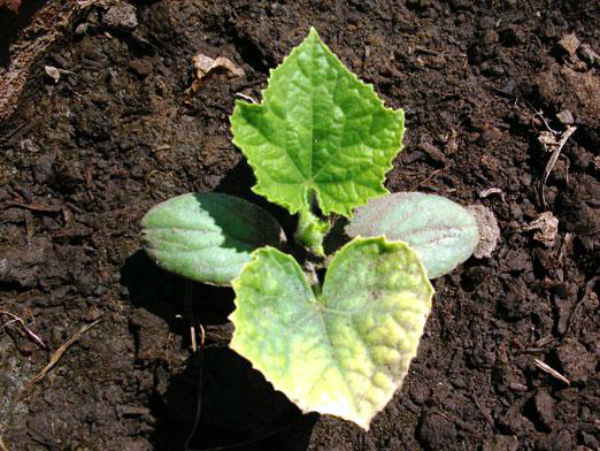
If cucumber leaves turn yellow and dry at the edges, it indicates a potassium or magnesium deficiency. If green veins remain on a yellowed leaf, it indicates a manganese or iron deficiency. A copper deficiency causes cucumber leaves to turn yellow at the top while remaining green at the bottom. This can be corrected with vitamin supplements.
Plant aging
This isn't even a cause, but a natural process. Sooner or later, a cucumber bed ages: flowers and buds no longer appear, and the leaves become rough and dry at the edges. Usually, by this time, the harvest has already been collected, the preparations have been made, and the dried tops can simply be removed from the row. If you want to harvest fresh cucumbers until autumn, you should use various agricultural practices that prolong the life of the cucumbers.
It is also important to consider that each specific variety requires special conditions and care when grown in a garden bed. Lack of suitable conditions is another reason why cucumber leaves turn yellow.
What to do
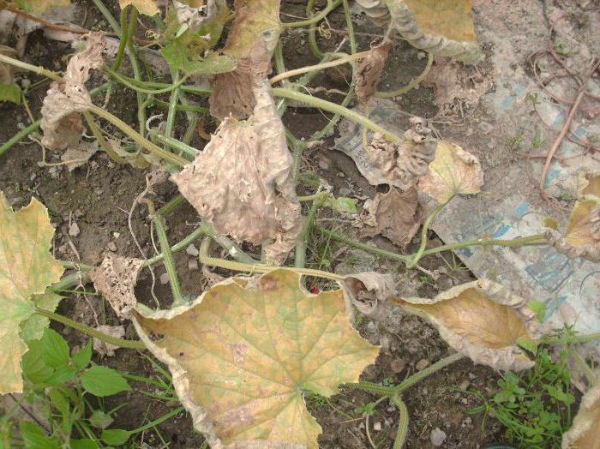
Cucumbers don't have a developed root system—their roots are located very close to the soil surface, and therefore often dry out due to insufficient moisture. This is the most common reason why cucumber leaves turn yellow when planted in the ground.
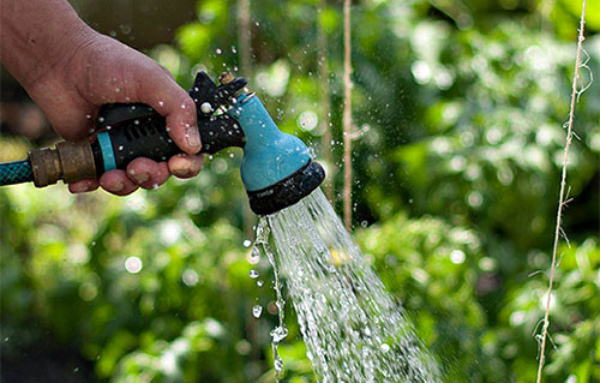
During a typical summer with occasional rainfall, cucumber beds are watered 2-3 times a week. During unusually hot weather, plants should be watered daily, and the shoots should be sprinkled with water. These procedures should only be performed in the evening or early morning, as leaves exposed to water can become sunburned.
When daytime temperatures drop below 25°C, there is no need for sprinkling; it is enough to simply water the bushes thoroughly at the roots.
It is important to understand that excessive moisture, including sprinkling in cool weather, can provoke the appearance of fungi on plants.
Cucumbers, like all cucurbits, are susceptible to rot diseases that appear during the fruiting period. White rot often attacks shoots at the roots, as well as unripe fruits, forming a white coating on the cucumber bud. Damage to the stems at the base cuts off the supply of nutrients from the soil, causing the leaves to turn yellow and dry out. Brown spots and yellowed edges on the leaves also indicate rot. Cucumbers can be treated for this affliction with specialized products, such as Trichodermin and its analogues. These are typically powders that are diluted in water and applied as a spray or watering agent.
If cucumbers are infested by pests (mites, aphids), the following products can help save the crop: Iskra, Photosporin, and Kornevin. Folk remedies are also helpful:
- ash and laundry soap - make a solution from 2 glasses of ash, half a bar of grated soap and 10 liters of water and spray the plants;
- Celandine infusion - pour 200 g of dried leaves into 10 liters of hot water, leave for 2 days and spray the tops.
Sometimes cucumber plantings fail due to insufficient pollination. If you're growing hybrid varieties, be aware that they sometimes produce only female flowers. In this case, the flower dries up and falls off before it's even budded because pollination hasn't occurred. This can be resolved by planting another cucumber variety with male flowers nearby, as well as providing access for insects.
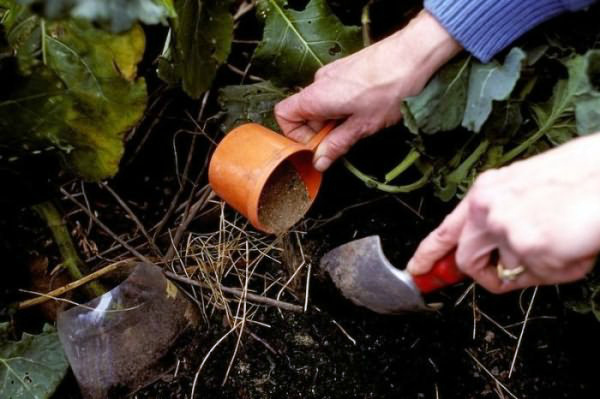
Providing plants with essential nutrients is equally important. Cucumbers growing in poor, sandy soils especially need additional nutrition. It's common to see cucumbers growing in gardens with green leaves, but their edges are dry and curled. To address this issue, water with vitamin-rich mixtures, spray with Bordeaux mixture, or copper oxychloride—these products replenish the missing elements and boost the plants' health.
Experienced vegetable growers recommend spraying the garden bed with whey when leaves turn yellow. If you don't have whey, you can prepare a solution of 2 liters of kefir and 10 liters of water. To speed up fruit set, it's recommended to add a couple of tablespoons of sugar to the whey fertilizer.
You can also add compost to the roots of cucumbers or water them with so-called "green" fertilizer, which is a solution of fermented grass. These simple and effective organic fertilizers will help prolong the fruiting period of cucumbers and produce a bountiful harvest.
Video: "Treating Cucumbers When Leaves Turn Yellow"
The author of this video suggests using an "old-fashioned" method of treatment if cucumber leaves in a greenhouse turn yellow.