
How to feed cucumbers in June – fertilizer options
Everyone loves cucumbers. However, growing them requires effort, as they require a lot of care and are very sensitive to their growing conditions, including soil and fertilizers. Problems with cucumbers often arise due to insufficient or excessive fertilizing. Therefore, it's important to always monitor the quantity and quality of nutrients added to the soil.
Content
Features of the period
June is a cool month in most of our country. Therefore, it's best to grow cucumbers from seedlings in a greenhouse or hotbed. This is also a good time to harvest an early crop. By following the rules and providing proper care, you can harvest tens of kilograms of fruit from a single frame.
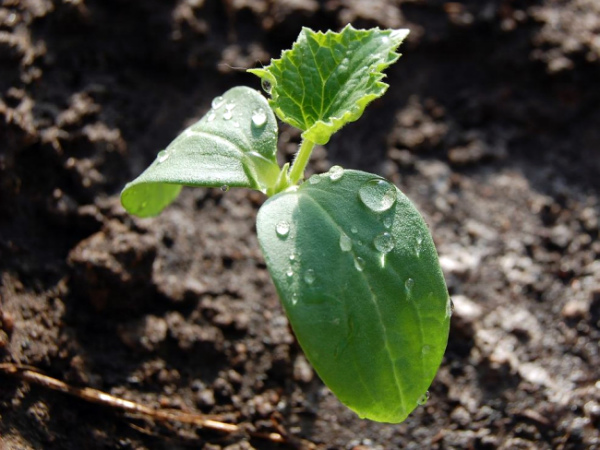
It's best to start preparing for cucumber growing in June in the fall to ensure a good summer harvest. It's crucial to disinfect the greenhouse and remove any remaining soil. If you plan to grow vegetables in the first crop rotation, then preparations can begin in late winter.
A few days after preparing the soil, you can begin planting the seedlings. The soil should be sufficiently warm (over 25°C). Up to 12 crops can be planted under the frame.
Plants need fresh air to grow, so it's best to ventilate the greenhouse regularly. Initially, fresh air should be allowed in only during the day to prevent frost, and as the weather warms, at night as well. In particularly hot weather, the frames can be sprayed with a chalk solution to create shade.
Planted seedlings should be watered in the morning at the roots. Every 10 days, cucumbers should be fed with fertilizer, the composition of which depends on the soil type in the greenhouse. If insects are unable to pollinate the plants, this can be done manually. If the seedlings are planted on time and properly cared for, the first vegetable harvest can be harvested as early as June.
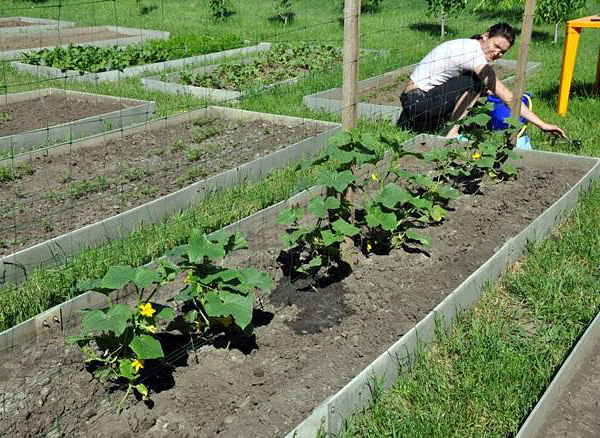
How to water while fertilizing
It is necessary to feed the seedlings with fertilizers during the watering process for their good growth. It's best to apply the fertilizer in the evening, when the sun's rays are less intense. During fertilization, it's important to prevent nutrients from reaching the plant itself, as this can cause leaf burn. Therefore, apply the fertilizer only to the soil around the main stem of the plant.
Keep in mind that cucumbers need to be fertilized every 10 days. Preparing the fertilizer is simple: dilute a liter of cow manure in a bucket of water and add urea or ammonium nitrate to the mixture. Mix the solution thoroughly and apply at a rate of one liter of fertilizer per four plants.
Once flowering begins, plants require additional care. During this period, you can fertilize vegetables with the same mullein solution, adding superphosphate and potassium salt to the mixture. You can also add boric acid, manganese, and zinc to the fertilizer. When the first fruits begin to appear, the plants can be watered with the same fertilizer as during flowering, but increase the dose of superphosphate and potassium salt by 10 grams.
Cucumbers also need to be fed during the fruiting period. After fertilizing, water the plants around the roots to ensure all nutrients reach the underground parts of the plant and prevent burning.
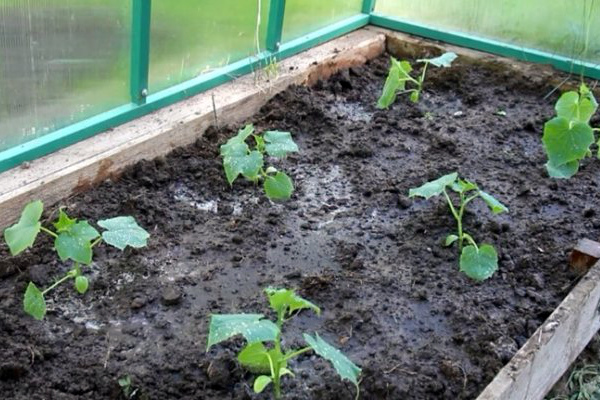
Cucumbers are generally water-loving plants, so the soil around them should always be moist. However, waterlogging should be avoided under any circumstances.
On average, every square meter of area will require 3 liters of water with a watering schedule of every other day. In hot weather, watering should be more frequent and volumes increased.
When watering, be sure to monitor the base of the stem: it shouldn't get wet, just like the cucumber ovaries. This part of the plant is very sensitive, and overwatering it can lead to rot.
At the same time, the edges of the beds need to be well-watered, as this is where the absorptive roots are located. Water should be poured into shallow holes and then filled with compost. This will prevent your plants from being susceptible to powdery mildew, a dangerous fungus.
Fertilizer composition
June is a cool month, but cucumbers thrive on warmth. Without enough warmth, vegetables don't grow well. Therefore, it's especially important to feed the plants with beneficial nutrients during this period.
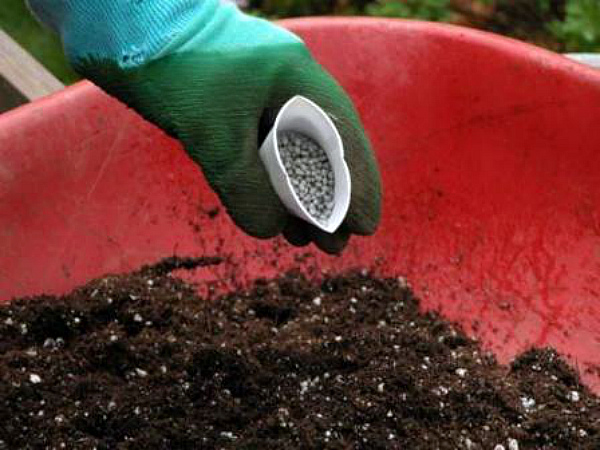
Fertilizers can be applied using both chemicals and homemade remedies, which are especially beneficial for fruit set. Chicken manure, for example, can be used as a top dressing.
Complex fertilizers are easy to prepare at home. Furthermore, folk remedies are quite effective for crop growth.
Here are some proven recipes:
- Mix 25 g of nitroammonium and Stimul, or 30 g of any micronutrient fertilizer, per bucket of mullein. One liter of the mixture is enough for 4–5 plants.
- Mix a bucket of water with chicken manure (1 l).
- Nettle infusion: 5 liters of chopped nettle per 10 liters of water. Preparation time: 5 days. Once ready, dilute 1 liter of the infusion in a bucket of water. Water one nettle plant with a liter of the solution.
- Yeast fertilizer for cucumbers promotes growth. The ratio is 100 g of yeast per bucket of water. Let the mixture sit for 24 hours. Then, water the plants at a rate of half a liter per plant.
If a crop's growth slows, it means environmental conditions are unfavorable or the plants are experiencing a severe nutrient deficiency. Fertilizing can always remedy the situation.
How to contribute
The method of fertilizing cucumbers depends on the composition of the fertilizer and the soil in which the crop is growing.
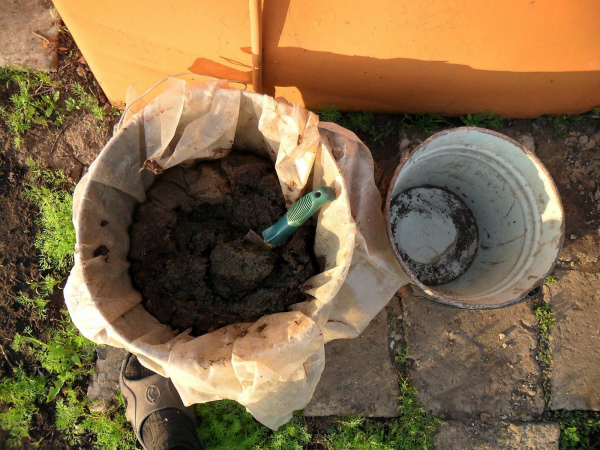
Depleted soil or soil composed of clay should be nourished with a mixture of mullein, superphosphate, potassium, magnesium, and nitroammonium or ammonium nitrate. After all, soil rich in microelements is the foundation for the growth and development of ovaries. All components are thoroughly mixed and evenly applied to the cucumber planting area to nourish the soil with minerals. Before planting, it is recommended to sprinkle granulated superphosphate on the beds.
Sandy soils can be additionally fertilized with magnesium. Therefore, in such areas, the soil should be enriched with organic mineral mixtures.
The most effective way to apply fertilizer to seedlings is by watering them at the roots. The fertilizer should therefore be liquid. It's also important to consider the risk of fertilizer getting on the plant itself and its buds. Fertilizing, including with undiluted chicken manure, can cause burns. Therefore, the fertilizer should be applied directly to the soil around the main stem, at the roots. Every effort should be made to ensure the solution penetrates deep into the soil, reaching the underground parts of the plant.
So, you can harvest cucumbers even in early summer—in June, as ovaries appear quite quickly in a greenhouse. The key is to follow the basic rules and recommendations of experienced gardeners, feeding the vegetables with balanced, periodic fertilizers. Better yet, combine these with generous watering, as this will help you get plenty of ovaries and a harvest that will exceed all expectations.
Video: "How to Water and Feed Cucumbers"
Use this video's tips on watering and fertilizing cucumbers to grow a great harvest.