
Yellow spots have appeared on my cucumbers – how to treat them?
Content
Causes of stains
It's important to understand that cucumbers are quite capricious plants, reacting to almost any irritant with yellowing leaves, regardless of whether all other conditions are met. This behavior can be confusing, especially if the gardener is encountering it for the first time. Fortunately, most problems can be resolved within a few days, or a week at most, by carefully following the plant's every whim. Let's look at the irritants and why they most often cause spotting on cucumber leaves.
Light
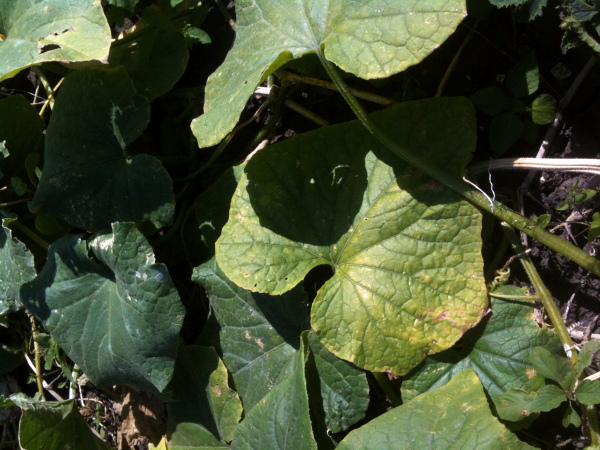
When planting cucumber beds in your garden, remember that cucumbers dislike excessive shade but don't tolerate full sun. Leaves often turn yellow due to lack of light, especially on the lower portion of the stem. Don't worry—this is a natural process. Once the leaves fall off, new ones will grow in their place.
However, sometimes yellow spots appear due to excessive sunlight exposure. This yellowing is nothing more than sunburn. In this case, the leaves tend to curl up. In most cases, excess light doesn't pose a threat to the plant, but during flowering and fruiting, it's best to shade the plants to avoid exhausting them.
Temperature
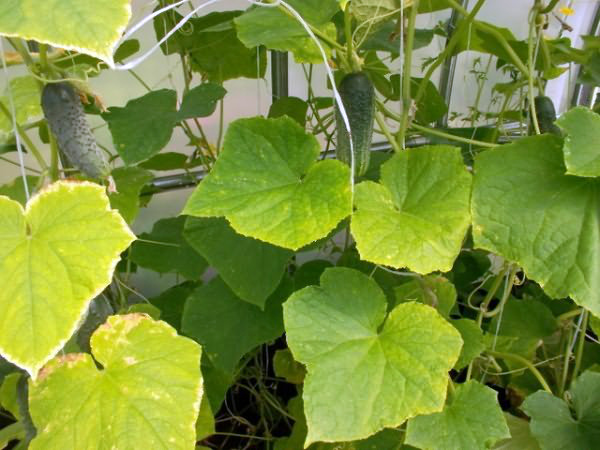
Air temperature, especially excessively high temperatures, has a detrimental effect on cucumber leaves. High temperatures are most often the cause of yellowing leaves in greenhouse plants.
If the thermometer reads 28°C or higher, expect abundant yellowing. The ideal temperature for healthy cucumber growth is between 23°C and 26°C.
Humidity
Maintaining a balance between watering different plants is a science in itself. And you can bet any watering manual would dedicate an entire section to cucumbers! They don't tolerate overwatering, as the roots lose their ability to breathe and rot. However, cucumbers also can't thrive in dry conditions. In both cases, cucumber leaves rapidly turn yellow, as if expressing a note of protest against the unbearable conditions of an open garden bed or greenhouse.
Diseases
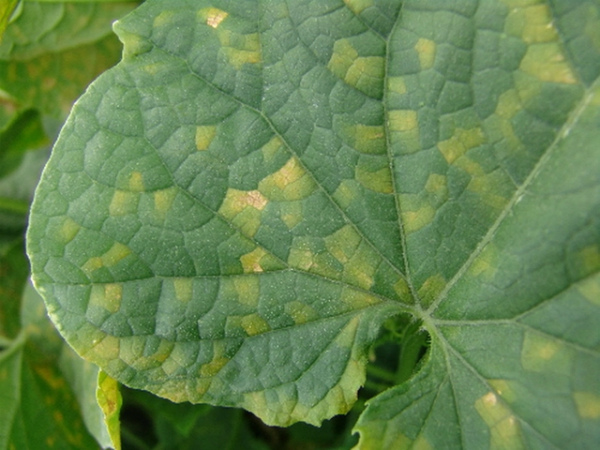
Fungal diseases are one of the most common causes of yellow spots on leaves. These symptoms are observed with downy mildew, root rot, and copperhead infestations. Fusarium wilt and pythium wilt often manifest in this manner. Favorable conditions for their development are created by high soil and air humidity, weak plant immunity, and neglect of safety precautions when planting seeds outdoors or in a greenhouse.
Insects
In addition to diseases, insects threaten the life and healthy growth of cucumbers. The most dangerous of these are whiteflies and spider mites. Their destructive activity involves consuming the plant's sap and tissue, leading to its death. These days, treating insect damage is easy, so there's no need to worry too much.
Fertilizers
When it comes to fertilizers, cucumbers turn yellow in two cases: when there is an excess of fertilizer in the soil, when the plant is completely overfed, and when there is a lack of nutrients, when it is completely depleted and cannot cope with growth on its own.
It is easy to determine which elements need to be added to the soil:
- yellowing at the edges indicates a lack of magnesium and potassium;
- darkened veins against a yellow background indicate a lack of iron;
- If only the upper leaves turn yellow, this indicates a copper deficiency.
Age
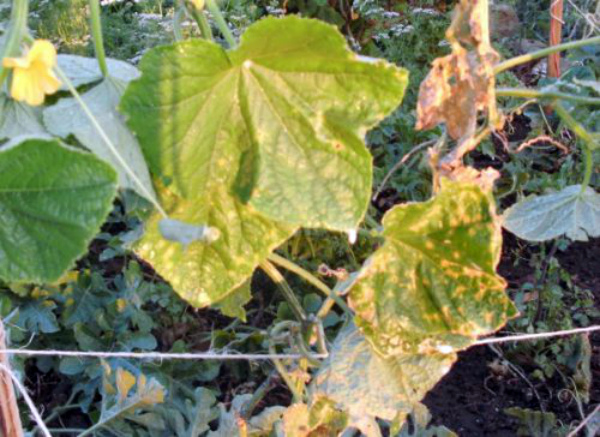
The only reason for yellowing that you can't do anything about is the plant's age. The closer the end of the fruiting season gets, the more yellowing the plant will become, as photosynthesis slows and soon stops altogether. Older fibers become stiff and conduct water less effectively. In such cases, you should remove the spent plants from the garden bed and enjoy the harvest they yielded.
How to treat?
If cucumber leaves are covered with yellow spots or have turned yellow with a reddish tint, a series of health-improving measures—in other words, treatment—is necessary. First, determine the source of the plant's reaction. Find out why things turned out this way. This will help you understand what exactly needs to be done in the garden.
If there's insufficient light, thin out the plantings. Regular pinching of shoots is essential to stimulate the development of female flowers. If the leaves are turning yellow due to too much sunlight, shade them by placing a tarp over the beds.
Temperature fluctuations or excessively high temperatures in the greenhouse can be controlled by regular ventilation and placing water containers around the perimeter of the structure. Remember: too high or too low temperatures promote fungal diseases. Don't put your plants at risk.
If moisture is the issue, you should regularly perform a soil moisture test. Take a handful of soil from a depth of about 10 cm and squeeze it in your hand. Based on its condition, you can determine whether you need to add more water or, conversely, slightly less.

If you haven't used antifungal treatment, or it's been ineffective, you should begin treating your cucumbers immediately. Plants damaged by fungus should be treated with fungicides. Downy mildew is treated with "Ordan." Root rot should be treated by spraying the bush and surrounding soil with fungicides and iodine solution, and adding a fertile soil layer. Copperhead, fusarium, and pythium are treated with fungicides and a nutrient complex. It's important to promptly remove any yellow or brown infected leaves, stems, fruits, or inflorescences from the bush.
A boric acid solution or onion peel infusion will help get rid of insects. To prepare the boric acid solution, dissolve 1 g of boric acid in 1 liter of water. For the onion infusion, pour 700 g of peels into 10 liters of water, boil the mixture, and let it steep for 14 hours. Both solutions can be used for spraying the leaves or watering the soil around plants.
If the yellowing is due to overfertilization, apply an unscheduled fertilizer with a potassium, magnesium, and copper complex, and water the plantings with a potassium permanganate solution (it will also help disinfect the soil). If you're overfertilizing, especially with nitrogen, mulch the soil with wood ash or sawdust.
If you want to prolong the growth of your cucumbers and rejuvenate them, use urea (carbamide) for foliar feeding. Use 25 g of urea per 10 liters of water. Apply 1 liter of the prepared mixture under each plant.
Video: "Problems of Growing Cucumbers"
Watch this video to learn about the fatal consequences a growing error can have on plants, and what you can do to avoid it.