
Methods for treating powdery mildew on cucumbers
Content
What is this
White spots, withered tops, leaves curled into unnatural shapes, and few vegetables in your garden—you're likely dealing with powdery mildew. This disease is caused by the fungus Erysiphe cichoracearum and Sphaerotheca fuliginea. Experts also call it an obligate parasite. It colonizes the plant's epidermal cells and causes the formation of mycelium, a white coating. The incubation period for the disease lasts from 3 to 5 days.
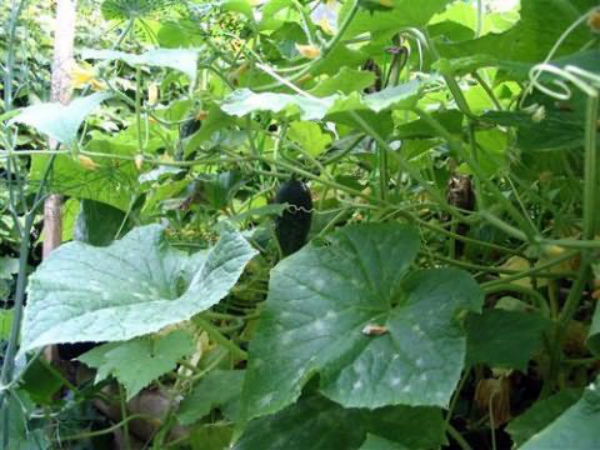
Warm and damp weather conditions favor the spread of the virus. Three to four days after heavy rainfall, outbreaks of powdery mildew can be observed on cucumbers. It prefers temperatures between 16 and 22 degrees Celsius and high humidity. Spore formation also requires ample light. Sudden fluctuations in day and night temperatures can reduce the immunity of vegetable crops to the pathogen.
Virus pathogens often survive in last year's plant debris that overwintered on the site.
Signs
Certain plant maintenance conditions contribute to the infestation of plantings by the ash beetle:
- cool and damp weather;
- plantings thickened beyond the norm;
- high nitrogen content in the soil structure;
- excessive drying and subsequent flooding of the soil;
- watering the area at a time when the top layer of soil is still quite wet.
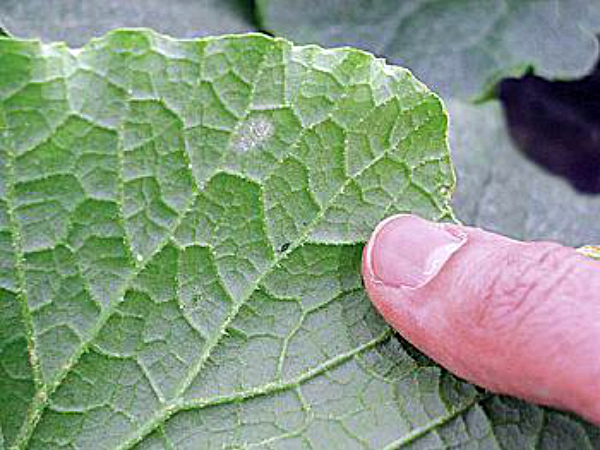
The hallmark of the disease is a white, fluffy coating on the surface of the foliage. The first signs of cucumber infestation by the fungus are round, whitish spots or light, reddish spots. These spots can first be seen on the upper surface of the leaf, and later on the underside. Over time, they colonize all green areas, right down to the shoots and roots. Some vines, if severely affected, may dry out. Leaves become curled and have a loose surface. The plants become weakened and experience a severe lack of oxygen, which often leads to their death.
Greenhouses provide particularly favorable conditions for the development of cucumber ash. Humidity there can reach up to 80%, and there is condensed moisture. The first signs of the disease can be observed near open windows. The disease is often seen on cucumber foliage, but less commonly, it affects the cotyledons. The infection spreads from leaves and shoots located close to the soil surface. Fruit infected with the virus are prone to cracking and rotting.
Video: "Signs of Powdery Mildew on Greenhouse Cucumbers"
Look at what greenhouse cucumbers look like when their leaves are affected by powdery mildew.
How to fight
As soon as you notice the first signs of illness, you should take immediate action. Before treating plants, avoid any spraying, stop fertilizing, improve light levels, thin out the plants, remove old and weakened leaves, and remove flower stalks. These treatments will effectively combat not only the mycelium but also the fungal spores.
Modern gardeners and vegetable growers often use chemicals to combat fungal infections:
- Topaz, a product widely used to combat the virus, is a popular systemic medication containing penconazole as its active ingredient. It is used for treatment at a rate of 1 ampoule per 10 liters of water. Spray with a freshly prepared solution. Treatments should be done every two weeks. The product poses a moderate risk to human and animal health during treatment.
- Tilt KE, a plant treatment product containing the active ingredient propiconazole, is available in a convenient emulsion form. It inhibits spore formation. Its effectiveness is enhanced by high ambient temperatures. The product quickly penetrates plant tissue. A disease-fighting solution is prepared at a rate of 0.4–0.5 ml per liter of water. The protective effect begins within a few hours after treatment and lasts for over two weeks. The product is harmful to bees and fish.
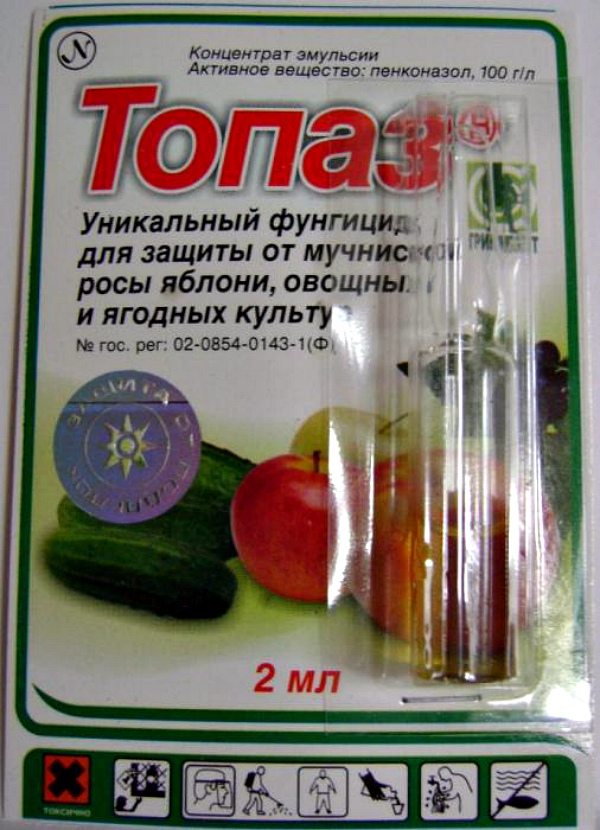
Vegetable crops can also be treated with Sulfarid, Bayleton, Fundazol, Previkur, Skor, Vitaros, and Acrobat MC to combat fungal infections. In the early stages of the disease, sulfur-containing products such as Thiovit Jet or VDG can be used. Copper-containing products, such as copper oxychloride and Bordeaux mixture, are also effective at a ratio of 1 teaspoon per 10 liters of water.
There are also quite a variety of folk methods of control that have proven themselves well among gardeners over many years.
A soap and soda solution has always been effective in eliminating fungal infections. To prepare it, use 5 grams of liquid soap and 25 grams of washing soda per 5 liters of boiling water. The plants will need to be treated several times, with intervals of 7-10 days.
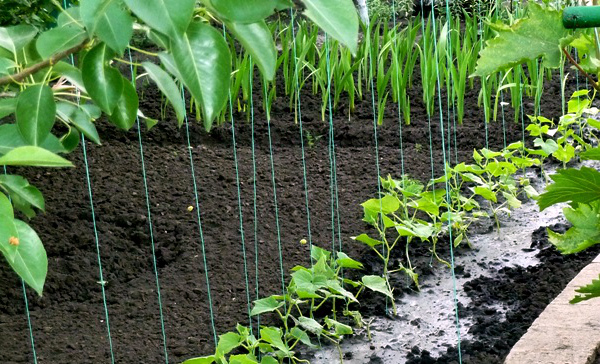
A whey solution, at a ratio of 1 part to 10 parts water, is also used to combat the disease. The treatment is repeated three times, three days apart.
A horsetail decoction is made by mixing 100 grams of horsetail per 1 liter of liquid. It's easy to prepare. The horsetail is steeped in water for 24 hours. Cool and strain. Before spraying, dilute with water at a ratio of 1:5. Spray plants with it three times every five days.
Mix 5 grams of copper sulfate with 50 grams of soap and 5 liters of water. Apply the resulting emulsion to the plantings at least twice, with a one-week interval.
A mustard solution can also help with treatment. To prepare it, mix 2 tablespoons of mustard powder in 10 liters of warm water. Then, water the vegetables.
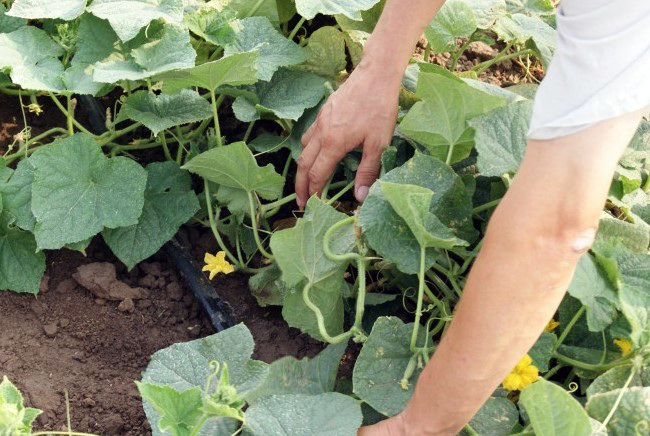
A popular folk remedy is treating cucumbers with a solution of soap and ash. This requires 1 kg of ash per bucket of water. Let the solution steep for about a week. Before applying the solution, which should be done daily or every other day, add a little soap.
A solution of rotted cow manure – 1 part to 3 parts water – will also help cucumber plants. Let it steep for about 3 days. Before use, dilute with water, doubling the volume.
Garlic infusion: 50 grams per 2 liters of water. Chop the garlic, place it in cold water for 1 day, then strain.
Another recipe for fighting the disease is 80 grams of copper sulfate, 50 grams of soda ash, 10 liters of water.
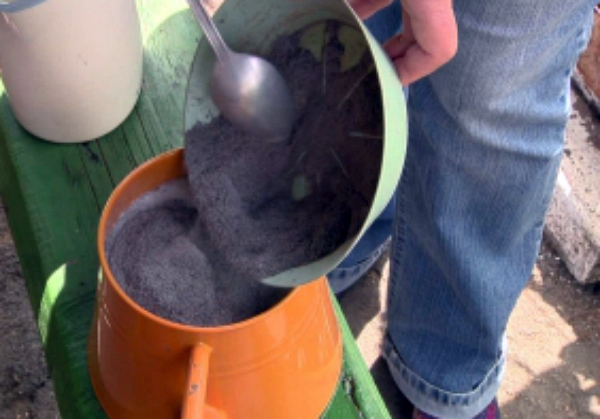
You can try treating the area with a colloidal sulfur solution. To prepare it, you'll need 40 grams of sulfur per 10 liters of liquid.
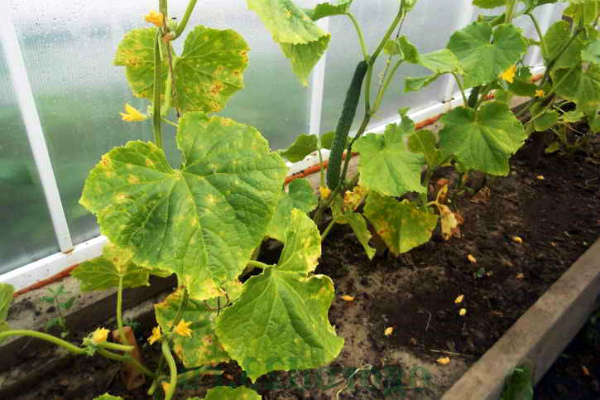
In addition to powdery mildew, there's also a downy mildew, also known as penosporosis. It's distinguished from powdery mildew by the presence of yellow spots on the leaf surface, rather than white ones. Since it's even more difficult to control than powdery mildew, it's best to take preventative measures: avoid sowing seeds too densely, adhere to crop rotation practices, avoid watering crops with cold water, and harvest on time.
If downy mildew cannot be avoided, treatment measures must be taken. Products such as Kuprosat, Ridomil, and Oxychrom can help. Folk remedies, such as spraying with whey and copper sulfate (1 teaspoon per 3 liters of whey and 1 bucket of water), are also effective against the downy mildew.
How to prevent
Experts recommend growing cucumber varieties that have strong immunity to the disease. These include Ofix, Lastochka, Phoenix, Golubchik, Octopus, Pasadeno, and Pasamonte.
Preventive measures include cleaning the area (removing plant debris and weeds) and following crop rotation rules (returning pumpkin crops to their usual locations no sooner than three years after the first infection). Preventive measures include isolating crops to prevent virus contamination within 20 meters of similar crops. Regular thinning and removal of old leaves from cucumbers that touch the ground are also necessary. It is important to avoid excessive nitrogen fertilizers and to apply phosphorus-potassium fertilizers in a timely manner.
There is a method of disease prevention that has been proven by many gardeners.
Even before the leaves emerge, in early spring, shrubs in the area are scalded with boiling water. This is done quickly, using a watering can with a diffuser.
This treatment doesn't harm plants waking up from winter dormancy, but it does kill fungal infections. A household steam cleaner can also be used—a jet of steam delivered under high pressure has a similar effect.
Video: How to Combat Powdery Mildew
In this video, an experienced gardener will explain how to prevent and treat one of the most common fungal diseases affecting gardens and vegetable plots.