
An overview of cucumber diseases in greenhouses and their treatment
Content
Diseases and their treatment
In open ground conditions, crops are not as well protected from diseases as in a greenhouse. Although greenhouses, including those made of polycarbonate, create a microclimate as close to natural conditions as possible, diseases and pests often cannot be avoided.
An attentive grower can identify cucumber diseases by various characteristic symptoms, such as wilting, spots or rot on leaves, and powdery deposits. Most of these diseases are treatable, and preventative measures can also be taken through agricultural practices. A correct diagnosis is the key to successfully treating your favorite crop, whether grown in a polycarbonate greenhouse or any other type.
There are many diseases and pests that affect cucumbers. Let's take a closer look at the most common ones.

Powdery mildew
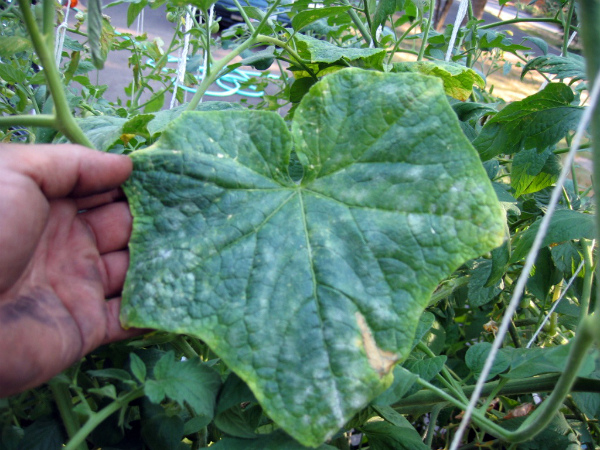
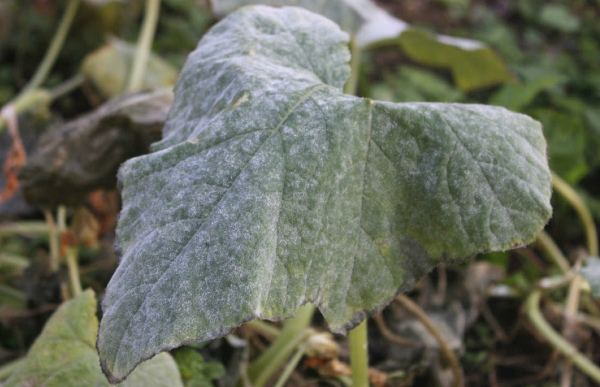
Signs of powdery mildew include the appearance of brown spots with a white coating on leaves. This characteristic coating is also called mycelium by experts. Gradually, the disease covers the entire surface of the leaves, turning them dull and dry. Cucumber seedlings affected by powdery mildew stop developing, and young shoots stop growing. The disease is caused by a fungus that overwinters in plant debris. It becomes active with the onset of spring.
Treating the unpleasant foliar plaque involves using a special solution, such as one made from weeds. It includes dandelion, plantain, coltsfoot, nettle, chickweed, and fireweed. These herbs should be chopped and poured into a 10-liter bucket with boiling water. Add 1 teaspoon of urea, liquid soap, and manganese powder, and mix thoroughly.
In addition to this cucumber recipe, other proven folk remedies can help remove harmful plaque from the leaves. For example, use a mixture of mullein, whey, and urea in a ratio of 10 liters of water per 1 kg of cow manure and 1 tablespoon of urea.
Some gardeners prefer to use a solution of sour milk to kill fungal spores, mixing 1 liter of sour milk per 9 liters of water. However, this method only slows the progression of the disease for a few weeks, not eliminates it completely. In mild cases, 1 kg of rotted hay, soaked in a bucket of warm water for 24 hours, or 3 liters of whey per 7 liters of water with 15 drops of alcohol iodine added, can help combat the disease.
Sulfur powder has proven effective in preventing powdery mildew. It's commonly applied to the soil using three layers of cheesecloth, then covered with plastic wrap for three hours. Horsetail infusion is also effective. To prepare it, take 1 kg of fresh or 100 grams of dried horsetail, add 10 liters of water, let it steep for one day, and then boil for several hours. After cooling, the infusion is diluted with water again at a ratio of 1:5.
As a preventative measure, affected leaves and shoots should be burned. They should not be thrown onto the edge of the garden plot.
An excellent solution is to plant disease-resistant varieties such as Otelo, Khrustik, and Laplandiya. Thinning the plants to 15–35 cm apart will also help, ensuring adequate air circulation.
Downy mildew
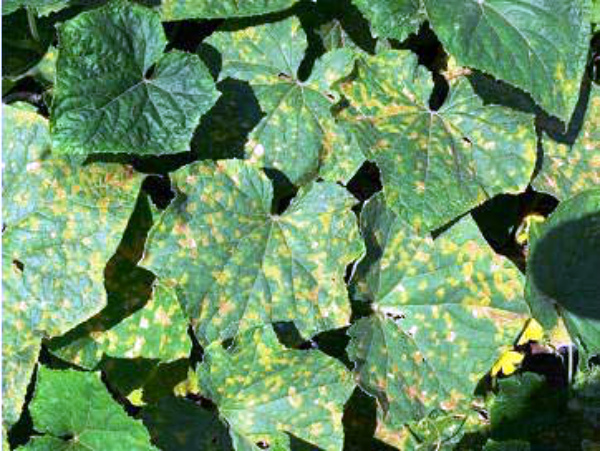
Downy mildew, or peronosporosis, can be identified by yellow-green spots on the foliage. The underside of the leaf turns purple-gray, and over time, it dries up and falls off. This dangerous disease can be detected both when cucumbers are grown in a greenhouse made of polycarbonate or other materials, and when they are planted outdoors.
Favorable conditions for the disease's development are high humidity and temperatures of 16-18 degrees Celsius. The onset of the disease can be easily identified by the presence of small droplets on the surface of the leaves. The spores remain active in the soil for a long time, making control difficult.
To treat downy mildew on cucumbers, their foliage is treated with copper-containing products such as Bordeaux mixture, Oxychom, and Ridomil Gold. These are more effective as a preventative measure. Rizoplan, a product containing live cells of a number of bacteria, can help fight the infection. It doesn't accumulate in the soil and decomposes quickly. To save cucumbers in a greenhouse, their leaves are also sprayed with a well-known folk remedy: whey.
Brown spot
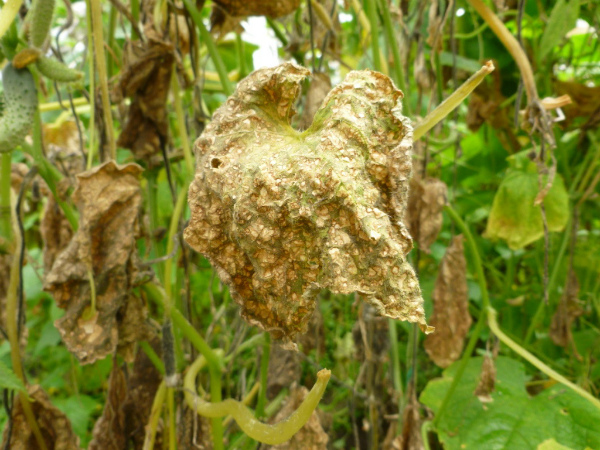
Cladosporiosis, also known as brown spot or sticky stem rot, is a dangerous disease characterized by chestnut- or coffee-colored spots. These can grow, becoming wedge-shaped necrotic areas and may have a characteristic ring around them. Thick slime, also known as rot, may be present around the spots. This fungal infection can destroy entire new shoots as it spreads rapidly throughout the plant. If affected shoots are discovered, they should be destroyed. This disease can even affect the root system.
Control methods for this rot include cutting off water supply for 100 hours. If the temperature inside the greenhouse is below 18 degrees Celsius, it is raised to 20 degrees Celsius using heating. Copper-containing products can be used until cucumbers appear. Many gardeners prefer to use Bordeaux mixture combined with liquid soap. Bactogen or Planriz have proven effective in combating stem rot. It is recommended to wipe greenhouse surfaces with chlorine-free disinfectants. Avoid watering cucumbers with cold water.
For prevention, it is necessary to replace plants in affected areas. The disease spreads very quickly. To avoid losing the harvest, it's essential to begin providing crop support as quickly as possible.
Rotten
Greenhouse cucumber diseases are always unpleasant. This is especially true for the common white, root, and gray rots. The first type of rot gets its name from the powdery formation that appears on the trunk and foliage. This disease can cause the death of the cucumber plant. The disease can also spread to other crops. When your plants are rotting, you can control it with modern chemicals.
Root rot spreads rapidly through plants. It is caused by improper care of shrubs, such as watering with cold water or reducing the usual temperature. Plants are often infected when seedlings are planted deep in the soil or when earthing up. Exposing the root system can help with early detection of the virus. A solution of copper sulfate or copper oxychloride is effective in this case. After treatment, the roots and stems are usually covered with dry, clean soil.
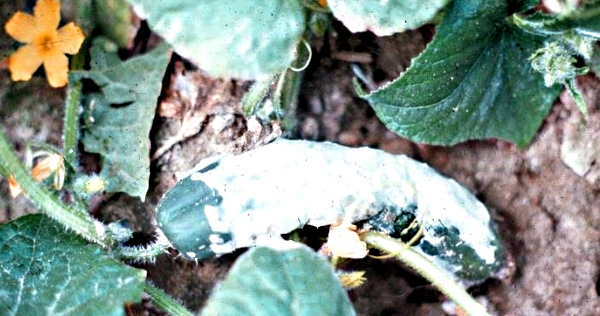
When gray mold is detected on cucumbers, characteristic colored spots are visible on their leaves. These harmful parasites tend to spread at night. What should be done in this case? To get rid of the gray mold, it's common to sprinkle wood ash between the rows when planting. Maintaining proper spacing between plants is also important. Treatment can be achieved by applying a mixture of chalk and potassium permanganate to the affected areas after leaf removal. Prevention involves proper plant care.
Black mold
Because greenhouses create warm and humid conditions (which mold thrives on), cucumber plants are often attacked by it. This fungal disease forms branching mycelia and spreads quickly. Experts believe that condensation accumulates inside greenhouses and is a great companion for mold.
Upon visual inspection, dark gray spots with a purple tint are found on the stems and petioles. Brown spots are present on the foliage, mostly on older leaves. As the disease spreads, a powdery, web-like area forms. The foliage subsequently dries and falls off. Black mold is also known as cucumber leaf burn. Temperatures favorable for rapid disease development include temperatures of 20-26°C (68-78°F), humidity levels of 50-100%, poor ventilation, temperature fluctuations, and injuries resulting from pruning or pinching. The latent period of the disease is up to 5 days. The fungus enters a dormant stage when air temperatures drop below 10°C (50°F), when spores are produced.
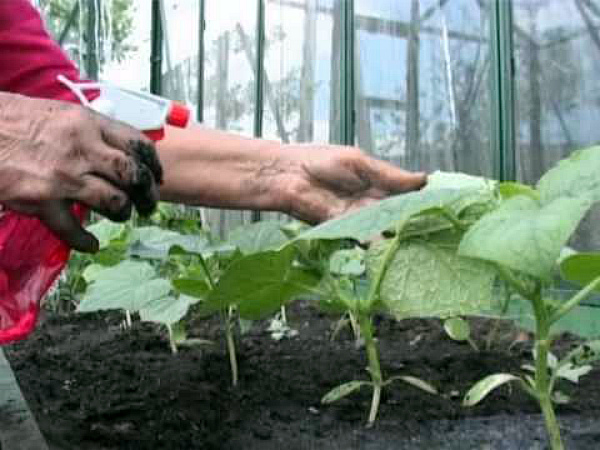
Prevention of black mold:
- tightness of greenhouse joints during assembly;
- sufficient amount of light;
- planting crops in one place once every 3 years;
- maintaining optimal temperature;
- the presence of a through ventilation system;
- plant feeding (for example, with a solution of 10 grams of urea, 2 grams of copper sulfate and 1 gram of zinc sulfate);
- watering the rhizome with warm water;
- garter;
- removal of affected bushes with soil.
Biological control methods include adding charcoal and wood ash to the soil before planting. Chemical treatment involves spraying with Bordeaux mixture or copper oxychloride. Barrier and Zaslon are also effective. For severe infestations, it is recommended to treat the greenhouse with a soap solution and potassium permanganate, and the plants with Fitosporin-M.
Pests and control methods
The main parasites on cucumbers in a greenhouse are spider mites, melon aphids, sprout flies and whiteflies.
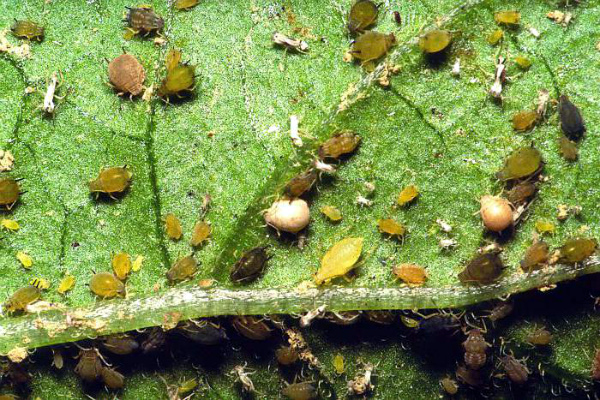
Spider mites tend to suck the sap from leaves, which leads to the loss of buds, flowers, foliage, and even the death of the plant. What can be done? Clearing the greenhouse of weeds, replacing the soil and pest control, moistening the soil, infusing it with onion or pepper infusions, using Malathion, and planting dill nearby to attract ladybugs will help.
Melon aphids attack fruits, flowers, and ovaries. To kill them, spray the plants with a stream of water, apply an infusion of onion peels, burn yellowed shoots, and treat the remaining shoots with sulfur powder or Karbofos. The pesticides Iskra and the biological product Fitoverm are also suitable. Planting mint, coriander, mustard, garlic, and basil nearby is recommended.
Preventative measures like composting will help prevent colonies of sprout flies and whiteflies. Loosen the soil before planting, and don't plant the sprouted seeds too deeply. Use growth stimulants when soaking them, and till the soil during harvest to remove any remaining vegetation.
Video: "How to Save Cucumber Roots from Root Rot"
This video will introduce you to a method for obtaining new roots for cucumber bushes with root rot.