
White spots on cucumber leaves and how to deal with them
Content
Causes of stains
White plaque appears on the leaves of the crop as a result of several common diseases (it does not matter how the vegetable is grown - in open ground or in a protected greenhouse):
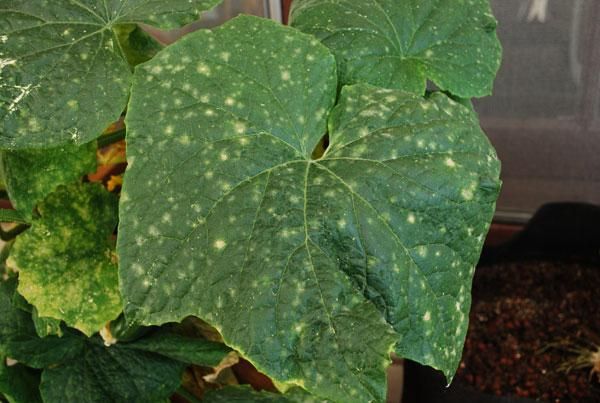
- White mosaic. The appearance of irregularly shaped spots on the foliage, vaguely resembling stars, indicates that greenhouse beds are at risk from this viral disease. If left untreated, the entire foliage will gradually turn white. The affected plant will not produce fruit, and if it does, the cucumbers will be small, deformed, and diseased.
- Spider mites. Another cause of white coating and spots on cucumbers. The presence of webbing on the underside of leaves can also indicate this disease. Affected plants gradually lose their foliage;
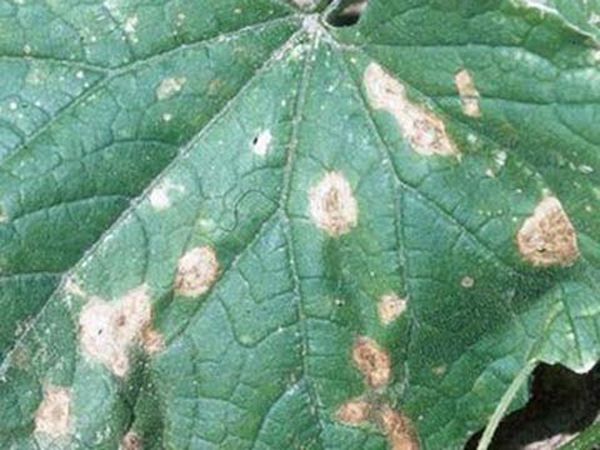
- Ascochyta leaf spot. An infectious disease that attacks weakened plants in conditions of high humidity (often in greenhouses). The first sign of the disease is white spots on the leaves, which eventually crack. The fruit of an affected plant will be soft, as if cooked.
- Powdery mildew. The name speaks for itself: in a short time, the entire surface of the leaves becomes covered with a white coating, creating the impression that flour has been sprinkled over the garden bed. The danger of the disease is that it affects young shoots and stems of the plant, and, consequently, the harvest;
- Anthracnose. A very dangerous fungal infection that threatens not only the foliage of the plant but also the fruit. The first sign of the disease is a white coating or spots that gradually turn brown. Over time, the affected leaf falls off, as if burned, and the infection continues to progress and spreads to the fruit, leaving deep brown spots.
Chemical treatment
So, we've figured out why spots appear, now let's figure out what to do if they're detected. Naturally, the greatest and fastest results are achieved with specialized treatments designed to combat specific diseases. For example, Actellic or Aktara can help stop the spread of cucumber mosaic (you'll need to remove the plantings themselves and treat all garden tools with the treatments). Spraying with Akarin or Fitoverm is excellent for spider mites. A traditional Bordeaux mixture can help eliminate the first signs of ascochyta blight (but if the disease has been present for a long time, treatment won't work, and you'll have to remove the plantings).
If you're fighting powdery mildew, you'll need an ampoule of Topaz and 10 liters of water—this is the mixture used to spray the beds. Bordeaux mixture or a sulfur solution will be useful for treating anthracnose (at the onset of the disease).

Treatment with folk methods
What should you do if you can't use special treatments, but you've still detected a plaque on your cucumbers? Why not try more traditional and safer methods? For example, if you suspect the presence of spider mites, be sure to remove all affected leaves, and don't forget about nearby weeds—the pathogen may be hiding there, too.
The same method is used to combat ascochyta blight: remove lower leaves promptly as soon as signs of the disease appear. Powdery mildew can be treated with a potassium permanganate solution (5 g of crystals per 10 liters of water) or a "milkshake" (made as follows: dilute 1 liter of milk or whey in 10 liters of water and spray the plants with the resulting mixture).

Preventing stains
There's no definitive answer to why white mold appears on cucumbers. There could be many causes, ranging from improper humidity in the greenhouse and contaminated seedlings to plant infection from using unsanitized equipment. To avoid problems, try to follow crop rotation rules, regularly ventilate the greenhouse, remove weeds around the beds, and regularly inspect the plants.
Video: "Cucumber Diseases and Their Treatment"
This video will tell you about the diseases that affect cucumbers and how to treat them.