
How to feed carrots and get a rich harvest
Content
Preparing the ground
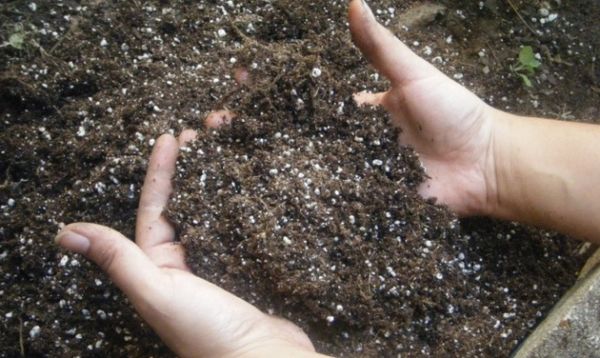
The plant grows best in loose, well-drained soil. If planting in loamy or peaty soil, it's recommended to use natural cultivators such as sawdust, sand, and turf. To prepare the soil in the fall, it's customary to use high-quality organic fertilizers. If the garden previously contained crops that were well-fertilized with compost and humus, organic matter is not necessary. Fertilizers with proven results, such as peat manure and compost, are applied at a rate of no more than 8 kg per square meter of usable area.
To deacidify the soil, it is recommended to add ash, chalk, or dolomite flour. Liming is only required when the soil pH drops below 5.5. Mineral fertilizers will be required when there are 2-3 weeks left before the planned carrot planting.
If the soil is not heavy, only nitrogen and phosphorus fertilizers are added. Potassium is used as a liquid root fertilizer. The beds should be dug over. If you are working with peat, clay, or podzolic soil, sawdust, humus, and sand should be added to loosen the soil. For black soil, sawdust and sand should be added, along with 2 tablespoons of superphosphate.
Fertilizers when planting
When planting carrot seeds, it's recommended to use homemade flour paste. Mix it with mineral complexes and inject the mixture into the furrows using a syringe. Before sowing, it's recommended to soak the seeds in a solution of nitrophoska and boric acid. Alternatively, place them in a bag and soak them in a wood ash solution for 1 day. Next, this beloved vegetable will require fertilizers that provide it with the necessary amounts of elements such as nitrogen, potassium, phosphorus, manganese, barium, and boron.
Fertilizers during the growing process
When caring for this root vegetable, a plot owner should remember to apply fertilizer to their carrots twice. However, if late-ripening varieties are selected, it's acceptable to apply the recommended fertilizers not twice, but even three times.
The first time carrots are fertilized, apply a fertilizer containing a high amount of mineral components at a rate of 150 grams per square meter. Potassium should be approximately 60 grams, nitrogen – no more than 50 grams, and phosphorus – up to 40 grams. The crop requires 20 grams of ammonium nitrate, and about 30 grams of potassium chloride and superphosphate. After a couple of weeks, apply the next fertilizing. It is recommended to use 1 tablespoon of potassium sulfate and the same amount of azophoska per 10 liters of water.
If you plan to use complex fertilizers, it's best to choose those rich in sulfur, boron, and sodium. When the vegetable is actively growing, late-season varieties should be fed with the fertilizers listed above, excluding nitrogen-containing ones. Experts strongly recommend applying mineral fertilizer to your favorite carrots after a good watering or heavy rainfall for best results.
Organic or mineral
It's best to use organic fertilizers shortly before winter. Chicken manure and slurry have proven effective. The manure should be soaked beforehand. The standard ratio is 1:10. When watering, dilute the fertilizer another 10 times. Slurry should be diluted in the same manner for use.
Fertilizers containing beneficial minerals are recommended to be applied not before winter, but 2-3 weeks before the planned planting of vegetables. A popular composition is 1 tablespoon of well-known superphosphate, the same amount of potassium chloride, plus 1 teaspoon of urea. This is the required amount for each square meter. You can use about 85 grams of mineral fertilizer (i.e., a vegetable mixture) when digging the soil. It's important to remember that wood ash can enrich the soil with potassium and microelements. Up to 15 kg of ash is required per 100 square meters when digging.
If the gardener used fertilizers during the preparation of the plot or replanting, then in the summer, until the end of August, it is recommended to use complex compositions.
For example, add up to 3 kg of humus and 10 grams of fertilizer containing potassium and phosphorus during spring or fall digging. Or, a month after germination, use 2 tablespoons of organic matter and 1 teaspoon of nitrophoska, diluted in 10 liters of water.
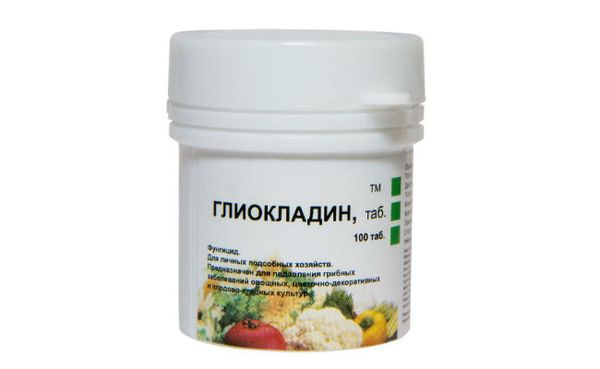
Another feeding can be done a couple of weeks after the first, diluting 1 teaspoon of mineral fertilizer and 1 tablespoon of organic fertilizer in 1 bucket of water. Foliar feeding is also popular. Ready-made complex formulations available in stores include "Gamair," "Gliokladin," "Trichodermin," "Fitosporin-M," and others.
Gardener's tips
Beginning gardeners should know that they can boost their favorite vegetable's immunity by fertilizing it with potassium sulfate two weeks before harvesting. Be sure to moisten the soil immediately before applying any fertilizer. Lime should be added to the soil every few years. A boric acid solution should be diluted at a rate of 3 liters per linear meter, a barium-manganese solution should be diluted at 1 teaspoon per 10 liters of liquid, and a saline solution should be prepared by diluting 1 tablespoon of salt in 10 liters of water. To obtain sweet carrots, spray the tops with humates three weeks before harvesting. Use 1 gram of this solution per 10 liters of liquid.
If the vegetable tops are not strong and healthy enough, use a urea solution. It is recommended to spray it four months before the planned harvest. Boric acid is also suitable. To correct a magnesium deficiency, treat the area with a magnesium sulfate solution. Once again, organic fertilizers are best applied during the winter tillage. Nitrogen and phosphorus fertilizers are recommended to be applied twice, namely during the active growing season.
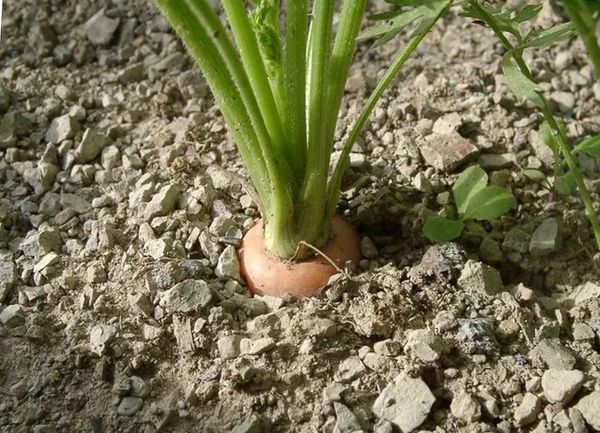
Video: "How to Feed Carrots?"
This video will tell you about the best fertilizers for carrots.