
Raspberry "Zyugana" is a Swiss remontant variety
Content
Characteristics of the variety
The Zyugana raspberry variety has strong, upright shoots that reach 1.8 meters in height; in shaded conditions, they can grow up to 2 meters.
There are sometimes recommendations that plants of this variety should not be tied up, but the bush performs better on a trellis.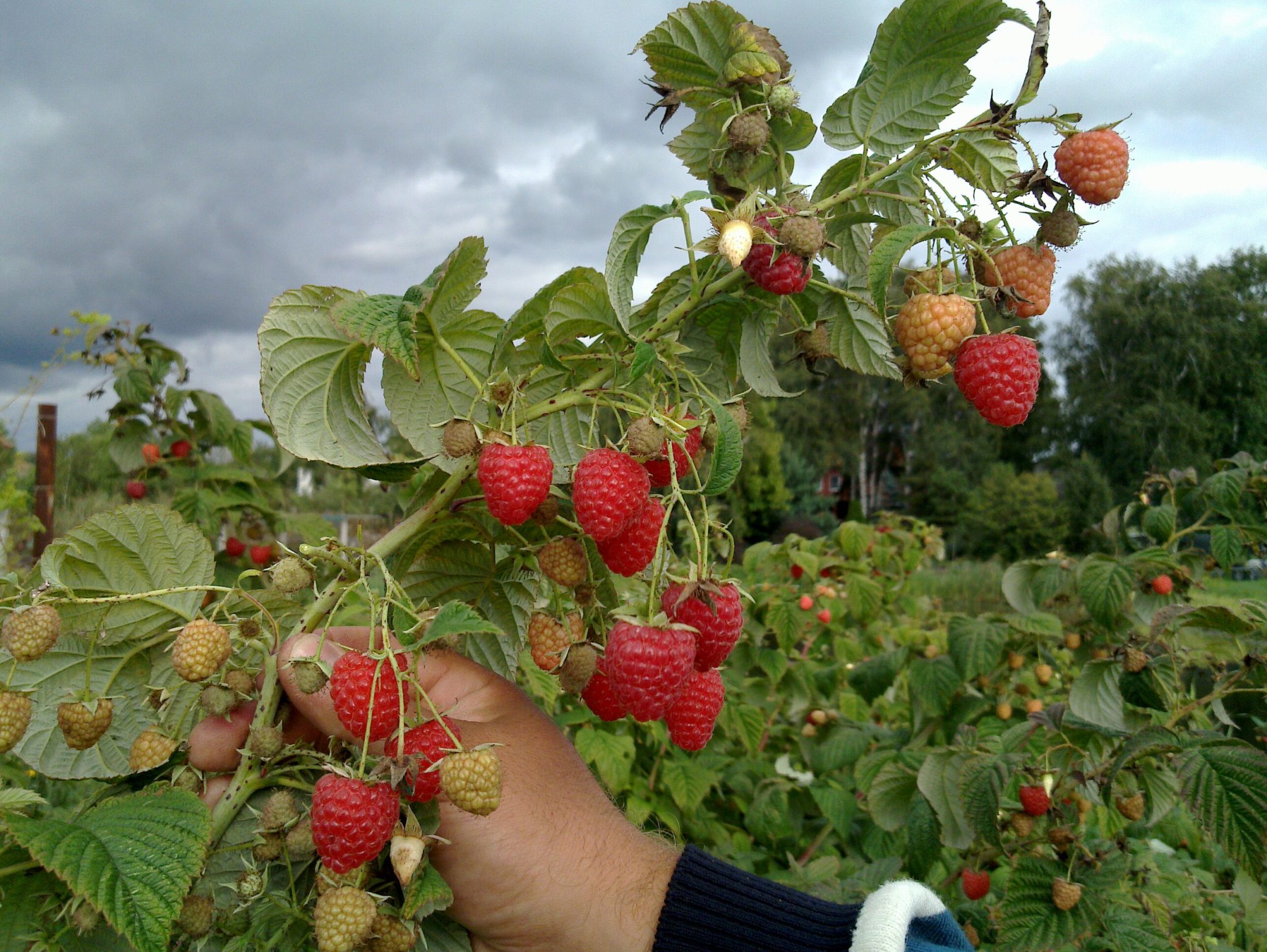
The bush is not very spreading, reaching about 70 cm. The shoots are dense, thornless, and have vigorous branching, producing numerous fruiting shoots. The leaves are large and dark emerald. Since this variety is everbearing, it can bear fruit twice per season.
With double fruiting, berries form twice on the previous year's shoots, with the second fruiting portion accounting for up to 50% of the shoot's surface. If pruned to ground level in the fall, the vine will bear fruit only once, with the fall harvest, when the fruiting area of the shoot's surface is 75%.
The berries form and ripen until late autumn and the first frosts, and the flowering of the bushes lasts until mid-autumn.
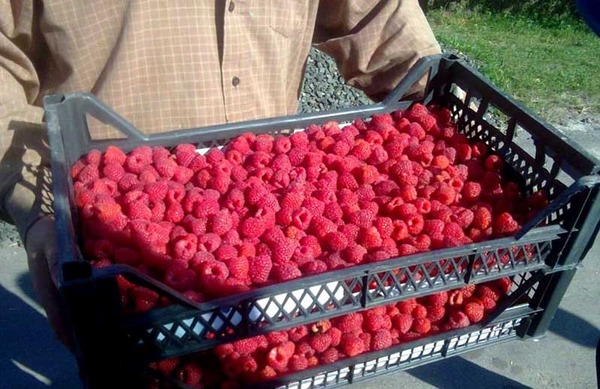
Due to the high yield of the bushes, each shoot can produce up to 300 grams of fruit. The berries grow large, slightly rounded, cone-shaped, and elongated. Each berry averages 5-6 grams in weight, and with proper care, they can ripen to 10-12 grams each. The fruits have a juicy, sweet, dessert-like flavor, with a distinct aroma.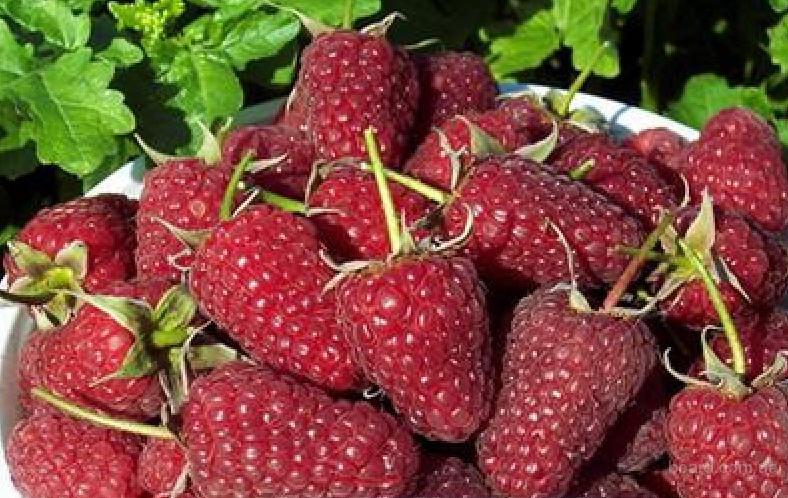
The berries ripen by July and continue to form, grow and ripen until the autumn frosts.
With such excellent taste and quality characteristics, the fruits are distinguished by excellent transport and storage qualities after harvest. After harvest, the fruits can be stored without losing their marketable appearance and taste for an average of 5-6 days in the cold and up to 3 days at room temperature.
Fruiting rates are also high and amount to 8-9 kg per bush per season.
The raspberry plant of the variety in question is characterized as powerful and unpretentious, resistant to low and high temperatures.
The creators of the variety state in the commercial description that the berries have a tasting score of 9 points and frost resistance of 9 points out of 10.
Covering will be necessary during severe frosts above -30 C. Regarding disease resistance, 7 points are declared, which is considered an average indicator.
Video "Description of the Variety"
From the video you will learn a lot about this raspberry variety.
Landing rules
The description of the Zyugana raspberry variety recommends considering the following nuances when planting. Before planting, select a site with a level surface, good sunlight, and protection from northern winds. This raspberry variety is unfussy when it comes to soil, and will thrive in almost any soil type. However, if possible, choose fertile, loose soil.
Almost all varieties of everbearing raspberries, including the Swiss variety, are not suited to soil with high acidity. If this is the case in your area, you should lime the soil.
To ensure the planted bush takes root quickly and well, as well as to ensure successful growth and a bountiful harvest, organic and mineral nutrients are added to the holes and trenches during planting. The soil in the holes should be moist during planting.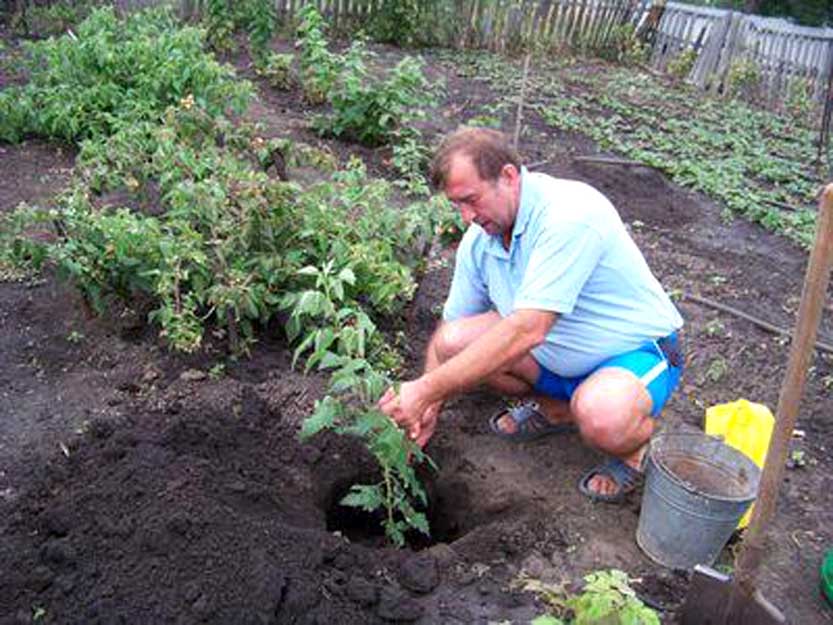
When planting remontant varieties, the following schemes are used: a distance of 3 x 0.25 m, a two-row planting variety is also used, adhering to the following parameters: 3.5 x 0.5 x 0.25 m.
The best time to plant this type of raspberry is late September or early spring, but it's important to do so before the crop begins to grow intensively.
To prevent the moisture valuable for raspberries from evaporating, the soil around the plant is mulched using manure, rotted straw or peat.
Care Features
After planting your raspberry bushes in your garden, proper care is key to achieving a good harvest. Regular pruning is the most important part of raspberry care. Autumn pruning of fruit-bearing canes occurs after the final harvest.
The shrub is thinned out, as the strong autumn shoots will give rise to thin, weak shoots that will draw nutrients from the soil and the plant. Therefore, to optimize the plant's lifespan and ensure a bountiful harvest, all young and weak shoots are pruned. This means the plant should have approximately 8-9 branches remaining.
During spring pruning, all young and weak growth is cut off, leaving no more than 10 shoots.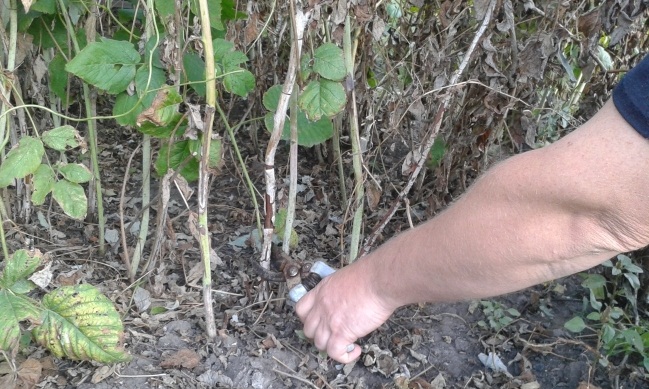
After pruning, tying is done. To ensure juicy and flavorful berries form on the raspberry bushes, the plant requires irrigation, the best form of which is drip irrigation.
Raspberry bushes need mulching; this will help retain moisture in the root zone, prevent soil cracks, and prevent the growth of weeds.
Pinching the growing points of young shoots is done in late spring, when the bush reaches 90-100 cm. This will stimulate intensive growth, but will also delay the autumn harvest somewhat.
Top dressing at the beginning of spring consists of a mineral-nitrogen complex (saltpeter, nitroammophoska).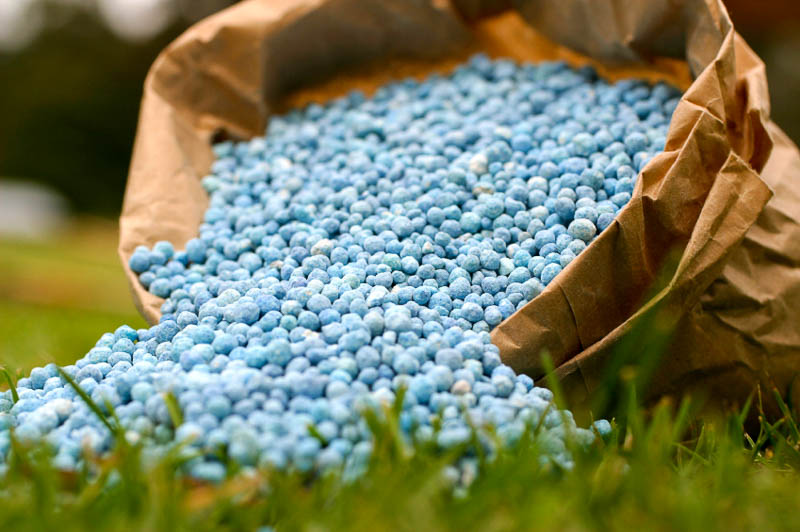
Before flower buds begin to open and during ovary formation, foliar feeding should be carried out using potassium, calcium, phosphorus with a small nitrogen content.
Raspberries require several fertilizing sessions during the period of fruit formation and ripening, so urea is added in the spring, after the snow melts.
To form large, juicy and dense berries, potassium nitrate and complex mineral fertilizers are used as fertilizers.
Raspberry bushes require periodic weeding and soil loosening. It is recommended to loosen the soil under each bush and between rows after each watering or rain, unless there is mulch underneath the plants.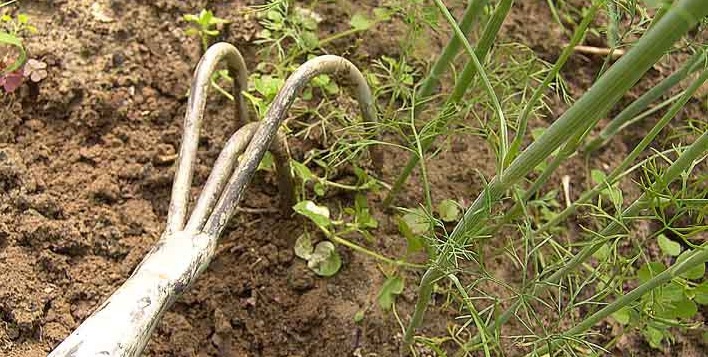
Raspberries are harvested as they ripen. If long-distance transportation or storage is planned, it's best to pick early in the morning.
The berry's excellent appearance, very high yield, and ease of storage and transportation make this variety one of the most promising for cultivation for market. Sugana raspberries form numerous suckers, making propagation much easier. The variety grows easily and shows excellent survival in home gardens and vegetable plots.
Video "Diseases and Pests"
From the video you will learn about raspberry diseases and pests.