
Raspberry "Yellow Giant" - Description of the Variety
Content
Description
The history of this variety's breeding dates back to the 1980s, but only in the last few years has its cultivation been gaining momentum. The popularity of the Yellow Giant raspberry variety is well-deserved today, as its advantages include easy planting and subsequent care, increased winter hardiness, high yields per bush, and tasty, large fruits.
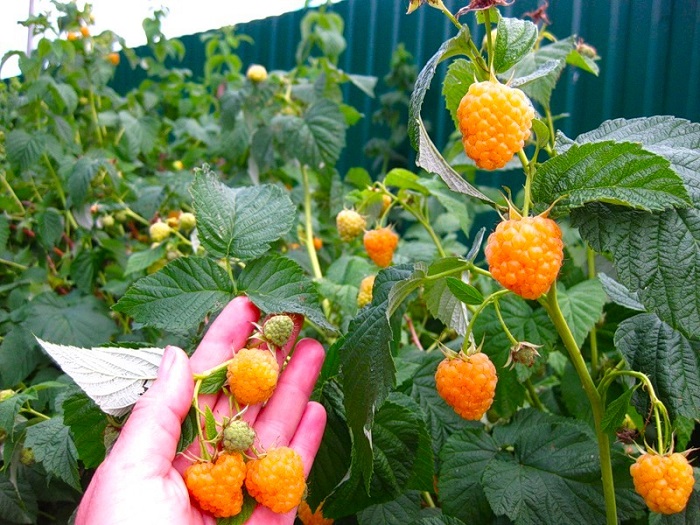
One can imagine the following description of the Yellow Giant raspberry variety:
- a medium-spreading, tall shrub that reaches a gigantic height of up to 2.5 m, requiring tying and support;
- fruit branches are dense, each one has 15-20 berries, sometimes empty flowers are observed;
- young stems are brown with a light waxy coating, and two-year-old shoots are grey with small green thorns all over the surface, causing a lot of inconvenience when harvesting;
- the foliage on the bush is large, wrinkled, dark green;
- shoots are straight and strong;
- according to the ripening time of fruits, it belongs to the mid-early variety;
- the fruits ripen approximately by mid-July;
- fruiting lasts up to one and a half months, in the southern regions it can increase to three months;
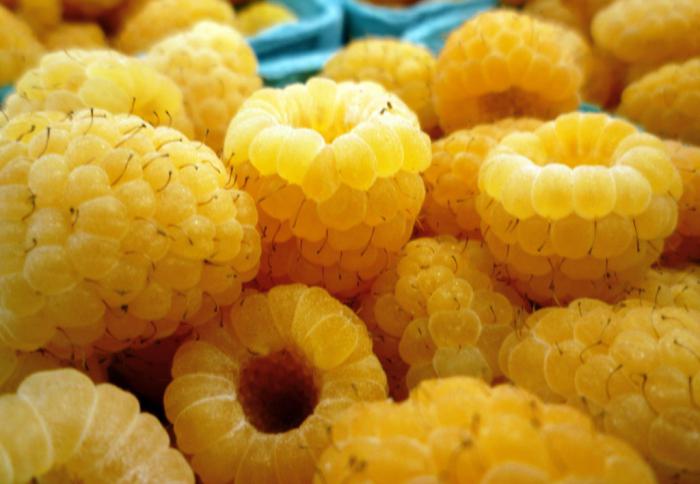
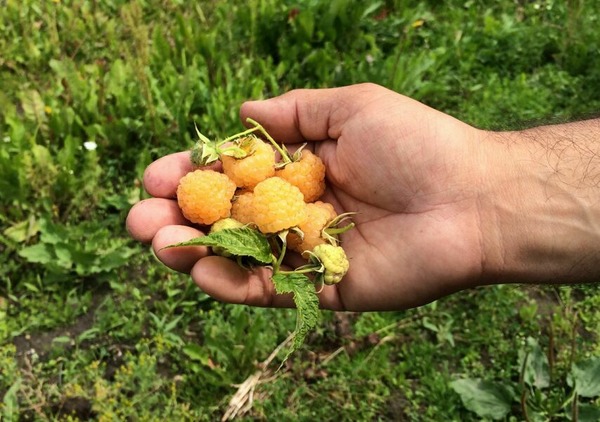
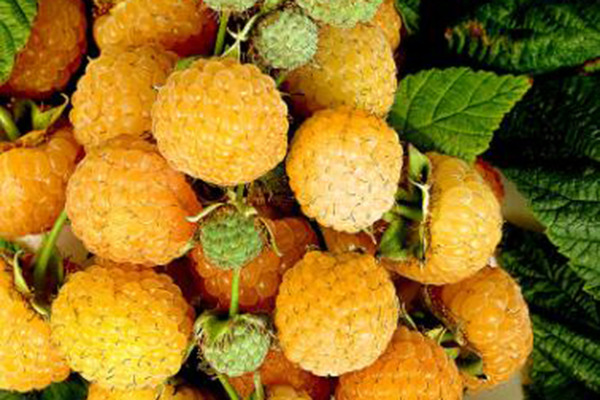
- the berries are large, round, and bright yellow-amber in color;
- the weight of berries is 8-10 g, sometimes they can reach 12 g;
- the taste of the berries is sweet, viscous, with practically no sourness;
- characterized by a high yield of 4-6 kg from one bush under proper care;
- the root system is well developed, which promotes rapid reproduction;
- with proper agricultural technology it acquires the characteristics of remontant plant;
- exhibits resistance to diseases and insect pests.
However, despite these numerous advantages, the Giant Raspberry also has some drawbacks: poor transportability, which is common to almost all yellow-fruited raspberry varieties. For this reason, it has not gained widespread acceptance in the agricultural industry.
Other disadvantages include thorns on the shoots and strong growth of shoots across the area.
Ripe fruits of the everbearing raspberry Yellow Giant tend to fall off the bush.
Video "Description of the Variety"
From the video you will find out what kind of variety it is.
Landing features
When planting this raspberry variety, consider the groundwater level. If the area you plan to plant the raspberries in has a high water table, you should provide the seedlings with a raised bed.
If the area has a normal groundwater level, raspberries are planted in shallow trenches.
The trench should be dug only two spade-widths deep, not 50 cm deep as for most raspberry varieties. Extract the raspberries in layers: fold the top layer to one side, and remove the bottom layer from the area, as it is less fertile.
The resulting trench is filled with plant biomaterial: tops, last year's leaves, covering it with the top, fertile layer of soil.
When preparing the soil this way, raspberries are planted 1.5-2 months later, immediately after the finished bed has settled. It's best to prepare the soil in the fall, and plant the shoots in the spring.
If this planting method is not suitable for some reason, and the soil on your site is fertile and uniform, then you can simply prepare for planting - dig regular planting holes and plant the plant.
After planting, it is recommended to apply wood ash to the soil at a rate of 200 grams per square meter. Plant the bushes at least one and a half meters apart. Planting the raspberry patch along a fence will make it easier to tie up the tall bushes. If the Yellow Giant raspberry patch is located in an open area, trellises and supports will be required.
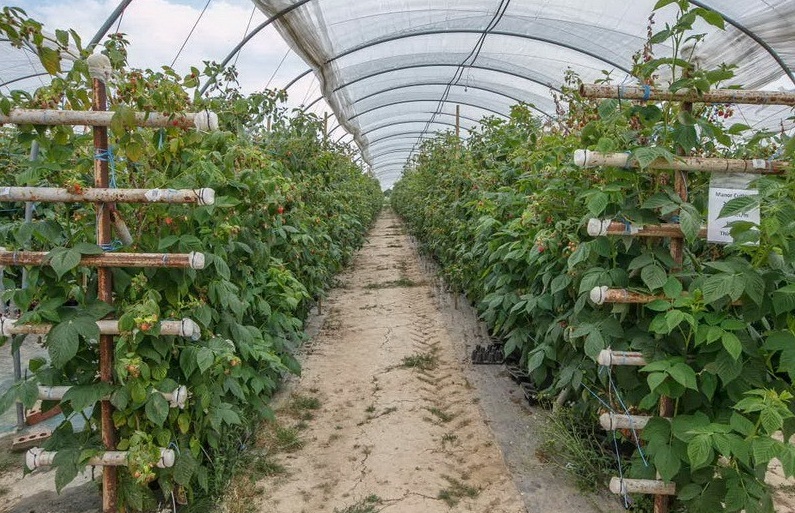
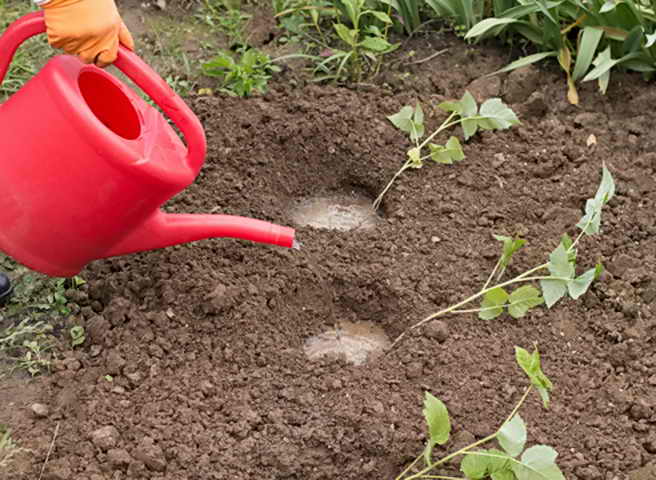
The technique of planting raspberries consists of the following stages:
- Prepare planting holes of the optimal size to accommodate the seedling's roots. The hole shouldn't be too deep.
- Water the hole generously before planting so that the soil dissolves into a porridge-like consistency.
- Immersing the seedling into the hole, deepening it below the growth point of the buds.
- Sprinkling the plant roots with dry soil.
- Saturate dry soil with water so that a layer of moist soil adheres to the roots, displacing excess air.
- Filling the planting hole with dry soil up to the site level.
- Mulching planted shrubs with organic matter - hay, straw, dry leaves.
Plant care
This variety of raspberry with yellow fruits does not require any special care, but some nuances still exist.
The soil beneath the plant should be at least 10 cm deep and always contain organic matter. For this purpose, use a mulch of fallen leaves, compost, or humus.
An important factor in care is understanding how to properly prune raspberries, as the procedure takes place in three stages: in the summer and fall of the first year of vegetation, and in the spring of the second year.
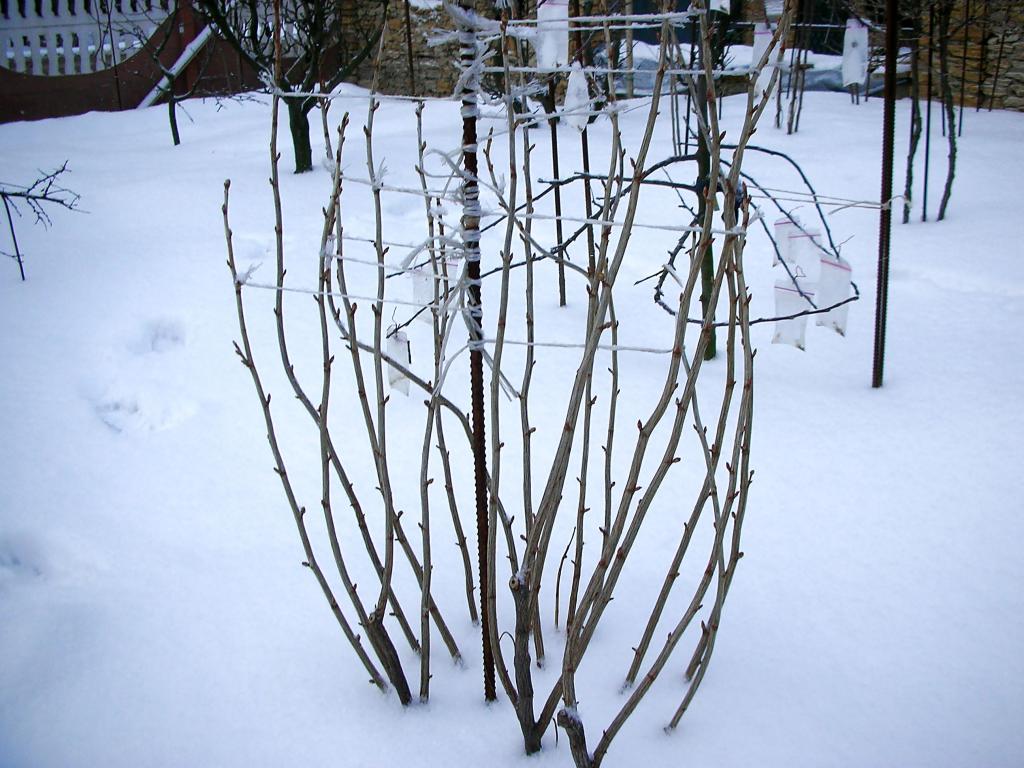
Yellow Giant raspberry bushes are prepared for winter by bending them over and tying them to the ground. This method is suitable for snowy winters. However, if the climate is harsh and snowfall is low, additional shelter will be required.
During hot, dry summers, bushes need to be watered generously. A lack of moisture will cause small, bony berries to ripen, and replacement shoots to wither.
In order to prevent moisture evaporation from the soil, the soil must be mulched.
Diseases and pests
Despite the fact that this type of raspberry is characterized by increased resistance to pests and diseases, there are still pests in nature that are “not indifferent” to bushes with yellow berries.
The main insect pests are:
The raspberry beetle is dangerous because it eats raspberry flower buds, and its larvae damage leaves and berries. Controlling this pest is simple: shake the bush early in the morning, after laying a sheet of plastic underneath it. Burn any fallen beetles.
The raspberry fly causes damage by laying eggs in leaf buds and at the tops of young branches, infecting them. Control by cutting off the tops of the branches every 10 days.
Spider mites attack the lower leaves of the branch, causing them to dry out and die.
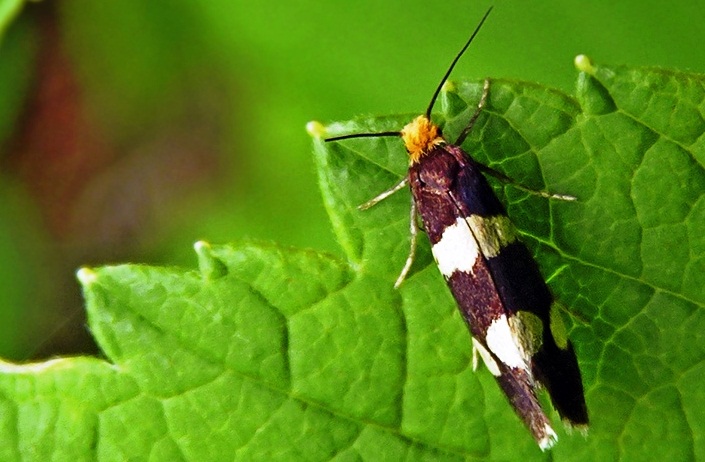
Raspberry moth larvae are small, brown moths. They are dangerous to budding buds, pupating in the center of stems, hiding in bark crevices and thus overwintering. During the winter, they feed on berry stalks. To control them, use products such as "Karbofos," "Confidor," "Iskra," and "Fufanon," which are also effective against many smaller insects that damage raspberry plants.
The bush is treated before the buds begin to bloom and after the last berries have been picked.
In the fall, the branches of the yellow berry bush are cut back to ground level, not only to increase the yield but also to treat the shoots if pests are found. Affected pruned stems are burned.
The soil under the affected bushes is dug up so that the larvae and spores of the parasites living there freeze.
To minimize pests and diseases, several measures can help reduce their occurrence. Regularly weed raspberries, remove excess shoots, loosen the soil throughout the summer and spring, and perform shallow tilling between rows and along the diameter of the bushes in the fall.
No less troublesome are the various insect pests and diseases to which the variety may be susceptible.
To prevent infection by various fungi and viruses, it is advisable to purchase visually healthy and strong seedlings from trusted retailers.
The most common types of diseases of this variety are considered to be:
- Bushy dwarfism. It manifests itself initially by thinning of the leaf membrane, followed by complete leaf death, gradual reduction in fruit size, and subsequent wilting of the plant. Control involves pruning off affected branches, and if the entire bush is affected, it is completely uprooted and burned. Unfortunately, there is no cure for this affliction.
- Shoot and leaf aphids. With this disease, the plant's leaves at the tips of branches first curl and dry out, causing young shoots to slow in growth and eventually die. To treat the bush during the growing season, spray it with Karbofos. Prepare a solution as follows: 60 g of the product per bucket of water. The resulting solution is enough to treat eight bushes.
Harvesting
The fruits of this type of raspberry begin to ripen around the tenth of July and continue to bear fruit until the first frost.
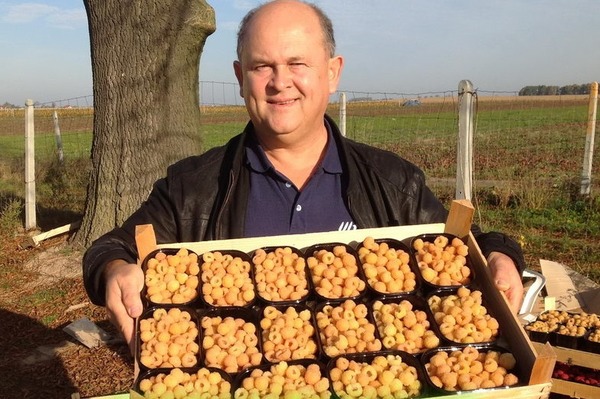
Since the bushes bear fruit abundantly and an average of up to 6 kg of berries can be harvested from each bush per season, several factors should be taken into account when storing and preparing berries:
- Yellow raspberries have low transportability.
- When overripe, they fall from the bushes.
- The best time to harvest is early morning.
- The most unfavorable time for picking berries is during or after rain; under such conditions, the already loose berries become soggy.
- You shouldn't transfer the collected berries from one container to another, as they are soft and fragile.
- The taste and texture are much sweeter, softer, and more delicate than their red counterparts. This should be taken into account when preparing preserves for the winter, such as jam, marmalade, and confiture.
- For winter preservation, this berry is ground with sugar and dried, but it should not be frozen due to its fragile consistency.
- Due to the sweet taste of the berries of this variety, they are very popular with children and adults.
Video: "Caring for Raspberries"
From the video you will learn how to care for this bush.