
Standard raspberry "Skazka": description of the variety
Content
Description
The Skazka raspberry variety is considered a standard variety, producing large, glossy red berries. The fruits are cone-shaped. They are sweet and juicy, with a pleasant aroma. Even when fully ripe, the raspberries will not fall off the bush.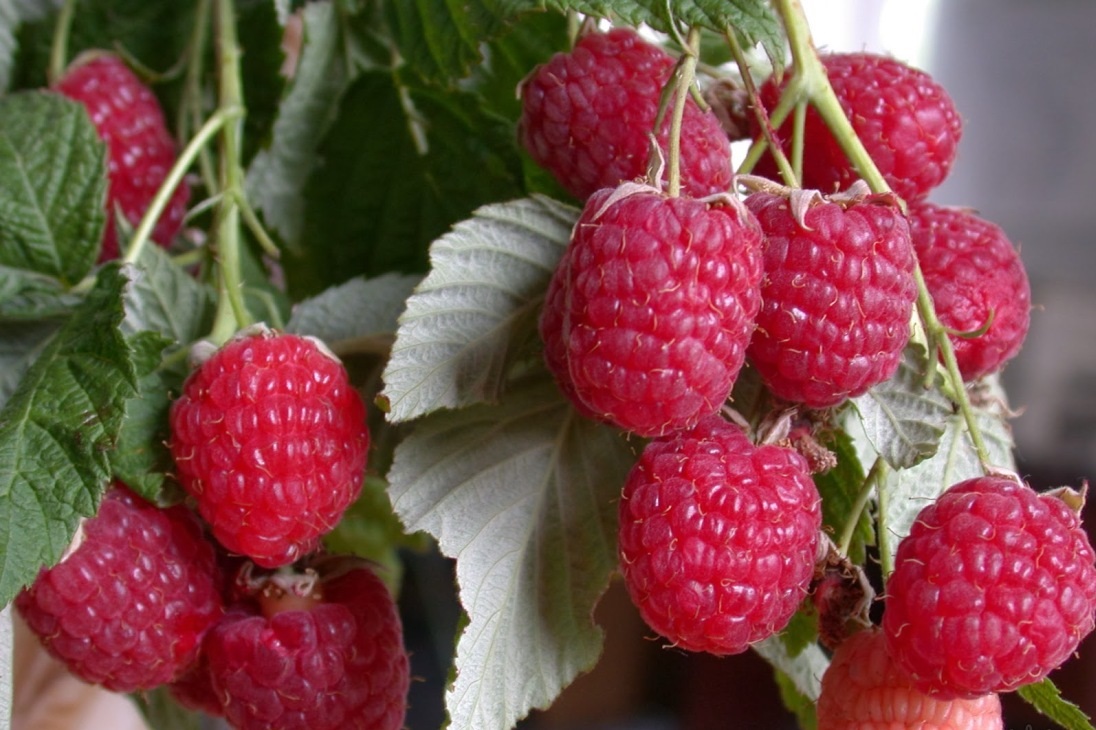
Skazka raspberries are easy to transport, even over long distances, without significant damage. This is due to the exceptional density of the pulp, its resistance to rot, and the strong "bonds" between the drupes. This variety is often grown for commercial purposes, as its fruits are very attractive. Furthermore, the berries retain their flavor and aroma for a long time.
This variety is characterized by a medium ripening period (bearing fruit from mid-summer to early August). The Skazka raspberry yields high fruit yields: up to 6 kilograms of berries can be easily harvested from a single bush. This variety has a variety of uses: ripe fruits are excellent for making jams and preserves, and they can also be eaten fresh or frozen, which preserves the berries' flavor for a long time.
The plant's bushes are typically medium-sized, no more than 2 meters tall. They are quite compact, and the shoots are thornless. The plant produces only a small number of shoots per season, so there's no risk of the berries spreading throughout the plot. The stems are firm, strong, and even. They lack a waxy coating. Staking the bush is not necessary. In the second year, the stems actively form fruiting branches bearing numerous berries. The berry-bearing branches are large and can produce up to five lateral shoots, which positively impacts yield. The leaves on the bush are large, green, and have a distinctive sheen.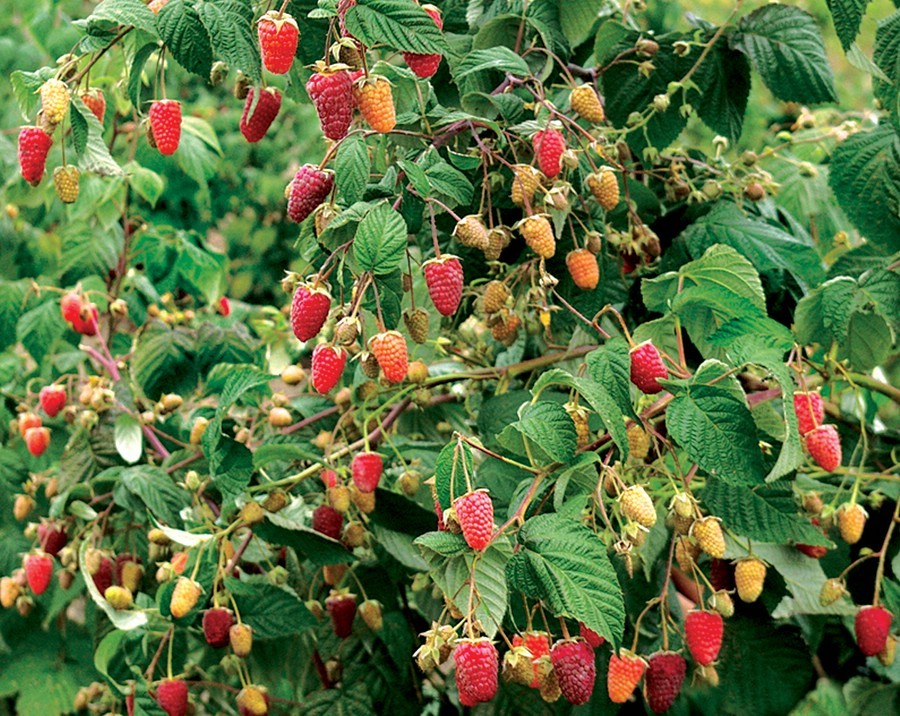
This variety is characterized by moderate frost resistance, surviving temperatures as low as -23°C. However, drought is not a problem for this crop. The plant also has high resistance to major diseases, but only with proper care.
Video "Description of Varieties"
From the video you will learn about the description of different varieties of raspberries.
Landing
Raspberry seedlings should be planted in sunny areas. The distance between individual seedlings should be no more than 0.3–0.45 meters. Rows should be spaced 1.5–1.7 meters apart. This will make caring for the berries much easier.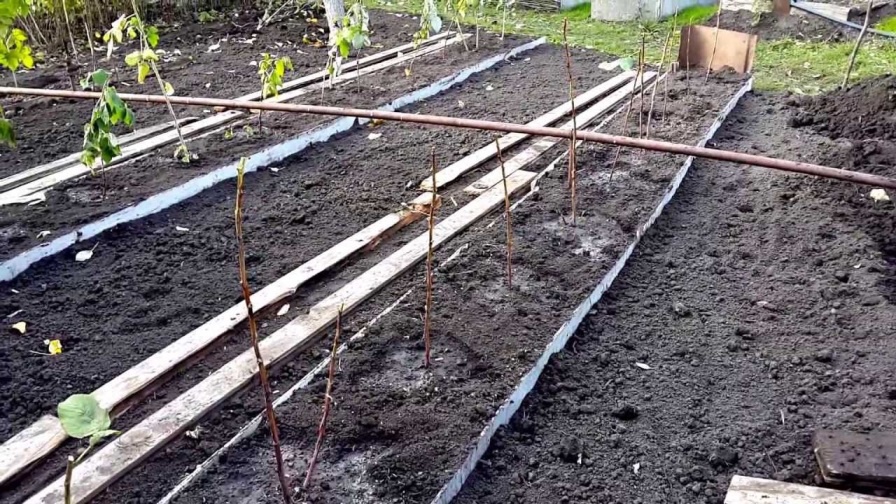
Stagnant water is detrimental to the plant: weak shoots develop, and the roots begin to rot, which can lead to the complete death of the bush. Moistening and mulching the soil circles near the trunk will ensure a consistent harvest. Furthermore, regular pruning of the bushes also influences the fruiting rate and berry size.
Growing
The optimal time for planting this variety of raspberry is mid-April. This timing varies depending on the region's climate. For example, in the Urals, raspberries need to be planted significantly later, as there is still snow on the ground in April.
Planting can be done in the fall, but many rightly consider spring planting to be the most appropriate. During this period, the plants will take root much better, especially if they haven't stretched out and the buds haven't yet opened.
If raspberries are being planted for the winter, the procedure is usually carried out in early October or late September. To prevent frost damage to the lower buds of the bush, it's recommended to earth up the berries to a depth of 0.12 meters when planting.
Planting should be done in bushes or in strips. Almost all standard varieties are grown this way. In the first case, special holes are dug in the soil for each bush. When planting in strips, a trench should be dug in the soil. Both methods are quite effective, so choose the one that suits you best.
To plant raspberry bushes, dig a hole measuring 0.5 by 0.5 meters. After this, the roots are placed in a special mullein solution, then lowered into the soil and covered with soil. Maintain a distance of one meter between bushes and two meters between rows. When planting in trenches, the distance between bushes should be more than 0.4 meters. During this period, add compost or wood ash to the soil.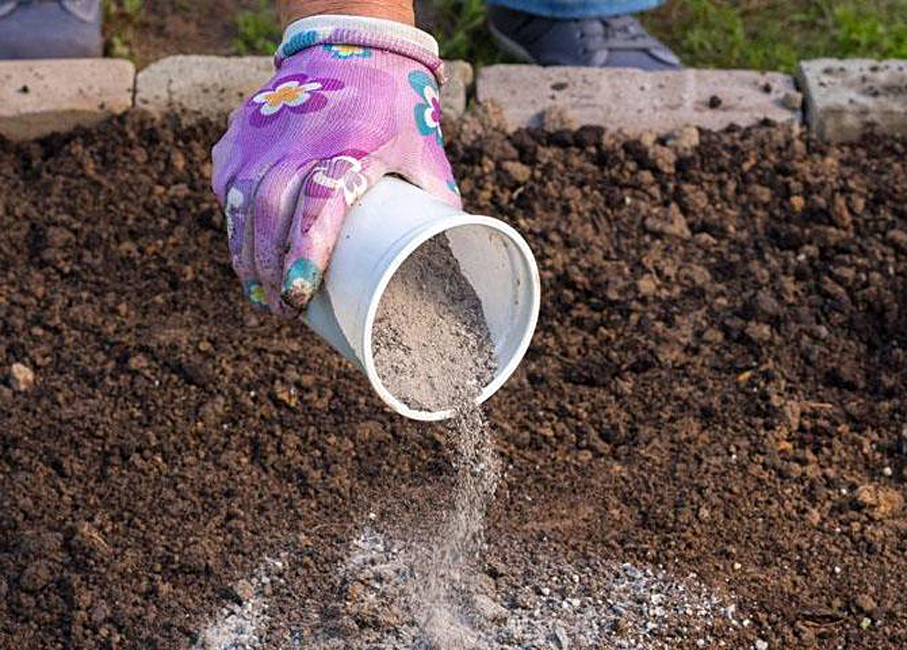
The seedling should be planted so that after the soil settles, the plant is 0.03 meters deeper than its growth level in protected soil.
Care
This variety can be propagated in several ways. The most effective method is by using cuttings. Root shoots or layering are less common. However, this method is less effective due to the small number of these organs.
Caring for Skazka is largely similar to caring for other raspberry varieties. However, this variety has its own unique characteristics that should be considered. When planting seedlings, choose sunny locations. The distance between rows of raspberries should be approximately 1.5 meters, and the distance between bushes should be 0.3 to 0.45 meters.
When watering, it's important to properly calculate the amount of liquid. If water stagnates, branches and shoots will weaken, and the roots will begin to rot, eventually dying.
"Fairytale" raspberries require mandatory pruning in the fall. After all, the plant's high yield will be significantly reduced if the bush becomes too dense.
So, the Skazka raspberry variety is a standard variety with a number of advantages. Therefore, gardeners are growing it more and more often each year. Furthermore, this berry can be grown commercially, which is another advantage.



Video: Growing and Caring for Raspberries
From the video you will learn how to grow and care for raspberries.