
Raspberry Tarusa - the most productive variety
Content
Description of the culture
The Tarusa raspberry is considered a raspberry tree, first bred in 1987. The leading breeder responsible for developing this berry variety was V. Kichin. The professor continued to cross-breed the standard specimen with the Stolichny variety, which had been cultivated by gardeners for over five years. The main goal of these experiments was to increase the yield of mid-season and late-season raspberry varieties. It was only in 1993 that the tree was given over for propagation, with the intention of making it available to a wider audience within a few years.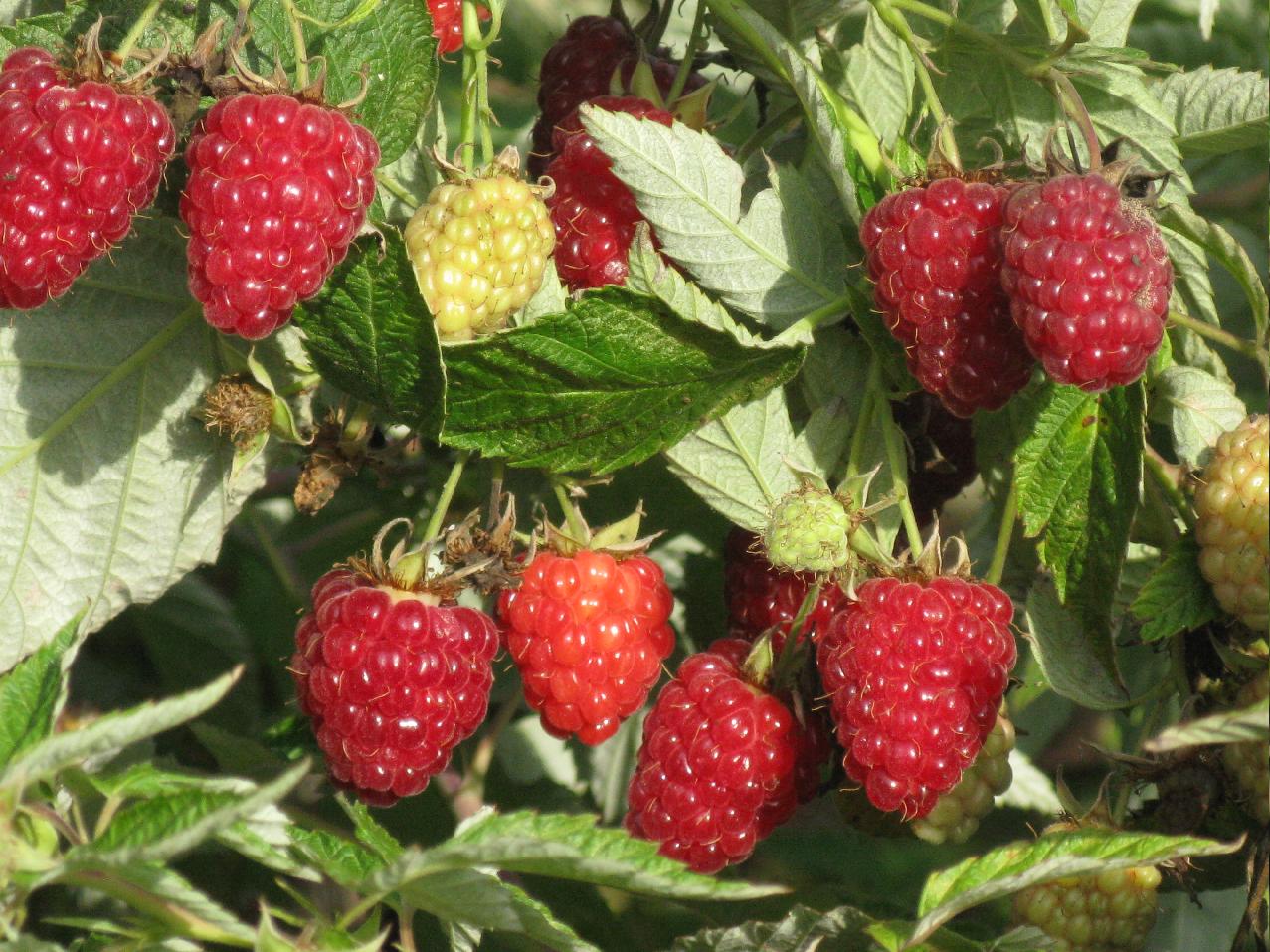
The variety's description highlights the fact that no additional support is required for growing raspberries. The tree itself is capable of growing in the desired direction, creating a beautiful crown and uniformly spreading shoots. Breeders consider the main achievement in developing this variety to be its standard form. Consequently, its lower portion lacks many branches, while the top grows lushly.
With proper care, raspberries will produce strong, sturdy shoots. These can reach over 2 meters in height and support a large harvest.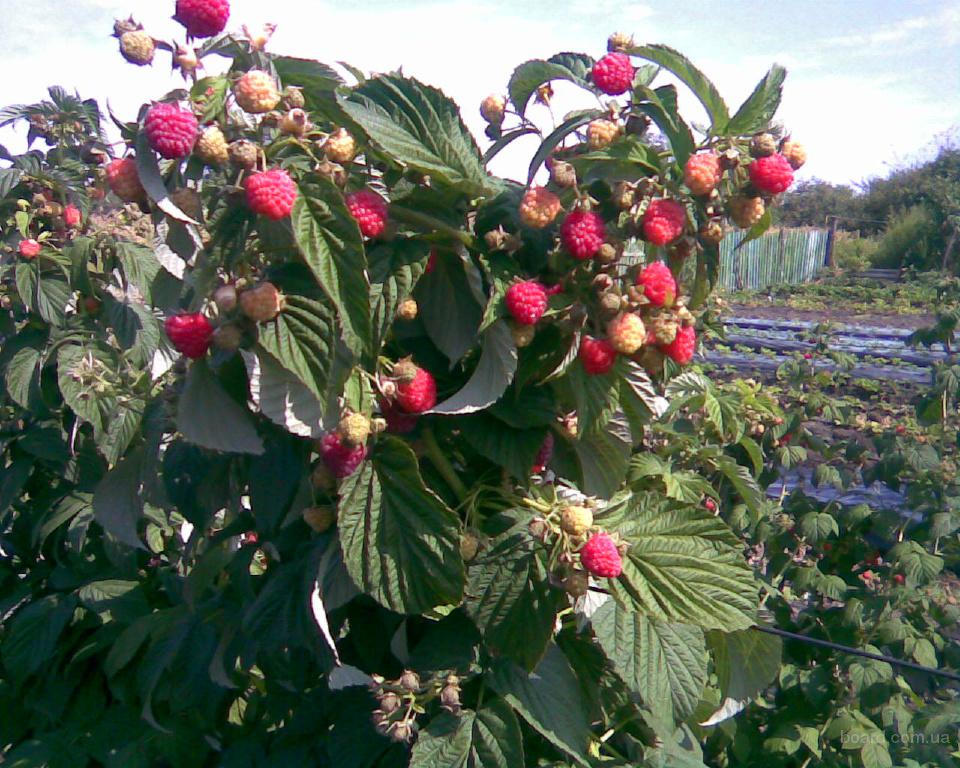
Gardeners note that the Tarusa raspberry produces beautiful flowers during flowering. Pollination is usually unproblematic, and abundant ovaries are produced. When ripe, the berries acquire a beautiful, rich, bright red color. With sufficient sunlight, they can reach a nearly pure ruby color. The raspberries grow large and, once ripe, begin to emit a soft, pleasant aroma. The Tarusa tree is prized by gardeners for the excellent flavor of its berries, which is distinct and rich.
The fruits don't fall off while growing, as they have wide stalks that hold the berries tightly as they ripen. However, this doesn't present any difficulties when it comes time to harvest the fruit after it ripens. On average, up to two dozen berries can be harvested from a single tree branch, each weighing up to 15 grams. Tarusa fruit has a characteristic elongated shape, and can reach 5 to 7 centimeters in length.
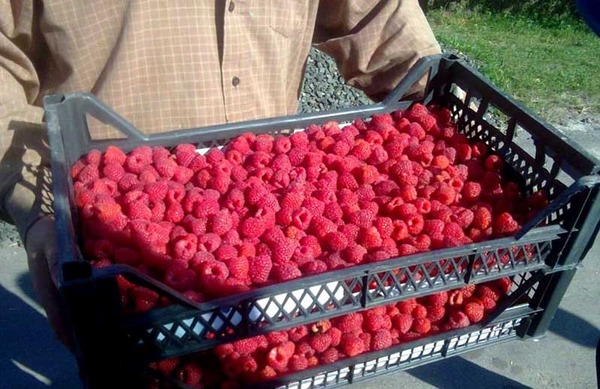
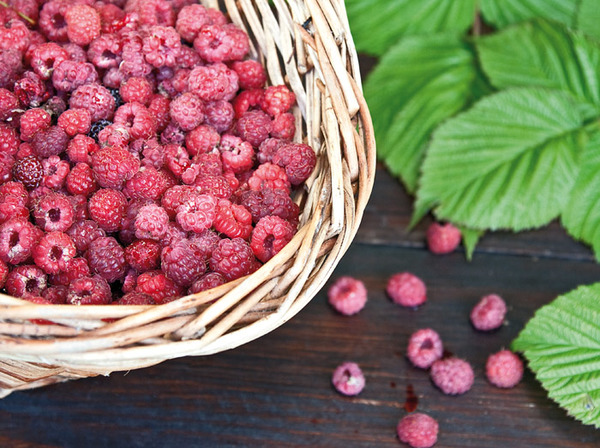
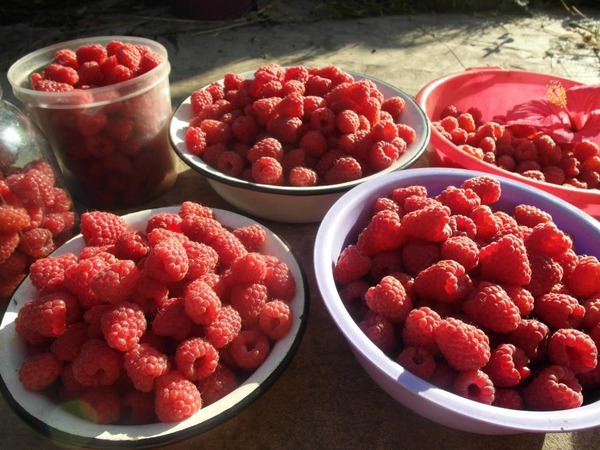
Another characteristic of this selected variety is that the Tarusa raspberry is thornless. This is very convenient for gardeners when it's time to harvest. The plant doesn't like prolonged rainfall, as excessive moisture in the soil can significantly reduce the raspberry yield.
Video "Description of the Variety"
From the video you will learn everything about this type of raspberry.
Growing
The Tarusa tree is a relatively easy-to-grow plant, making it easy to grow even for novice gardeners. For those willing to put in the effort for a bountiful harvest at the end of the season, planting and growing this tree won't be too difficult.
The raspberry tree is considered a unique species that requires a special approach to cultivation. It's important to understand that the primary consideration isn't the cultivation method used for a particular variety, but rather how it's cared for. After planting a Tarusa tree, it's important to encourage it to produce more shoots, as this will increase the yield. The tops of the bushes will need to be pinched. If this is done in a timely manner on the young shoots that have emerged from the trunk, it will allow new side shoots to emerge. With proper care, you can get more than ten shoots. By the end of the season, such a standard bush will resemble a small, slender tree that produces a harvest of raspberries. The following year, the fruit will be even more abundant.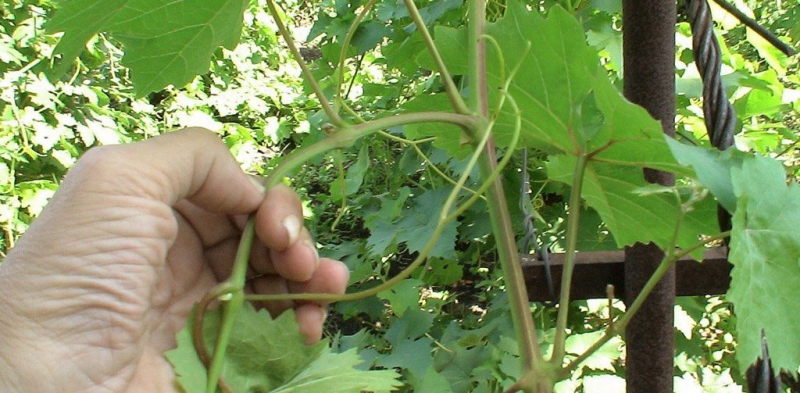
If you've decided to seriously get started growing raspberries in your garden, be aware that you can encounter unscrupulous sellers at the market. They're willing to sell wild raspberry seedlings as cultivars. The deception lies in the fact that these seedlings are often dug up from abandoned plots and will no longer produce a bountiful harvest.
If novice gardeners are about to plant a Tarusa raspberry tree for the first time, it is important to remember the following basic recommendations:
- try to buy raspberry seedlings from people you know, specialized plant nurseries or stores;
- When purchasing a plant at the market, always pay attention to the sellers - they should have special cards with personal information about the nursery owner or documentation for specific varieties and species of plants;
- Don't be tempted by the low prices you can find from vendors along the highways.
By following these tips, you can protect yourself from being scammed by unscrupulous seedling distributors. You can also avoid purchasing diseased or fungus-infected trees.
Site selection and soil preparation
To get a large raspberry harvest, you should choose the right planting site and prepare the soil.
First of all, you should pay attention to areas that receive good sun exposure. Avoid areas that are shaded for most of the day or near tall trees. Shading is only acceptable in southern regions, as the sun there can be scorching and very hot.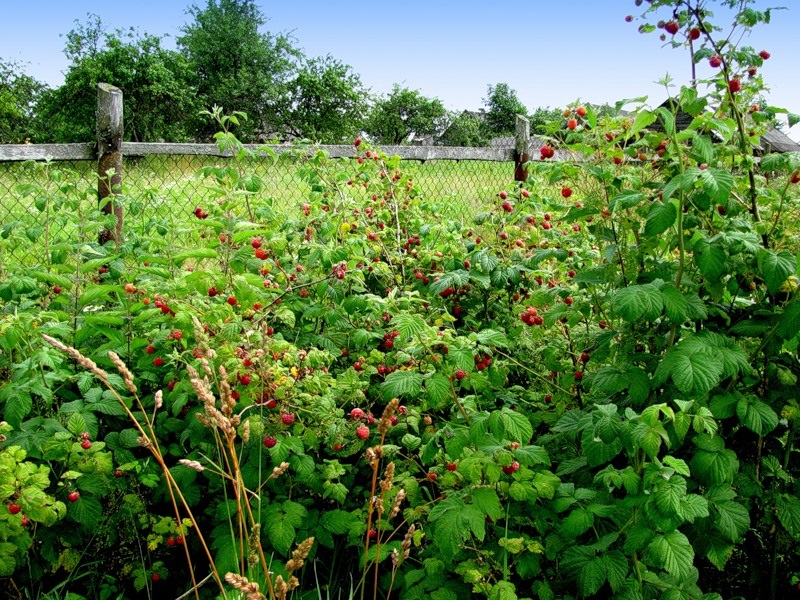
Experts recommend planting Tarusa trees along your property, fences, or hedges. Separate areas can be designated for planting, but this requires a larger area.
It's not advisable to grow strawberries, tomatoes, or potatoes near raspberries. These plants are susceptible to various diseases that the Tarusa tree is vulnerable to. By preventing such proximity, you can reduce the risk of disease.
To maintain the Tarusa tree's productivity, it's best to transplant it to a new location after 8-9 years. This is because raspberries will draw on the same micronutrients over a long period of time, and the soil will begin to deplete. Raspberries can be planted in this location again after 5 years.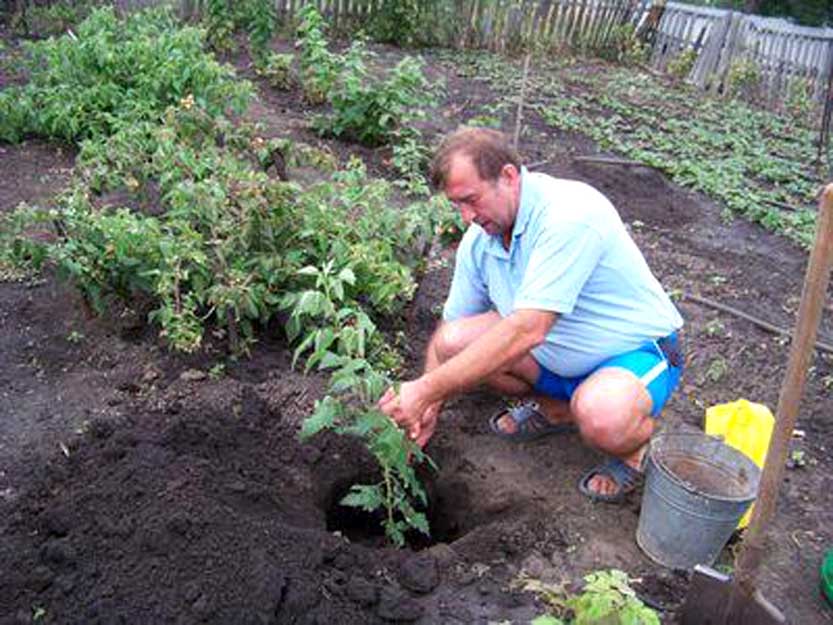
The plant appreciates regularly moist soil. This will ensure juicy fruits. Avoid allowing the root system to dry out, especially in the first few weeks after planting. Overwatering isn't as dangerous, but it should still be avoided to prevent root rot.
The soil should be rich in minerals and nutrients. Loamy soil is ideal for planting.
Preparing the soil for planting should be done at least one month before the expected planting in the fall and one week before if planting is planned in the spring.
Nitroammophoska (a fertilizer based on nitrogen, potassium, and phosphorus) is an excellent fertilizer. Wood ash and rotted manure are also often used. Two buckets of compost, a quarter of a kilogram of ash, and 150 grams of complex nitroammophoska are sufficient per square meter of soil.
If the soil is clayey, it can be loosened by adding humus and peat. If the soil contains high levels of acidic substances, lime can be used to neutralize them. For example, 600-800 grams of limestone per square meter of soil is sufficient. After adding the fertilizer, loosen the soil.
Planting period
To ensure raspberries take root well, they should be planted at the right time. This can be done in both fall and spring.
It's best to plant raspberries early in the spring. Planting can be scheduled immediately after the ground thaws.
Spring seedlings may grow more slowly. Consequently, the first fruits may not appear for another year.
When planting Tarusa in autumn, it is advisable to do it in the second half of October.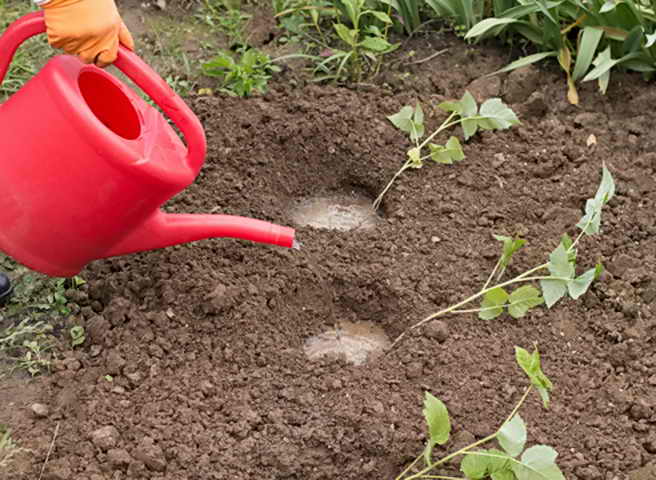
Of course, planting times depend directly on your region and its climate. You can find out more from specialists in your area.
Planting in the ground
Planting and care are crucial when growing a Tarusa tree. After purchasing the seedlings and selecting a site, you can begin planting. Dig the required number of holes, spaced 50 cm apart. Then, add fertilizer to each hole. The seedling should be placed in the soil to the same depth it was before transplanting. Then, fill the hole and compact the soil around the bush. After this, you will need to prune small shoots that are 20-30 cm above the ground. You can add mulch, spreading it around the trunk. Water each bush with 5 liters of water. During the first few days, you can provide shade for the seedlings.
Care
When caring for this raspberry variety, remember to avoid allowing the soil to dry out throughout the ripening period. During the growing season, the plant requires timely watering, which is essential for producing juicy fruits.
During hot summers, mulching is required to protect the soil from rapid moisture loss.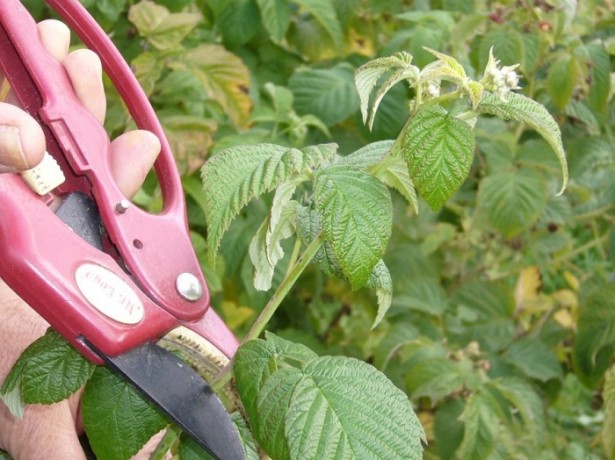
In July, you can prune shoots that have already borne fruit. During the first year after planting, it is recommended to protect the plant from future frosts by covering the soil around the bush. If the Tarusa tree has suffered severe frost or physical damage, the bush should be sprayed with a special solution.
It is very important to promptly treat the plant against common and most dangerous diseases, as well as protect it from attacks by harmful insects.
Pest control
The Tarusa tree is highly susceptible to disease and pests. Crop losses can be caused by the raspberry beetle, the raspberry moth, and the raspberry and strawberry weevil.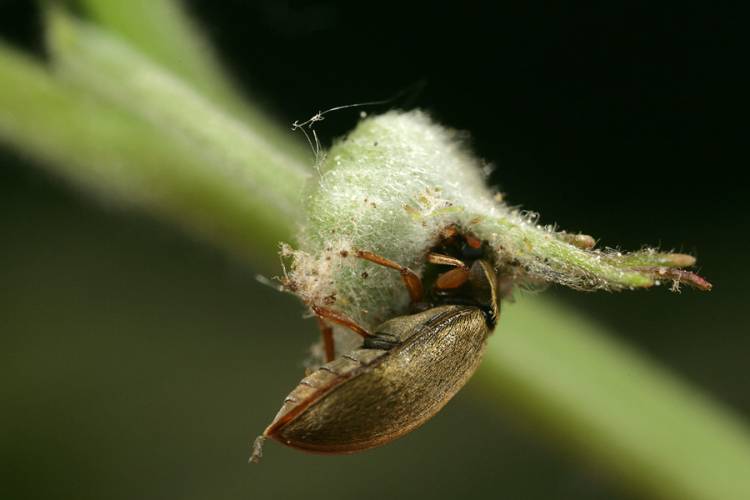
Preventative measures should be used against them, but if they appear on the plant, special chemical preparations with a targeted effect will be required.
Chlorosis is a dangerous disease for raspberries. This disease occurs as a result of severe drought, soil depletion, and high groundwater levels.
Harvesting
Raspberries should be picked immediately after ripening, otherwise they may fall off. On average, the berries ripen by mid-July. They are picked every two days. It is not recommended to pick after rain or in the morning after dew, as this can lead to spoilage. Berries last longer if picked with the stems attached. It is also not recommended to over-harvest tender and soft berries, as they may become bruised and release juice.
Video: "Effective Planting and Care Methods"
From the video you will learn how to properly plant and care for raspberries.