
Raspberry variety "Beauty of Russia": characteristics, cultivation and care
Content
Description
The variety was developed in 1990 at the Moscow Institute of Horticulture and Nursery by Professor V.V. Kichina, the author of many well-known varieties of large-fruited raspberries. The Krasa Rossii raspberry variety is the result of crossing the thornless Maroseyka with the medium-sized Mirage.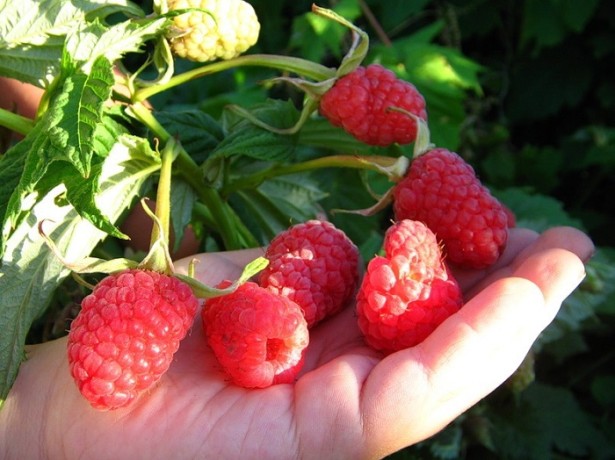
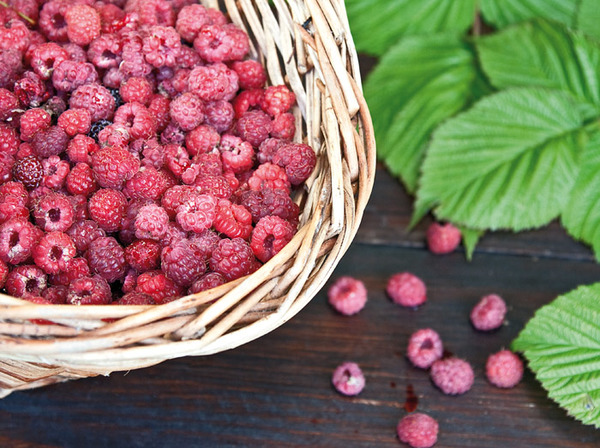
Moderately tall bushes grow up to 1.6 m, producing up to 10 replacement shoots and 5 root suckers per season. The stems are strong, softly pubescent instead of thorns, and covered with a thin waxy coating. Fruiting branches are strong and branched, each bearing up to 20 berries. The largest berries form on the lower branches. Berries average 4 to 10 g in weight, but with proper care and the addition of manure, they reach even larger sizes. The berries are cone-shaped, bright red, and very sweet and aromatic. They have average transport qualities.
The Beauty of Russia variety begins to ripen in mid-July and finishes in the first week of August, meaning it is a mid-season variety and is not affected by recurrent frosts during flowering. A fairly extended fruiting period allows for 4-5 harvests, with one bush yielding 4.5-5 kg of juicy, ripe berries.
Video "Variety Review"
This video will tell you about the characteristics of the Krasa Rossii raspberry variety.
Advantages and disadvantages
The undoubted advantage of this variety is its large berries and high yield. The berries are delicious, sweet, juicy, yet firm, with a relatively small number of seeds.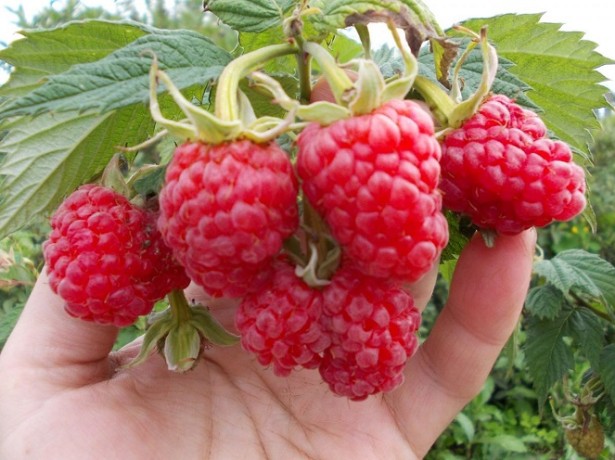
The absence of prickly thorns is also a huge plus for this variety.
The moderate number of root suckers is pleasing, which prevents the raspberries from spreading across the plot and at the same time makes it possible to easily propagate them.
The ripening period can also be considered successful, as the harvest is not lost due to spring frosts.
The variety tolerates winter quite well, with frosts down to -30°C (-22°F). In areas with harsher climates, shoots should be bent down to support the snow.
Resistance to raspberry diseases such as didymella, anthracnose and gray mold is also an undoubted advantage.
Disadvantages include its tall stature, which requires the installation of stakes and wire. It is also susceptible to late blight. There are some negative reviews about the fruit's taste, including insufficient sweetness and a lack of raspberry aroma.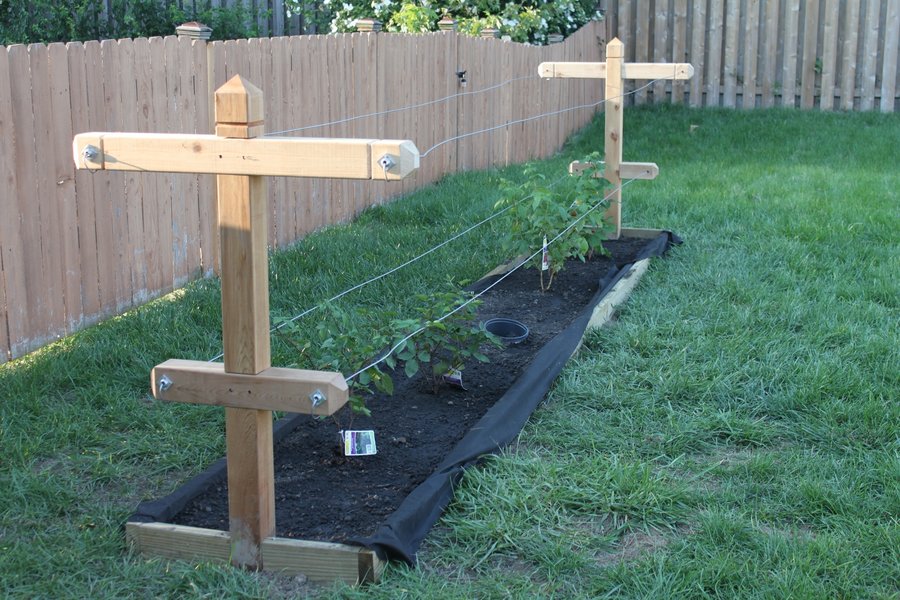
But this is most likely the result of improper planting and inadequate fertilization. Large-fruited varieties will only reveal their best qualities if all activities, from planting to winter preparation, are carried out competently and punctually.
Landing features
Raspberries should be planted in a well-lit area protected from cold winds. The groundwater table should be no higher than 1.5 meters, so it's best to avoid planting them in low-lying areas prone to spring floods. Higher elevations that dry out quickly also won't yield high yields. Raspberry roots grow in the shallow topsoil, and if it dries out, this will adversely affect the harvest not only this year but also the next. Before planting, the area should be cleared of perennial weeds, dug over, and rotted manure should be added at a rate of 4-5 kg per square meter.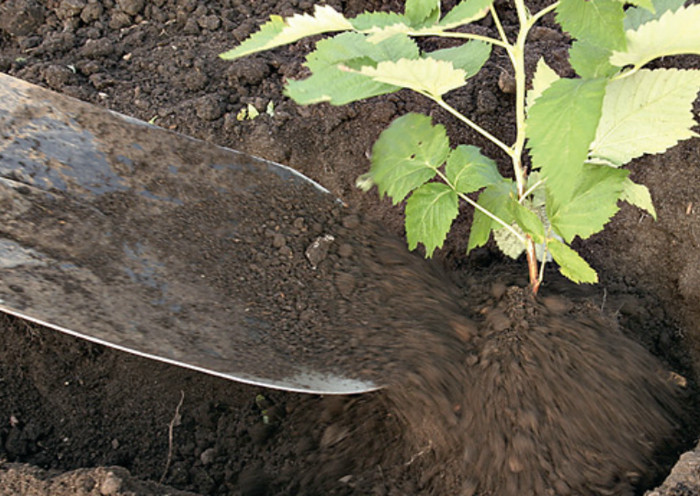
Raspberries are planted in spring and fall. Fall planting is best done in October, when the seedlings are ripe. Leafy shoots planted in August or September root poorly and may die during their first winter. Raspberries are planted in rows to facilitate digging in supports and tying wire.
The distance between bushes in a row is 70 cm, and between rows, 1.8-2.5 m. Raspberries are quite easy to plant and can be planted with just a spade. To ensure the seedlings receive the necessary nutrients, it's best to dig a 50x50x40 hole before planting and add a nutrient solution. The nutrient solution recipe is: 10 kg of compost or humus, 10 g of potassium sulfate, 400 g of wood ash, and 200 g of granulated superphosphate. A larger harvest can be achieved by planting raspberries in trenches. This method is labor-intensive, but it significantly simplifies subsequent care. The trench is prepared 20-25 days before planting. It should be 40 cm deep and 50-60 cm wide. A 10-centimeter layer of rotted manure is placed on the bottom, a small amount of superphosphate is scattered on top, and the rest is filled with fertile soil. After planting, the seedlings must be trimmed back to 70 cm and watered generously. Mulch can be applied to the rows to conserve moisture.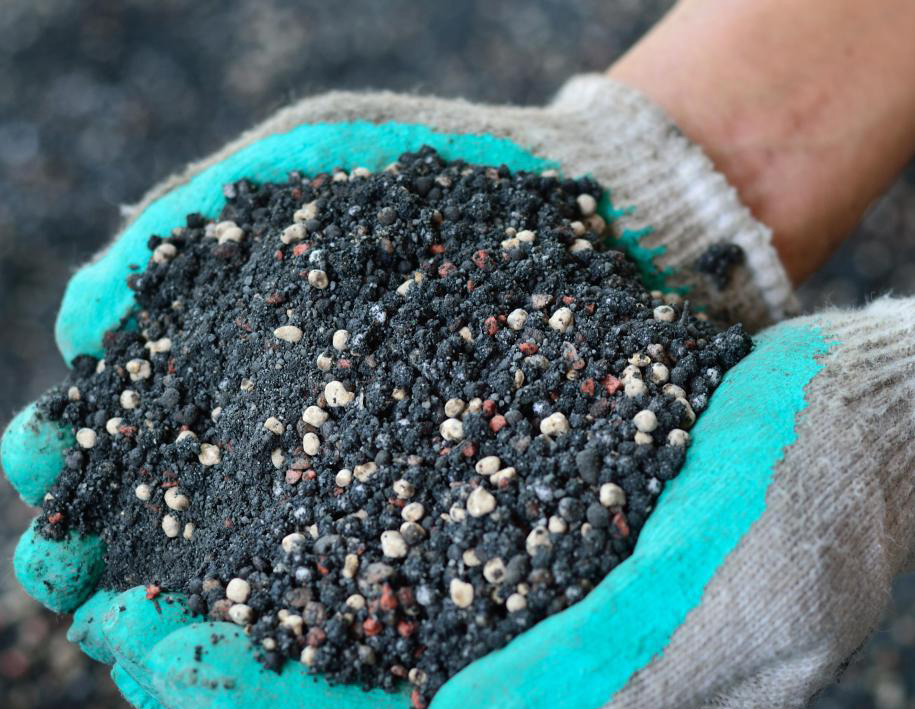
Fertilizing the seedlings is crucial. The first feeding is done after two weeks with a solution of mullein with added saltpeter (1 kg of fresh manure per bucket and a tablespoon of saltpeter per liter per seedling).
Care nuances
The Krasa Rossii raspberry dislikes dense growth, but like all raspberries, it forms a lot of shoots around itself. These shoots take 50% of the plant's nutrients and weaken its defenses. Therefore, these shoots must be controlled like weeds. To do this, they are pruned with a sharp shovel to a depth of 3-4 cm and removed. The freed bush receives good sunlight and bears fruit along its entire length, not just at the tips. In addition to these shoots, it's important to remove any excess replacement shoots. Up to 12 of these can emerge from the central part of the bush each year. The seven most vigorous shoots should be left and pruned to 1.5 m.
The stems should be secured to wire stretched between the supports to prevent them from breaking in the wind and under the weight of the ripening fruit. Particular attention should be paid to the lower fruit-bearing branches, which, if they come into contact with the ground, can infect the fruit with fungal infections.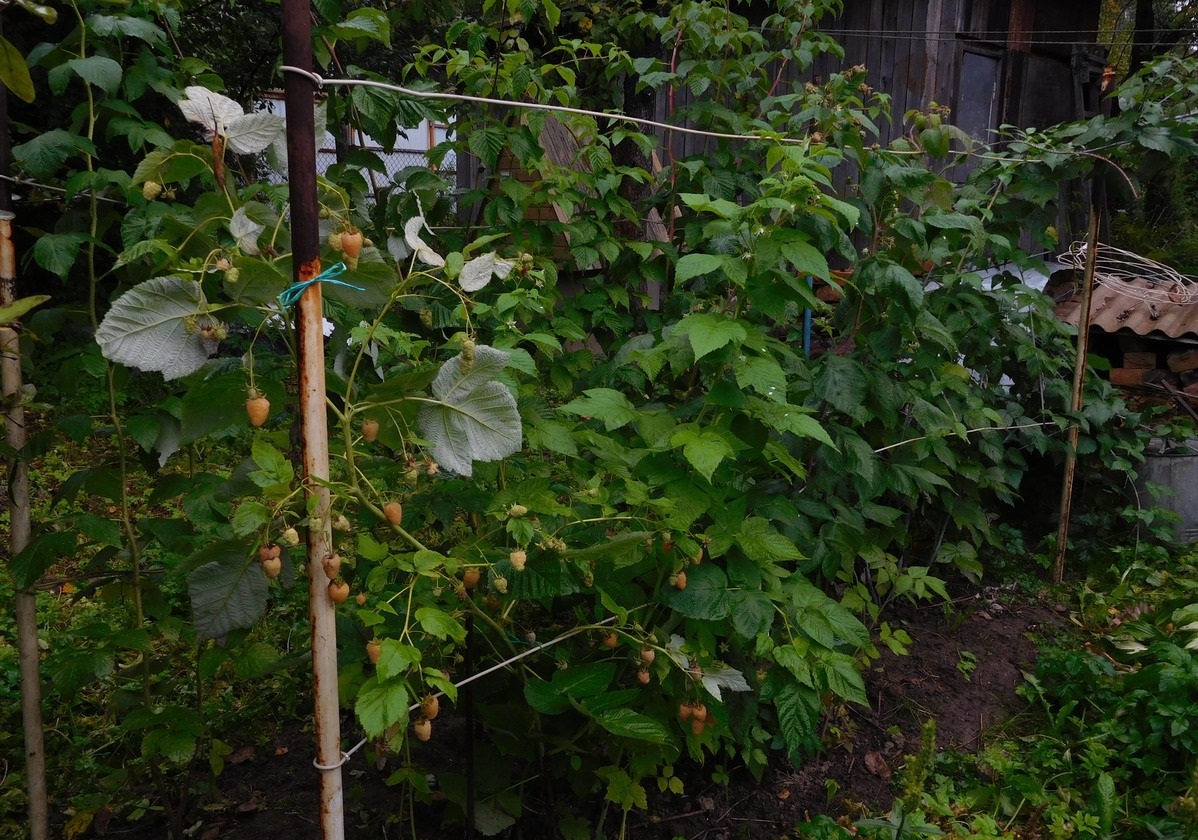
To produce large, abundant berries, regular, moderate watering is required. Neither too much nor too little moisture is acceptable.
Raspberries prefer rotted manure as a fertilizer. It's best applied in the fall. It will warm the roots during the winter, and by spring, it will have fully decomposed, stimulating spring growth. Mineral nitrogen fertilizers also increase yield. Apply 7 kg of urea per 100 square meters, preferably in the fall. Applying nitrogen in the spring will stimulate leaf growth and new shoots. Potassium fertilizers (3-4 kg per 100 square meters) can be applied both in the spring and fall.
Diseases and pests
The Krasa Rossii raspberry variety, as the variety description indicates, is relatively resistant to diseases that cannot be treated and require the removal of diseased plants or entire plantings.
Late blight attacks raspberries in regions of Russia with cool, humid climates. The fungus attacks all parts of the plant—roots, stems, leaves, flowers, and berries. It is often mistaken for frost or other diseases, and treatment is improper. Affected plants fail to open their flower buds. During flowering, the flower core darkens. Infected berries appear sun-scorched, and unripe fruits take on deformed shapes and dry out. Leaves affected by late blight wilt and dry out.
To combat this disease, you can use the immunomodulator "Zircon" or try folk remedies. You can spray raspberries with a solution of regular yeast (100 g per 10 liters of water). To protect the fruit, use a calcium chloride solution. Besides diseases, raspberries are susceptible to many pests.
The raspberry beetle and its larvae feed on the fruit, flowers, and leaves, significantly reducing the yield. To prevent this, loosen the soil around the bushes where the beetle hides.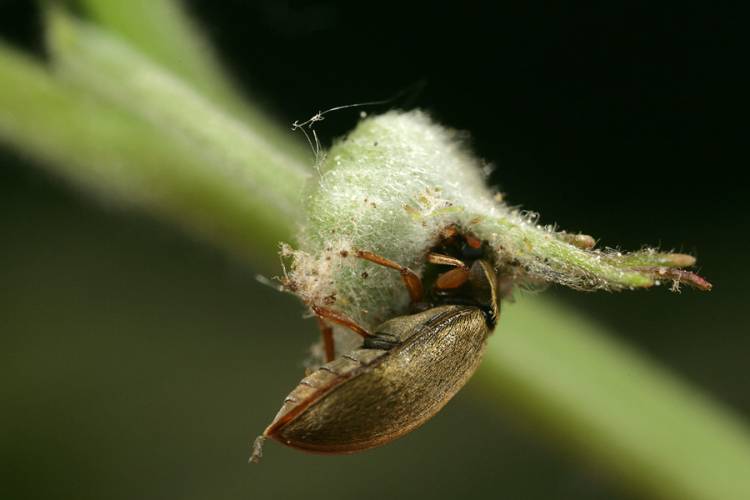
The beetles can be shaken off onto a cloth spread around the raspberry and destroyed, or the bush can be treated with Fufanon during bud formation.
Spider mites infest the undersides of leaf blades, spreading throughout the plant as their population grows. Leaves take on a marbled appearance, and flower buds dry out and fall off. Control is achieved with acaricides such as Fufanon, Acrex, and Actellic.
Stem gall midges can be identified by the spherical swellings that appear on the middle and lower parts of the trunks. These swellings cause shoots to dry out and eventually die. Bushes weakened by the midge are then attacked by purple spot. Shoots with swellings are removed. In spring and fall, this pest can be controlled by spraying with Bordeaux mixture.
Harvesting
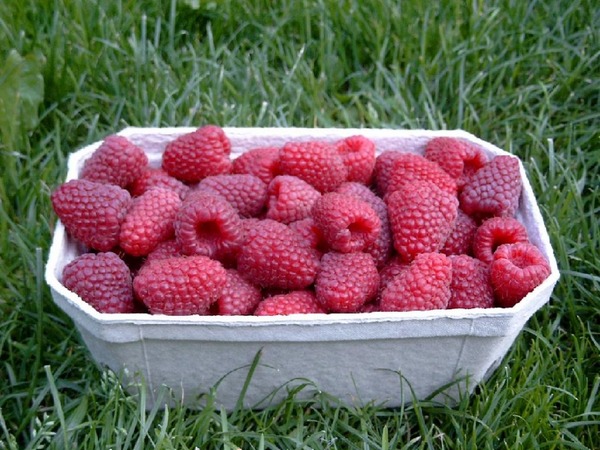
Berries need to be picked frequently to prevent some of the harvest from ending up on the ground. Five picking sessions are recommended throughout the growing season. It's best to choose dry weather for this, as berries wet from dew or rain will quickly spoil. Transportability isn't this variety's strong point; the berries are very juicy, so it's best to use shallow containers for transport to prevent them from getting bruised. It's also best to process them quickly, as raspberries don't keep for long.

Video "Growing"
From the video you will learn how to grow raspberries.